
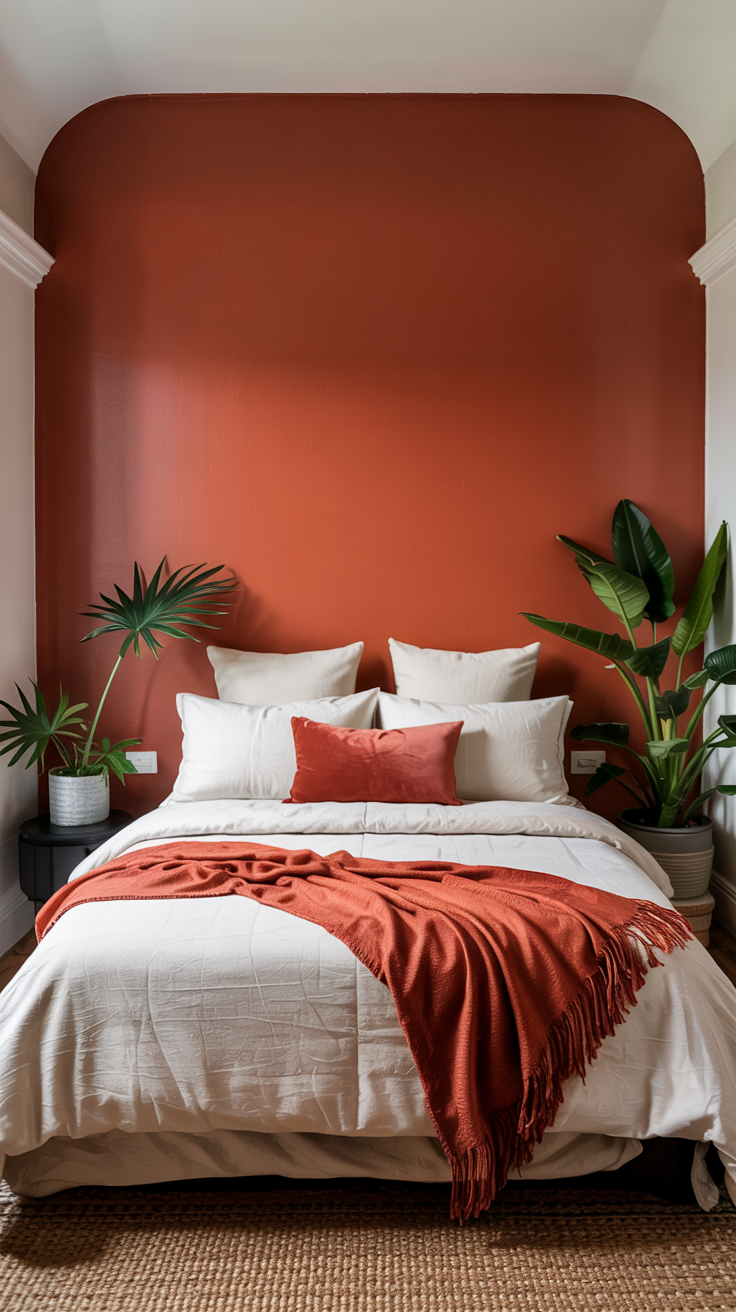
Choosing the right color palette can completely transform a small bedroom, making it feel larger, cozier, and more stylish. From soft neutrals to bold artistic combinations, colors play a major role in shaping the mood and visual appeal of a compact space. The best small bedroom color palettes balance beauty and functionality while reflecting your personal style. Whether you prefer calming earthy tones, sculptural monochrome schemes, or unique layered shades, there are endless possibilities to explore. Thoughtful color choices can also highlight architectural features, enhance natural light, and create a more harmonious atmosphere. In this article, you’ll discover inspiring small bedroom color palettes designed to help you create a beautiful and inviting retreat.
Soft Greige And Cream Small Bedroom Color Palette
I often recommend a soft greige and cream palette for homeowners who want a timeless and calming bedroom. In small rooms, this combination creates a seamless visual flow that makes the space appear larger while maintaining warmth. Greige walls paired with cream textiles produce a refined atmosphere without feeling sterile. This palette works especially well in modern interiors where simplicity and comfort are equally important.
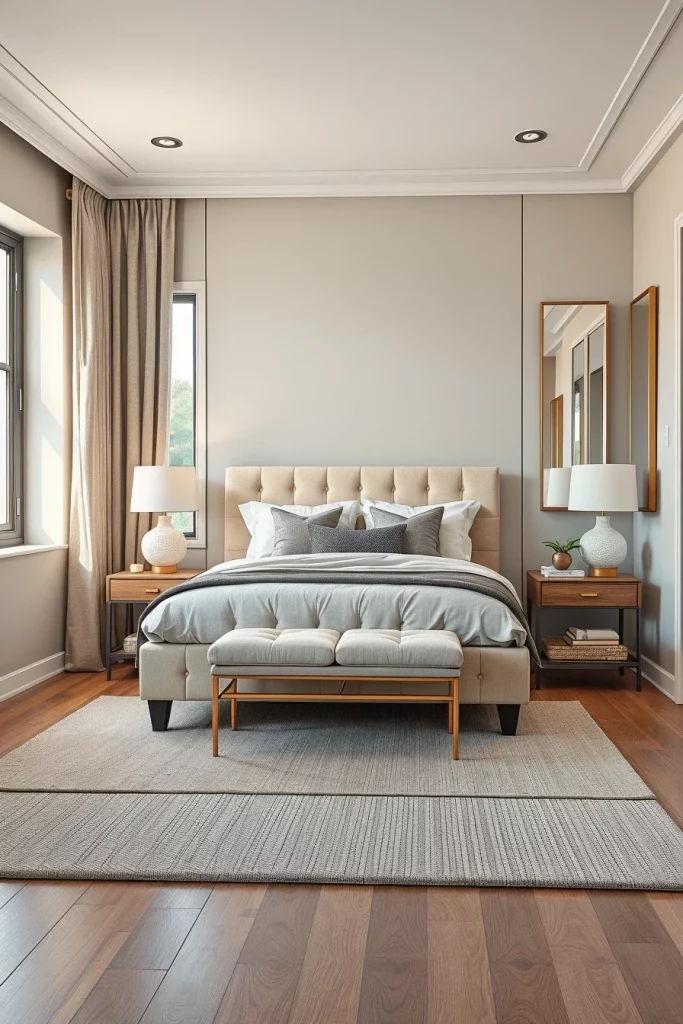
For furniture, I prefer an upholstered cream bed with a streamlined silhouette, slim bedside tables, and a compact storage bench placed at the foot of the bed. Layering cream bedding with greige throw pillows adds depth without overwhelming the room. I also like incorporating textured rugs, linen curtains, and ceramic table lamps because these elements introduce subtle variation while preserving the cohesive look.
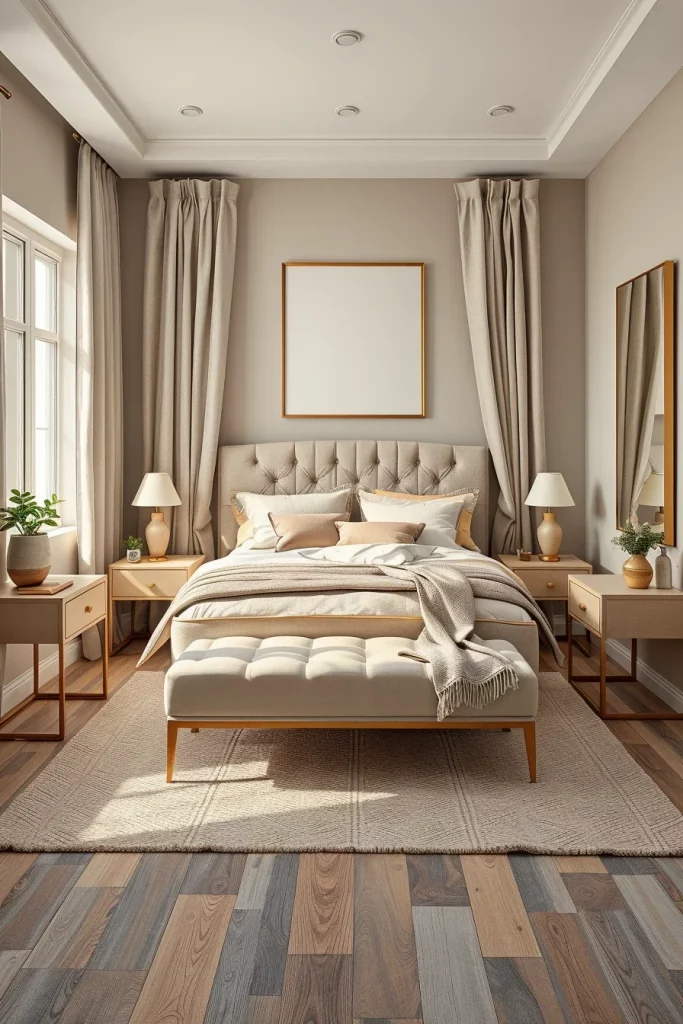
In my experience, designers frequently emphasize the importance of texture when decorating neutral rooms. Publications such as Architectural Digest often highlight layered materials as the key to preventing monochromatic interiors from feeling flat. I have found that combining boucle, linen, and matte finishes creates a sophisticated result.
To complete this bedroom, I would add a large framed artwork in soft neutral tones and a full-height mirror to maximize natural light and visually expand the space.
Sculptural Charcoal And Warm White Bedroom Palette
A sculptural charcoal and warm white palette offers a striking yet balanced look for a small bedroom. I like using charcoal as an accent color rather than covering every surface, because strategic placement creates visual depth without making the room feel enclosed. Warm white walls and ceilings help maintain brightness while allowing darker features to stand out.
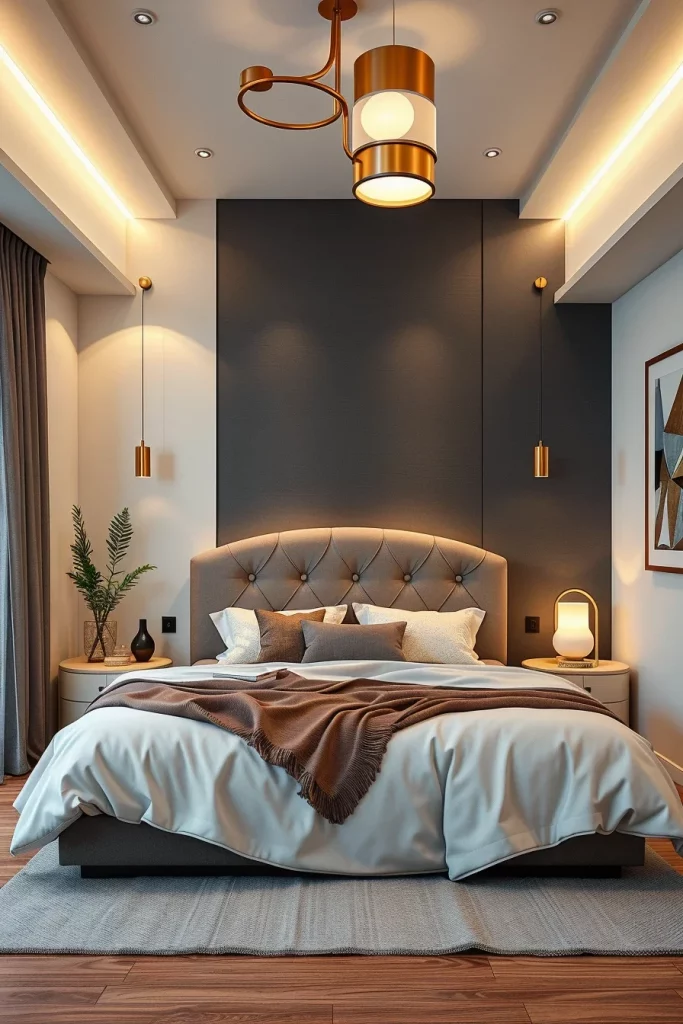
I usually include a curved upholstered headboard, rounded nightstands, and sculptural lighting fixtures to reinforce the artistic concept. A warm white platform bed paired with charcoal accent walls creates a dramatic focal point. I also recommend soft textiles, such as wool throws and textured cushions, to soften the contrast between dark and light elements.
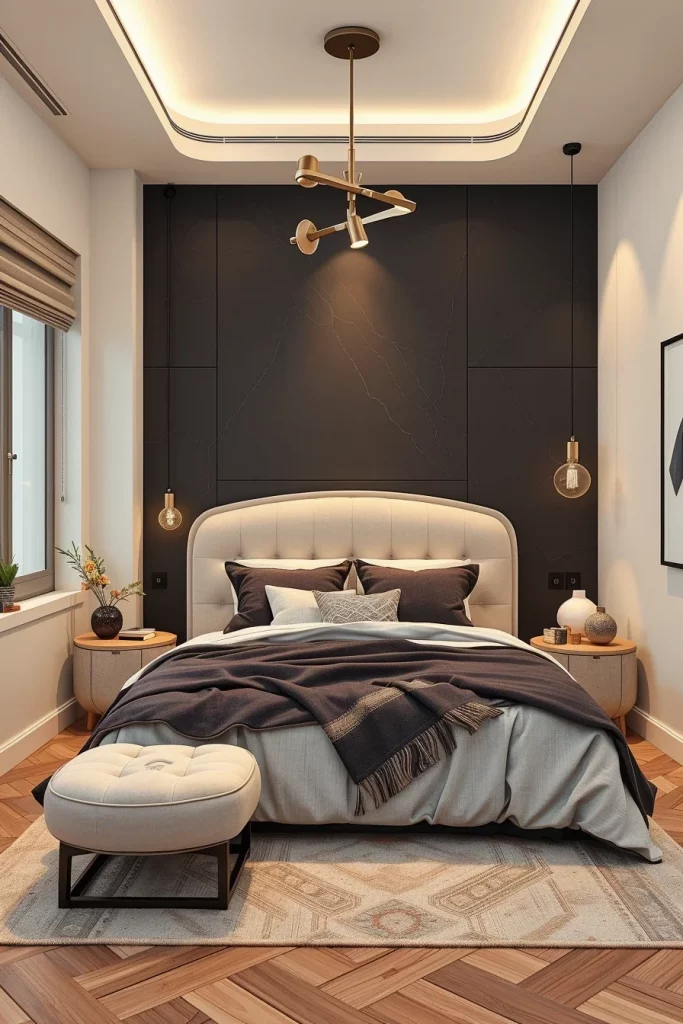
Personally, I appreciate how this palette introduces architectural interest into compact spaces. Many American interior designers advise balancing dark colors with generous lighting, and I strongly agree with this approach. Layered lighting, including sconces and bedside lamps, prevents the room from appearing too heavy.
What I would still add is indirect LED lighting behind the headboard or under floating furniture to emphasize the sculptural forms and create a sophisticated evening ambiance.
Dusty Rose And Mushroom Tones For Small Bedrooms
Dusty rose and mushroom tones create an inviting atmosphere that feels elegant rather than overly feminine. I often use this palette in small bedrooms because the muted shades add warmth while maintaining a serene environment. The subtle contrast between rosy undertones and earthy mushroom hues introduces dimension without visually shrinking the room.
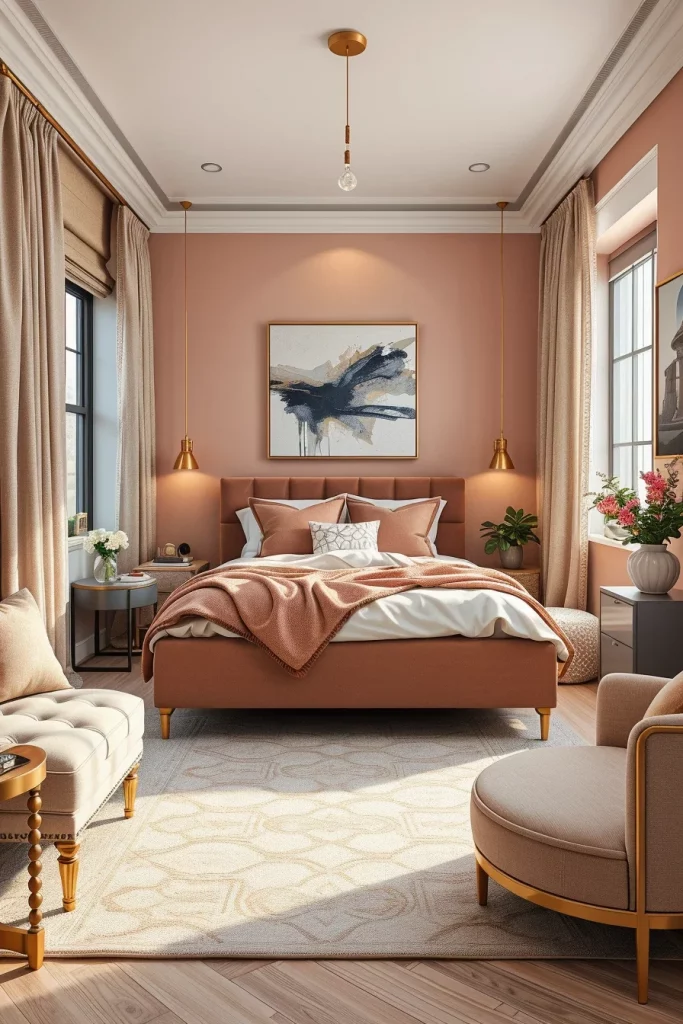
For furnishings, I recommend a mushroom-colored upholstered bed, soft dusty rose bedding, and minimalist nightstands with clean lines. Textured curtains, layered rugs, and upholstered accent seating contribute additional comfort. Brass hardware and soft ambient lighting complement these shades beautifully and enhance the room’s sophisticated character.
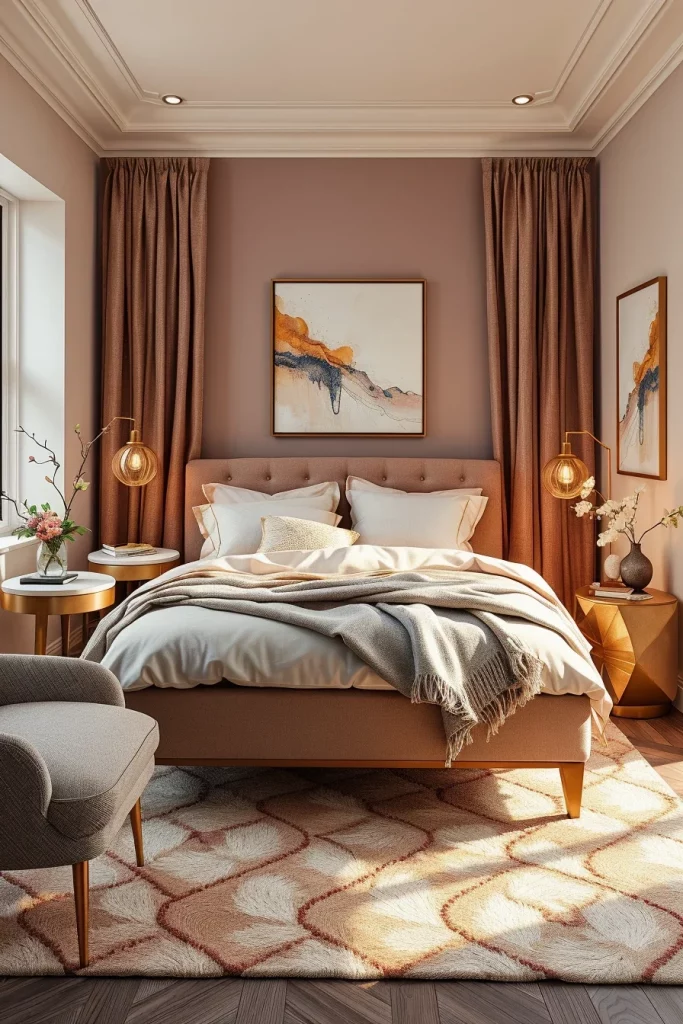
From my experience, this palette appeals to homeowners seeking a softer alternative to standard neutrals. I have noticed that muted pink-based shades continue to appear in design publications because they create warmth without overwhelming small spaces.
I would also incorporate abstract artwork featuring blush, taupe, and beige accents to strengthen the color story and provide an additional focal point.
Sage Green And Sand Color Palette For A Relaxing Retreat
Sage green paired with sand tones creates one of the most relaxing small bedroom palettes I have worked with. This combination evokes a peaceful retreat while maintaining a modern aesthetic. Soft green walls combined with sandy beige accents establish a tranquil environment that promotes rest and relaxation.
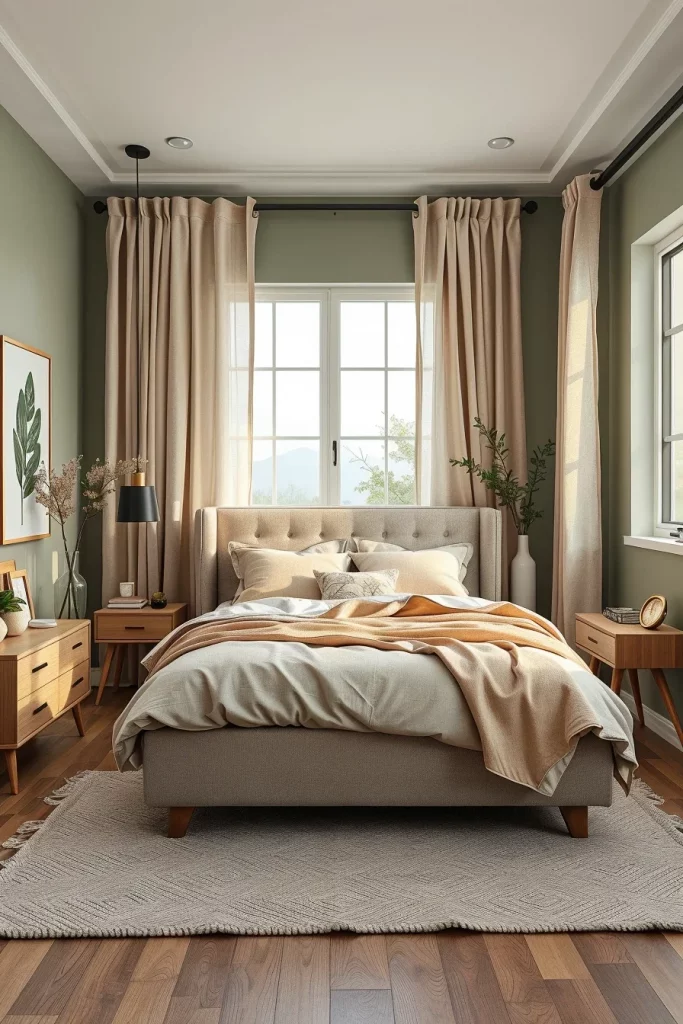
I usually select a low-profile bed in neutral upholstery, simple bedside cabinets, and woven-texture accessories for this design. Sand-colored bedding layered with sage throw blankets creates subtle contrast. I also like adding soft curtains, textured rugs, and understated decorative objects to maintain the room’s serene character.
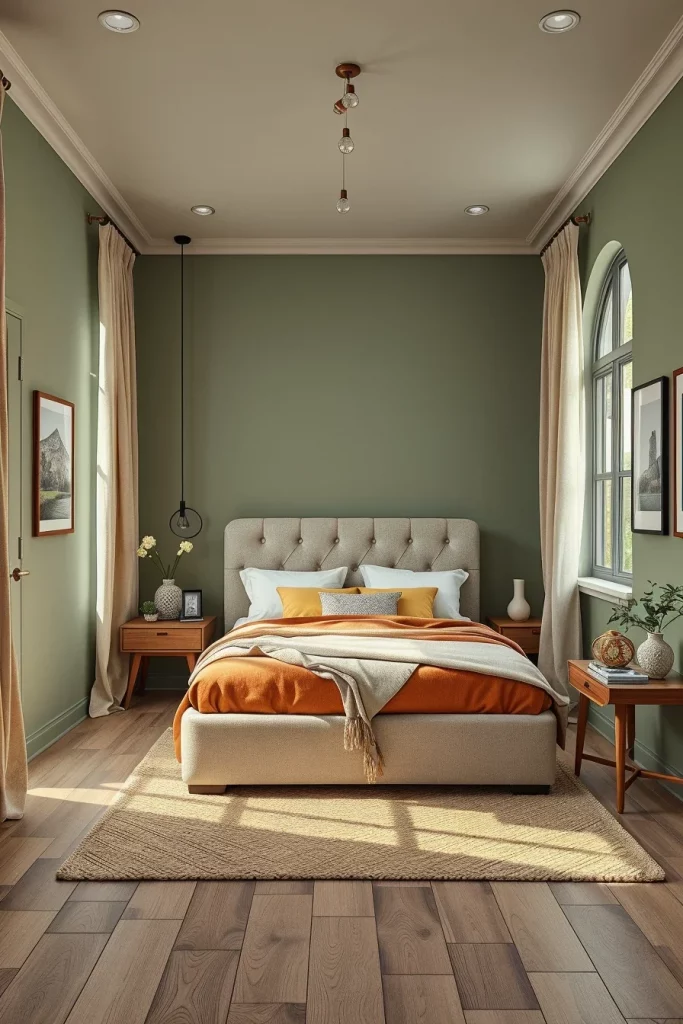
In my opinion, sage remains one of the most versatile bedroom colors because it pairs effortlessly with both contemporary and traditional furnishings. Designers frequently recommend muted greens for sleeping spaces due to their calming psychological effect, and I have consistently observed positive results when using them.
To further enhance this palette, I would include dimmable lighting and additional concealed storage solutions to preserve the room’s uncluttered appearance.
Artistic Terracotta And Clay Color Scheme For Cozy Bedrooms
An artistic terracotta and clay palette introduces warmth, personality, and depth into a small bedroom. I love this scheme because it creates an intimate atmosphere while still feeling refined and contemporary. Warm clay-colored walls paired with terracotta accents establish a cozy environment that feels welcoming throughout the year.
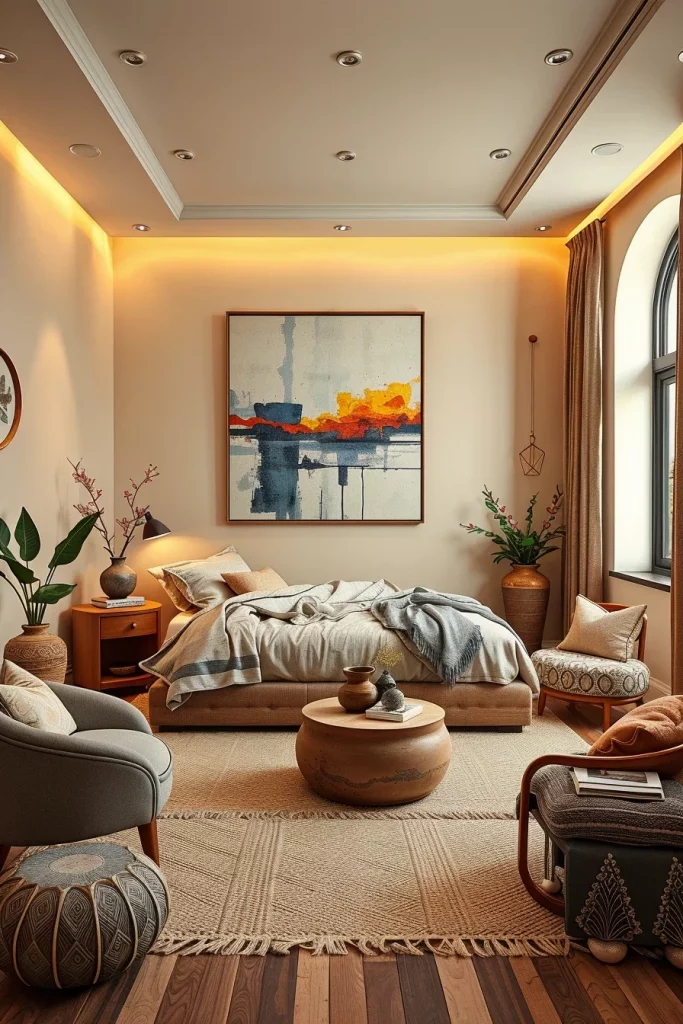
For furniture, I recommend a simple upholstered bed, streamlined storage pieces, and soft neutral textiles that balance the rich earthy shades. Curved furniture, textured ceramics, and layered fabrics reinforce the artistic character of the room. I also find that matte finishes work exceptionally well with these colors because they emphasize their natural richness.
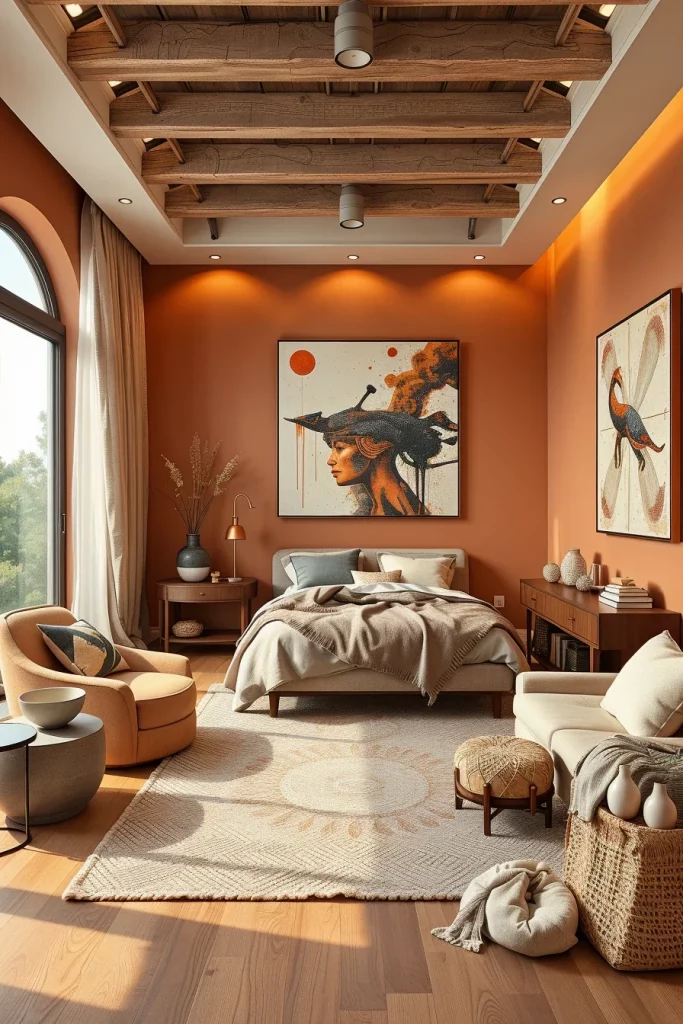
Personally, I enjoy incorporating handmade decorative accessories in terracotta spaces because they add authenticity and individuality. Interior publications such as Elle Decor frequently showcase earthy palettes paired with sculptural forms, demonstrating how these combinations can feel both current and timeless.
I would complete this bedroom with oversized abstract artwork and subtle accent lighting to emphasize the warmth and depth of the palette.
Moody Navy And Soft Beige Palette For Small Spaces
I often recommend a moody navy and soft beige palette to homeowners who want a bedroom with depth and sophistication. Although many people worry that dark colors will make a small room feel cramped, I have found that deep navy can actually create the illusion of expanded space when paired with warm beige tones. Navy introduces richness and character, while soft beige keeps the room balanced and welcoming.
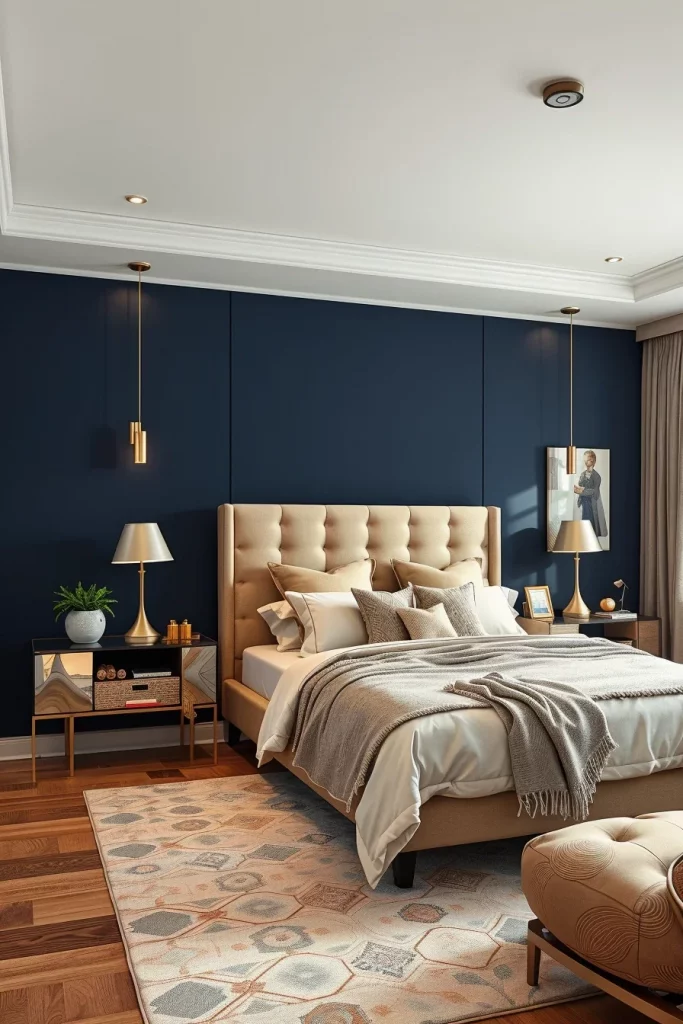
For furniture, I prefer a beige upholstered bed positioned against a navy accent wall. Light-toned nightstands, layered bedding in ivory and beige, and understated area rugs help soften the intensity of the darker shade. I also suggest incorporating brushed metal lighting fixtures and simple window treatments to maintain a refined, contemporary aesthetic without overcrowding the room.
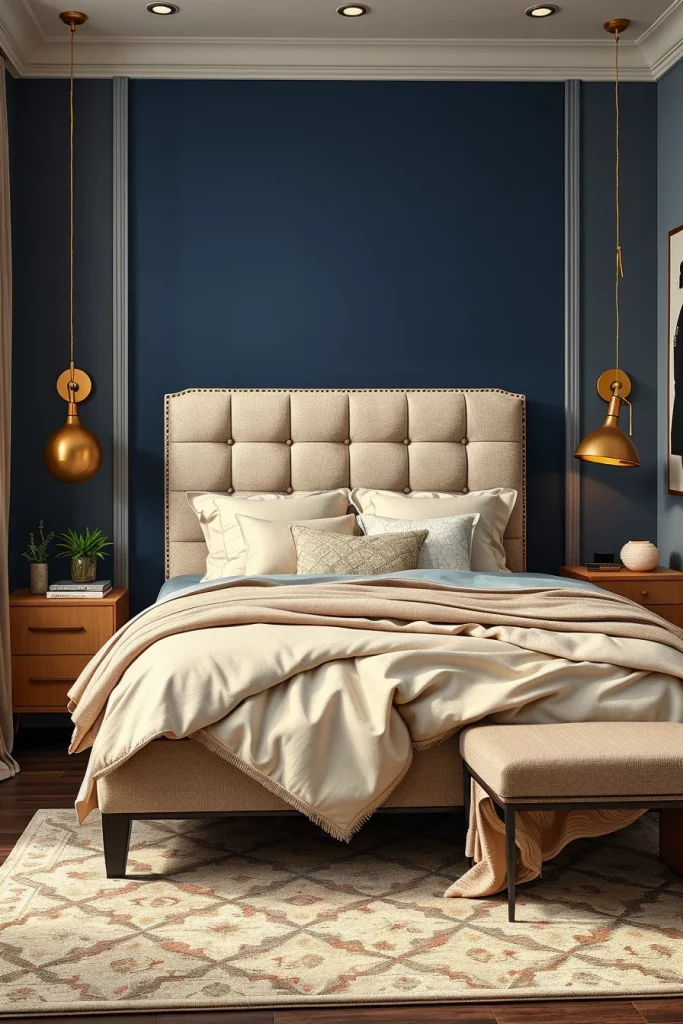
In my experience, navy remains one of the most versatile colors in interior design because it pairs beautifully with numerous finishes and materials. Designers featured in House Beautiful often recommend using dark colors strategically rather than excessively, and I completely agree with this principle in compact bedrooms.
To make this palette even more functional, I would add concealed storage furniture and layered lighting, including bedside sconces and ceiling fixtures, to ensure the room remains bright and practical.
Lavender Gray And Ivory Bedroom Color Combination
Lavender gray and ivory create a serene and elegant bedroom palette that feels both fresh and timeless. I appreciate this combination because it introduces subtle color without overpowering a small room. Lavender gray offers a gentle softness, while ivory brightens the space and reflects natural light beautifully.
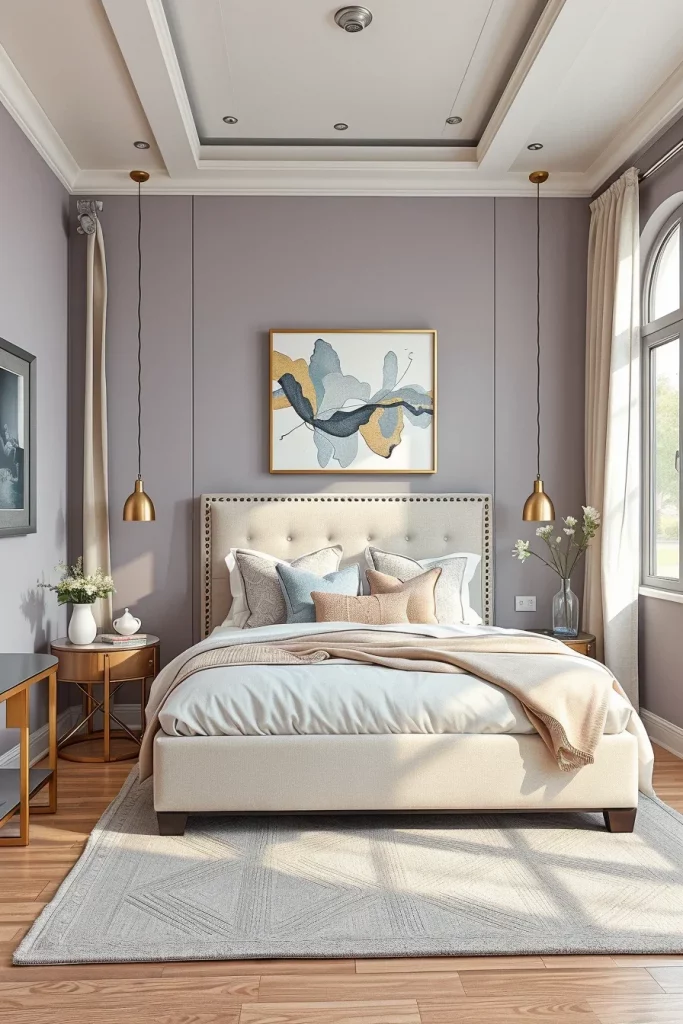
I usually select an ivory upholstered bed, streamlined nightstands, and layered textiles featuring soft gray and lavender accents. Textured bedding, elegant curtains, and understated decorative accessories help establish a cohesive look. I also like incorporating soft metallic finishes, such as brushed nickel or antique brass, because they complement the palette without dominating it.
Personally, I find that this color scheme works exceptionally well in bedrooms designed for relaxation. Soft purple undertones have long been associated with calm and comfort, making them particularly suitable for sleeping spaces. I often recommend this palette to clients seeking an alternative to traditional neutrals.
What I would add to this room is a statement pendant light and oversized artwork featuring abstract lavender and ivory tones to enhance visual interest.
Sculptural Black And Taupe Palette For A Dramatic Small Bedroom
A sculptural black and taupe palette creates one of the most stylish and unusual looks for a compact bedroom. I love using this combination because it brings dramatic contrast while maintaining sophistication. Taupe softens the intensity of black, allowing the room to feel inviting rather than overwhelming. In small spaces, carefully balanced dark accents can create a striking sense of depth.
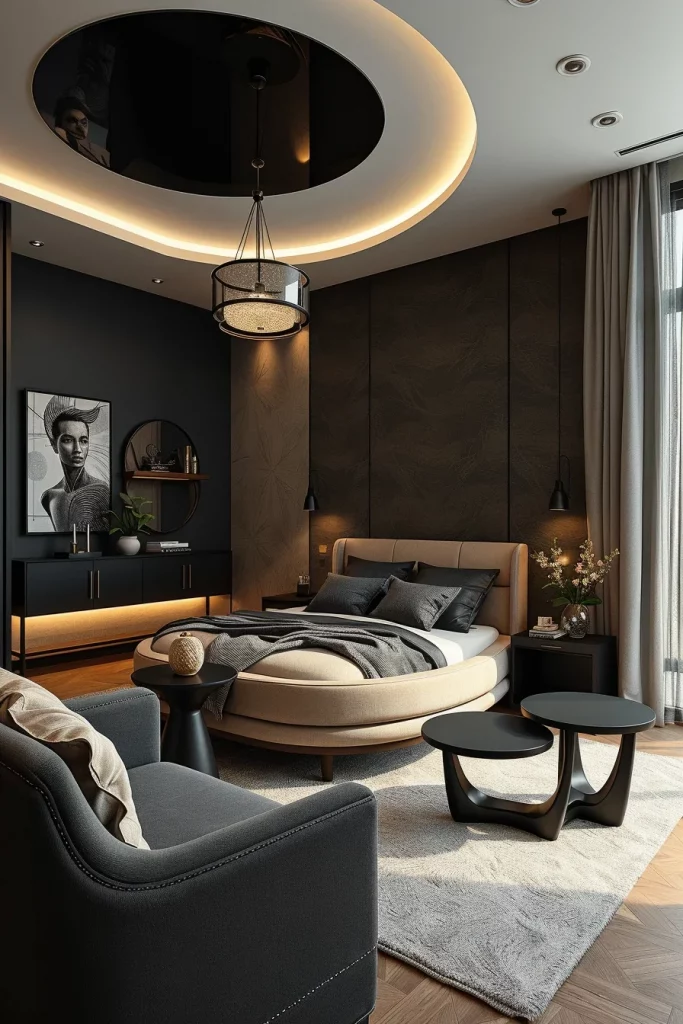
When designing with this palette, I favor furniture with curved silhouettes and architectural forms. A taupe upholstered bed with rounded edges, black accent tables, sculptural lighting, and minimalist storage pieces work particularly well together. Layered textiles in varying shades of taupe add warmth, while matte black details provide definition and visual structure.
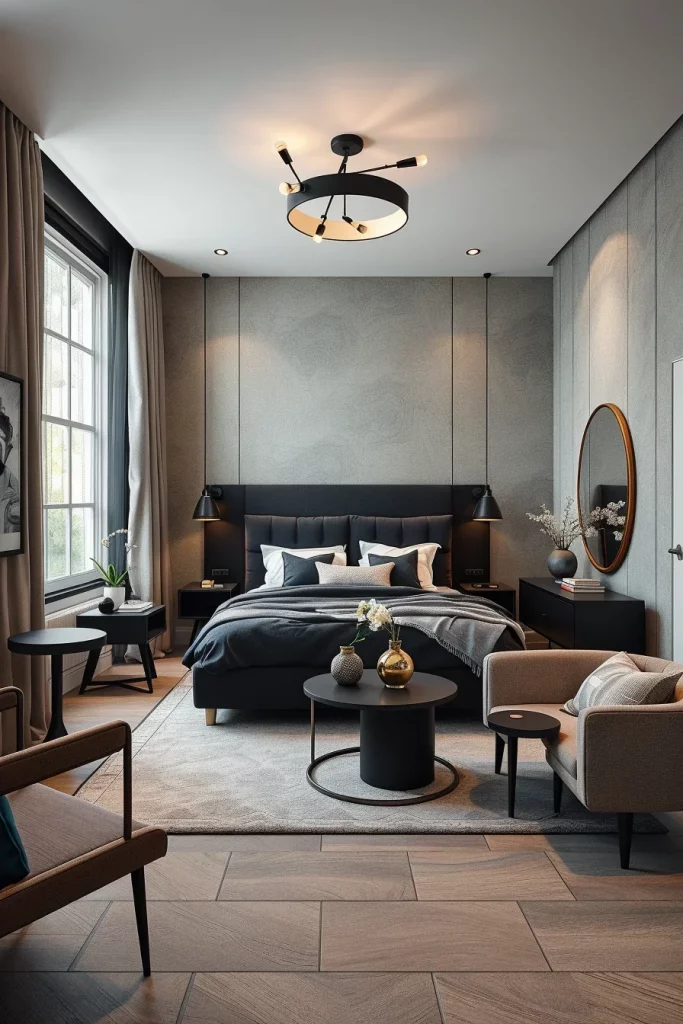
In my opinion, the success of this palette depends heavily on lighting. I have noticed that rooms featuring dark tones feel significantly more comfortable when illuminated by multiple light sources. Many contemporary designers recommend combining ambient, task, and accent lighting, and I consistently follow this strategy.
I would also introduce textured wall finishes or large-scale artwork to emphasize the room’s sculptural quality and prevent the space from appearing overly monochromatic.
Muted Olive And Warm Stone Color Palette Ideas
Muted olive and warm stone tones create a grounded and sophisticated atmosphere in small bedrooms. I frequently use this palette because it combines earthy richness with understated elegance. Olive introduces depth and personality, while warm stone shades maintain openness and ensure the room feels airy.
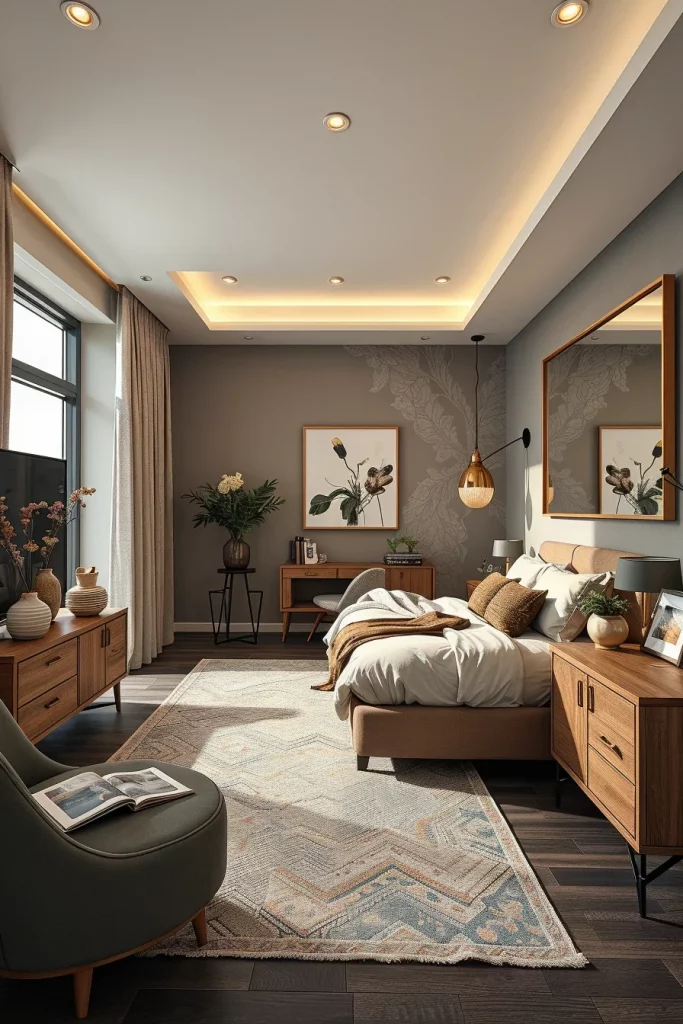
For furnishings, I recommend a warm stone upholstered bed, simple bedside tables, and soft textiles featuring subtle olive accents. Layered bedding, textured rugs, and ceramic accessories contribute warmth and character. I also like incorporating natural textures and soft lighting to enhance the welcoming atmosphere of the room.
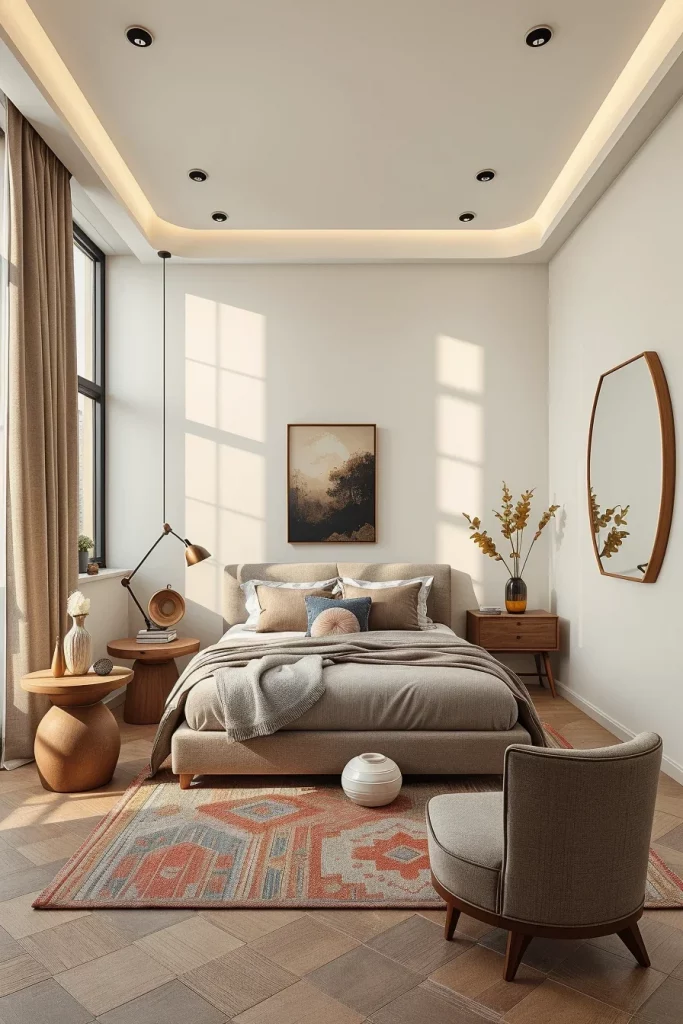
From my experience, muted olive works particularly well when paired with warm neutrals because it feels contemporary without becoming trend-dependent. This palette offers a refined alternative to traditional gray or beige interiors while remaining highly adaptable.
To complete the design, I would add oversized mirrors and integrated storage solutions to maximize both light and functionality within the limited space.
Stylish Peach And Soft Caramel Bedroom Color Inspiration
A stylish peach and soft caramel palette offers a unique and inviting approach to decorating a small bedroom. I enjoy working with these colors because they create warmth and softness while still feeling modern. Peach introduces subtle freshness, while caramel adds richness and depth, resulting in a balanced and welcoming environment.
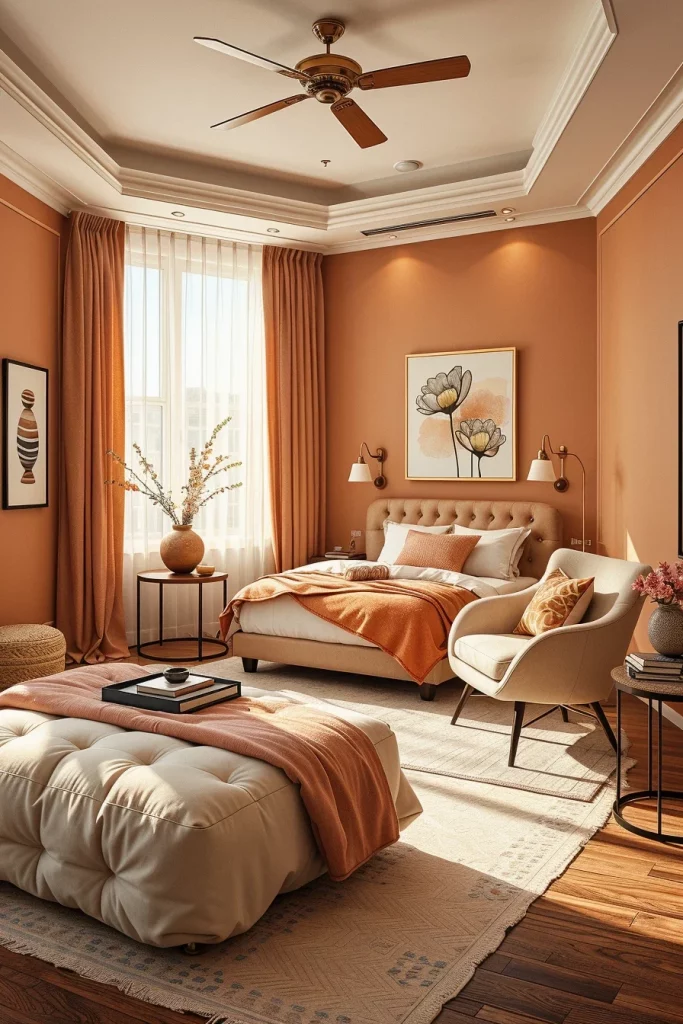
I usually pair these shades with an upholstered bed, light contemporary furniture, and layered textiles in complementary neutral tones. Soft caramel accent chairs, peach-toned bedding, textured rugs, and elegant lighting fixtures help establish a cohesive design. I also recommend incorporating curved furniture pieces to reinforce the room’s soft and welcoming atmosphere.
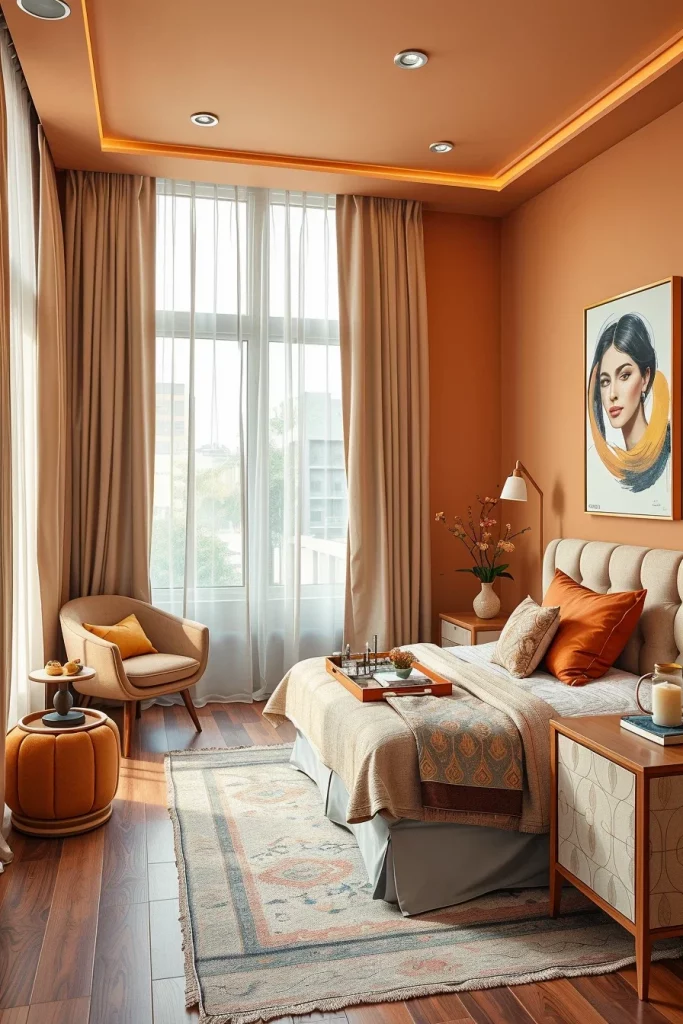
Personally, I find that peach-based palettes can make compact bedrooms feel significantly more cheerful and comfortable. When used thoughtfully, these tones create a cozy retreat without overwhelming the limited square footage. Soft warm shades continue to appear in contemporary interiors because they offer versatility and enduring appeal.
I would finish this bedroom with abstract wall art, decorative ceramic accessories, and sheer curtains to maximize natural light and emphasize the room’s warm character.
Unusual Teal And Mocha Color Palette For Compact Bedrooms
I find that teal and mocha create one of the most unusual yet balanced combinations for a compact bedroom. Teal introduces depth and personality without overwhelming the room, while mocha softens the overall atmosphere with warmth. In a small bedroom, I prefer using teal as an accent wall behind the bed and layering mocha through textiles and furnishings. This combination feels contemporary, inviting, and visually rich while maintaining a cozy scale.
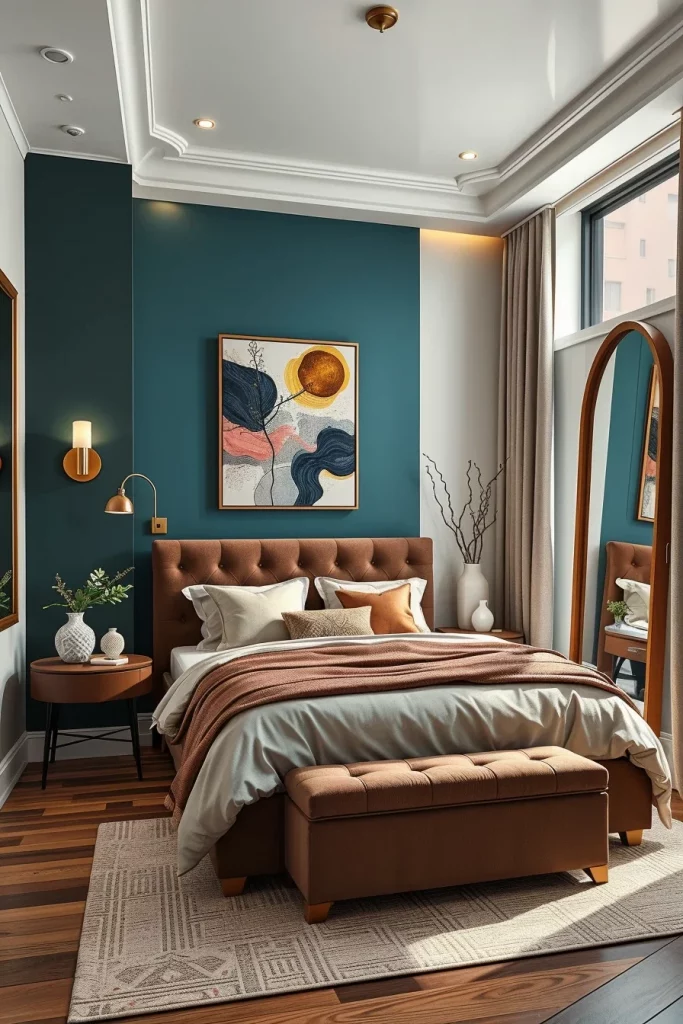
For furniture, I recommend an upholstered mocha bed frame, streamlined nightstands, and soft cream bedding to lighten the palette. Brass lighting fixtures pair exceptionally well with teal, adding subtle sophistication. I also like incorporating textured throws, abstract artwork, and a plush area rug to create visual interest without cluttering the room. Full-height curtains in a warm neutral shade help elongate the walls and make the space appear taller.
In my experience, designers frequently emphasize balancing saturated colors with lighter surfaces in small spaces. Publications such as Architectural Digest often recommend grounding bold wall colors with neutral furnishings to prevent visual heaviness. I have found this advice particularly effective when working with teal.
To complete this palette, I would add sculptural ceramic accessories, layered lighting, and a large mirror opposite a window to maximize natural light and enhance spaciousness.
Artistic Burgundy And Blush Tones For Elegant Small Bedrooms
An artistic pairing of burgundy and blush instantly elevates a small bedroom. Burgundy introduces richness and sophistication, while blush softens the scheme and prevents the room from feeling enclosed. I like using blush on walls or textiles while reserving burgundy for accent pieces, upholstered furniture, or decorative details.
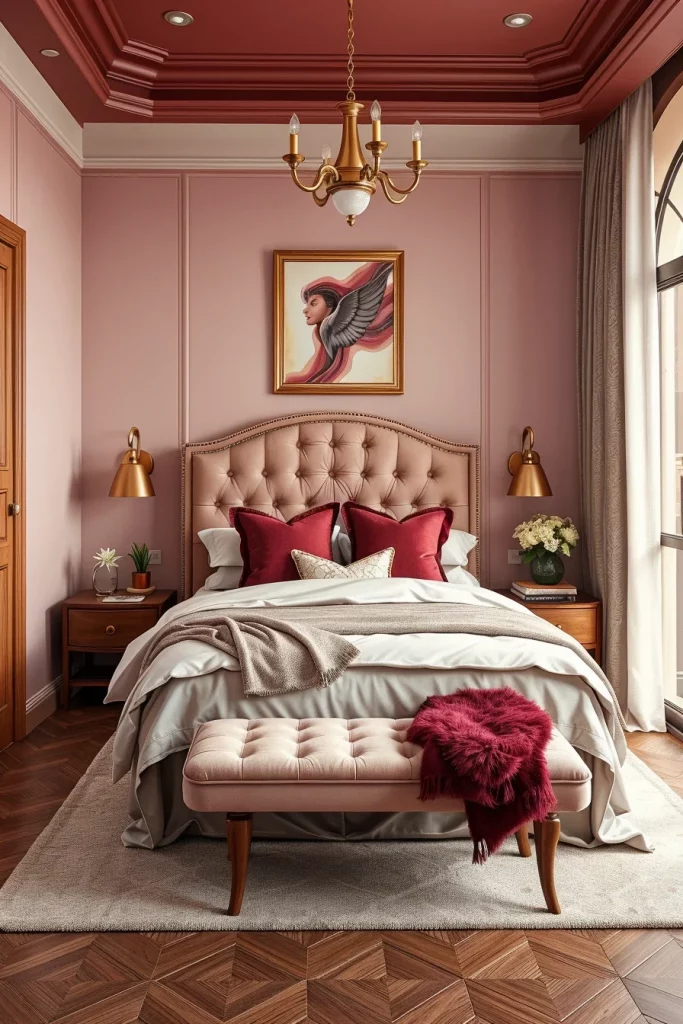
A tufted blush headboard becomes a natural focal point in this design. I often include slim bedside tables, brass sconces, soft linen curtains, and layered bedding featuring both shades. A velvet bench at the foot of the bed adds elegance without taking up excessive visual space. Minimal decor and clean-lined furniture ensure the room remains open and airy.
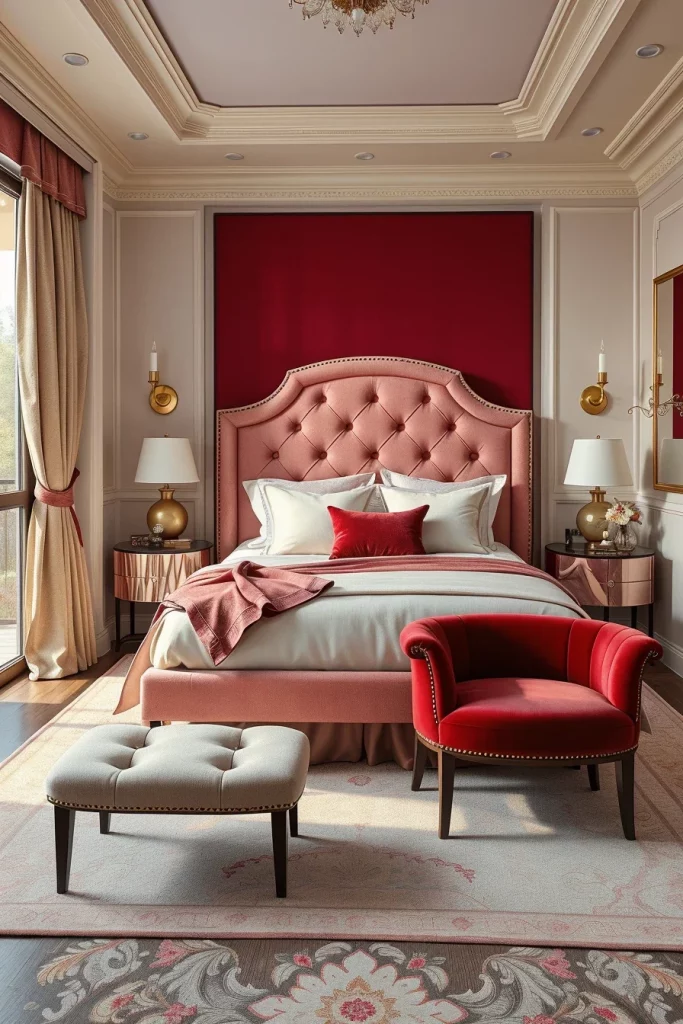
Personally, I appreciate how this palette creates a boutique hotel atmosphere in compact interiors. Many interior designers featured in Elle Decor recommend incorporating multiple textures when working with rich hues, and I agree completely. Velvet, linen, boucle, and matte finishes provide depth without requiring additional color.
What is often missing in this palette is sufficient ambient lighting. I recommend incorporating wall sconces, table lamps, and concealed LED lighting to soften the dramatic tones and create balance.
Cream, Cinnamon, And Coffee Layered Color Palette
A layered palette of cream, cinnamon, and coffee creates an inviting retreat that feels timeless and comforting. I often recommend this combination to homeowners seeking warmth without sacrificing brightness. Cream keeps the room visually open, while cinnamon and coffee introduce subtle contrast and depth.
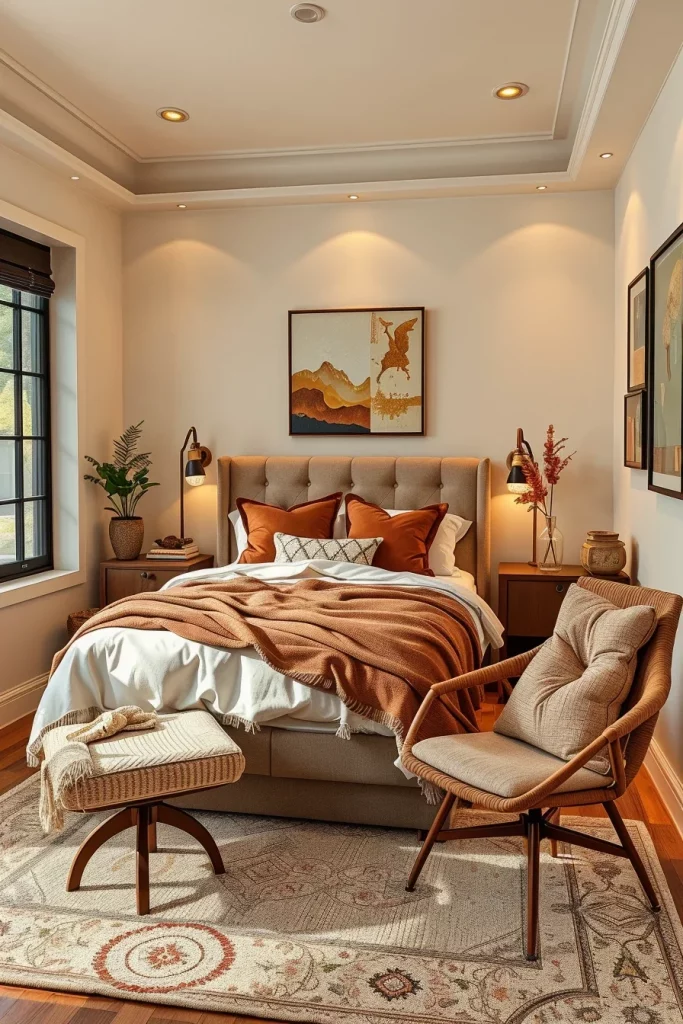
I prefer starting with cream walls and bedding as the foundation. A coffee-toned upholstered bed, cinnamon accent pillows, woven textiles, and warm wood-inspired finishes create cohesion throughout the room. A comfortable reading chair in a cinnamon shade can also add character without overwhelming the layout. Soft lighting with warm bulbs enhances the cozy atmosphere.
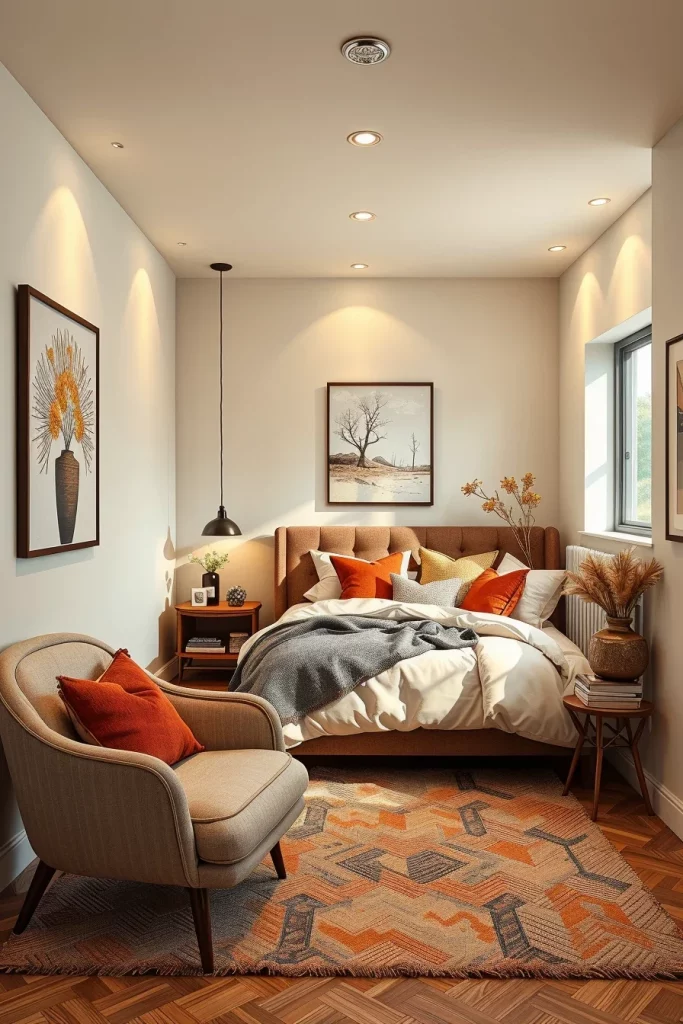
From my perspective, this palette works exceptionally well because it relies on tonal variation rather than strong contrast. House Beautiful frequently highlights layered neutrals as an effective strategy for smaller rooms, and I have consistently seen positive results with this approach.
To further enrich this design, I would introduce textured wall panels, oversized artwork in earthy hues, and natural fiber rugs to add additional visual interest.
Sculptural Monochrome White Bedroom With Textural Depth
A sculptural monochrome white bedroom can make even the smallest room feel expansive. Rather than relying solely on color, this approach emphasizes shape, texture, and form. White surfaces reflect light beautifully, creating a fresh and airy environment that visually enlarges compact spaces.
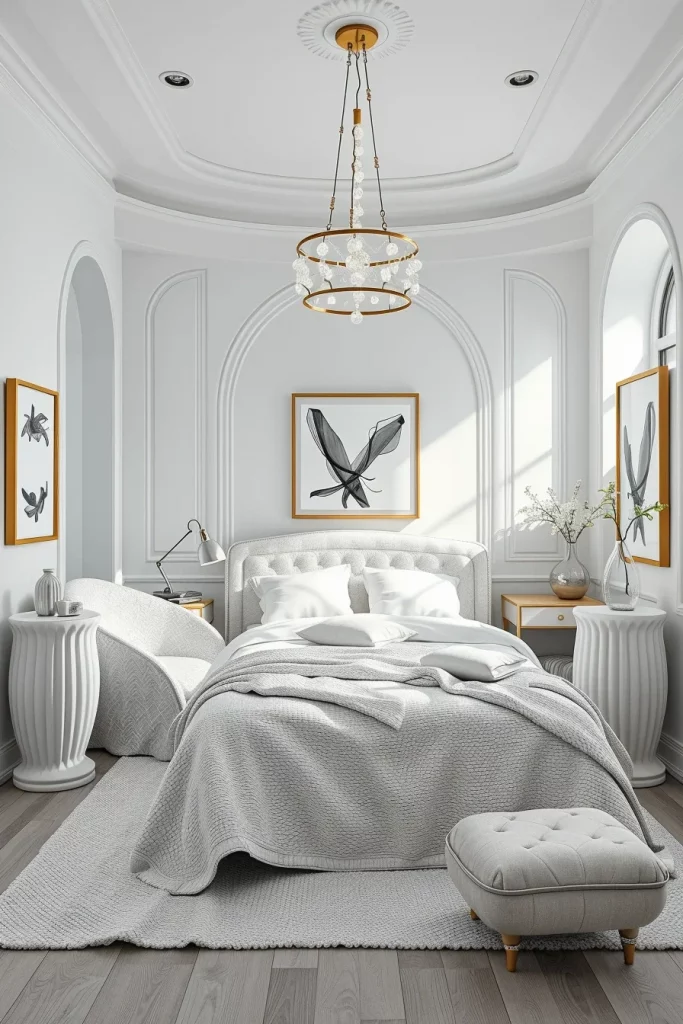
I like incorporating curved headboards, textured bedding, boucle chairs, ribbed nightstands, and layered fabrics to prevent the room from feeling sterile. Sculptural pendant lighting, fluted wall panels, and oversized abstract artwork contribute architectural interest while preserving the monochromatic aesthetic. Minimal furnishings help maintain an uncluttered appearance.
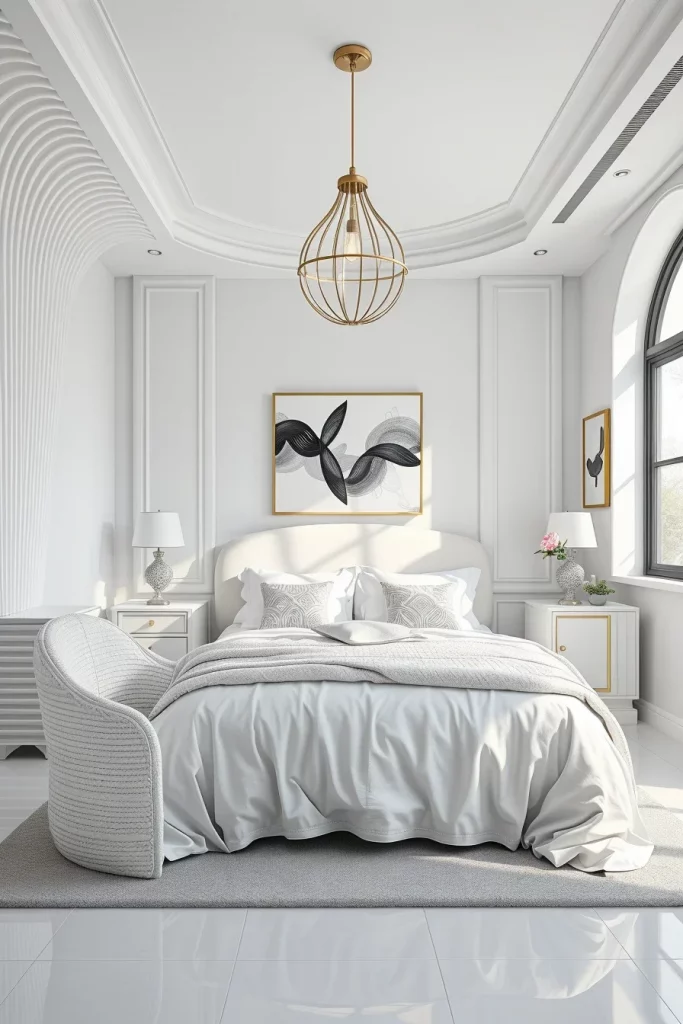
In my experience, successful monochrome interiors depend on variation in materials. Designers featured in Better Homes & Gardens often stress the importance of mixing textures in all-white rooms, and I strongly agree. Combining boucle, linen, plaster finishes, and matte surfaces results in a sophisticated, dynamic interior.
One addition I always recommend is strategic lighting. Layered illumination from ceiling fixtures, bedside lamps, and indirect LED lighting highlights the room’s textures and enhances its overall depth.
Misty Blue And Warm Gray Color Palette For Serenity
Misty blue paired with warm gray creates a calming retreat ideal for small bedrooms. This palette promotes relaxation while maintaining a sophisticated appearance. I often choose misty blue for walls because it reflects natural light softly and visually expands compact spaces. Warm gray introduces balance and understated elegance.
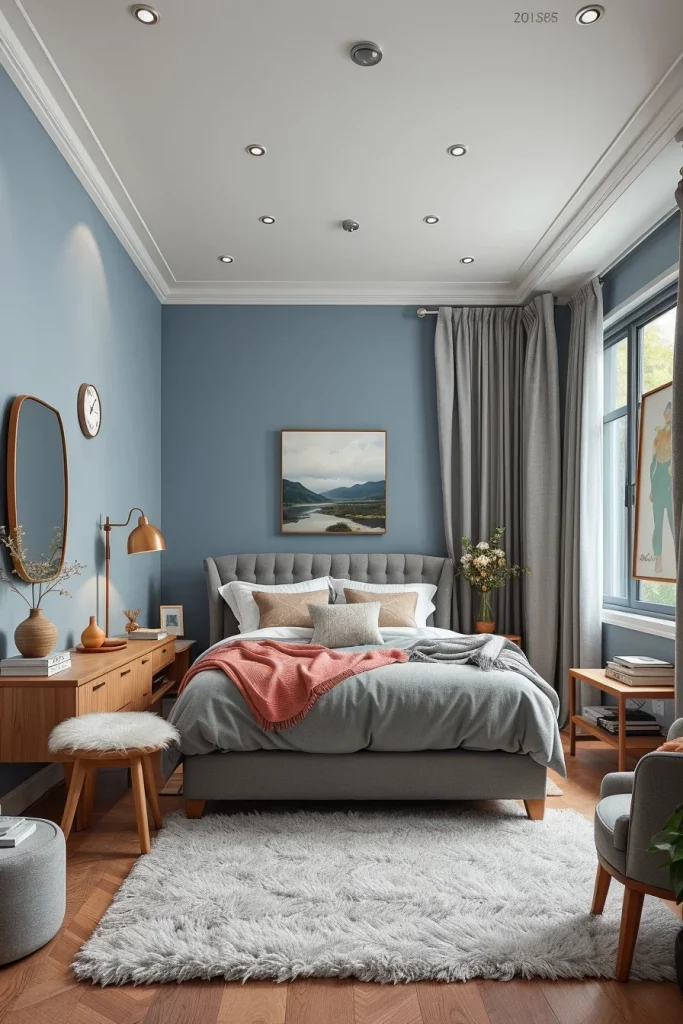
For furnishings, I recommend a gray upholstered bed, pale blue bedding, streamlined storage solutions, and soft textured curtains. Light oak accents and brushed nickel hardware complement the palette beautifully. I also like adding layered textiles, such as knitted throws and plush rugs, to increase comfort and warmth.
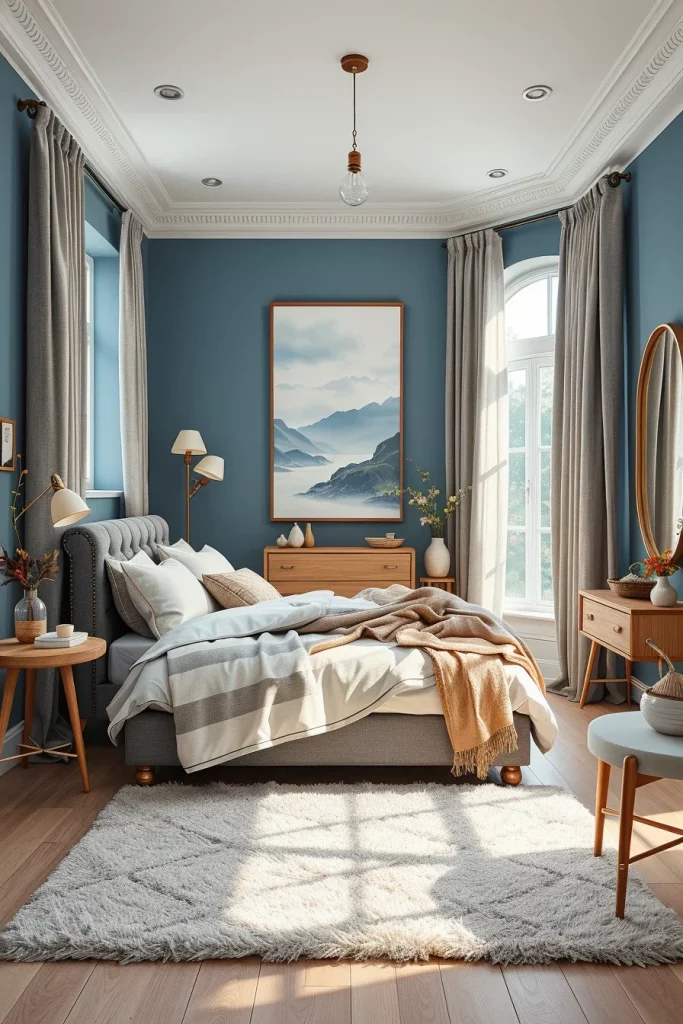
Personally, I find this combination particularly effective in bedrooms with limited natural light. According to many interior experts, soft blue tones support restful environments, making them an excellent choice for sleep spaces. I have repeatedly seen how this palette transforms small rooms into serene sanctuaries.
To complete this design, I suggest incorporating oversized mirrors, subtle artwork, and concealed storage solutions to maximize both functionality and visual openness.
Stylish Plum And Soft Beige Bedroom Color Story
Plum and soft beige create a remarkably stylish color story that brings depth and softness to a small bedroom simultaneously. I often recommend this palette to homeowners who want a sophisticated look without making a compact room feel enclosed. Soft beige serves as an airy backdrop, while plum introduces richness and visual interest. In smaller bedrooms, I prefer using plum strategically on accent walls, textiles, or decorative elements rather than throughout the entire space.
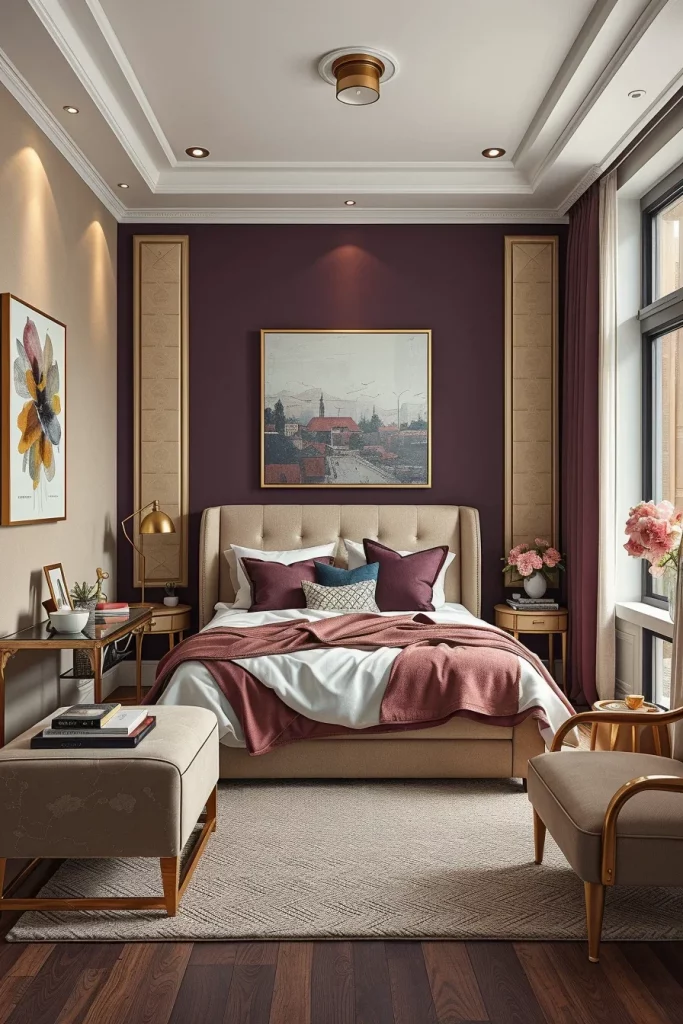
For furnishings, I suggest a beige upholstered platform bed paired with plum throw pillows and layered bedding. Light-toned nightstands, a streamlined dresser, and soft beige curtains maintain brightness throughout the room. I also like incorporating brushed gold lighting fixtures and abstract artwork featuring plum accents to unify the design. A textured area rug in neutral shades helps anchor the room while preserving openness.
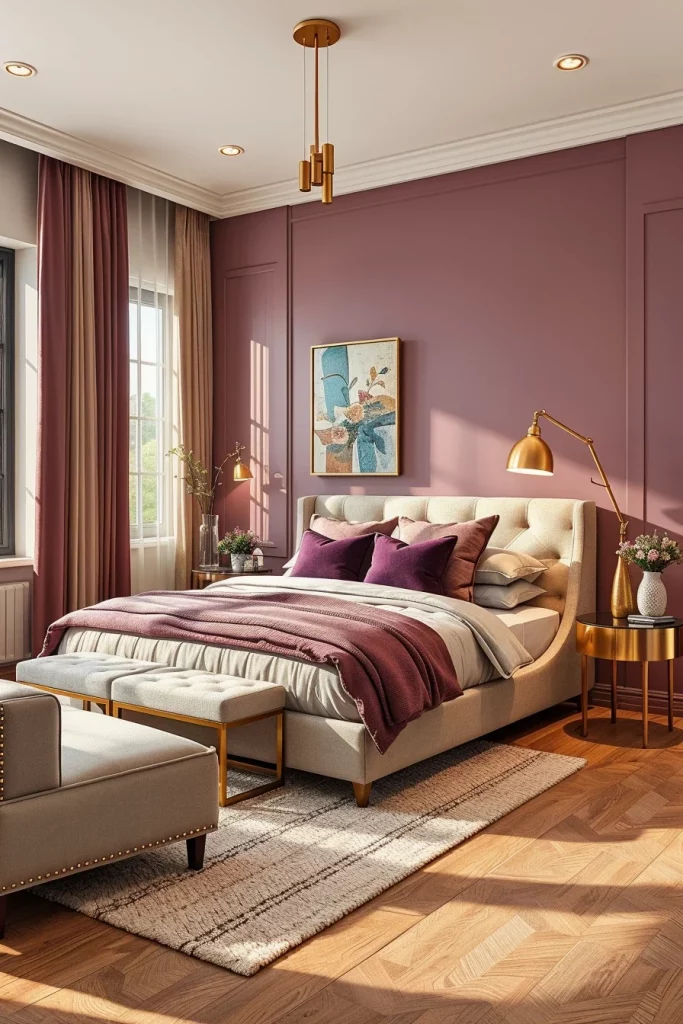
Personally, I find that plum works exceptionally well when balanced with warm neutrals. Interior designers frequently featured by HGTV often recommend introducing metallic accents alongside deep jewel tones to prevent interiors from feeling heavy. I have used this strategy in several projects, and it consistently creates a polished result.
To enhance this palette further, I would include a large mirror, subtle layered lighting, and sculptural accessories that reinforce the room’s elegant atmosphere.
Unusual Mustard And Greige Palette For Modern Small Bedrooms
An unusual mustard and greige palette offers a fresh interpretation of modern bedroom design. Mustard brings warmth and personality, while greige creates a sophisticated neutral foundation. I appreciate this combination because it feels contemporary yet welcoming, especially in compact spaces where warmth is essential.
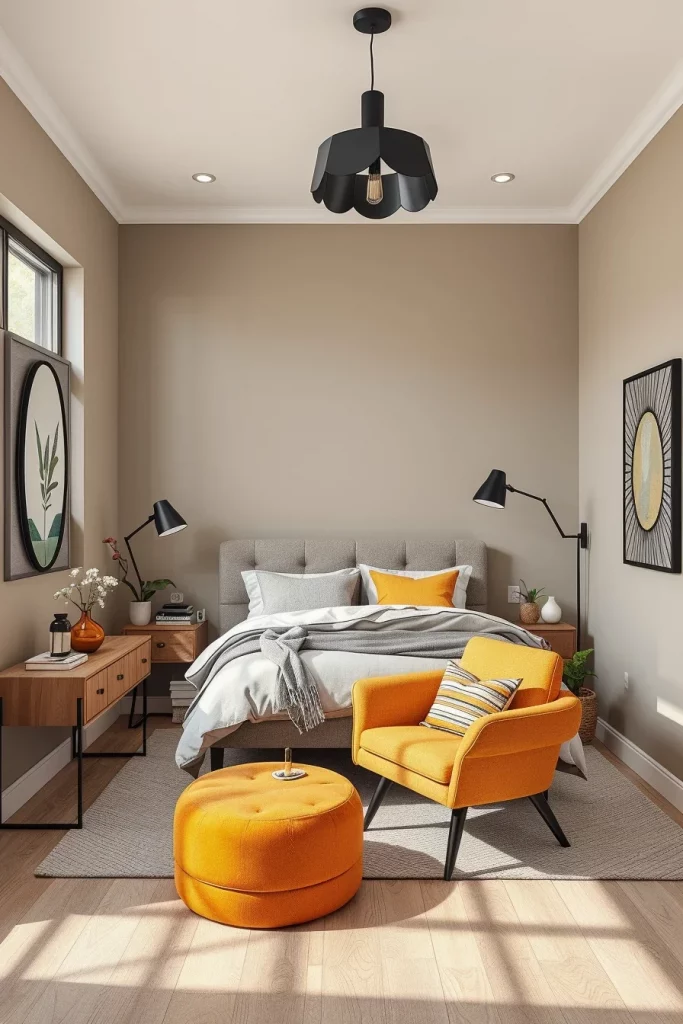
I usually begin with greige walls and introduce mustard through upholstered seating, bedding accents, or decorative accessories. A low-profile bed with clean lines, minimalist nightstands, and integrated storage furniture support a clutter-free layout. Black metal lighting fixtures and simple geometric artwork complement this palette beautifully. Soft textiles and layered curtains add comfort without overwhelming the room.
In my experience, mustard is most successful when used intentionally rather than excessively. Design publications such as Domino often encourage using bold shades as accents in small spaces, and I strongly agree with this approach. A carefully balanced color distribution allows mustard to energize the room without dominating it.
What I would add to complete this bedroom is additional texture through boucle fabrics, ribbed surfaces, and subtle wall treatments that enrich the overall design.
Artistic Forest Green And Linen Color Combination
The combination of forest green and linen creates an artistic and calming retreat for a small bedroom. Forest green introduces depth inspired by nature, while linen tones soften the overall appearance and maintain brightness. I often recommend this pairing for homeowners seeking a refined yet grounded aesthetic.
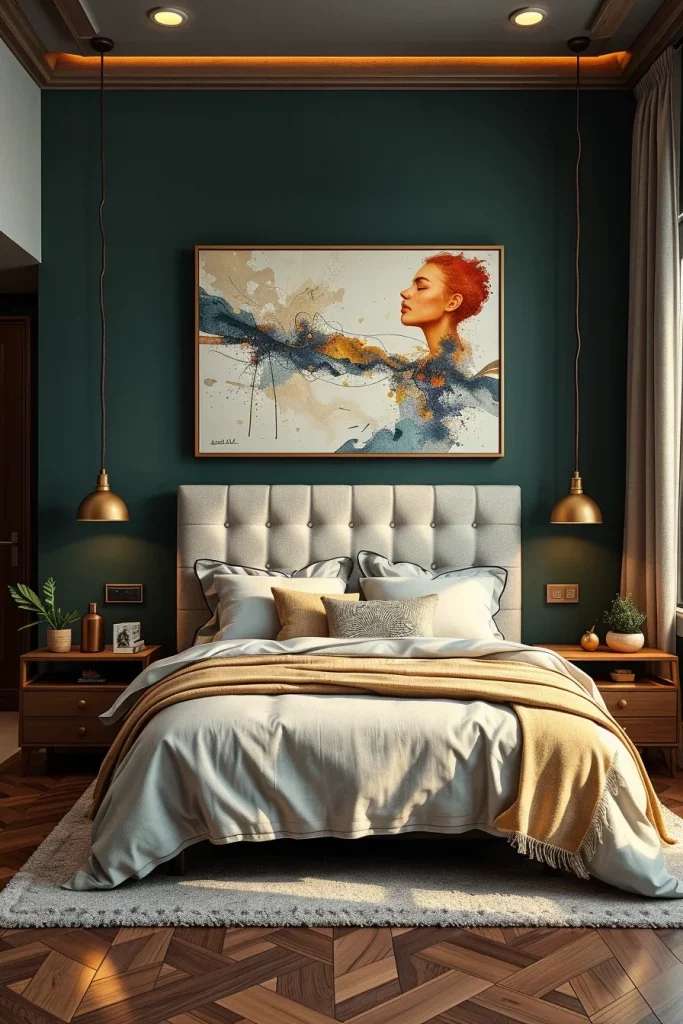
I prefer using forest green on a feature wall behind the bed while incorporating linen shades through upholstery, curtains, and bedding. A linen-covered headboard, floating nightstands, and warm wood-inspired furniture create balance throughout the room. Layered textiles, oversized artwork, and soft lighting contribute to an inviting atmosphere. Minimal decor ensures the bedroom remains visually spacious.
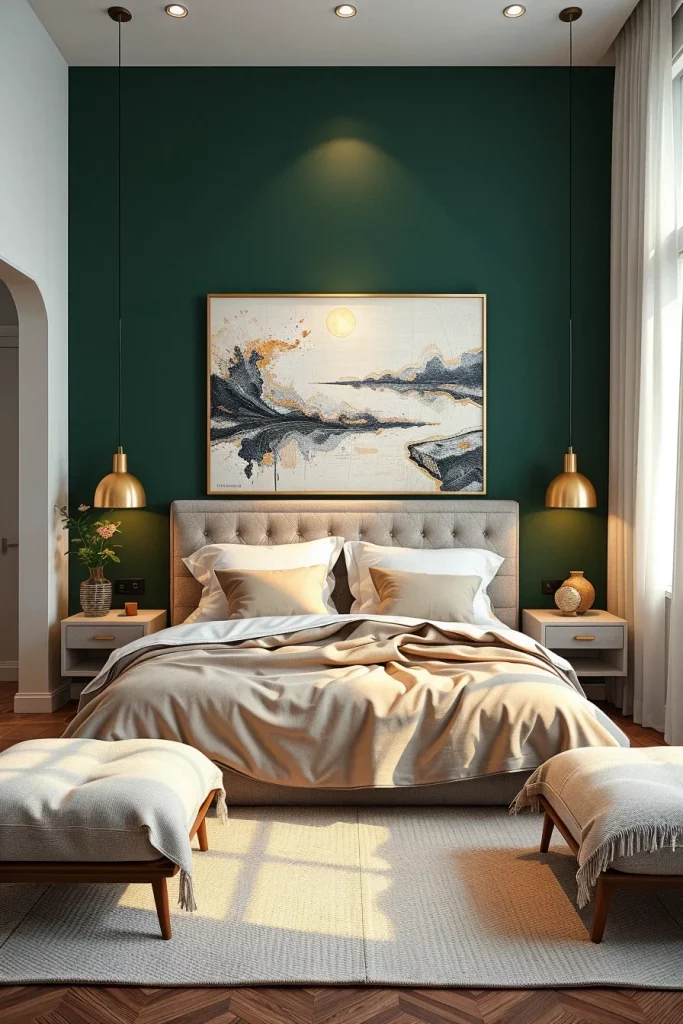
Personally, I appreciate how this palette promotes relaxation. According to many interior experts, green tones are associated with calmness and restoration, making them particularly suitable for sleep environments. I have repeatedly found that forest green creates a cocooning effect without making a small bedroom feel cramped.
To strengthen this design, I would introduce additional indirect lighting and subtle sculptural decor pieces that enhance the room’s sophisticated character.
Chocolate Brown And Soft Ivory Palette For A Rich Look
Chocolate brown and soft ivory create a luxurious yet highly practical palette for compact bedrooms. The richness of chocolate brown adds warmth and intimacy, while ivory prevents the room from feeling too dark. I often suggest this combination to readers who want a dramatic atmosphere while preserving visual balance.
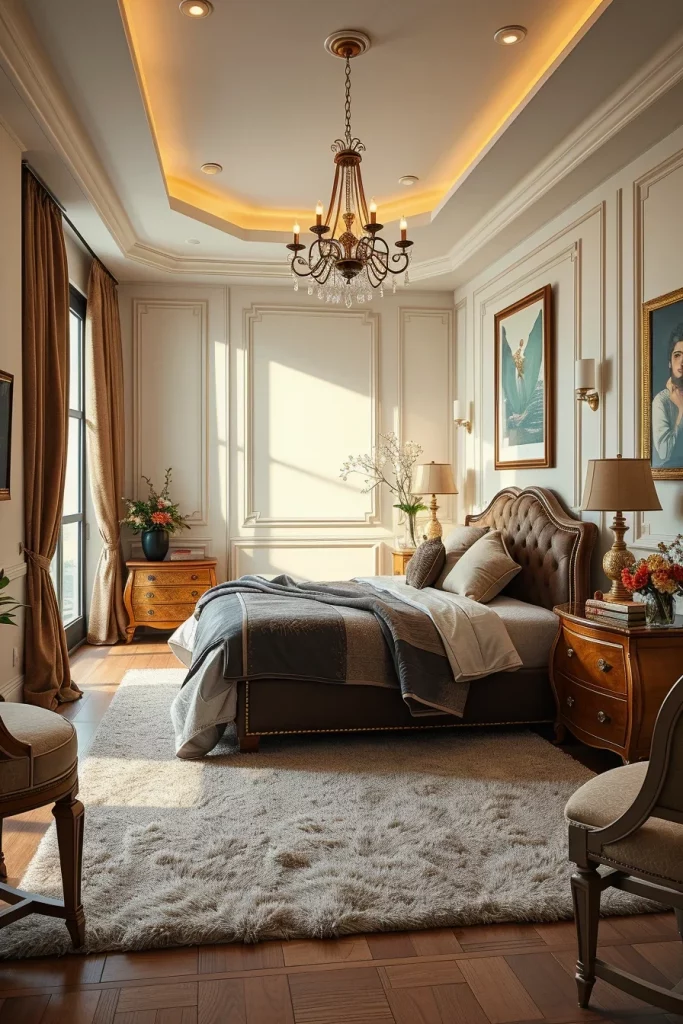
I recommend ivory walls paired with a chocolate brown upholstered bed or accent furniture. Soft ivory bedding, layered throws, and textured curtains keep the room feeling bright. Sleek bedside tables, warm metallic lighting, and understated artwork complete the design. A plush rug introduces additional comfort and helps define the sleeping area.
From my perspective, this palette succeeds because it balances contrast with softness. Many designers featured in House Beautiful advise layering lighter textiles when using deep tones, and I consistently apply this principle in small bedrooms. It helps maintain openness while still delivering richness.
I would also incorporate concealed storage solutions and reflective surfaces to maximize functionality and amplify natural light within the room.
Sculptural Taupe And Graphite Bedroom Color Palette
A sculptural taupe and graphite palette offers a refined, architectural look ideal for contemporary small bedrooms. Taupe softens the space, while graphite introduces contrast and structure. I often recommend this palette for minimalist interiors because it feels sophisticated without relying on excessive decoration.
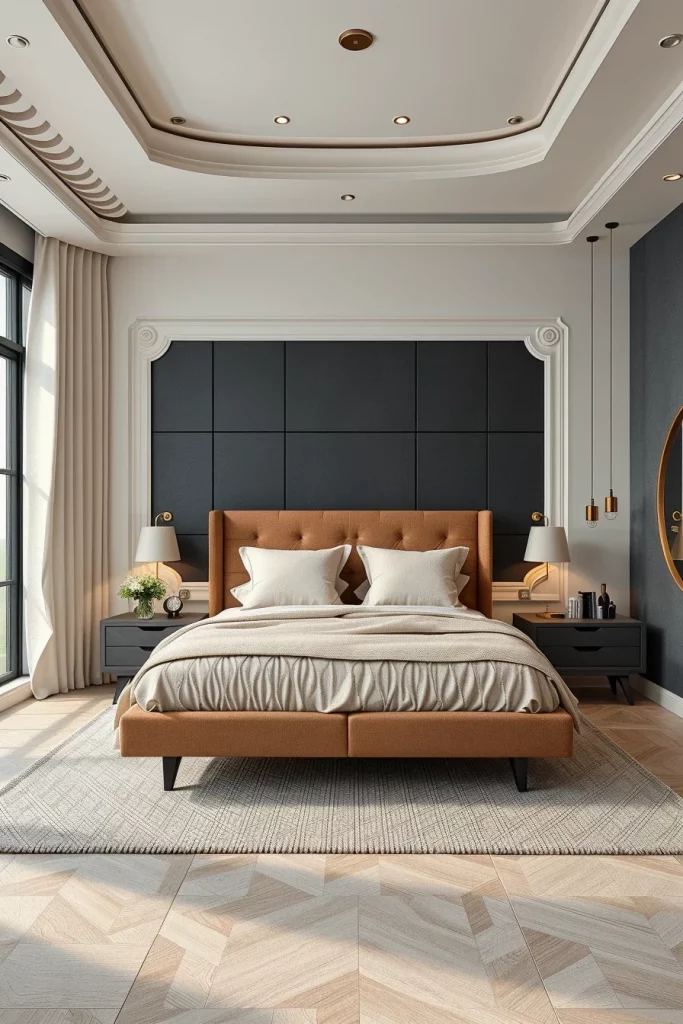
For furniture, I favor a taupe upholstered bed with graphite accent walls or built-in storage. Floating nightstands, sculptural lighting fixtures, and streamlined wardrobes reinforce the modern aesthetic. Layered bedding in tonal neutrals, textured wall finishes, and oversized abstract artwork create depth while maintaining visual simplicity. Clean lines are essential to preserving spaciousness in a compact room.
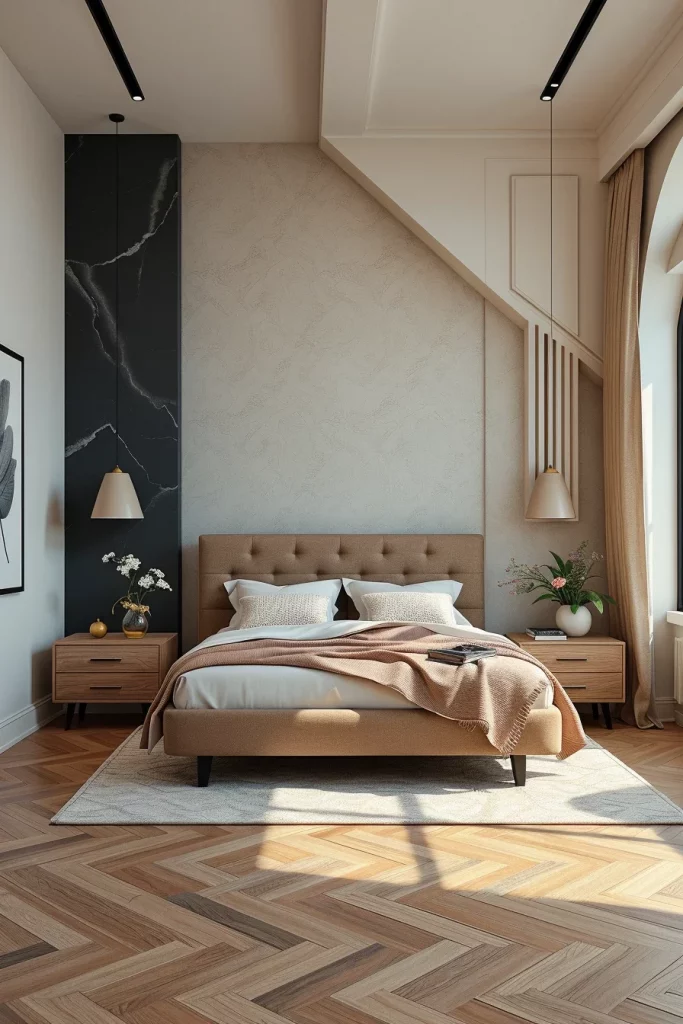
In my experience, the success of this palette depends on texture rather than color variation. Architectural Digest frequently highlights the importance of combining tactile materials in neutral interiors, and I fully agree. Boucle fabrics, matte finishes, and fluted surfaces add dimension and prevent monotony.
To complete this design, I would add indirect LED lighting, large-scale mirrors, and carefully selected sculptural accessories that emphasize the room’s architectural qualities.
Warm Coral And Sandy Beige Palette For A Cheerful Atmosphere
I find that warm coral paired with sandy beige creates one of the most welcoming and uplifting color palettes for a small bedroom. Coral introduces energy without overwhelming the room, while sandy beige softens the overall effect and visually enlarges the space. In smaller rooms, I recommend using sandy beige on the walls and larger surfaces, allowing coral to appear through textiles and accent details. This combination works especially well in modern interiors that prioritize warmth and comfort.
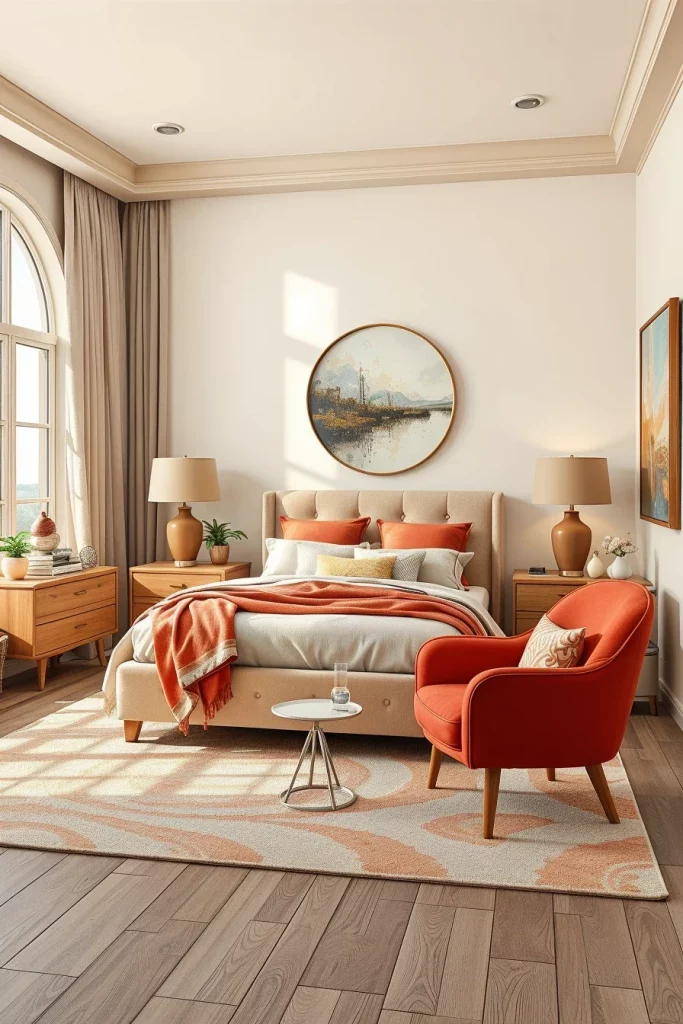
For furniture, I prefer a low-profile upholstered bed in beige fabric, paired with streamlined nightstands in light oak finishes. A curved accent chair in muted coral adds personality while maintaining visual softness. Layered bedding featuring beige, cream, and subtle coral tones creates depth without cluttering the room. I also recommend incorporating sculptural ceramic lamps and textured rugs to make the design feel more refined.
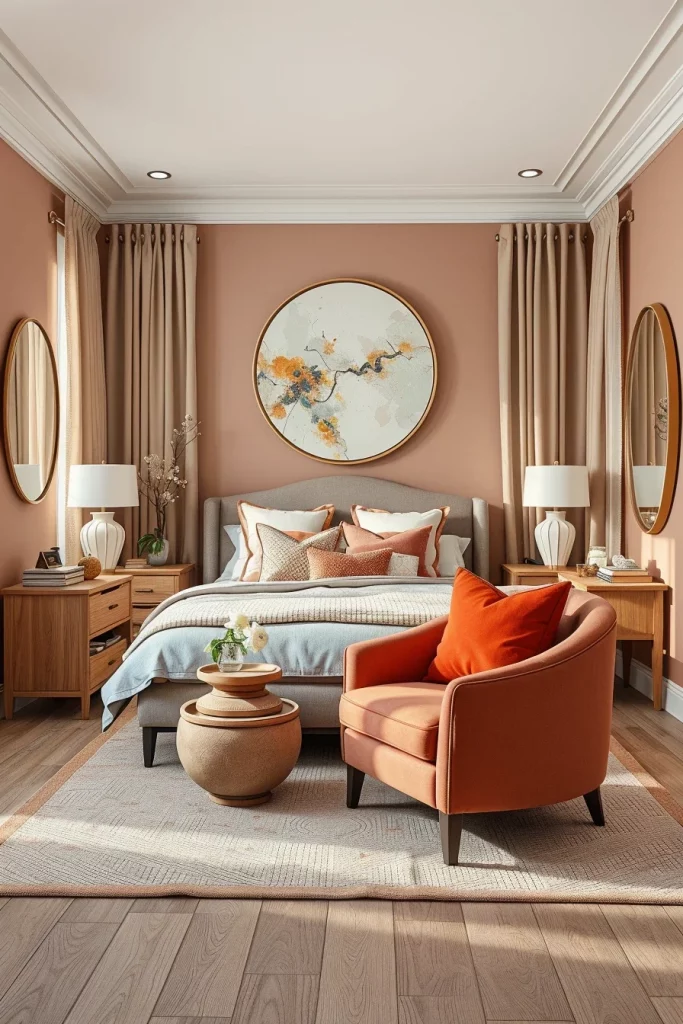
Personally, I often suggest this palette to homeowners who want their bedroom to feel cheerful year-round. Designers at publications such as Architectural Digest frequently emphasize the importance of warm neutrals in creating timeless interiors, and I agree that sandy beige provides an excellent foundation for evolving decor styles.
To complete this design, I would add sheer linen curtains, a large round mirror to reflect natural light, and a few abstract artworks featuring coral accents to reinforce the palette.
Soft Lilac And Warm White Small Bedroom Design
Soft lilac and warm white create an elegant, serene atmosphere that feels especially effective in compact bedrooms. I like using warm white as the dominant wall color because it reflects light beautifully, while soft lilac introduces subtle color without visually shrinking the room. This palette feels calm, sophisticated, and highly versatile.
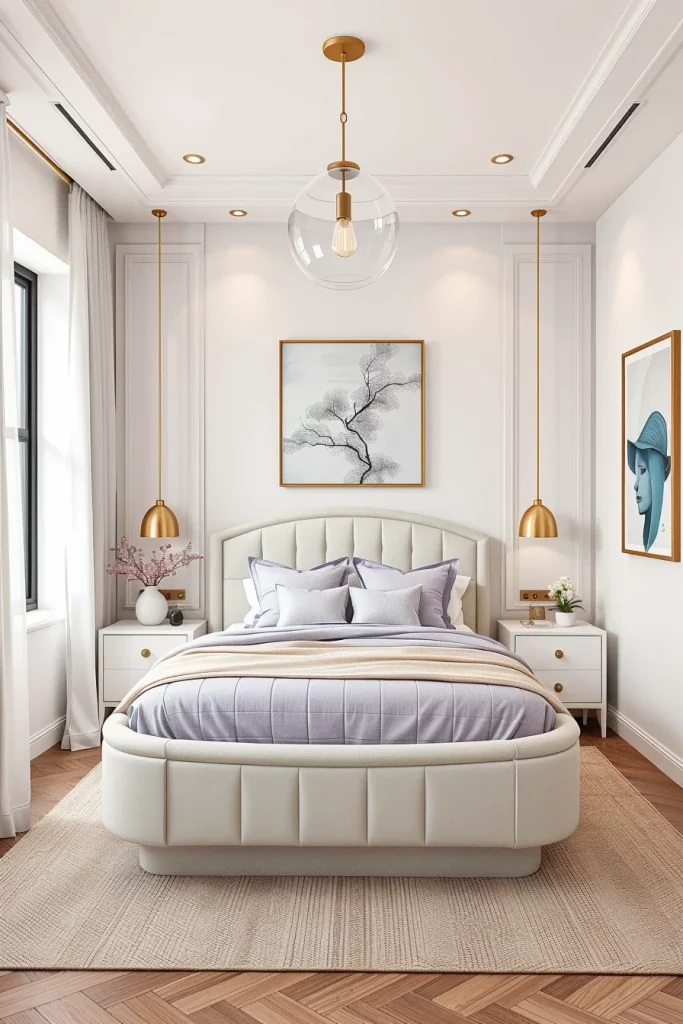
I usually pair this color scheme with an upholstered bed featuring a softly curved headboard in warm ivory fabric. Minimal bedside tables, integrated storage solutions, and floating shelves help preserve valuable floor space. Soft lilac bedding, layered throws, and plush accent pillows contribute additional texture while maintaining a light visual appearance. Sculptural pendant lights further enhance the modern aesthetic.
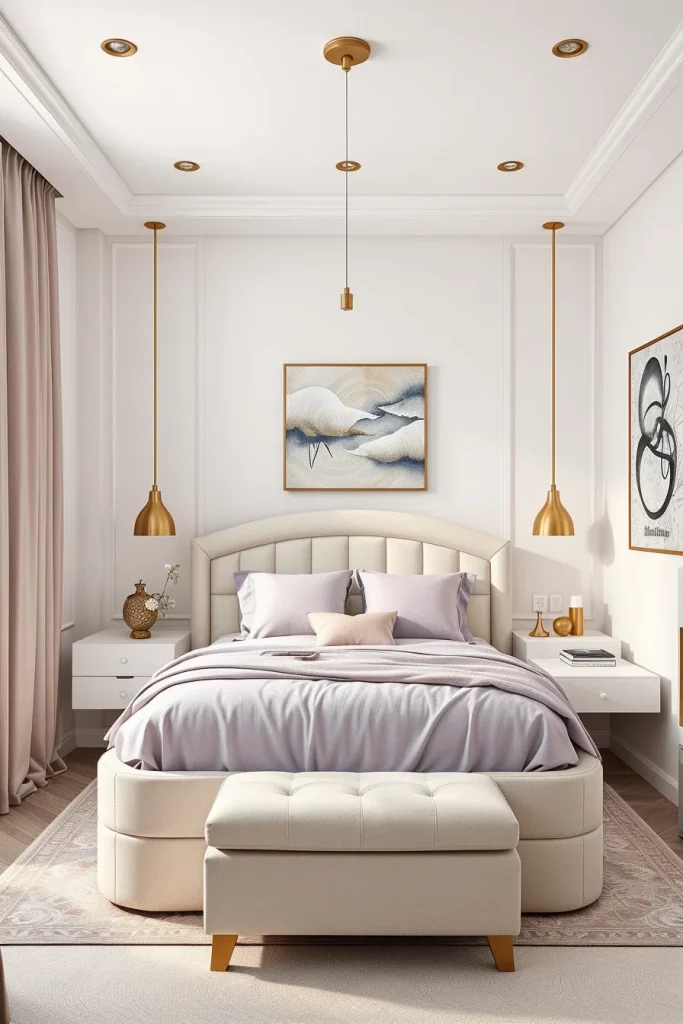
In my experience, this palette works exceptionally well for readers seeking a restful retreat. Many interior designers featured in Elle Decor recommend soft purple tones for bedrooms because they promote relaxation while still adding character. I appreciate how lilac feels distinctive without becoming overwhelming.
I would also include subtle metallic accents in brushed brass, along with floor-to-ceiling curtains and textured wall art, to create additional dimension within the space.
Artistic Rust And Oatmeal Color Palette For Contemporary Bedrooms
An artistic rust and oatmeal palette introduces richness and depth while maintaining a balanced, contemporary atmosphere. I often recommend oatmeal tones for walls because they provide a soft neutral backdrop, allowing rust accents to become focal points. In small bedrooms, this combination feels sophisticated and surprisingly cozy.
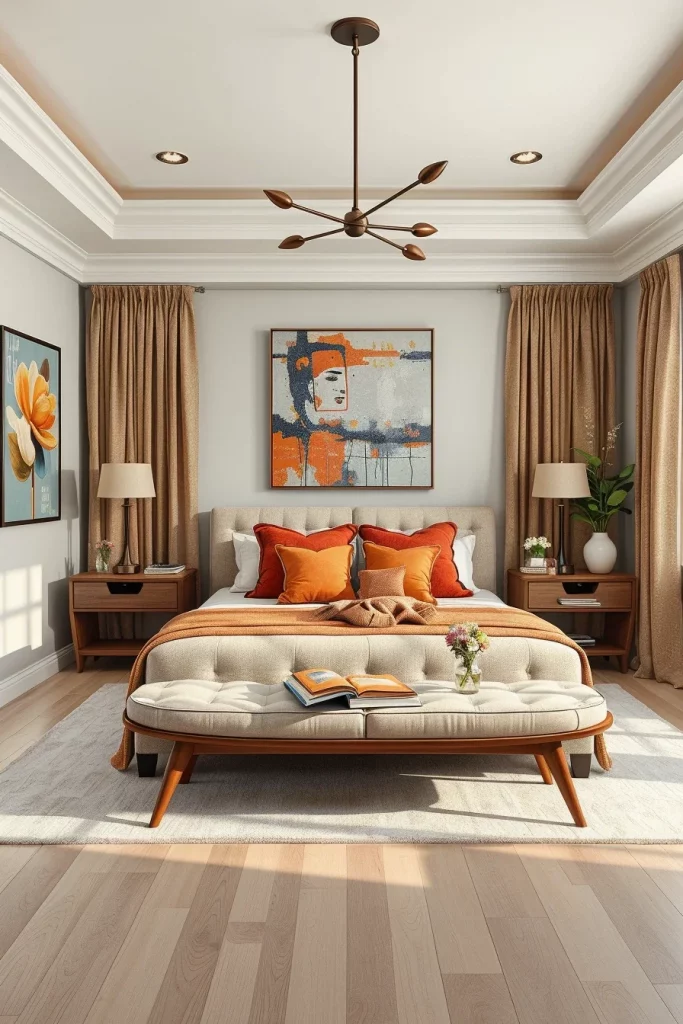
For furnishings, I prefer a platform bed upholstered in oatmeal fabric, complemented by sleek walnut bedside tables and a contemporary bench at the foot of the bed. Rust-colored bedding, accent cushions, and an oversized area rug introduce warmth throughout the room. Sculptural lighting fixtures and abstract wall art reinforce the artistic character of the design.
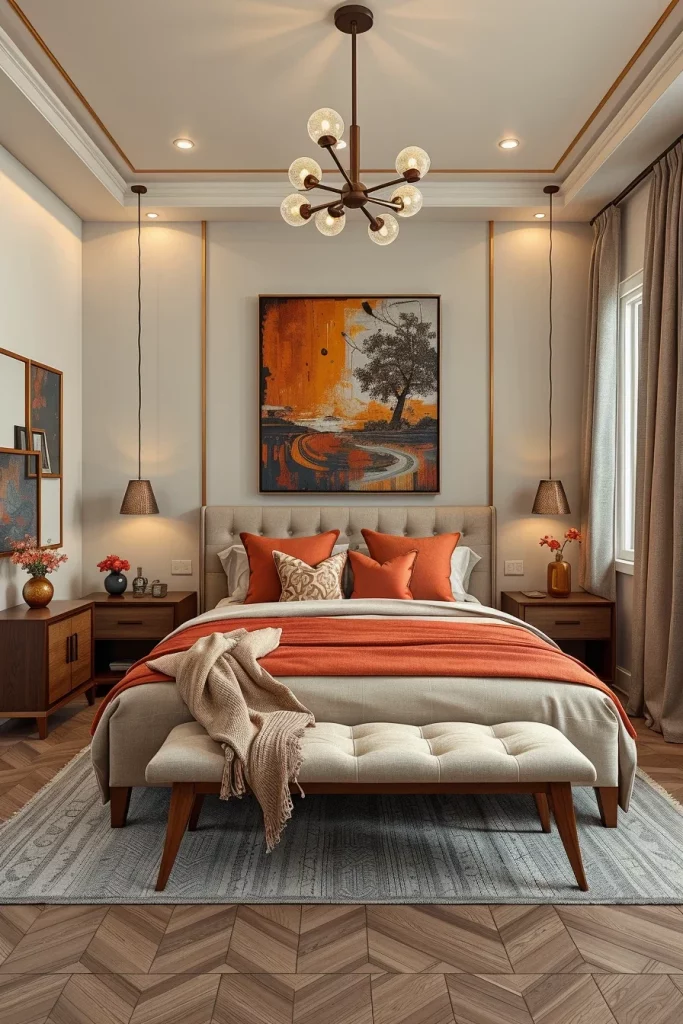
From my perspective, this palette is ideal for homeowners who want a bedroom that feels modern yet inviting. I have noticed that designers increasingly use earthy shades like rust because they create warmth without relying on overly saturated colors. The result is a room that feels grounded and timeless.
To enhance this palette further, I would add layered lighting, textured drapery, and a large statement mirror to increase brightness and visual spaciousness.
Stylish Blue Gray And Cream Bedroom Palette Ideas
A stylish blue gray and cream palette offers a refined solution for small bedrooms. I often use blue gray on feature walls or cabinetry because it introduces subtle depth while maintaining an airy appearance. Cream balances cooler tones and prevents the room from feeling sterile.
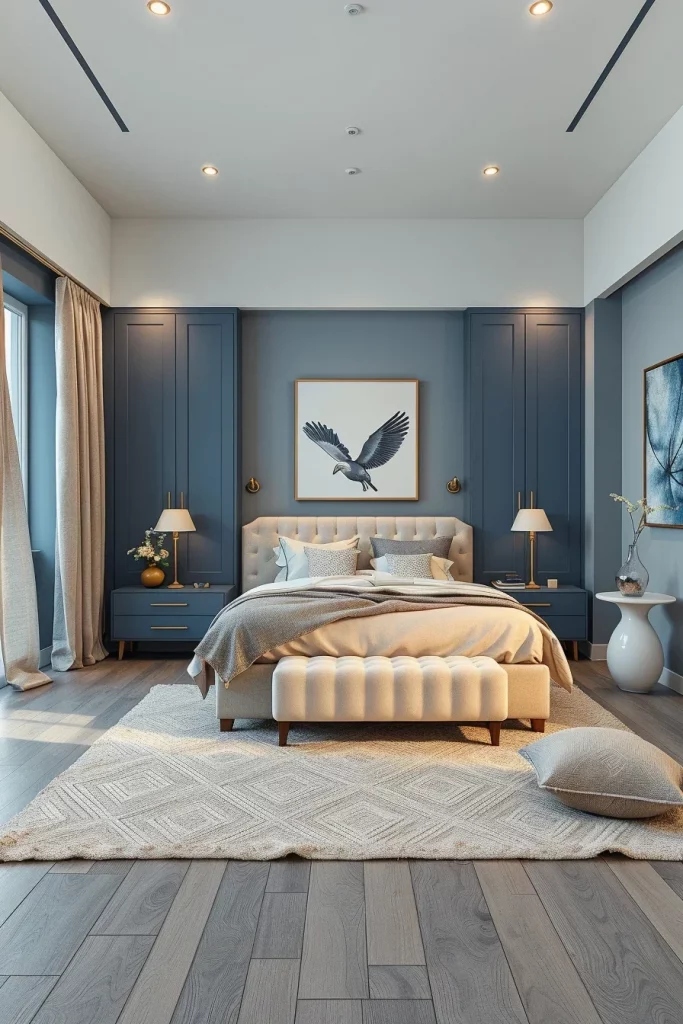
I recommend incorporating a cream upholstered bed, floating nightstands, and built-in wardrobes finished in soft blue gray. A textured cream rug, layered bedding, and linen curtains help soften the overall design. Modern sconces, sculptural side tables, and minimal artwork maintain a contemporary aesthetic while maximizing available space.
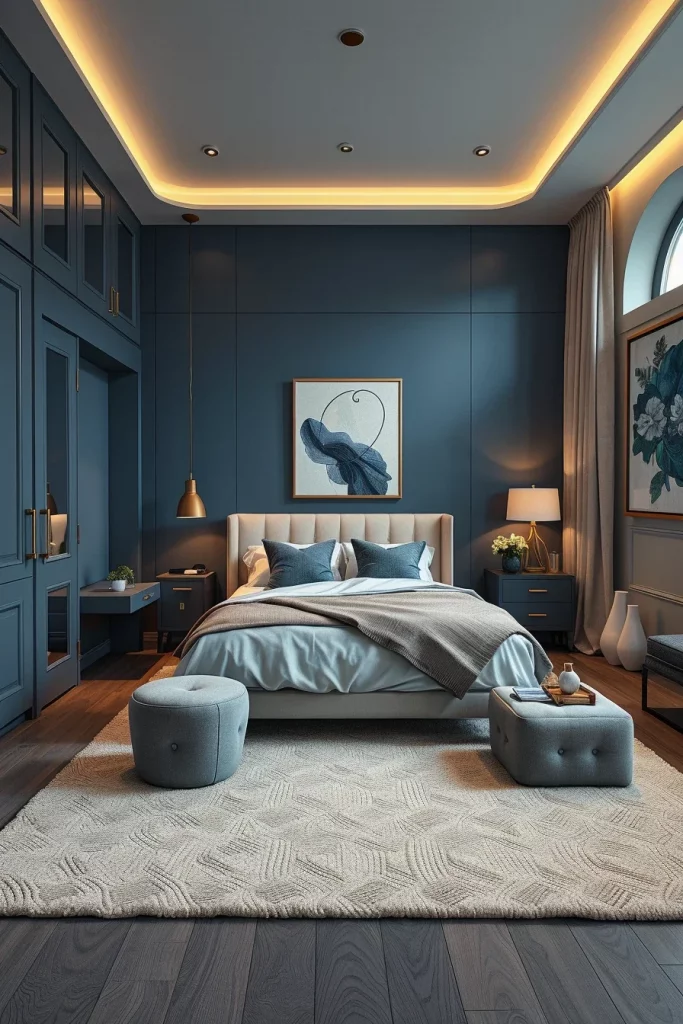
Personally, I appreciate this palette because it adapts easily to changing decor trends. House Beautiful frequently highlights blue gray as a timeless interior shade, and I find that it consistently delivers a sophisticated look in both traditional and contemporary homes.
To complete this bedroom, I would introduce subtle wood accents, integrated ambient lighting, and decorative ceramics to add warmth and texture.
Unusual Deep Emerald And Pale Beige Color Scheme
This unusual pairing of deep emerald and pale beige creates dramatic contrast while remaining suitable for compact bedrooms. I prefer using pale beige across most surfaces to maintain openness, while deep emerald appears on accent walls, upholstery, or decorative elements. The result feels luxurious yet balanced.
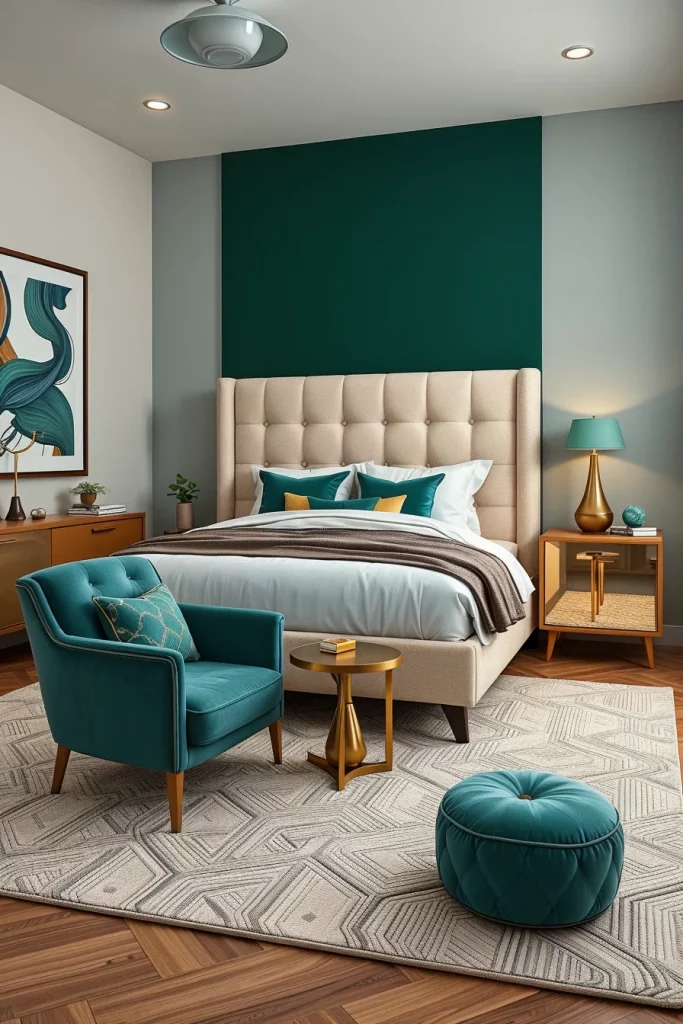
I often select a pale beige upholstered bed, streamlined storage furniture, and minimalist nightstands to establish a clean foundation. Emerald velvet cushions, an accent chair, and carefully chosen artwork introduce richness without overwhelming the room. Brass hardware and sculptural lighting fixtures complement the palette beautifully.
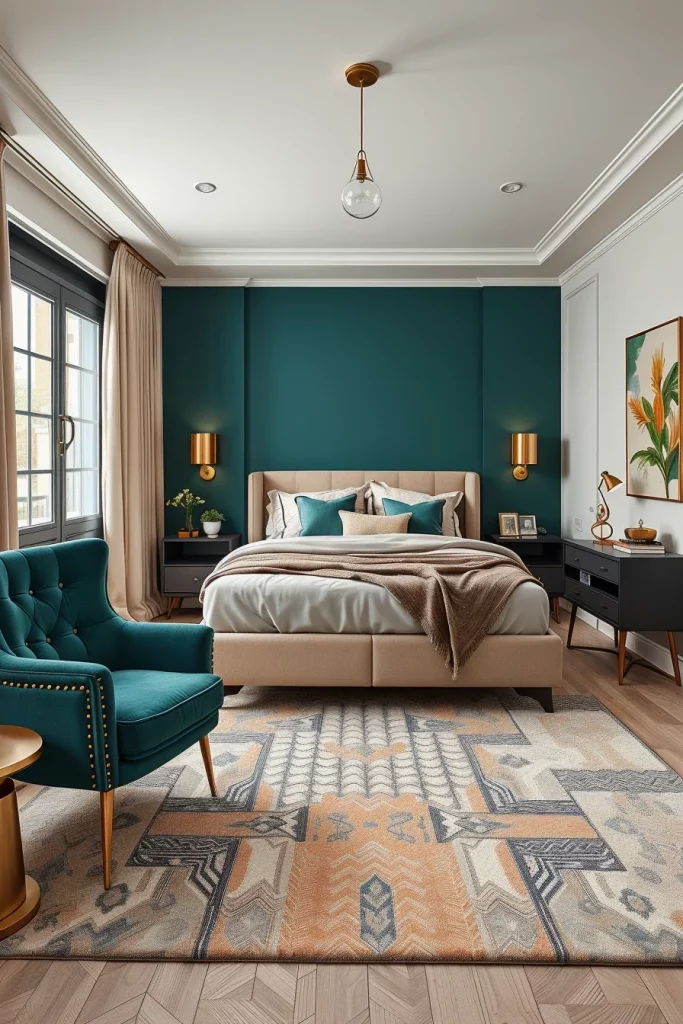
In my experience, deep green tones bring a sense of tranquility and sophistication to bedrooms. Interior designers featured in Better Homes & Gardens frequently recommend green hues because of their calming associations with nature, and I find emerald especially effective when used strategically.
I would further enhance this space with layered window treatments, textured bedding, and a large contemporary rug to soften the stronger color contrasts.
Sculptural Espresso And Soft Camel Bedroom Palette
I consider a sculptural espresso and soft camel palette one of the most sophisticated options for a small bedroom. Deep espresso tones introduce richness and architectural depth, while soft camel keeps the room feeling warm rather than heavy. In compact spaces, I recommend limiting espresso to accent walls, built-in cabinetry, or statement furniture pieces, allowing camel shades to dominate the larger surfaces. This approach creates visual contrast without making the room feel confined.
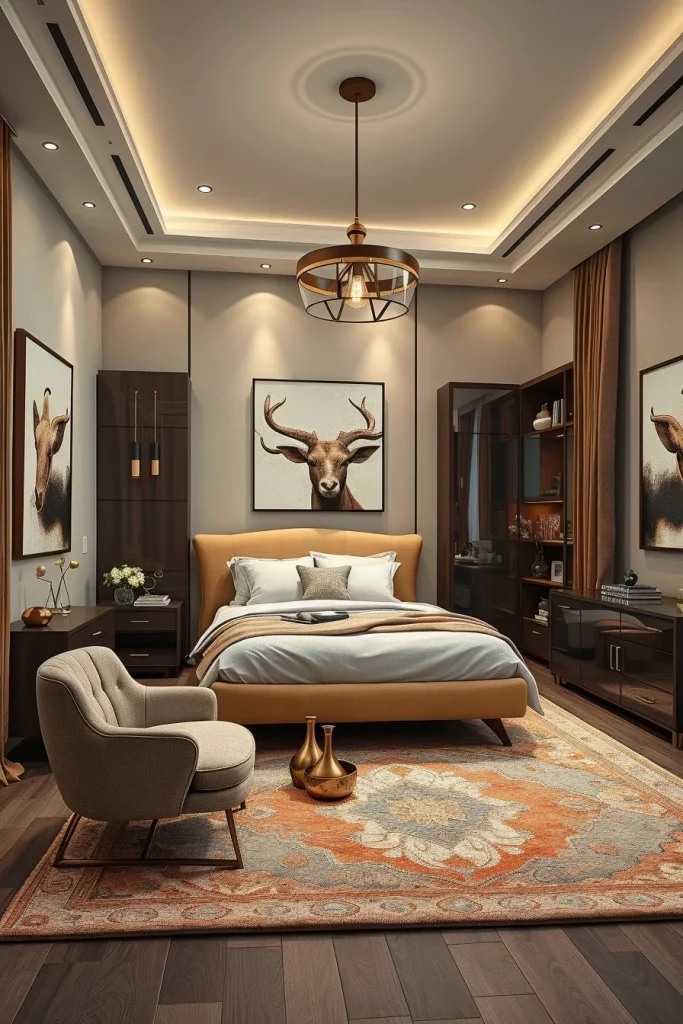
For furniture, I prefer a camel upholstered bed with a curved or sculptural headboard that becomes the focal point of the room. Espresso-toned floating nightstands and streamlined wardrobes provide storage while preserving floor space. A textured camel area rug, layered bedding, and soft boucle seating help soften the darker elements. Sculptural table lamps, oversized artwork, and modern pendant lighting complete the refined atmosphere.
In my experience, this palette works beautifully for homeowners who appreciate contemporary interiors with depth and character. Designers frequently featured in Architectural Digest often combine warm neutrals with darker accents to create intimate spaces, and I have found this strategy particularly effective in small bedrooms.
To elevate this design further, I would incorporate floor-to-ceiling curtains, subtle metallic accents in bronze finishes, and concealed LED lighting to highlight architectural details.
Pale Mint And Warm Taupe Color Palette For Small Rooms
Pale mint and warm taupe create a fresh yet grounded palette that feels exceptionally well suited to small bedrooms. I like using pale mint on the walls because it reflects light while adding a subtle hint of color. Warm taupe introduces balance and warmth, preventing the room from feeling overly cool. Together, these shades create a calm and inviting retreat.
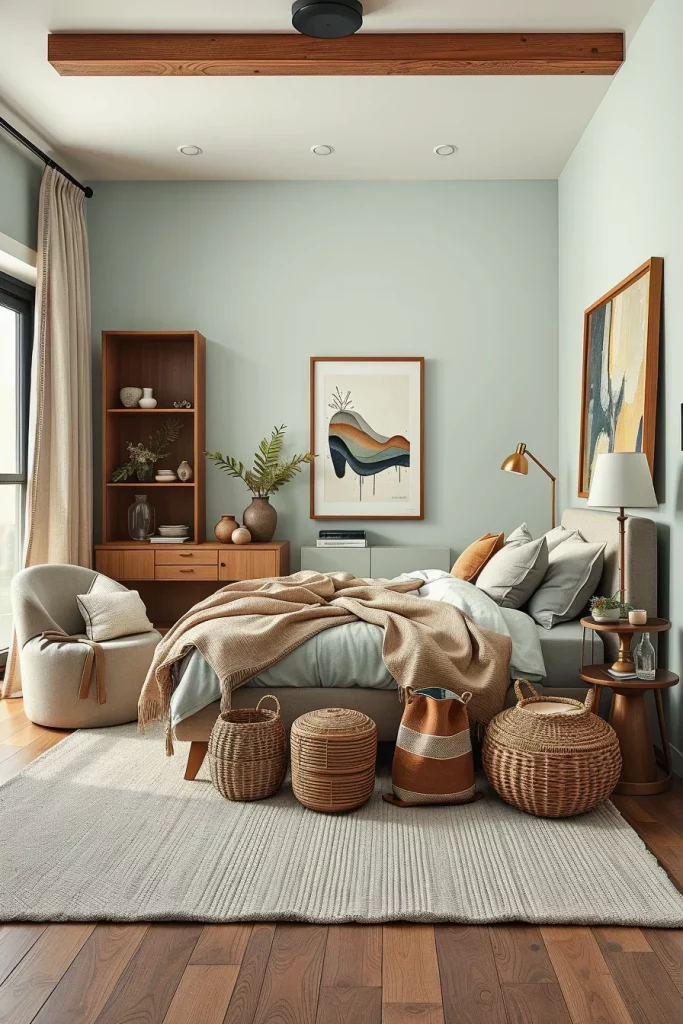
I typically pair this palette with a warm taupe upholstered bed, minimalist bedside tables, and integrated storage solutions finished in soft neutral tones. Pale mint bedding, textured throws, and linen curtains enhance the airy atmosphere. I also recommend incorporating natural textures through woven baskets, ceramic accessories, and textured rugs to create visual interest without adding clutter.
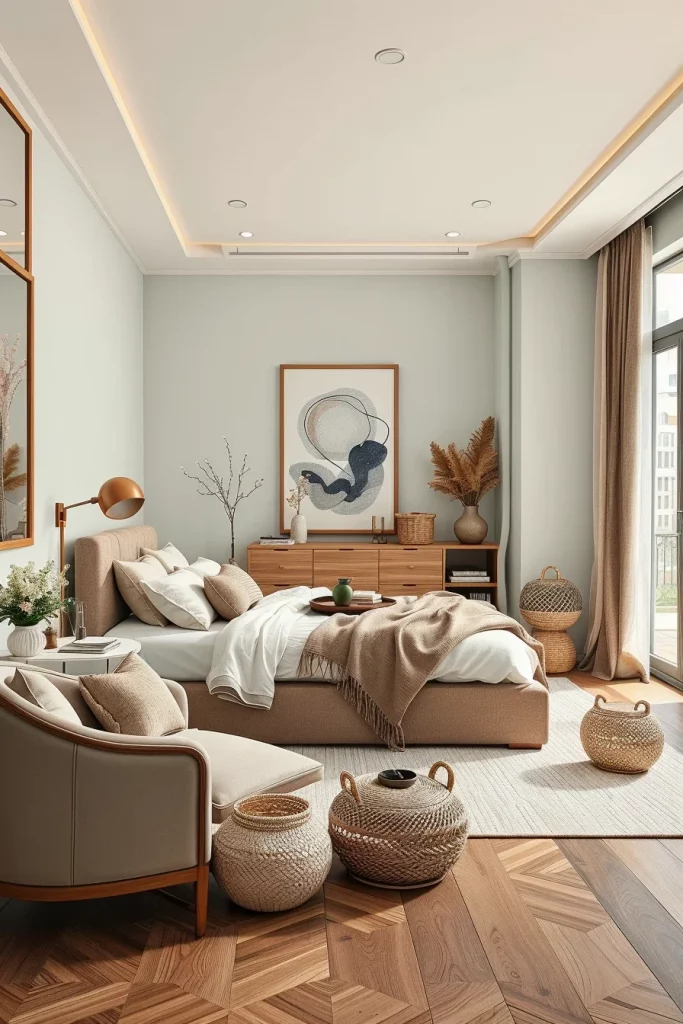
Personally, I often suggest this palette for readers seeking a tranquil environment. Interior designers from House Beautiful frequently emphasize the importance of soft greens in promoting relaxation, and I agree that pale mint delivers serenity while remaining highly versatile.
I would complete this bedroom with layered lighting, a large mirror to maximize brightness, and abstract artwork featuring both mint and taupe tones.
Artistic Cinnamon And Dusty Pink Bedroom Inspiration
An artistic combination of cinnamon and dusty pink introduces warmth, softness, and individuality into a small bedroom. I often use dusty pink as the primary wall color because it feels gentle and sophisticated, while cinnamon accents add depth and visual structure. This palette creates a contemporary atmosphere that feels both welcoming and distinctive.
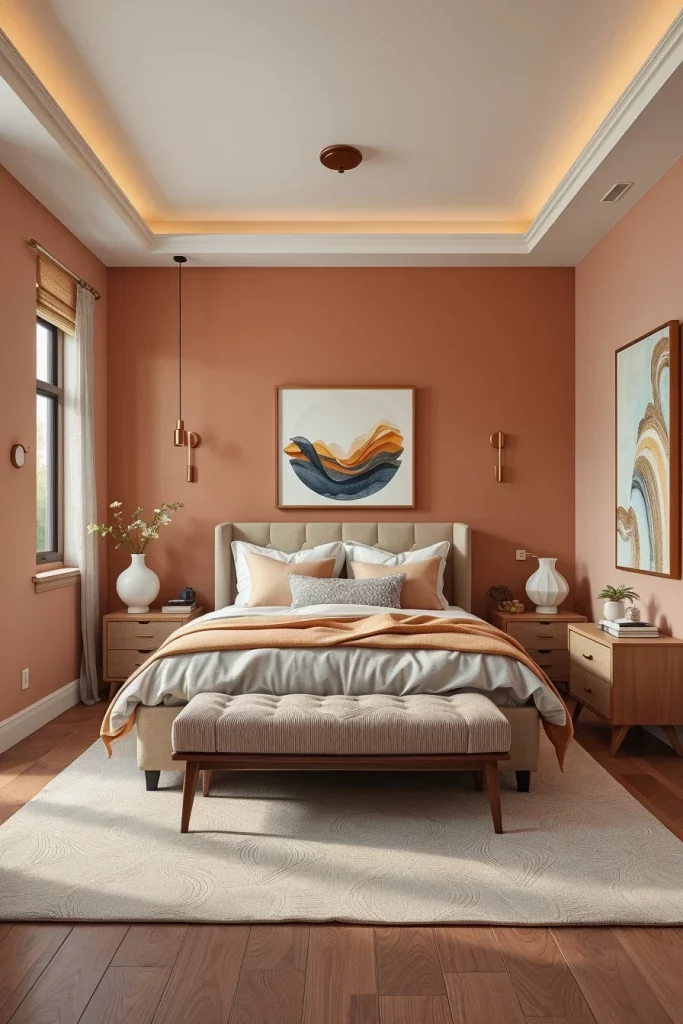
For furnishings, I recommend an upholstered bed in a soft neutral fabric, complemented by cinnamon-toned accent cushions and a textured bench. Minimal nightstands, sleek storage units, and layered textiles maintain functionality without overcrowding the room. Sculptural lighting fixtures and abstract wall art reinforce the artistic personality of the space.
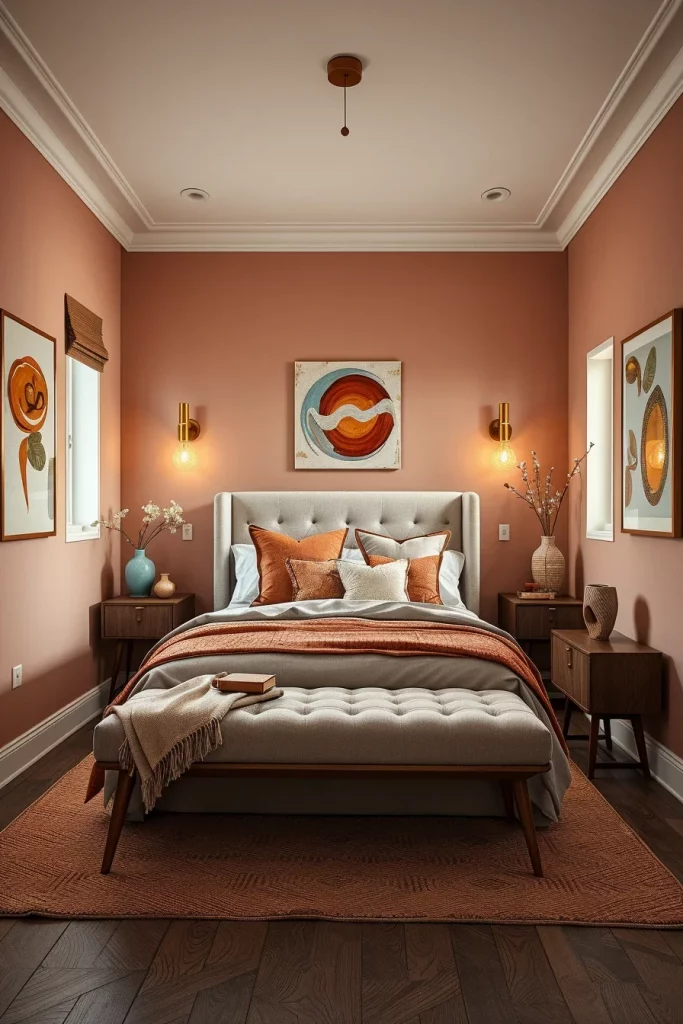
From my perspective, this palette is ideal for homeowners who want something more expressive than traditional neutrals. I have noticed that many contemporary designers are embracing earthy pinks and warm terracotta-inspired hues because they create inviting interiors without appearing overly decorative.
To further enrich this design, I would add oversized curtains, textured bedding, and handcrafted ceramic decor pieces that emphasize warmth and authenticity.
Stylish Stone Gray And Soft Gold Accent Palette
A stylish stone gray and soft gold palette offers timeless elegance for compact bedrooms. I prefer stone gray as the dominant color because it establishes a calm and versatile foundation. Soft gold accents introduce warmth and sophistication while reflecting light throughout the room, making the space feel larger.
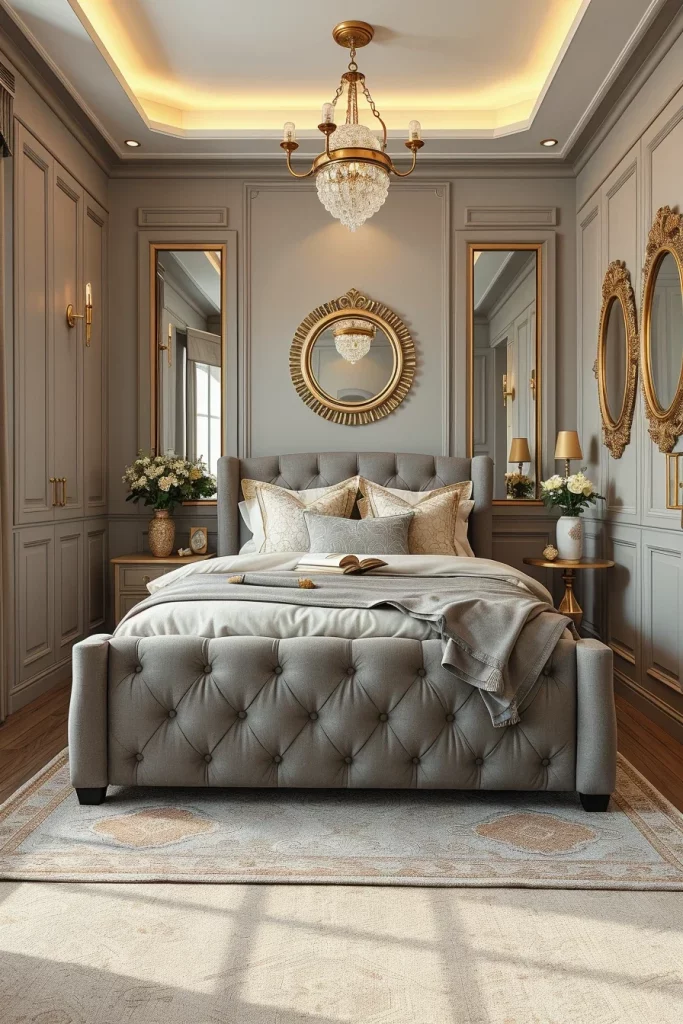
I usually furnish this bedroom with a gray upholstered bed, streamlined bedside tables, and built-in wardrobes finished in matching tones. Soft gold appears through lighting fixtures, mirror frames, decorative accessories, and subtle hardware details. Layered bedding in cream and gray tones contributes additional texture while maintaining a cohesive appearance.
In my experience, this palette adapts beautifully to both minimalist and contemporary interiors. Designers at Elle Decor often recommend metallic accents for small spaces because reflective surfaces increase visual brightness, and I find soft gold especially successful in creating a luxurious yet understated atmosphere.
I would also include full-height curtains, a textured area rug, and integrated lighting to ensure the room feels warm and multidimensional.
Unique Layered Neutral Color Palette For Small Bedrooms
A unique layered neutral palette proves that small bedrooms do not require bold colors to make an impact. I like combining multiple shades of cream, oatmeal, taupe, camel, and soft gray to create subtle contrast and depth. Layering similar tones allows the room to feel cohesive, spacious, and exceptionally calming.
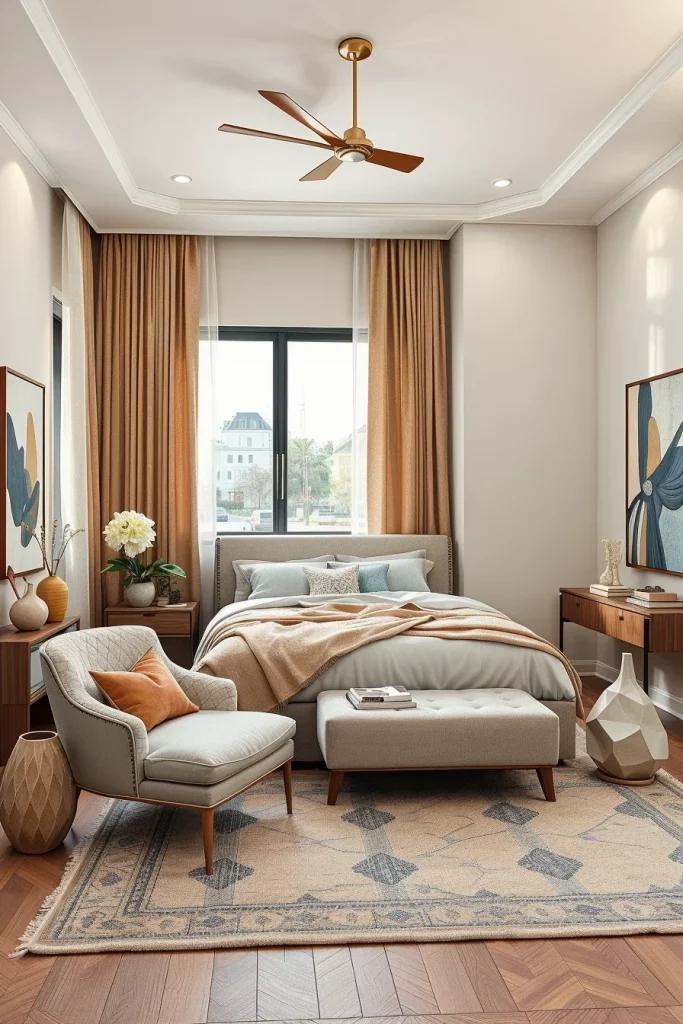
I generally select an upholstered bed in a warm neutral fabric and pair it with minimalist wood furniture in complementary finishes. Layered bedding featuring several neutral shades adds dimension, while textured rugs, boucle chairs, and linen curtains contribute warmth. Sculptural decor objects, oversized artwork, and statement lighting prevent the design from feeling flat.
Personally, this is one of my favorite approaches because it remains timeless and adaptable. Better Homes & Gardens frequently highlights layered neutrals as a reliable strategy for creating sophisticated interiors, and I have found that this palette works beautifully in bedrooms of any size.
To perfect this design, I would add concealed storage solutions, oversized mirrors, and varying textures such as boucle, linen, and ceramic finishes to ensure the room feels rich and inviting.
The right color palette can make even the smallest bedroom feel stylish, comfortable, and visually spacious. Whether you prefer soft neutrals, rich earthy shades, or bold artistic combinations, thoughtful color choices can completely transform your space. Use these inspiring small bedroom color palettes to create a room that feels both functional and uniquely your own.