
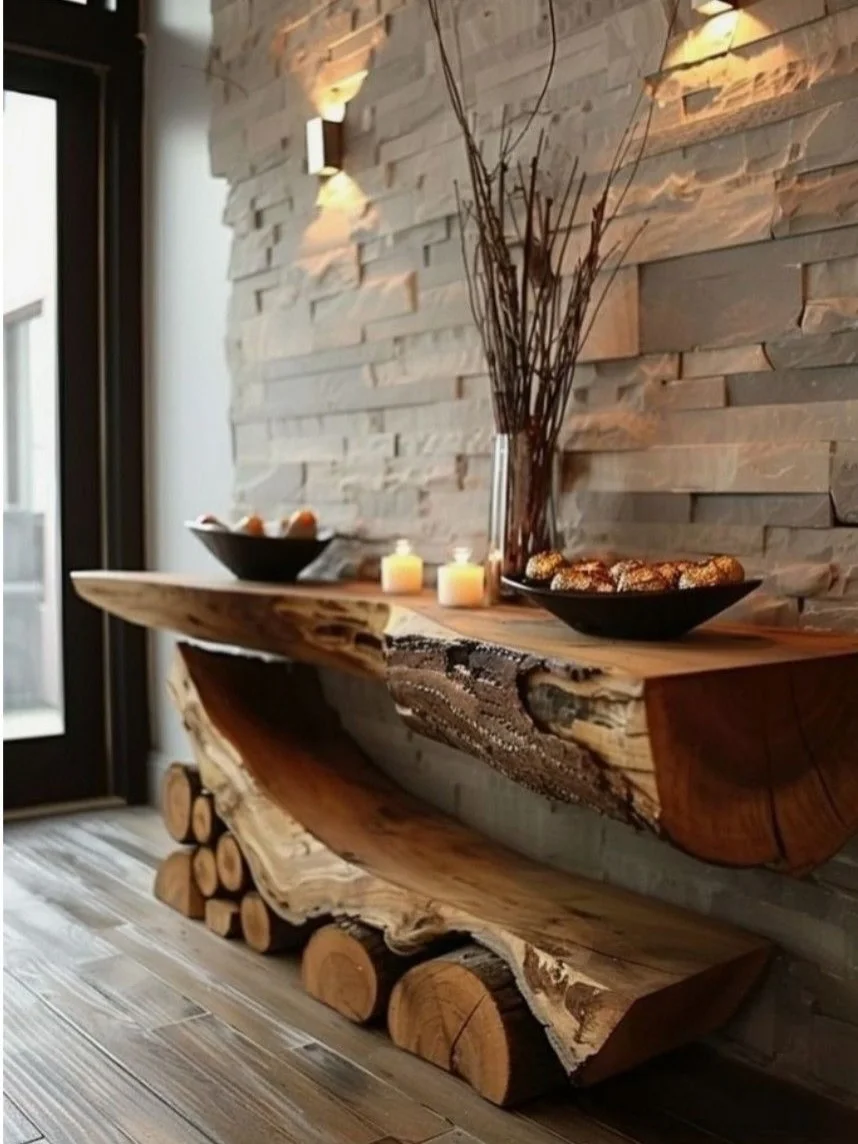
Wood furniture has a timeless way of making every room feel warmer, more inviting, and thoughtfully designed. From sculptural shelving and elegant coffee tables to practical nightstands, cabinets, and statement seating, wood can adapt beautifully to different spaces and decorating styles. I love how the right wood piece can add texture and character while also providing everyday function. Whether you are furnishing a living room, bedroom, kitchen, entryway, or open-plan space, there are countless ways to make wood furniture feel intentional rather than predictable. In this collection, I’m sharing stylish wood furniture ideas that show how different shapes, finishes, and arrangements can transform the atmosphere of a home. Which wood furniture idea would you love to bring into your own space?
Organic Wood Shelving With Sculptural Character
I love how this shelving unit immediately becomes the focal point of the room through its irregular, organic construction. Thick wood shelves with naturally uneven edges and visible circular cut ends create a striking sculptural effect, while books, small vessels, framed artwork, candles, and greenery fill the open compartments. A soft upholstered chair sits beside the shelving, and a substantial stump-style side table continues the same material language. The warm brown wood stands beautifully against the muted wall and creates a cozy, intimate atmosphere.
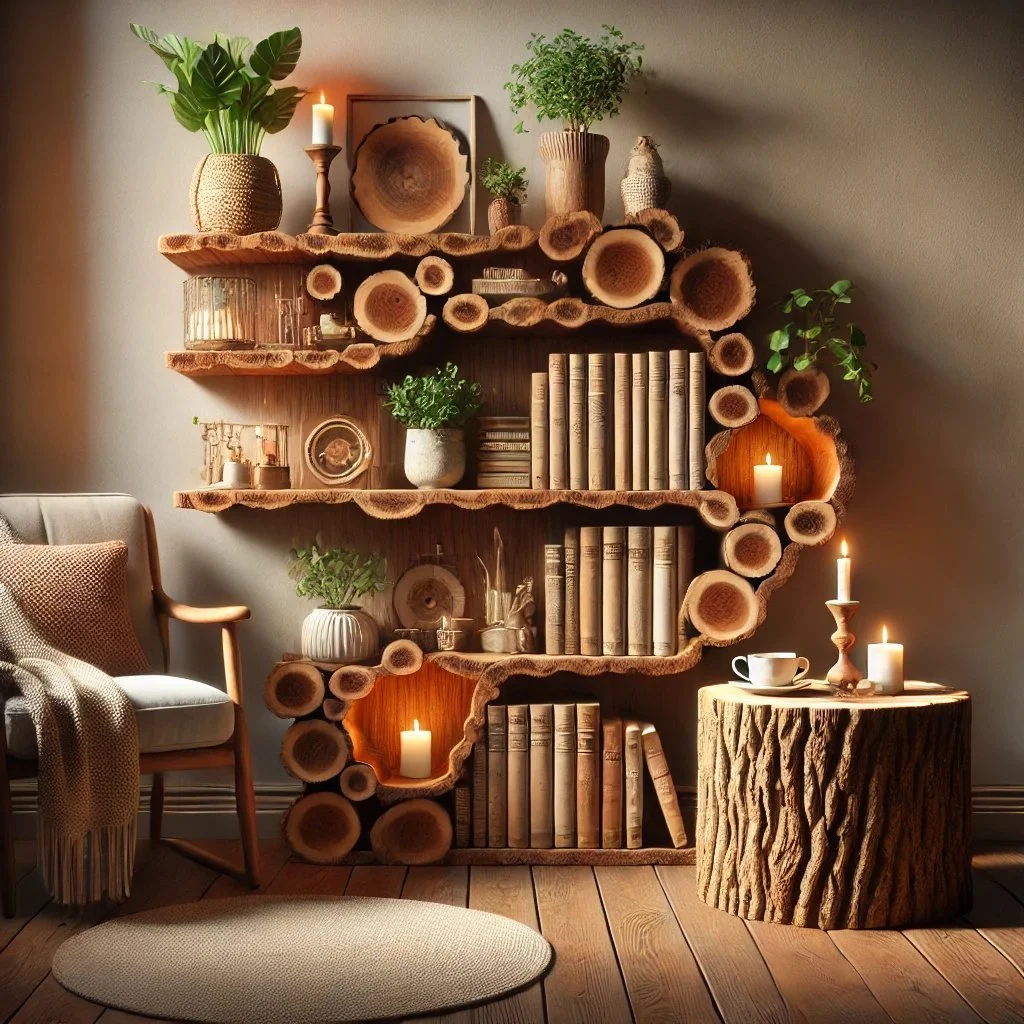
What makes this furniture arrangement work so well for me is the combination of storage and visual interest. The shelves provide several levels for books and accessories without looking like a conventional rectangular bookcase. The irregular edges give the entire piece a handcrafted appearance, while the repeated wood tones visually connect the shelving with the nearby table and flooring. I also like the way the candles and small decorative objects occupy selected spaces rather than every available shelf.
When I look at a statement shelving design like this, I would keep the surrounding furniture relatively restrained so the shelving has room to breathe. I would also organize books and accessories in small groups instead of filling every compartment. The strongest feature here is the wood itself, so I would let its texture, grain, and unusual silhouette remain visible rather than competing with it.
Minimal Wood Nightstand With a Soft Modern Feel
This bedroom takes a much quieter approach to wood furniture. I see a simple rectangular wood nightstand positioned beside a large upholstered bed, with a glowing round lamp and a small character figure placed on top. The neutral bed, textured rug, and expansive window create a light backdrop, while the medium wood finish adds just enough warmth to keep the composition from feeling sterile. The clean geometry of the nightstand contrasts nicely with the soft upholstery surrounding it.
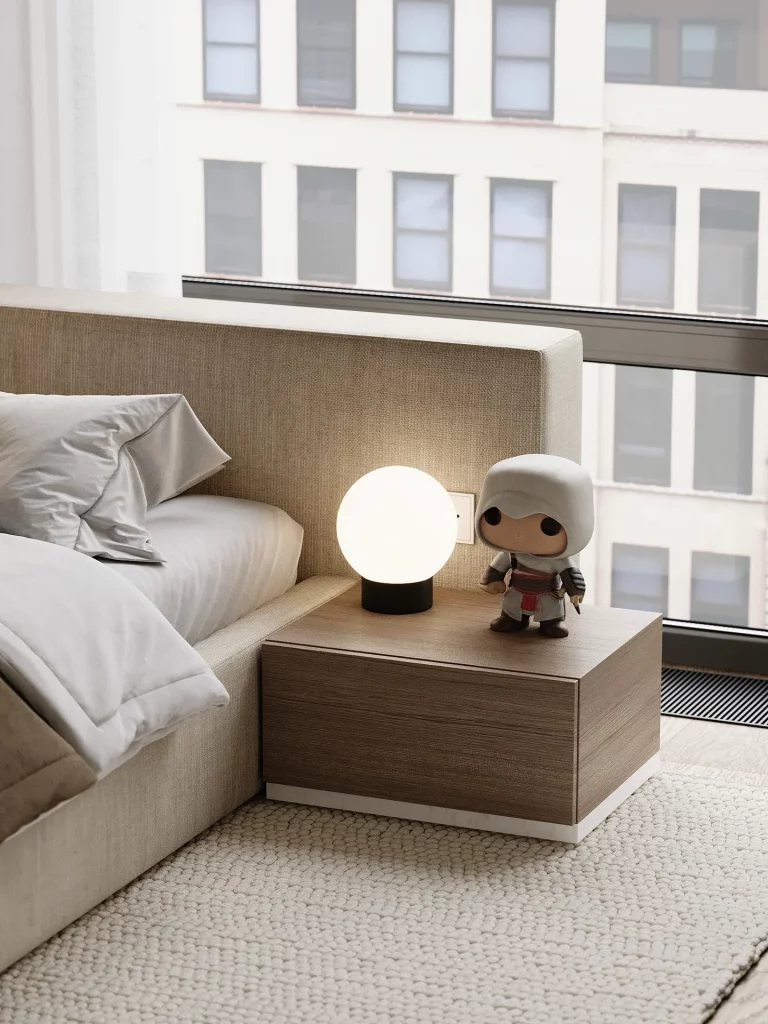
For me, this is a great example of how one wood piece can make a difference without dominating a room. The nightstand provides a practical surface for lighting and a few personal objects while its enclosed form keeps the overall look visually tidy. Its proportions also feel appropriate beside the substantial bed, creating a balanced relationship rather than making the bedside area look crowded.
I would use this approach when I want a bedroom to feel calm but still have some material warmth. A simple wood nightstand does not require elaborate styling; one functional lamp and one or two personal objects can be enough. I especially like the idea of matching the wood tone to other warm elements in the room rather than introducing several competing finishes.
Warm Wood Coffee Table Against a Curved Sofa
Here, a large dark wood coffee table sits in front of a generously curved cream sofa. The table has a strong rectangular top, substantial vertical supports, and an open lower shelf holding books or decorative boxes. A neutral rug defines the seating area, while small touches of yellow and blue appear through the surrounding furniture and cushions. Sunlight enters through the tall windows and creates crisp shadows across the room, emphasizing the clean lines and rich wood surface.
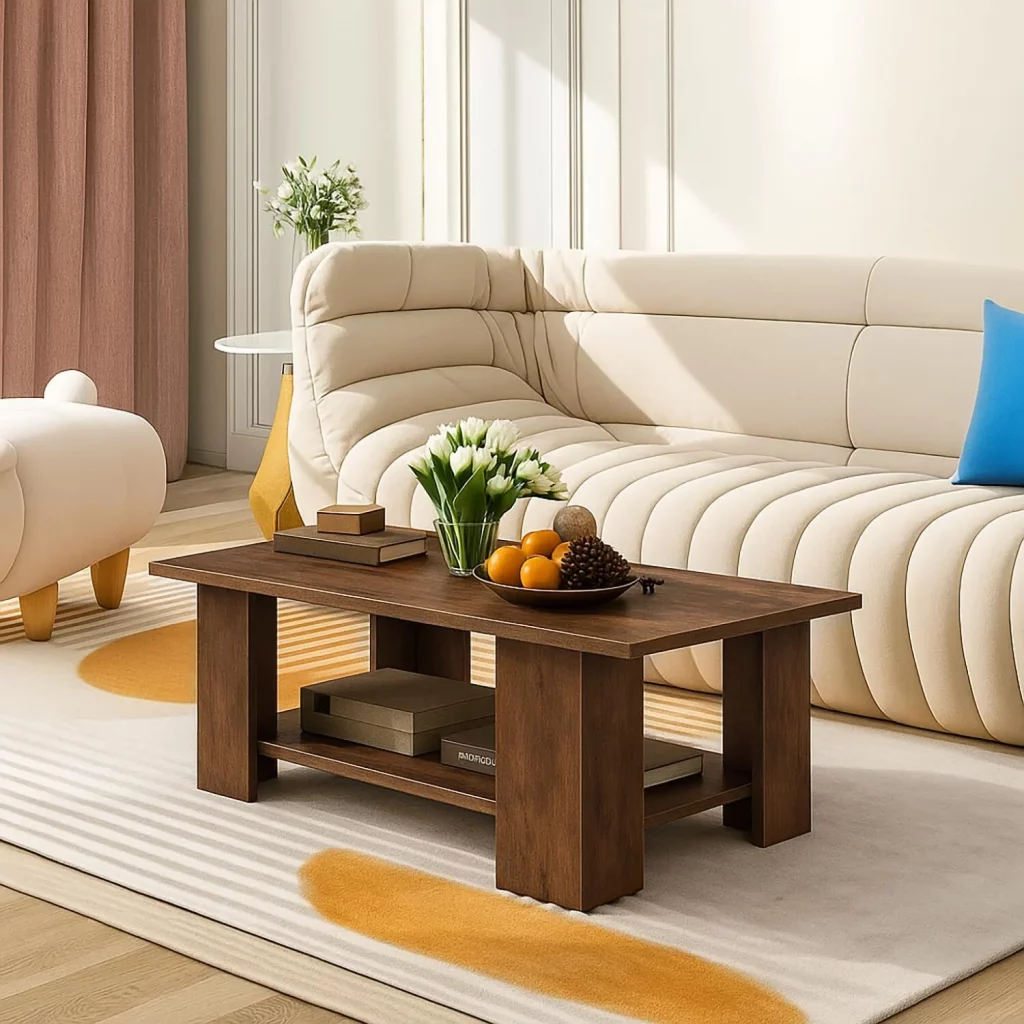
I find the coffee table particularly effective because it combines a generous tabletop with useful lower storage. The open shelf makes it possible to keep books or objects accessible without placing everything on the main surface. At the same time, the substantial wood construction visually anchors the pale upholstered seating and prevents the room from becoming too monochromatic.
For a similar arrangement, I would choose a coffee table that is large enough to relate to the sofa without obstructing movement around it. I also like using the lower shelf for a limited selection of books or boxes because it adds function without creating visual clutter. The contrast between the rounded sofa and structured table is another detail I would intentionally preserve.
Live-Edge Console With Natural Wood Texture
This console has a very distinctive presence because both its upper and lower surfaces retain irregular wood edges and visible natural forms. The thick top appears to follow the character of the material rather than a perfectly straight manufactured line, while cylindrical wood sections support the lower structure. A textured stone wall forms the backdrop, and simple bowls, candles, branches, and small decorative pieces are arranged across the console.
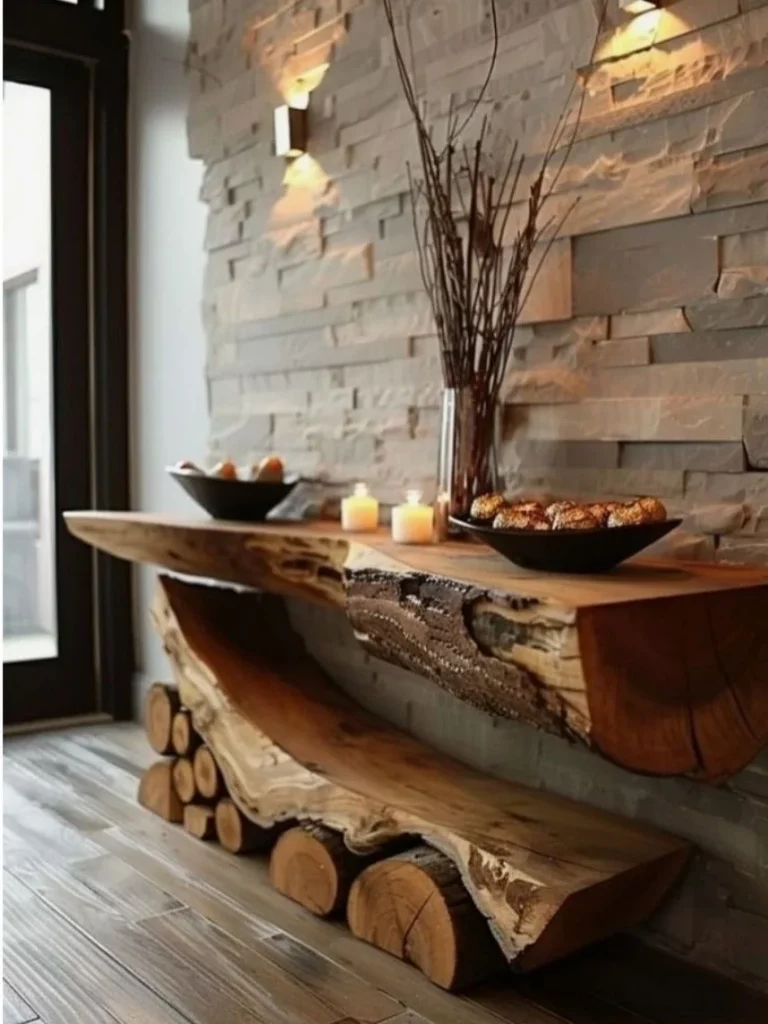
I like this piece because the furniture itself supplies most of the visual character. Instead of relying on complicated decoration, the irregular edges, contrasting wood surfaces, and visible end grain create interest. The lower shelf also adds practical storage or display space while keeping the console visually open.
If I were styling a similar console, I would avoid covering the entire surface. The image shows how a few carefully spaced objects allow the wood to remain the star. I would also place this type of furniture against a relatively quiet wall so the grain and silhouette remain easy to appreciate.
Dark Wood Kitchen Cabinetry With Decorative Lighting
The kitchen shown here combines deep wood cabinetry with a warm stone-like backsplash and countertop surfaces. A compact peninsula or counter occupies the right side, while cabinetry and appliances create a functional working area. Warm pendant lights hang above the space, and a dark-framed doorway opens toward another room with additional wood cabinetry. The patterned floor and softly illuminated interiors reinforce the rich, warm character of the furniture.
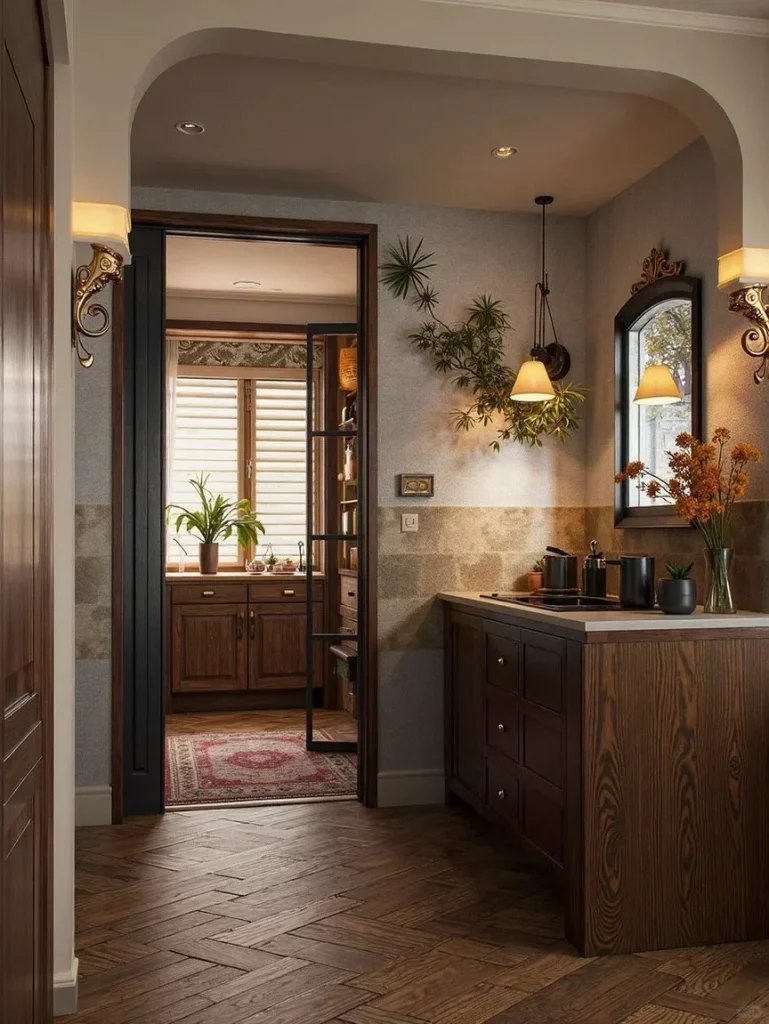
For me, the strength of this kitchen is its consistency. The cabinetry, flooring, door frames, and furniture elements all work within a warm wood-focused palette, creating a connected visual flow between spaces. At the same time, the lighter countertop surfaces prevent the darker cabinetry from making the room feel excessively heavy.
I would take inspiration from this balance when using dark wood in a kitchen. Keeping the surrounding surfaces lighter can help the cabinetry remain substantial without overwhelming the room. I also like the layered lighting visible here because it adds warmth and makes the darker finishes feel intentional rather than flat.
Classic Wood Bed With Architectural Detail
This bedroom centers on a substantial dark wood bed with an elaborately shaped headboard and matching footboard. The headboard features layered detailing and a symmetrical silhouette, while decorative molding frames the surrounding walls. Matching bedside tables, table lamps, framed artwork, an upholstered chair, and patterned area rugs complete the composition. The warm neutral wall color allows the deep wood furniture to stand out while maintaining a cohesive traditional atmosphere.
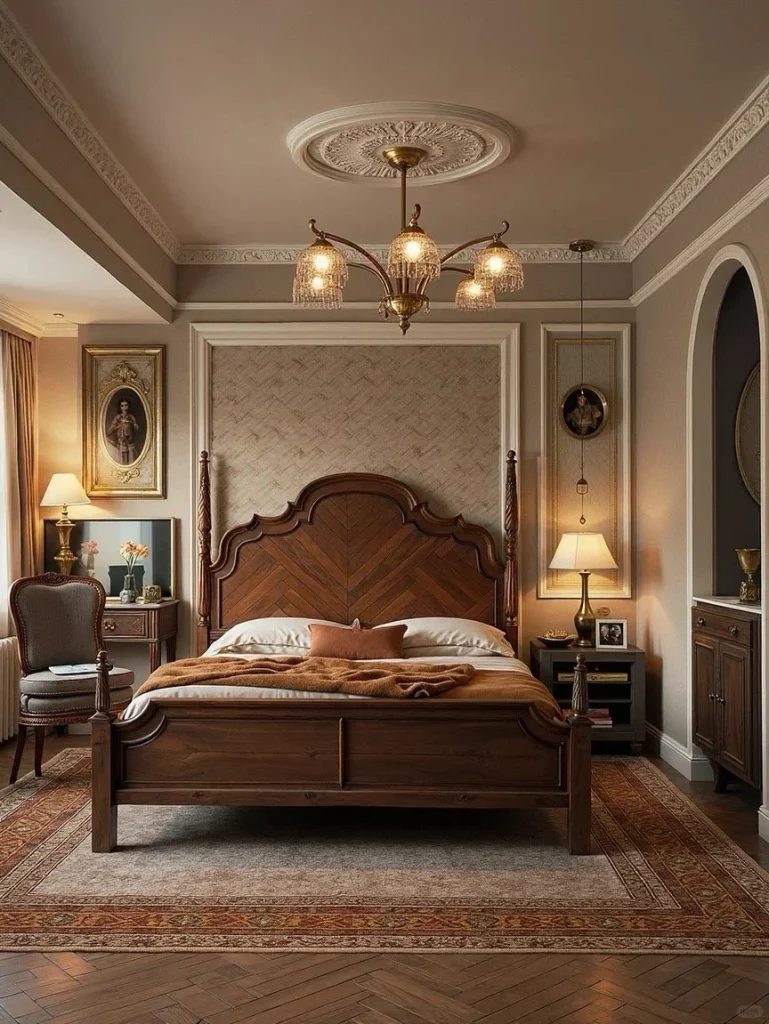
I think the bed works especially well because its scale matches the room. It feels substantial without appearing disconnected from the architectural details around it. The symmetrical bedside arrangement also creates visual stability, while the lamps provide practical nighttime lighting and reinforce the balanced layout.
When working with a strongly detailed wood bed, I prefer to let it remain the primary furniture statement. The image demonstrates how surrounding pieces can repeat its wood tone without competing for attention. I would also keep the bedding relatively simple so the carved or shaped silhouette of the headboard remains visible.
Streamlined Wood Seating With a Sculptural Coffee Table
This spacious living room features a cream sofa and two matching wood-framed lounge chairs arranged around a rounded rectangular coffee table. The seating has smooth, flowing wood arms and bases, while the coffee table echoes those curves through its thick sculptural form and large central opening. A neutral rug spreads beneath the furniture, and a dark wood accent wall rises behind the sofa with a simple framed artwork centered above it.
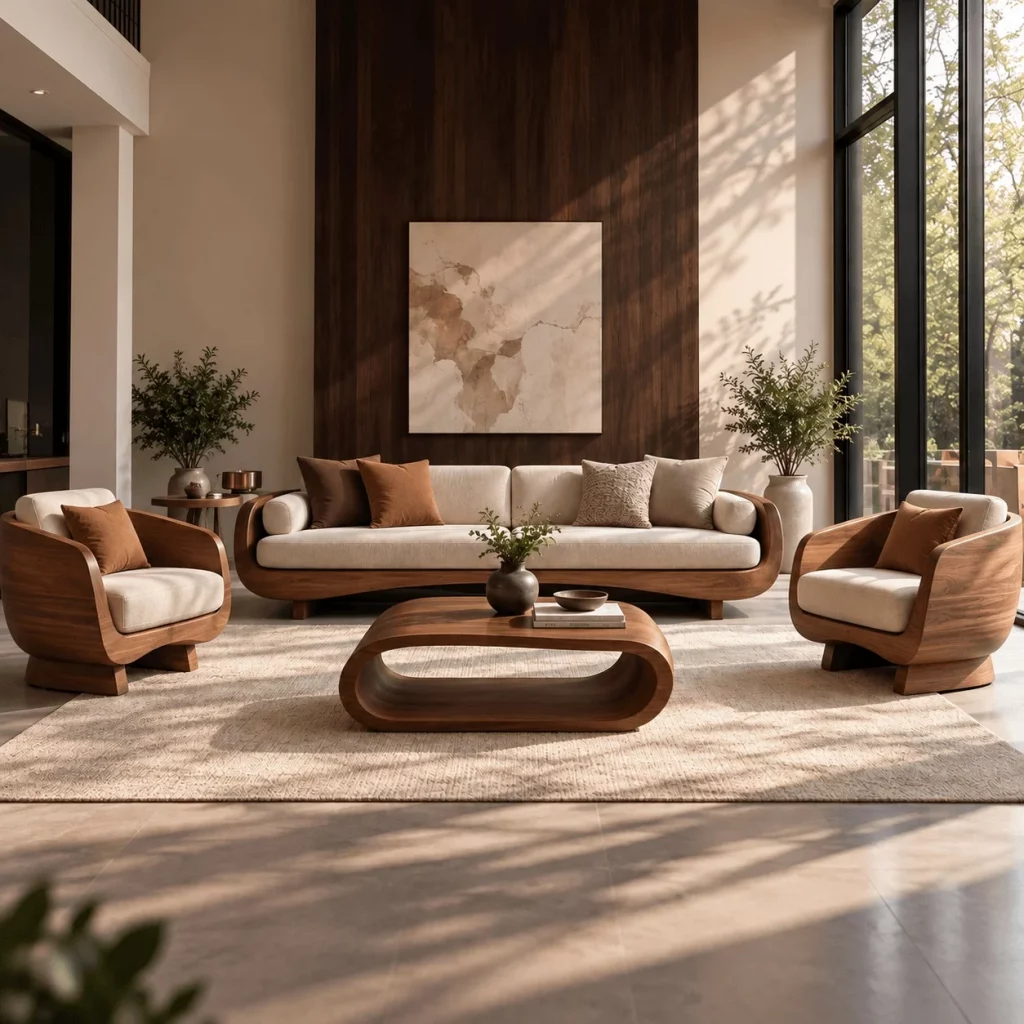
What I particularly appreciate is the repetition of curves throughout the furniture. The rounded coffee table relates naturally to the curved edges of the sofa and chairs, creating a cohesive composition without requiring numerous decorative accessories. The generous seating arrangement also encourages conversation because the chairs face toward the central table and sofa.
For me, this is a useful lesson in using wood furniture as a unifying element. Instead of matching every piece exactly, I would repeat similar curves, wood tones, or proportions. The result can feel coordinated while still allowing each piece to have its own identity.
Deep Wood and Burgundy Furniture in an Open Living Space
This dramatic living area brings together a deep burgundy sectional, a large rounded wood coffee table, and a gray upholstered chair. Behind the seating area, the open kitchen and dining zone feature wood cabinetry, a long dining table, and a striking sculptural pendant installation. Ornamental ceiling molding adds another layer of detail, while the wood flooring carries the material palette throughout the open-plan space.
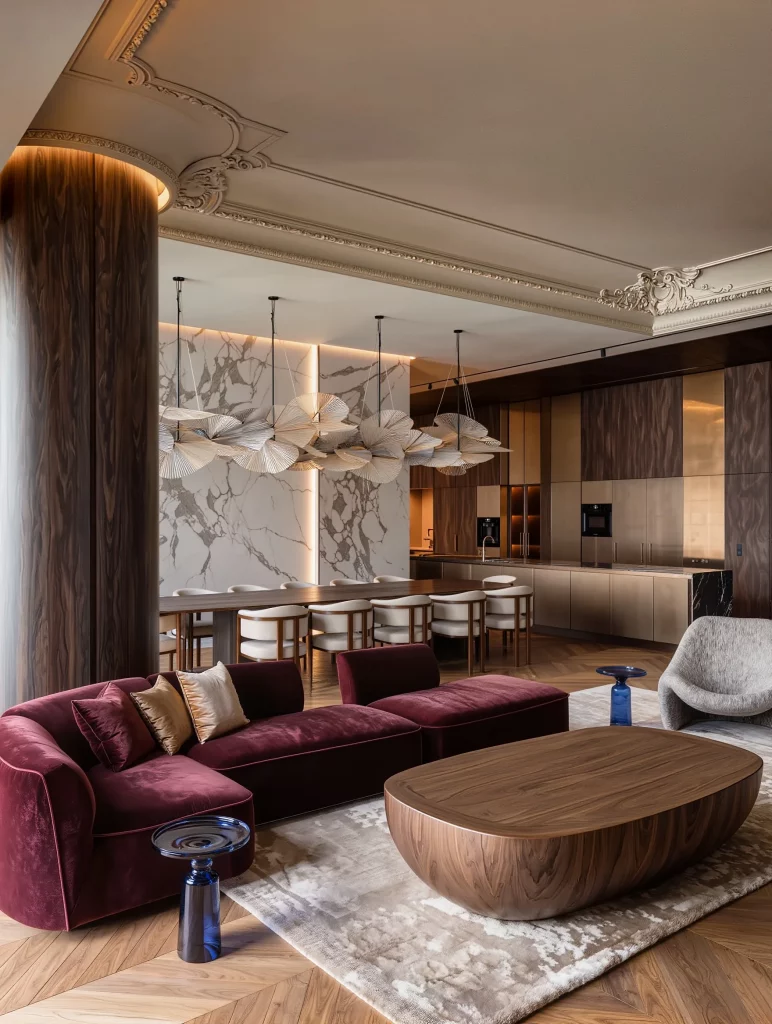
I like how the large coffee table becomes a bridge between the rich upholstery and the extensive wood finishes in the kitchen and floor. Its rounded form softens the substantial sectional, while the generous surface provides plenty of room for everyday use. The open layout also means the furniture has to work visually from several directions, and the consistent wood tones help achieve that continuity.
If I were recreating this feeling, I would pay attention to proportion before adding accessories. A large room needs furniture with enough visual weight to avoid looking lost, and this arrangement demonstrates that principle clearly. I would also use one dominant wood tone across several pieces so the open-plan spaces feel connected.
Built-In Wood Room Divider With Open Display Niches
This tall wood storage unit functions as both furniture and a room divider. It stretches almost from floor to ceiling and combines closed cabinet doors with open vertical niches. Books, small vessels, and decorative objects occupy selected openings, while the unit separates the visible sleeping area from the adjacent space. Its light wood finish coordinates with the flooring and creates a warm contrast against the pale walls.
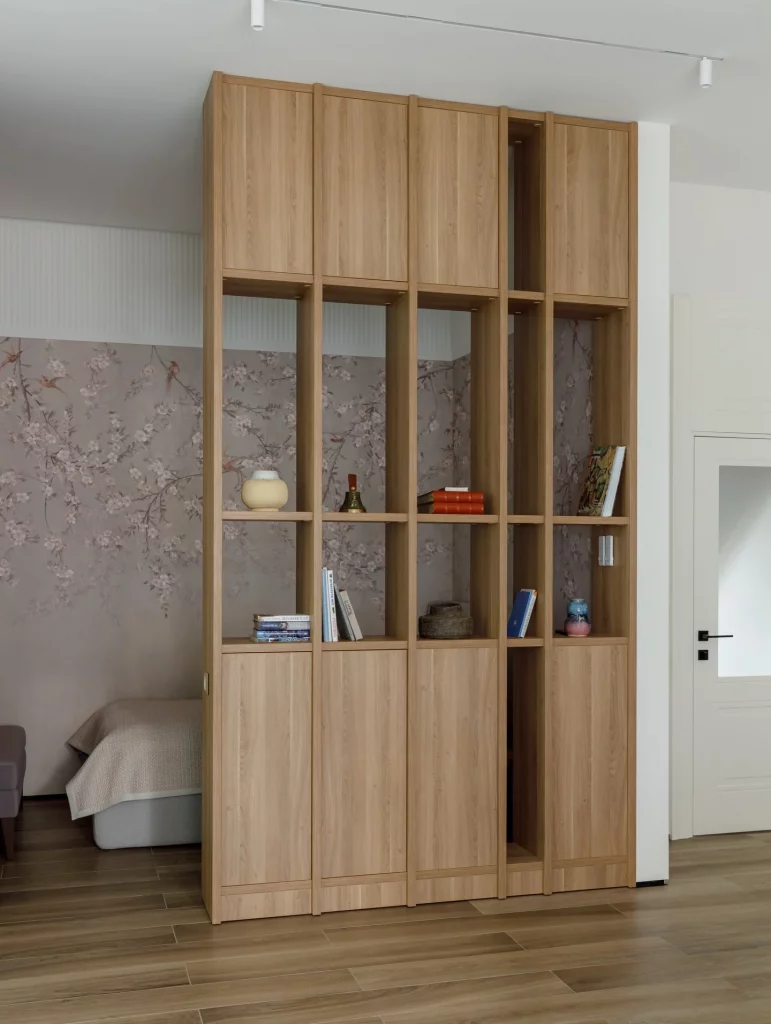
For me, this is one of the most practical examples in the collection because the furniture solves several needs simultaneously. It provides substantial closed storage, open display space, and spatial separation without completely closing off the adjoining area. The vertical proportions also draw attention upward, making the room divider feel like an integrated architectural feature.
I would consider this type of furniture when a home needs zoning but cannot accommodate a full wall. The key is maintaining a thoughtful balance between open and closed sections. I would also avoid filling every niche because the empty spaces are important to the light, airy appearance shown here.
Traditional Wood Seating With Arched Windows and Layered Detail
The final interior presents a spacious sitting area furnished with several dark wood-framed sofas and armchairs surrounding a rectangular coffee table. The seating has upholstered cream cushions, while blue accent pillows add controlled contrast. Large arched windows bring in abundant daylight and reveal greenery outside, and an ornate hanging light occupies the center of the room. A large patterned rug defines the seating arrangement over the pale floor.
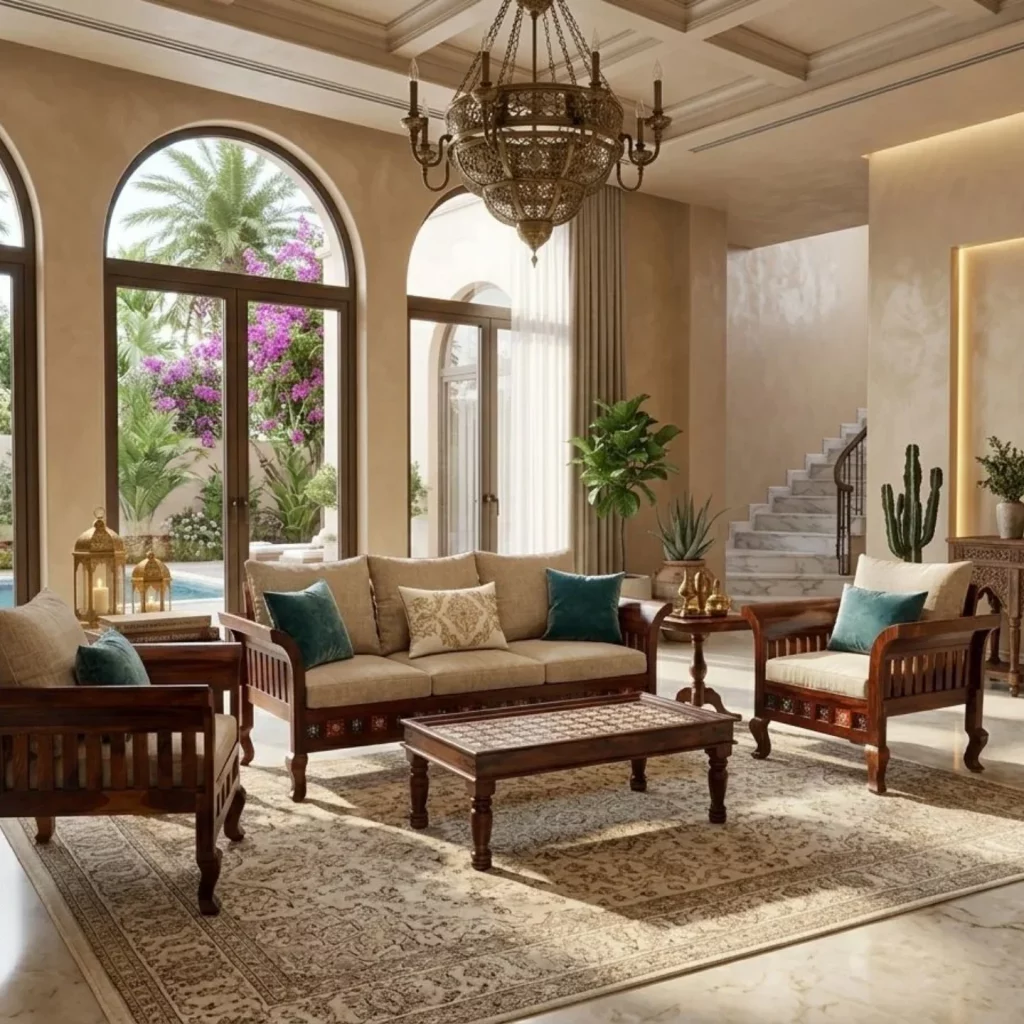
I like the way the wood furniture gives this expansive room a clear sense of structure. The sofas and chairs create a defined conversational arrangement rather than allowing the large floor area to feel empty. Their dark wood frames contrast with the light upholstery, while the coffee table visually connects the individual seating pieces into one cohesive group.
From my perspective, this arrangement shows why classic wood furniture can remain relevant even in a spacious, light-filled interior. The most important thing is proportion: the furniture needs to be substantial enough for the room while leaving comfortable pathways around it. I would also preserve the open sightlines toward the arched windows because they contribute so much to the overall feeling of space.
Deep Brown Dining Furniture With Soft Upholstered Seating
I immediately notice the rich dark-brown round dining table surrounded by four cream upholstered chairs with rounded backs and black legs. The table sits over a geometric floor covering in brown, cream, and terracotta tones, while a dark brown door and matching cabinetry reinforce the warm palette. Above the table hangs a sculptural white pendant light, and a small tray with dark ceramics and a pitcher creates a simple centerpiece.
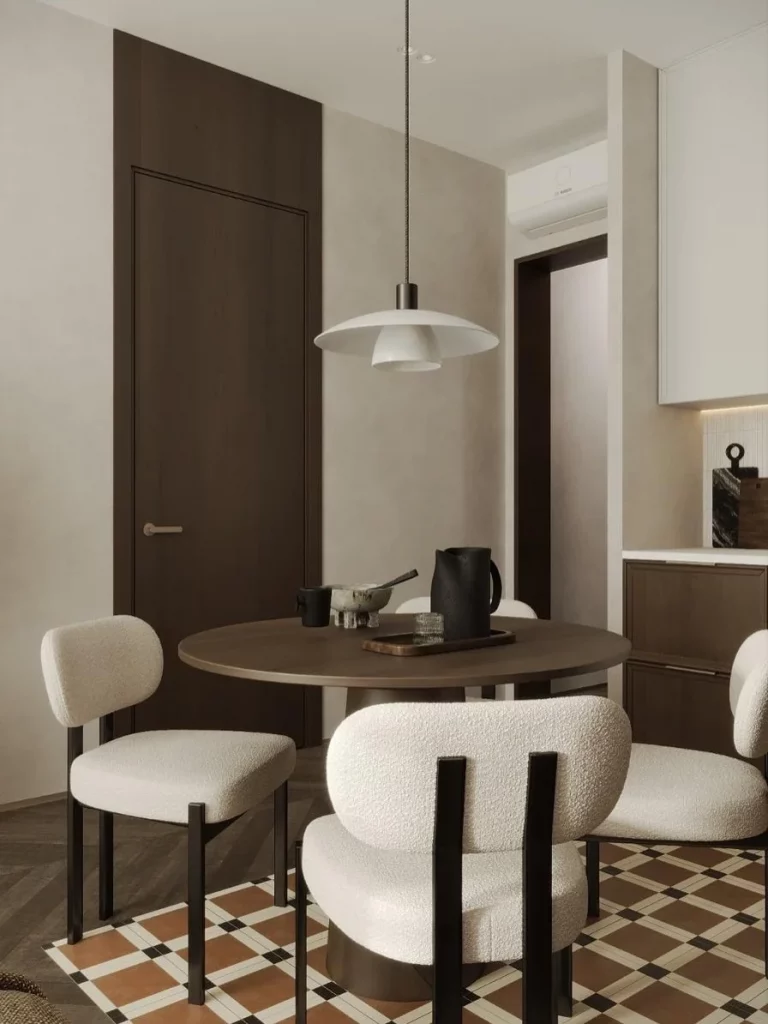
What makes this arrangement work for me is the contrast between the substantial dark wood table and the soft, light-colored seating. The rounded table also makes sense in this relatively compact dining area because it allows the chairs to sit naturally around it without creating sharp corners in the circulation space. I especially like how the black chair legs echo the darker furniture details, giving the composition a sense of continuity.
When I am looking at a dining space like this, I always pay attention to the relationship between the table, lighting, and floor. Here, all three elements help define the dining zone visually. I would keep accessories restrained, as the combination of the patterned floor, dark furniture, pendant, and sculptural chairs already provides plenty of character.
Carved Wood Cabinetry That Gives a Bedroom Character
This bedroom takes a completely different approach to wood furniture. A tall carved wooden bed frame occupies the left side of the room, while an imposing dark wood cabinet with glass-front doors and intricate carved details stands against the wall. The bed is dressed with striped cream-and-yellow bedding, and a large metal-toned vase with long red decorative stems sits beside the cabinet.
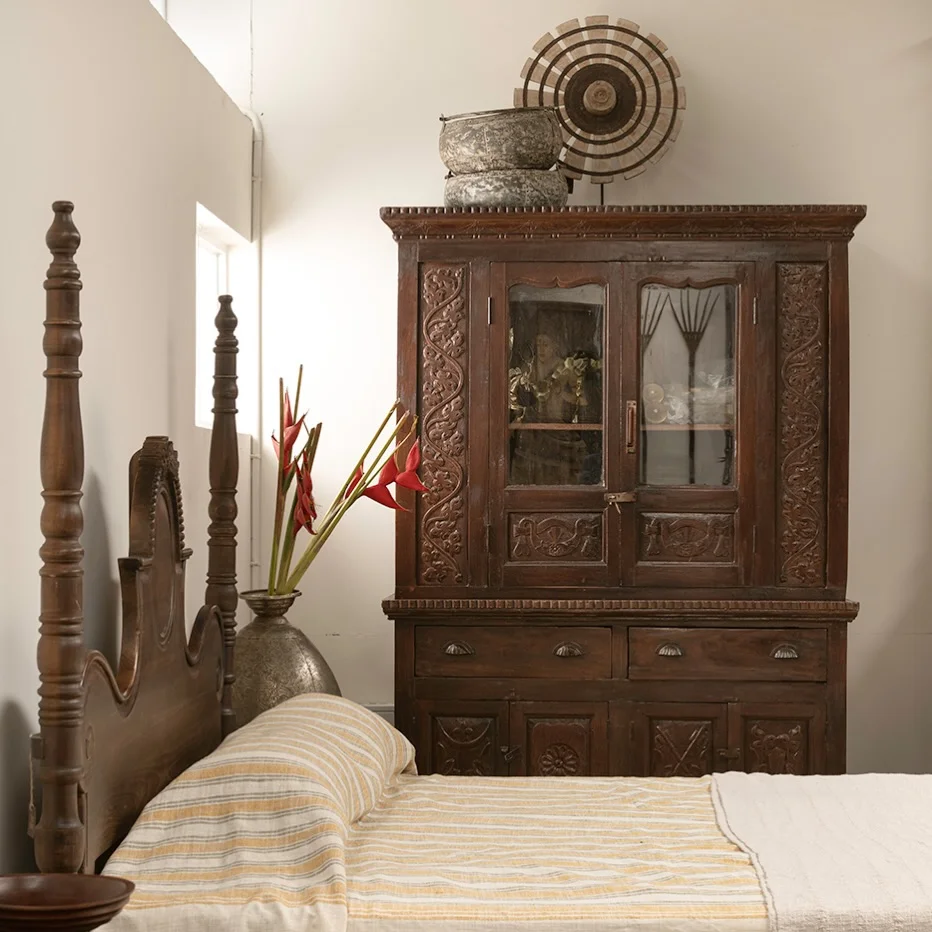
I like how the cabinet becomes the visual anchor without needing additional large pieces of furniture around it. Its substantial construction and decorative carving contrast with the light walls and relatively simple bedding. The glass doors also make the cabinet feel more visually open, allowing the objects inside to become part of the room’s styling rather than being completely hidden.
For me, this is a good reminder that one distinctive wood piece can define an entire room. If I were recreating this feeling, I would let the cabinet or bed remain the main feature and avoid competing with it through too many decorative objects. The restrained wall color shown here gives the carved furniture enough space to stand out.
Warm Wood Sofa With Lattice Arm Details
The sofa in this room has a beautiful combination of warm wood framing and cream upholstered cushions. The arms feature an open lattice pattern, while the back and seat cushions remain simple and softly tailored. Several cream pillows continue the neutral palette, and the sofa sits on a pale textured rug over a warm wood floor. A large window brings in natural light, while framed minimalist artwork hangs above the sofa.
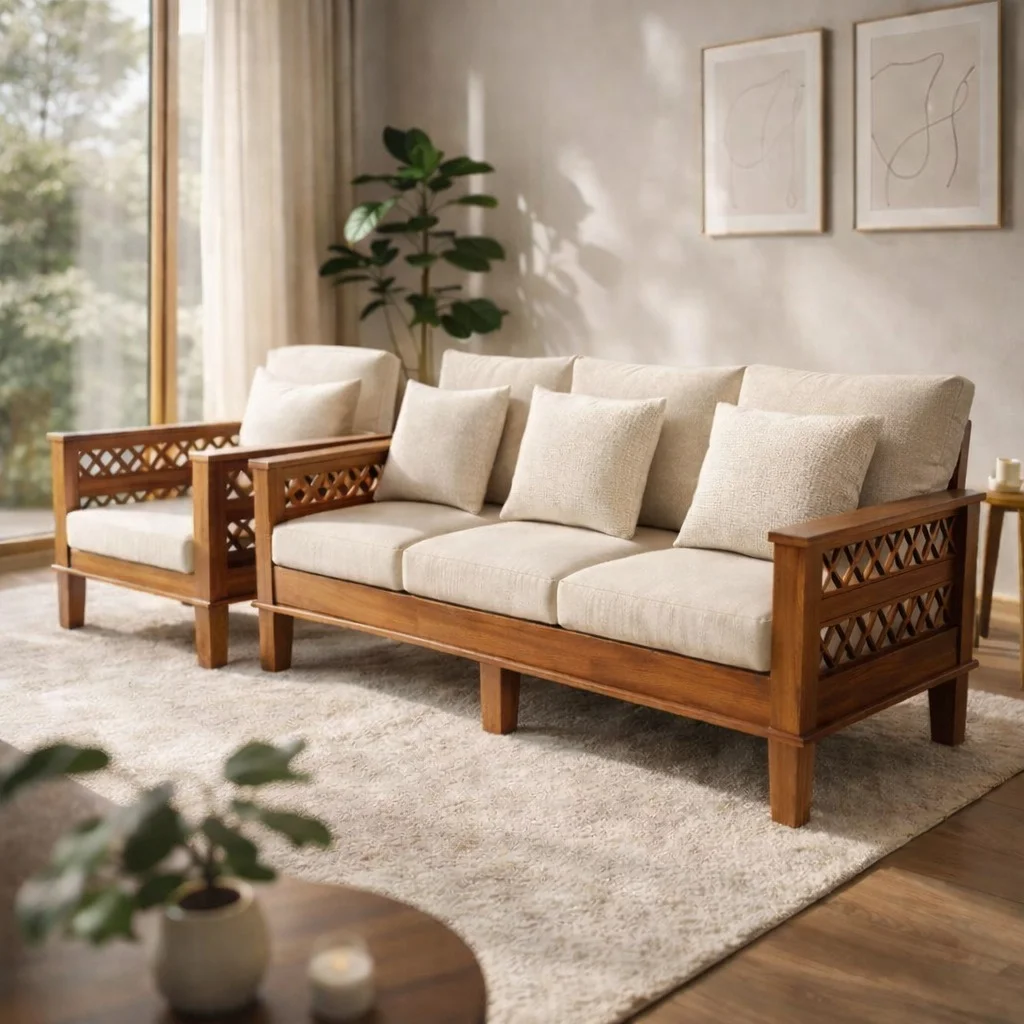
I think this design succeeds because the wooden frame gives the sofa a strong architectural outline while the upholstered cushions keep it comfortable and inviting. The open lattice sides add visual interest without making the sofa feel heavy. I also appreciate the way the light upholstery connects with the rug, curtains, and artwork, creating a calm backdrop for the warmer wood tones.
This is the kind of furniture I would use when I want wood to feel substantial but not overpowering. Instead of covering the room with matching wooden pieces, I would allow one beautifully framed sofa to carry much of the visual weight. The simple artwork shown here is also a useful lesson: a quieter wall treatment can help detailed furniture remain the focus.
Tree-Inspired Corner Shelving With Integrated Lighting
This shelving design is one of the most distinctive ideas in the collection. A natural-looking tree trunk rises vertically through a corner, with curved wooden shelves extending from it at several levels. Warm integrated lighting illuminates the shelves, which hold small decorative objects, framed photographs, books, bottles, and vases. The arrangement sits beside a window with a television visible on the adjoining wall.
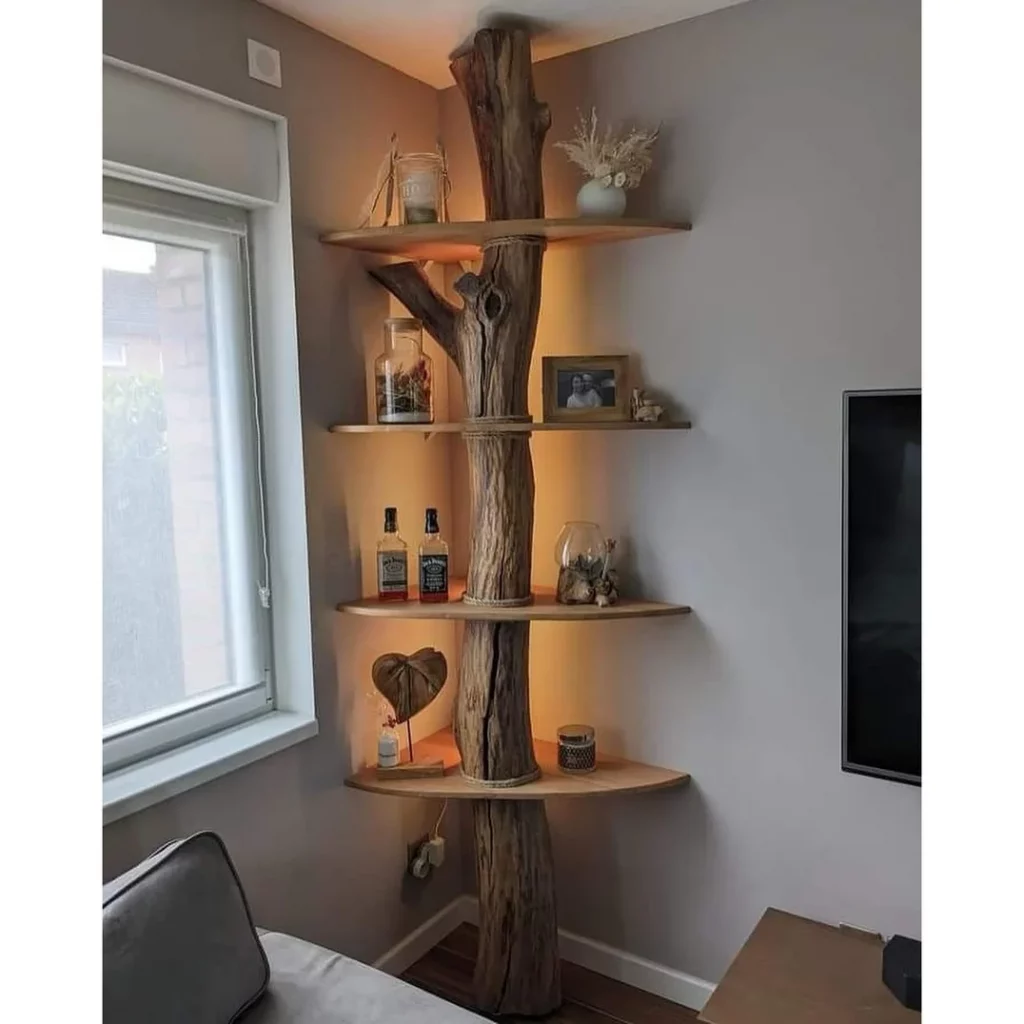
I find the combination of storage and sculptural design particularly interesting here. The shelves make use of an otherwise awkward corner while the central vertical form gives the entire unit a strong sense of structure. Because the lighting is built into the shelving, the objects become visible in the evening without requiring additional lamps in the corner.
For me, the practical lesson is to treat storage as part of the room’s visual identity. Rather than seeing shelving only as a place to put things away, this design turns it into a major feature. I would keep the objects displayed here selectively arranged so that the shelves remain useful without becoming visually crowded.
Warm Wood Dining Table Under Layered Pendant Lighting
This dining area combines a substantial rectangular wood table with dark-framed chairs featuring woven light-colored seats. Several pendant lights hang above the table, including large black fixtures in the foreground and fabric-shaded fixtures farther back. Wood ceiling beams repeat the material used on the dining table, while a dark sideboard, television, and wood-toned door appear in the background.
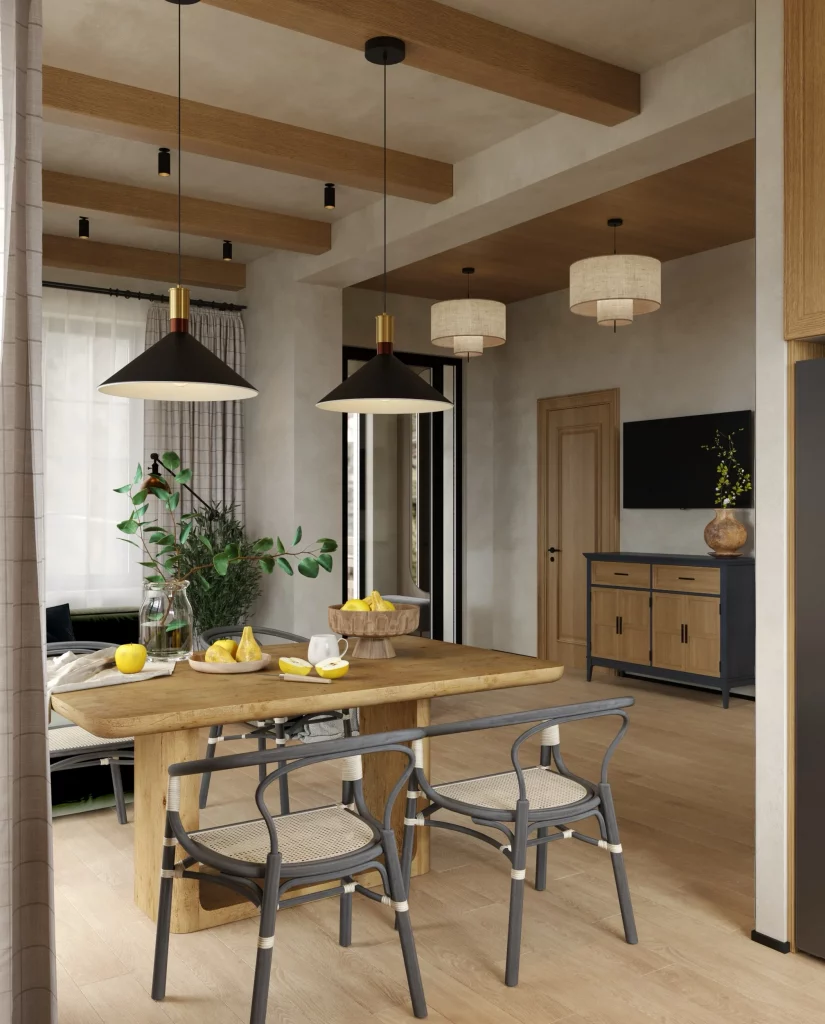
I like the strong connection between the ceiling, dining table, and surrounding furniture. The repeated wood tones visually tie together different areas of this open interior, while the black elements add definition. The long table also provides generous space for several diners and leaves room for the decorative bowls and fruit arranged down its center.
What I would take from this room is the importance of repetition. When I use wood furniture in a larger space, I find that repeating a related wood tone in architectural or furnishing details can make the room feel much more cohesive. The multiple pendant fixtures also help establish the dining table as a clear focal area.
Two-Tone Wood Coffee Table With Open Storage
The coffee table shown here has a particularly practical two-tone design. Its white upper structure includes an open shelf, while the lower section and side panels are finished in a warm medium-brown wood. Books are neatly arranged on the lower shelf, and the tabletop holds an open book, a dark blue mug, and a small potted succulent. Behind it sits a cream sofa with several pillows, while a woven room divider and potted greenery add texture.
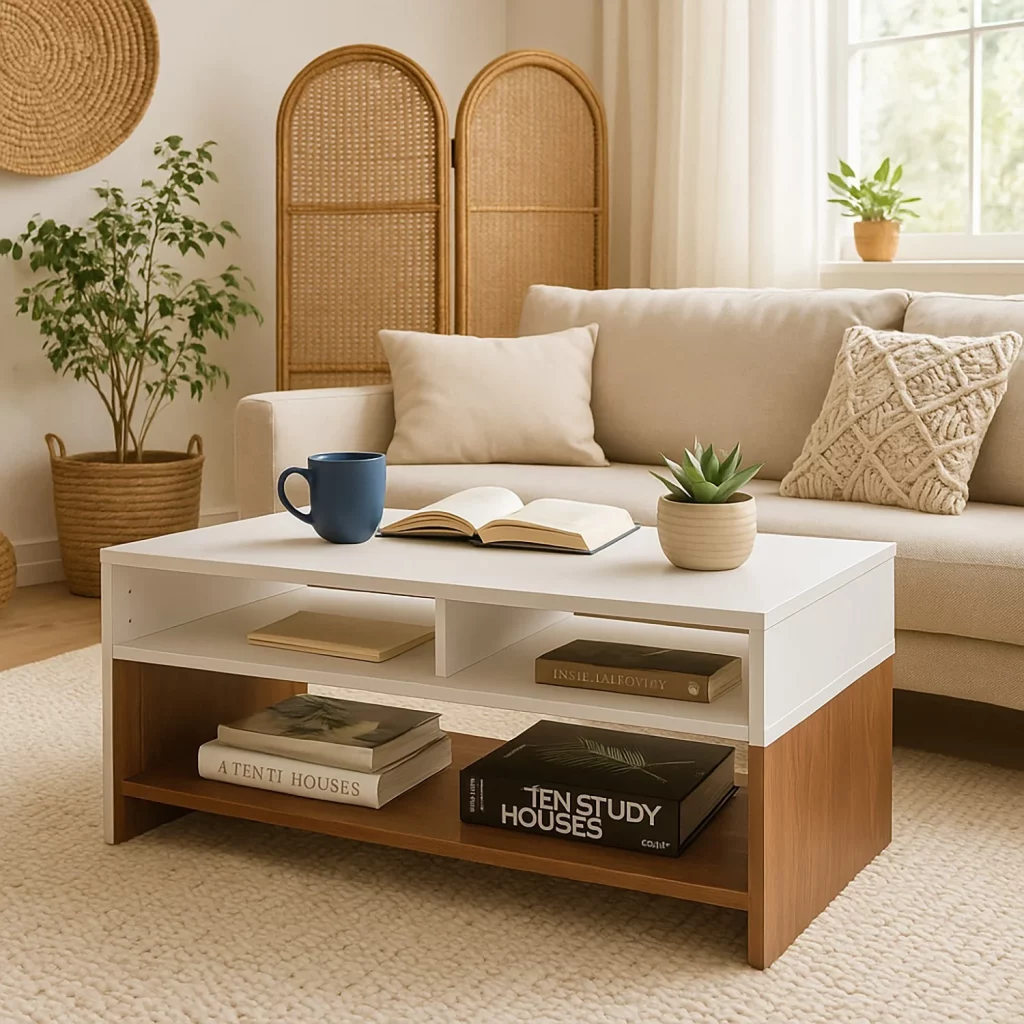
I appreciate how the table combines display space with a clean working surface. The open compartments provide a place for books without requiring additional storage furniture, while the broad tabletop can comfortably accommodate everyday items. The contrast between white and wood also keeps the relatively substantial table from looking too visually heavy.
For me, this is a very approachable way to introduce wood furniture into a lighter living room. I would use the open shelves for a limited number of books and objects, just as shown here, rather than filling every available space. Keeping some empty areas makes the storage feel intentional and allows the furniture itself to remain visible.
Simple Wood Cabinets With Sculptural Decorative Pieces
This interior uses two low wood cabinets in a warm natural finish, positioned against a softly colored wall. Each cabinet has simple flat doors, creating a clean backdrop for the sculptural objects displayed on top. One piece resembles a small stylized figure with a pointed form, while the larger cabinet supports a rounded wooden character sculpture. A framed artwork is partially visible on the left.
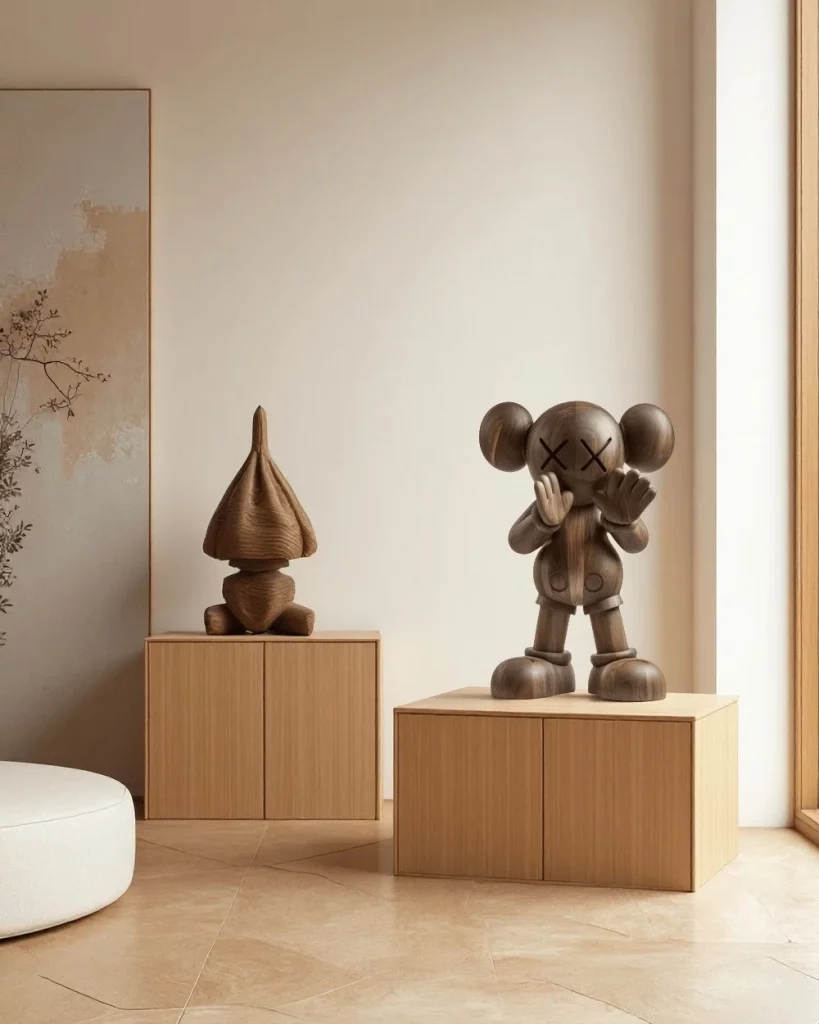
I like the restraint of this arrangement. The cabinets provide practical concealed storage while their simple rectangular forms allow the sculptural objects to take center stage. The matching wood finish also creates a visual relationship between the furniture and accessories without requiring elaborate detailing.
This is a good example of how I would approach decorative furniture in a minimalist room. Instead of filling the cabinet tops with many small objects, I would choose a few pieces with enough shape and scale to be noticed. The open wall area around the sculptures is equally important because it prevents the composition from feeling crowded.
Statement Wood Dining Room With Sculptural Wall Decor
This dining room makes wood part of almost every major visual element. Vertical wood panels cover the walls, diagonal textures appear behind the central artwork, and a long dining table is surrounded by dark chairs with cream upholstered seats. Above the table hangs an elaborate branching chandelier, while three large sculptural shell-like forms decorate the central wall. The floor features a striking geometric black-and-white marble pattern.
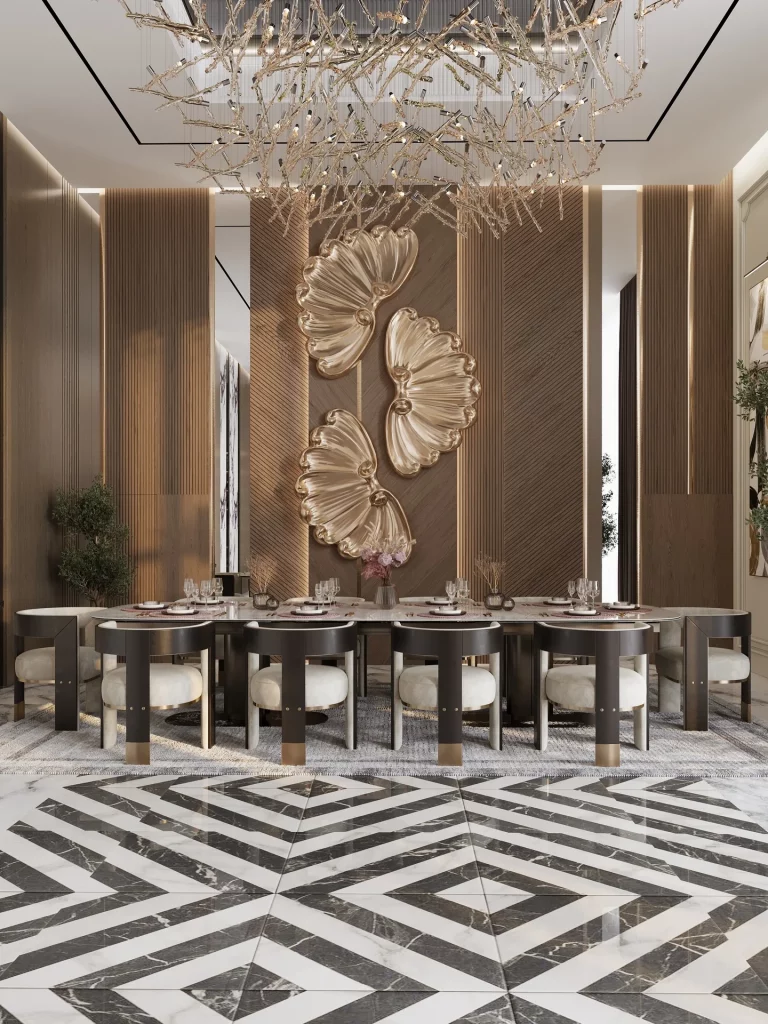
For me, the most successful aspect is the layering of textures. The vertical wall treatment, diagonal paneling, upholstered seating, sculptural centerpiece, chandelier, and patterned floor all have distinct surfaces, yet the restrained neutral palette keeps them connected. The long table also suits the scale of the room and provides a strong horizontal line beneath the oversized wall decoration.
I would approach a room like this with careful editing. The architecture and major furniture already make a strong statement, so smaller accessories should remain secondary. What I find especially useful here is the way wood can be used on both walls and furniture to create warmth even when the overall room has a formal, highly structured appearance.
Built-In Wood Shelving Wrapped Around a Natural Trunk
This living area features an extraordinary wall of open wooden shelving, with a large natural-looking trunk running vertically through its center. The shelving is arranged in repeated compartments, each illuminated with warm lighting and styled with books, small objects, vases, and greenery. A curtain-covered window sits to the left, while a small round wood table and part of a light upholstered chair appear nearby.
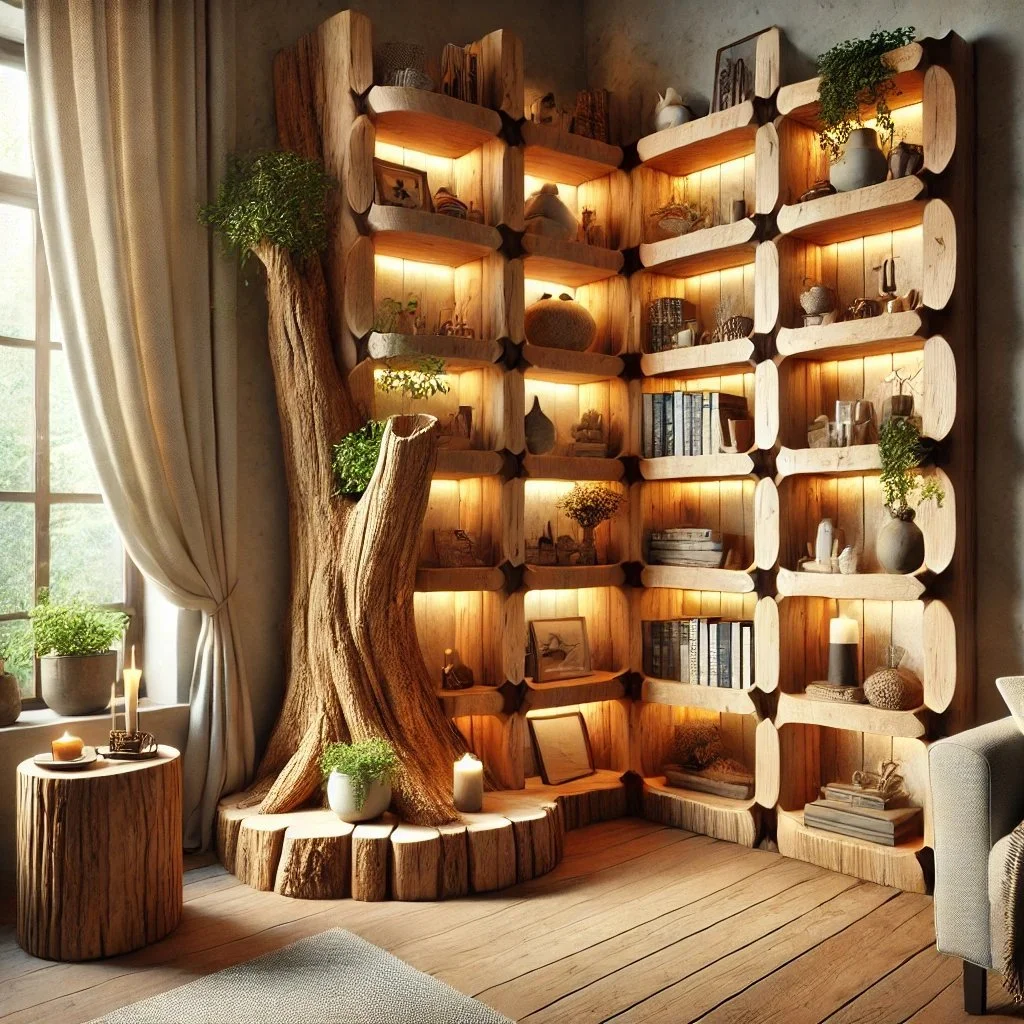
I love the way this furniture turns storage into an architectural feature. The repeated compartments provide plenty of individual spaces for organizing books and decorative objects, while the central trunk creates an organic visual line through the otherwise regular shelving. The warm lighting is especially effective because it emphasizes the depth of the shelves and makes the entire wall feel inviting.
From my perspective, the strongest lesson here is that storage does not have to disappear. When a shelving system is thoughtfully designed, it can become the main personality of a room. I would keep the displayed items varied in height and shape but leave some compartments relatively open, allowing the structure itself to remain part of the composition.
Wood Storage Bench With Strong Rustic Construction
The final piece is a compact wood bench with an upholstered seat and a highly substantial frame. The front features broad wooden panels reinforced with dark metal bands, while the sides have thick vertical supports and curved handles. A wooden coat rack hangs above it, and the bench sits beside a stacked stone wall over a large gray tiled floor. The neutral upholstery provides a comfortable-looking place to sit.
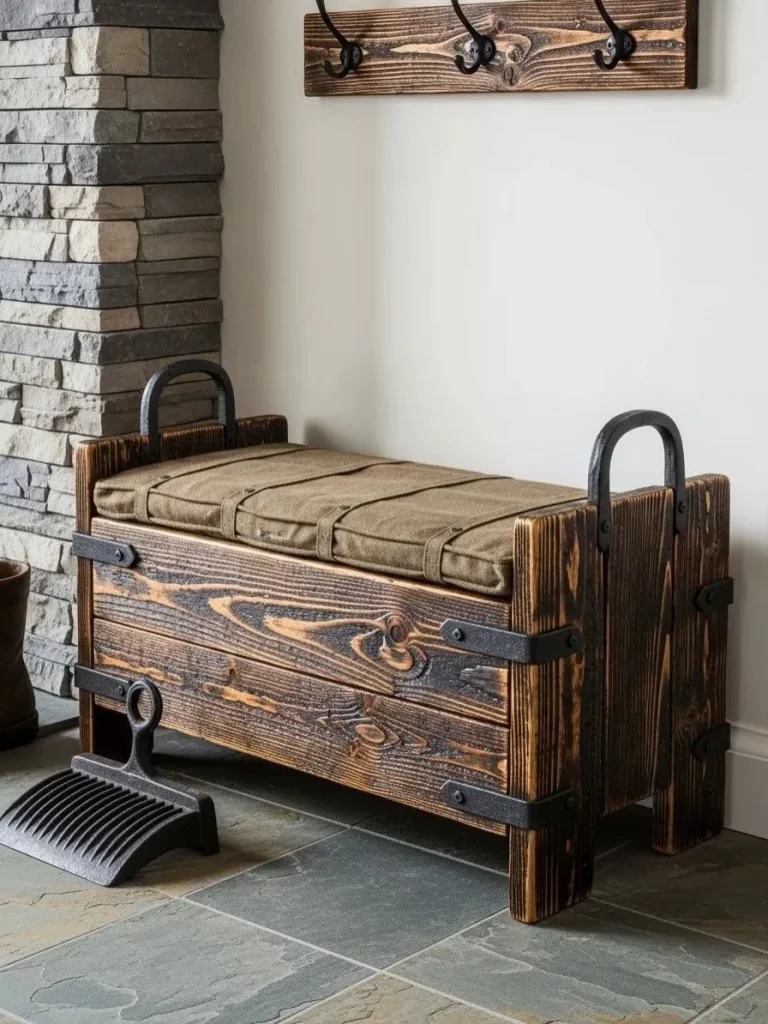
I think this bench demonstrates how wood furniture can solve a practical problem while still becoming a defining feature. The generous seat creates a convenient place to sit, while the enclosed lower section provides storage without exposing its contents. The dark metal hardware also gives the piece a strong visual structure that works naturally with the nearby stone surface.
For me, an entryway piece like this is most successful when durability and usefulness are considered alongside appearance. The substantial construction shown here makes the bench feel suited to an everyday space, while the upholstered top adds comfort. I would keep the area around it relatively uncluttered so the bench, coat rack, and stone wall can remain clearly visible.
Warm Wood Staircase With Integrated Lighting
I’m immediately drawn to the staircase because the wooden treads create a strong visual rhythm against the light walls. Each step appears to have integrated lighting beneath it, producing a soft glow that emphasizes the individual levels and makes the staircase feel almost sculptural. A slim dark railing runs upward through the center, while glass panels near the upper landing keep the composition visually open. At the top, tall curtains and a textured wood-toned wall add another layer of warmth.
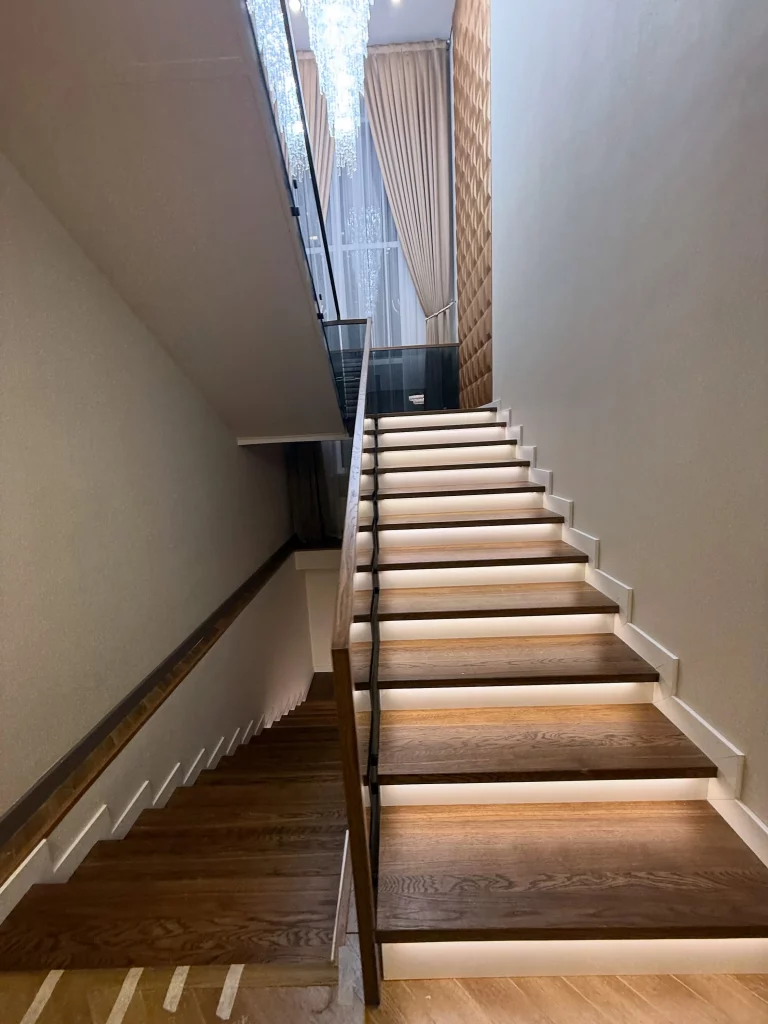
For me, this is a great example of how wood can become more than simply a furniture material. The substantial stair treads add warmth and visual weight, while the pale surrounding surfaces prevent the staircase from feeling too heavy. The lighting is also highly practical because it improves visibility on the stairs while creating an atmospheric effect in the evening.
If I were taking inspiration from this design, I would pay close attention to the relationship between the wood tone and the surrounding finishes. The staircase works because the wood has enough contrast to stand out without competing with every other element. I also like the idea of using subtle integrated lighting rather than adding visually bulky fixtures around the stairs.
Wood and Metal Coffee Table With Industrial Character
I like the substantial coffee table shown here because its warm wood top immediately becomes the focal point of the seating area. The tabletop has a paneled appearance with visible grain and a darker surrounding edge, while the lower structure is made from dark metal with an intricate geometric framework. A gray upholstered sofa sits behind it, and the television console in the background continues the use of warm wood.
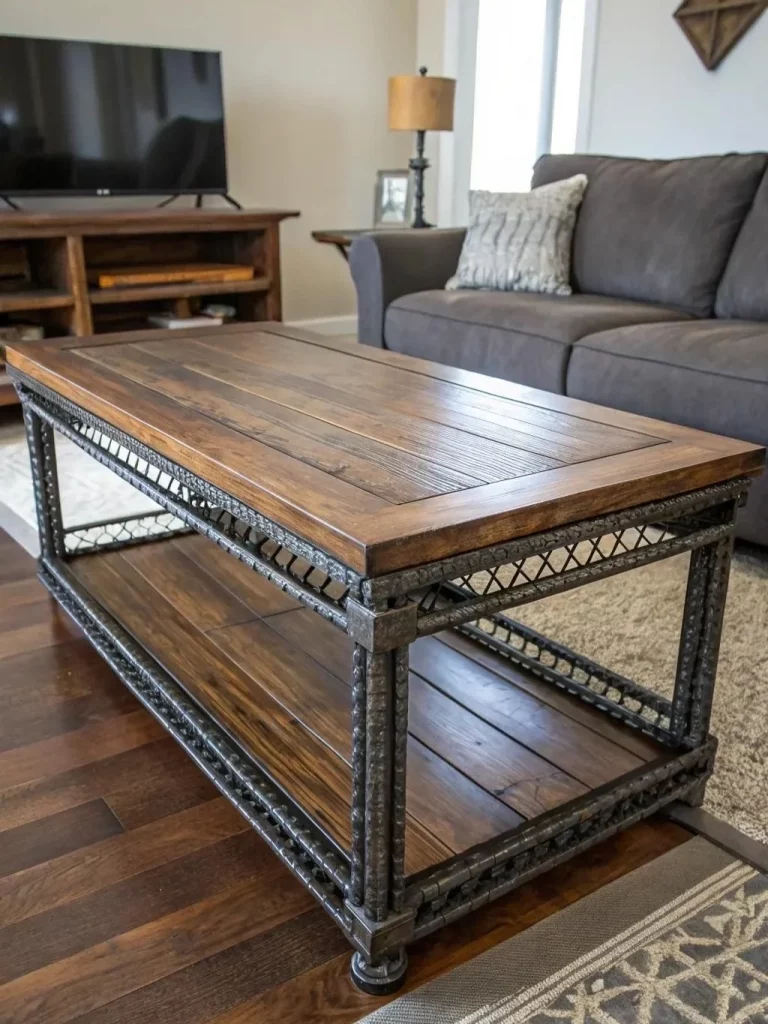
The combination works particularly well because the materials balance one another. The wood softens the harder appearance of the metal frame, while the metal gives the table a strong structural presence. I also appreciate the lower shelf, which provides useful space for books or other objects without requiring another storage piece.
From my perspective, a coffee table like this works best when the surrounding furniture is relatively restrained. The table already has plenty of visual detail, so I would let its construction remain noticeable instead of covering the surface with too many accessories. A few carefully chosen objects can leave enough of the wood grain visible to appreciate the craftsmanship.
Warm Wood Built-In With Sculptural Display
This interior takes a much more seamless approach to wood furniture. I see a wall of warm wood cabinetry with clean vertical lines, a long built-in surface, and a matching desk or console extending into the foreground. Books and small decorative objects are arranged along the shelf, while a large wooden sculptural figure provides the central point of interest. The furniture has rounded edges and softly curved details that make the extensive woodwork feel approachable.
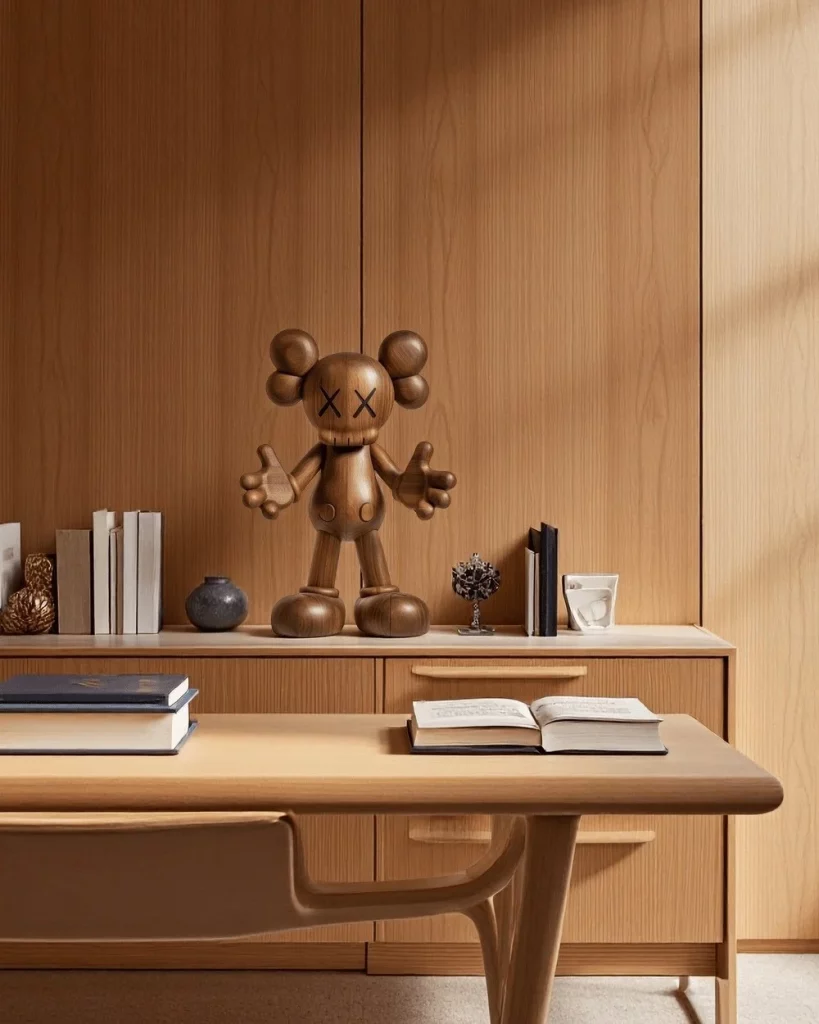
What works for me here is the consistency of the material. The cabinetry, shelving, and desk appear to belong to one coordinated composition rather than looking like unrelated furniture pieces. At the same time, the open shelf breaks up the closed storage and gives the room space for books and personal objects.
I would use this image as inspiration for anyone who wants furniture to feel integrated into the architecture. Instead of filling a room with several separate cabinets, a built-in arrangement can use one wall efficiently while creating a much calmer visual effect. I especially like the combination of straight cabinetry with rounded furniture edges because it prevents the design from becoming too rigid.
Two-Tone Wood Coffee Table With a Clean Modern Form
I love the simplicity of this coffee table, which combines a rich wood tabletop with a white lower section and an open shelf. Its rectangular shape provides plenty of usable surface area in front of a soft white sofa, while the lower compartments offer room for books and a few everyday objects. Large windows bring in natural light, and the restrained styling keeps attention on the furniture itself.
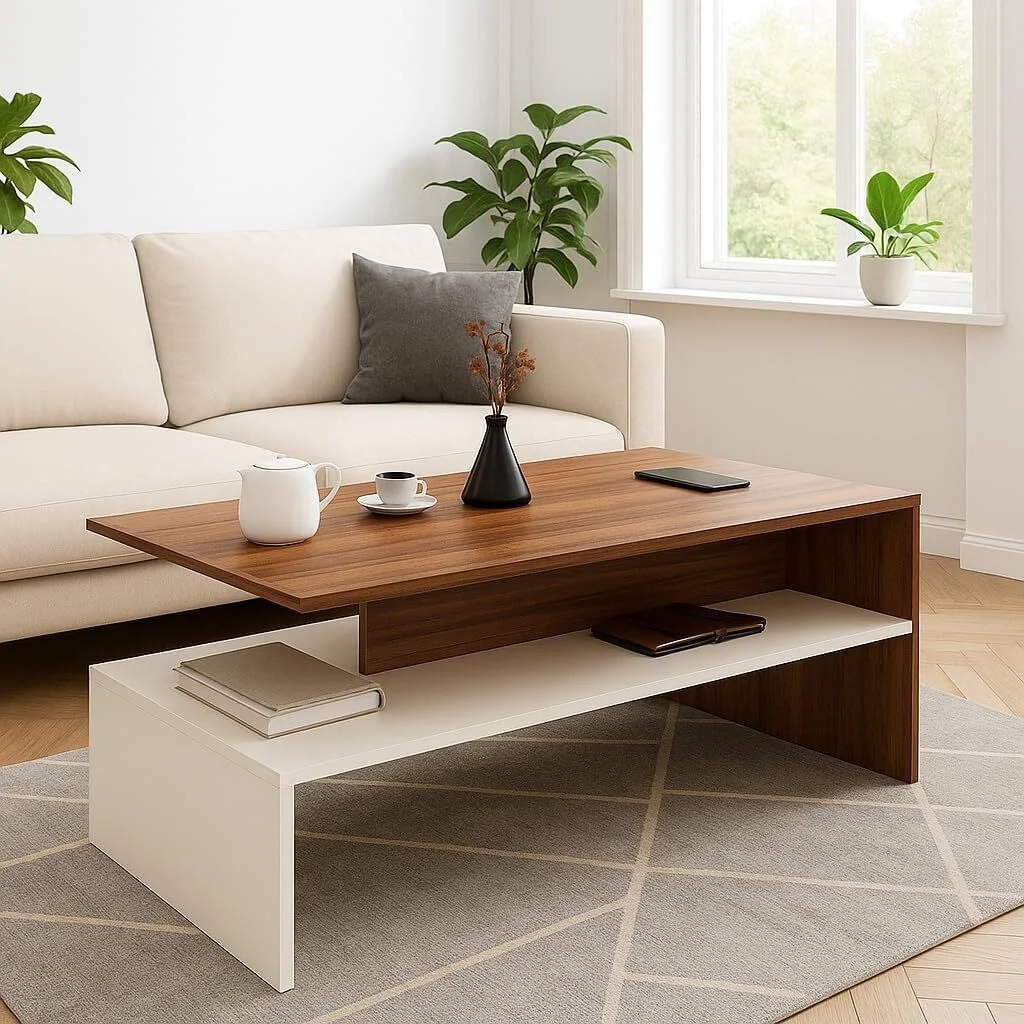
For me, this is a practical approach to using wood in a modern living room. The warm tabletop introduces contrast without overwhelming the light interior, while the white base visually connects with the sofa and walls. The open storage also keeps useful items accessible while preventing the table from becoming a purely decorative object.
When I’m looking at a compact living room, I always appreciate furniture that performs more than one function. This table combines a generous tabletop with additional storage, so it can reduce the need for extra pieces around the seating area. The key is to keep the lower shelf edited, as the open design looks best when only a few items are visible.
Dark Wood Entryway With Patterned Tile Flooring
This entryway shows how wood furniture and cabinetry can create a sophisticated first impression. I see several tall dark wood doors and built-in storage surrounding a central doorway, with a compact console positioned along the side. The floor features a striking black-and-white geometric tile pattern that creates a strong contrast with the deep wood tones. Simple lighting and minimal objects keep the space visually controlled.
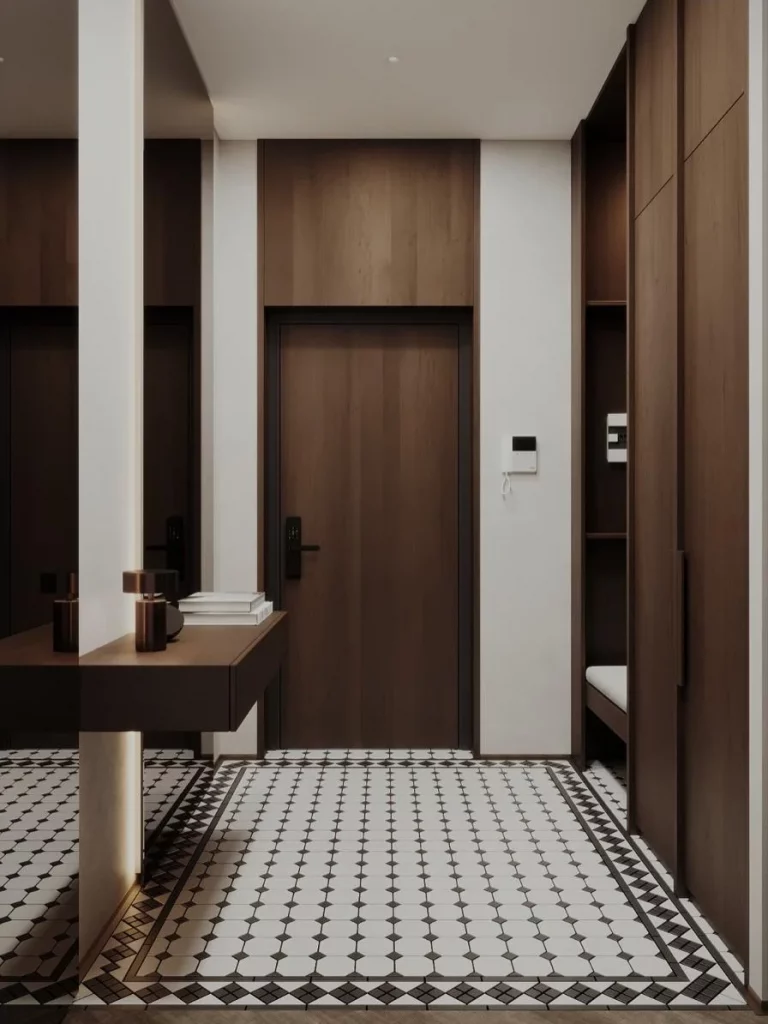
I think the design succeeds because the patterned floor and woodwork have clearly defined roles. The flooring provides visual interest underfoot, while the cabinetry adds warmth and practical storage. The tall vertical surfaces also make the entryway feel structured and organized without relying on a large number of decorative pieces.
For my own decorating approach, I would take this as a reminder that an entryway does not need many accessories to feel finished. A well-designed console, useful cabinetry, and carefully selected flooring can establish the entire character of the space. Keeping the surfaces relatively clear also makes the beautiful woodwork easier to notice.
Soft Bedroom With a Wood Paneled Accent Wall
I find this bedroom especially calming because the warm wood wall behind the bed creates a strong backdrop without making the room feel dark. A large upholstered bed sits in front of it, dressed in white bedding with a brown throw and neutral pillows. A simple wood nightstand stands beside the bed with a round glowing lamp, while full-height curtains frame the large window overlooking the surrounding buildings.
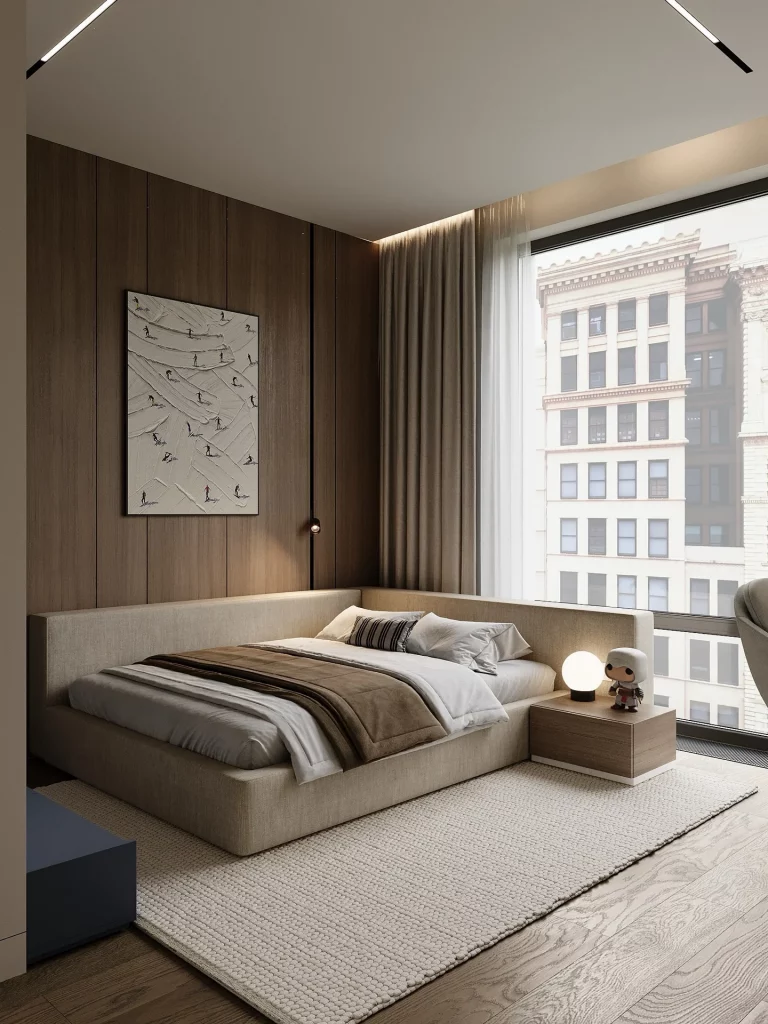
The furniture works because the hard warmth of the wood is balanced by the softness of the upholstered bed, bedding, rug, and curtains. I also like the restrained bedside arrangement because it keeps the sleeping area functional without filling it with unnecessary objects. The large rug adds another layer of texture and visually defines the bed area.
If I were recreating this atmosphere, I would keep the palette close to the combination shown here: warm wood, soft beige, white, and brown accents. The important detail is not to make every element the same color. The subtle differences between the wood, textiles, flooring, and curtains give the room depth while maintaining a restful appearance.
Rich Wood Seating With Ornamental Detailing
This room presents a completely different interpretation of wood furniture. I see a substantial wooden sofa and matching armchairs with carved and patterned detailing, upholstered in deep teal fabric and surrounded by richly patterned rugs. The wall behind the seating features intricate wood panels and a central decorative mosaic, while a large hanging lantern adds an elaborate focal point above the arrangement.
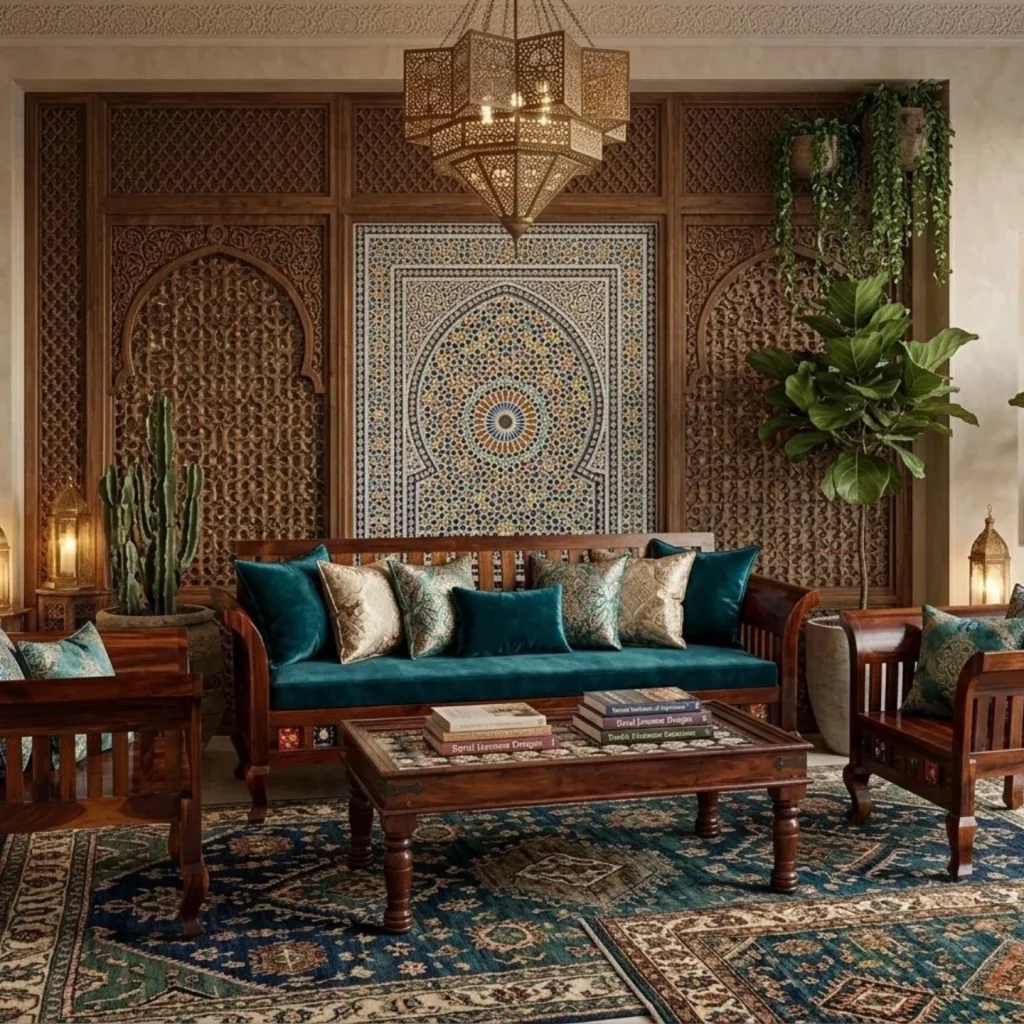
What I find interesting is the way the furniture becomes part of a much larger decorative composition. The wood seating provides a strong structural foundation, while the upholstered cushions introduce softness and color. The rugs, wall panels, mosaic detail, and lighting all have considerable visual presence, yet they are united by the warm, deep tones repeated throughout the room.
My main decorating observation here is that ornate furniture benefits from repetition. If I introduced a richly detailed wood piece into a simpler home, I would allow it to remain the star rather than surrounding it with many unrelated accents. In this room, however, the detailed furniture works because the architectural backdrop and textiles have enough richness to support it.
Warm Wood Living and Dining Area With Coordinated Furniture
I like how naturally the wood moves through this open interior. The room includes several wood-paneled doors, exposed ceiling beams, a wood-toned dining table, and a matching console beneath the television. A set of gray-framed chairs surrounds the dining table, while soft neutral walls and upholstered seating keep the overall environment comfortable. Pendant lights hang across the ceiling, adding a clear visual layer above the furniture.
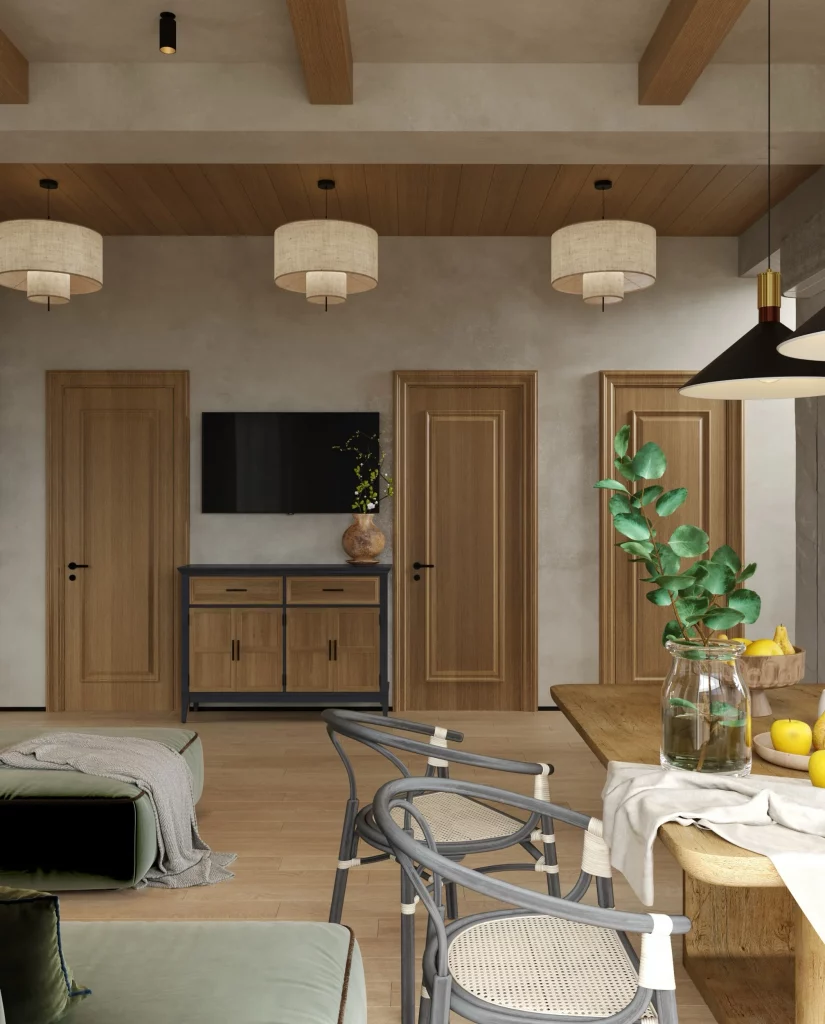
The strongest feature for me is the coordination between the different wood elements. The doors, ceiling beams, table, and console create continuity across the open space without requiring every piece to look identical. The furniture also feels appropriately scaled to the room, leaving clear circulation areas between the seating and dining zones.
I would borrow this idea when working with an open-plan home where several functions need to feel connected. Repeating a similar wood tone across separate pieces can make the rooms feel intentionally related. I also like the restrained use of accessories, because the architecture and furniture already provide plenty of visual structure.
Curved Wood Lounge Furniture In a Soft Neutral Interior
This seating arrangement shows how expressive wood furniture can be even when the color palette remains quiet. The large curved armchair has a beautifully rounded wooden frame surrounding a light upholstered cushion, and a matching sofa sits behind it. A low curved coffee table continues the rounded forms, while warm neutral textiles cover the floor and seating. Natural light enters through the tall windows, emphasizing the wood grain.
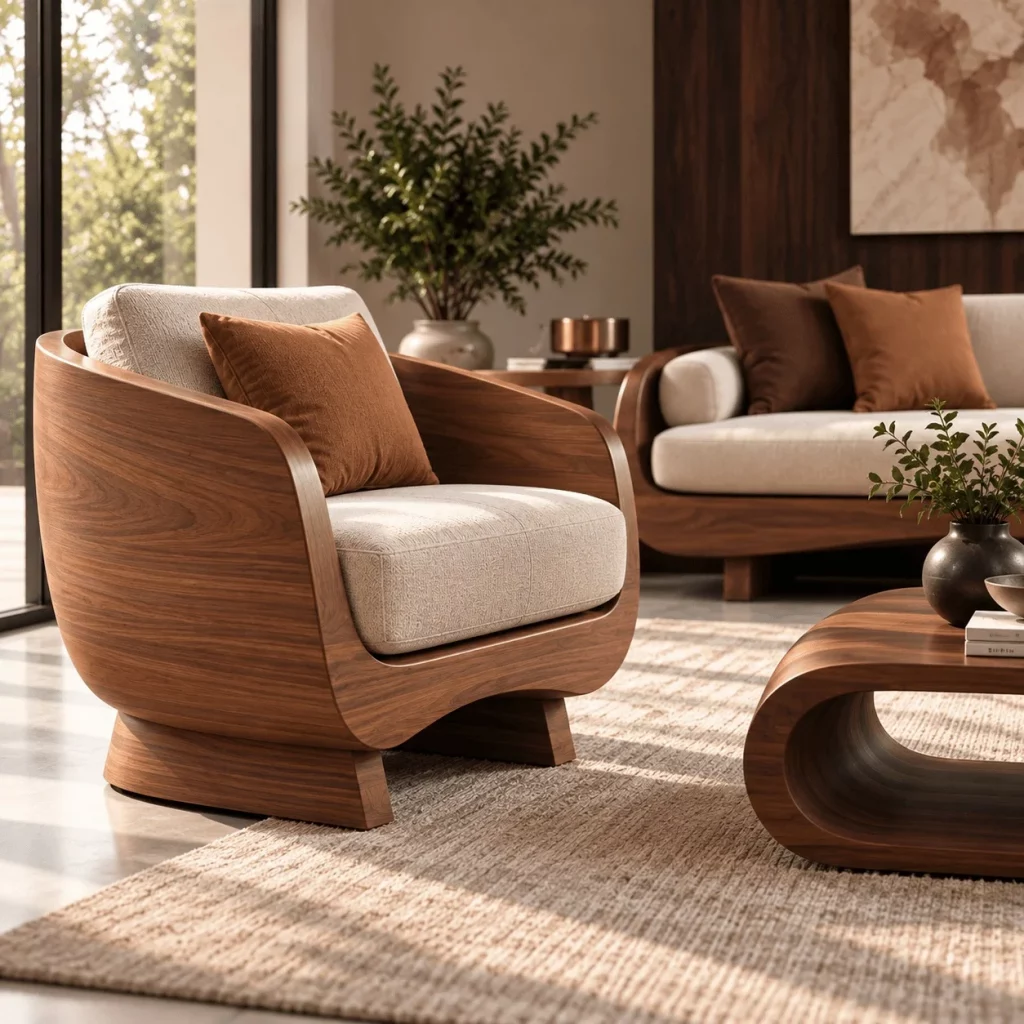
For me, the appeal comes from the contrast between the sculptural silhouettes and the understated colors. The curved furniture has a strong personality, but the cream, beige, and brown palette keeps the room comfortable rather than visually busy. The generous chair also appears designed for relaxed sitting, so the furniture combines decorative impact with everyday comfort.
I would use this approach when a room needs character without relying on bold color. One beautifully shaped wooden chair or table can provide a focal point on its own. I would also give sculptural pieces enough surrounding space to be appreciated, because crowded placement would make their rounded forms much less effective.
Organic Wood Shelving With a Sculptural Centerpiece
The final image takes wood furniture in an especially artistic direction. I see a shelving composition built from irregular natural-edged wood slabs, with a substantial branching wood form running vertically through the center. Books, small vessels, candles, and decorative objects are arranged across the shelves, while a round wood side table sits nearby and a light upholstered chair occupies the corner. A wood-plank wall behind everything reinforces the material theme.
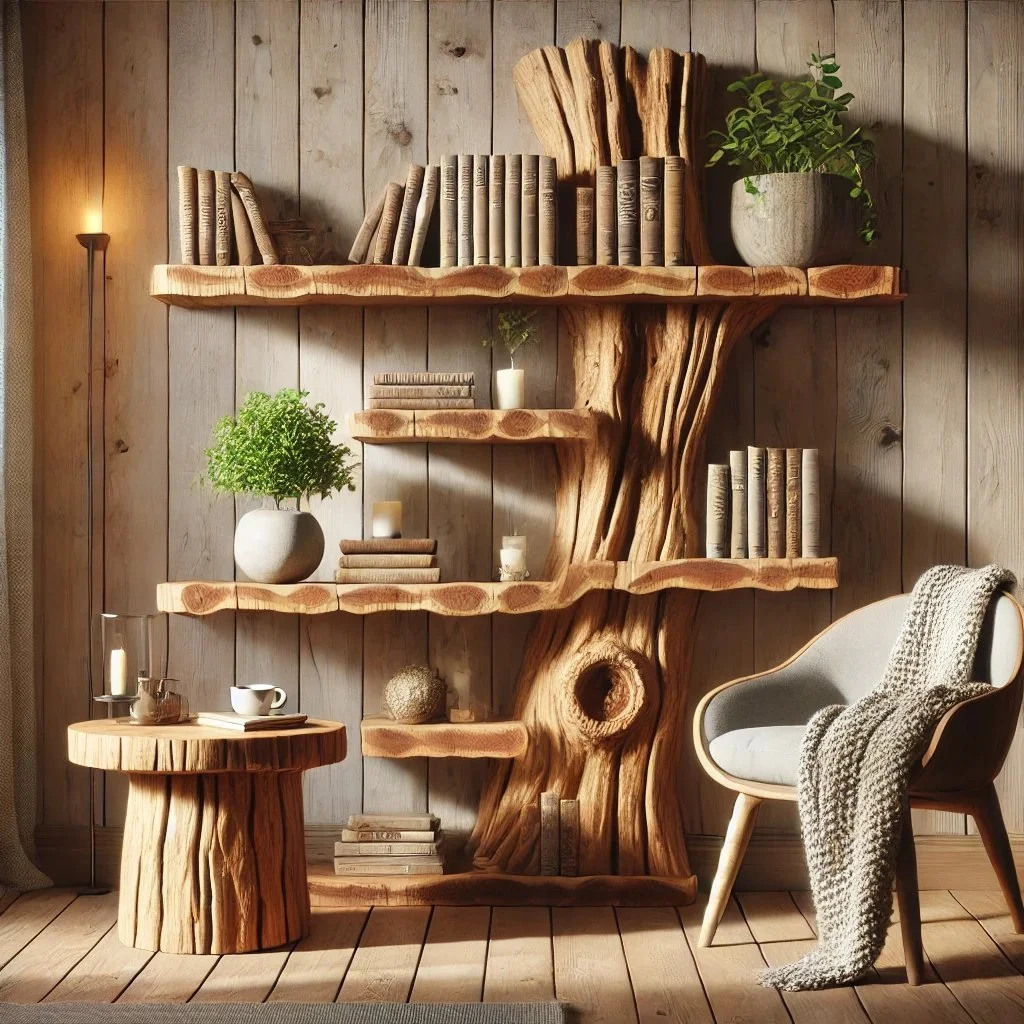
What I appreciate most is the combination of storage and sculptural design. The shelves provide practical space for books and display objects, but their uneven edges and central organic form make the entire unit feel like a statement piece. The nearby chair and side table also create a small reading or relaxing zone without competing with the shelving.
I would take inspiration from this idea for a room that needs storage but could benefit from a stronger focal point. The trick is to let the shelving itself provide the personality and keep the displayed objects relatively selective. Books and a few carefully positioned accessories are enough to make the shelves useful while allowing the unusual wood construction to remain the main attraction.
Wooden Trunk Table Anchoring a Soft Bedroom
The bedroom immediately catches my attention with its combination of pale horizontal wall boards, a wood-paneled ceiling, and a large upholstered bed dressed in muted lavender-gray bedding. At the foot of the bed sits a substantial wooden trunk-style table with turned supports, carved detailing, a dark stained surface, and built-in compartments holding books. A slim wooden shelving unit stands beside the bed, while a round leaning mirror, woven wall decoration, sheer curtains, and a leafy potted plant complete the composition. I love the contrast between the substantial wood furniture and the soft textiles throughout the room.
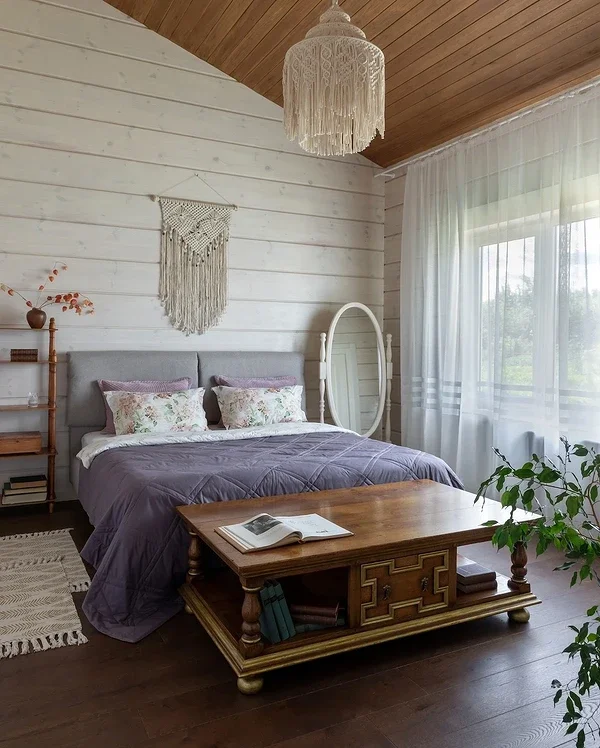
The large table at the foot of the bed is particularly practical because it provides both a surface and enclosed storage without requiring additional floor space elsewhere. I also like the way its darker finish gives the pale upholstered bed more visual weight and creates a clear focal point at the lower end of the room. The open shelving beside the bed adds another useful storage zone while keeping books visible and easy to reach. To me, this is a good example of using one substantial wooden piece to combine function, character, and visual structure.
If I were recreating this feeling, I would let one detailed wooden furniture piece take the lead instead of filling the bedroom with matching wood. The existing room works because the wood is balanced by upholstered furniture, soft bedding, white curtains, and pale walls. I would also keep the tabletop relatively uncluttered, since the generous surface already has enough presence on its own. A few carefully chosen books, like those shown here, are enough to make the furniture feel lived-in without overwhelming it.
Dark Blue Bedroom With a Sculptural Wood Statement
Here, the wooden element becomes much more sculptural. A large irregularly shaped wood slice is mounted centrally above a low upholstered bed, standing out beautifully against the deep blue wall. The room also features exposed wood ceiling beams, a warm wood floor, vertical wood slats near the wardrobe area, and small dark bedside tables. I notice how the natural pattern of the large wood piece becomes the main decorative feature while the rest of the furniture remains restrained.
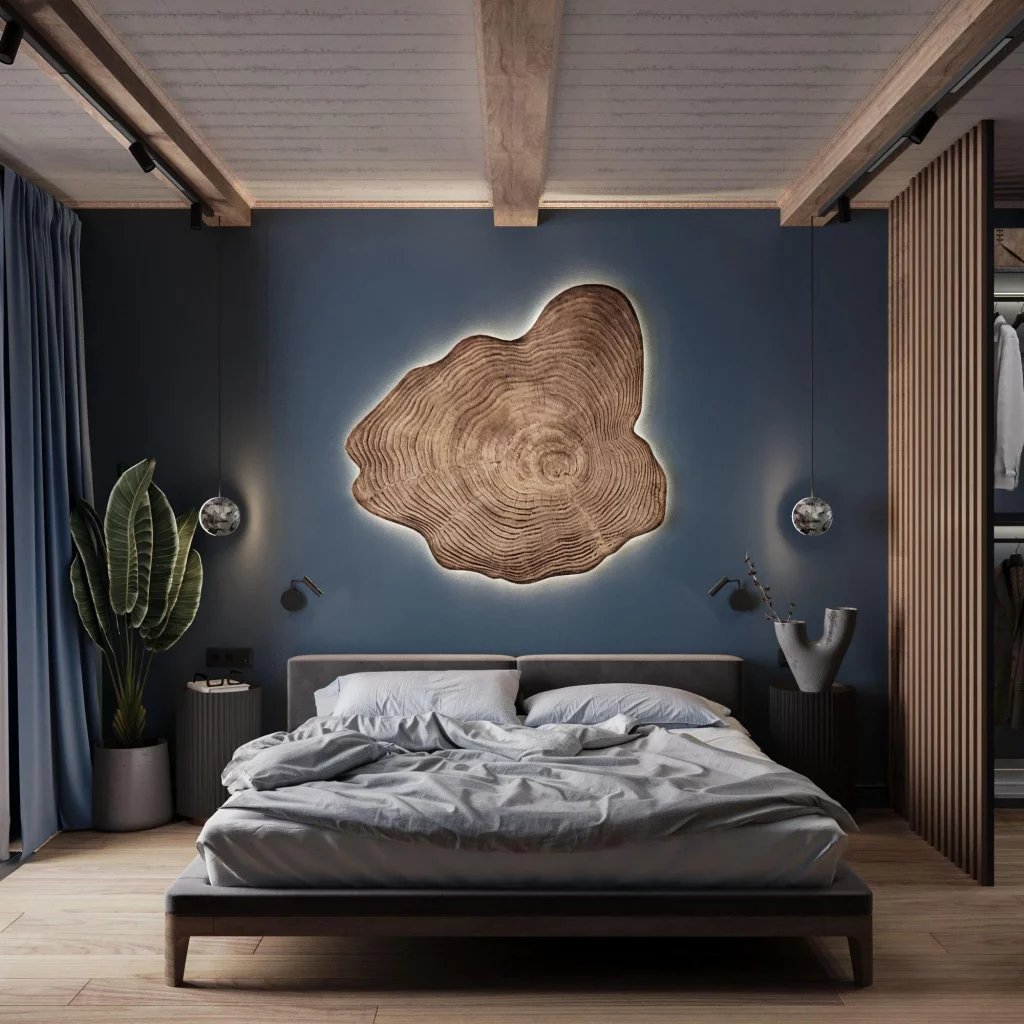
What makes this arrangement work for me is the balance between the cool dark wall and the warmth of the wood. The large wood form gives the wall texture and movement without requiring a collection of smaller decorations. Meanwhile, the low bed keeps the composition horizontal, allowing the statement piece above it to remain the visual focus. The vertical slatted partition on the right also adds rhythm while separating the sleeping area from the storage space without completely closing it off.
I would use this approach when I wanted wood furniture or wood detailing to feel artistic rather than conventional. Instead of adding several decorative pieces, I would choose one substantial wooden feature with an interesting natural outline and let it breathe. The lighting is also important here: the subtle illumination around the sculptural wood emphasizes its edges and surface pattern. That small detail shows me how carefully positioned light can make a material feel much richer at night.
Built-In Wooden Shelving Beside a Minimal Bedroom
This bedroom takes a more streamlined approach, pairing a gray upholstered bed with a striking floor-to-ceiling wooden shelving unit. The shelving is divided into individual compartments, each softly illuminated from within, and contains books, small sculptural figures, a lamp, and headphones. On the opposite side of the room, narrow vertical wall elements create a textured backdrop behind the bed, while a small round black table sits beside it. The combination of gray, warm wood, and carefully controlled lighting feels contemporary and composed.
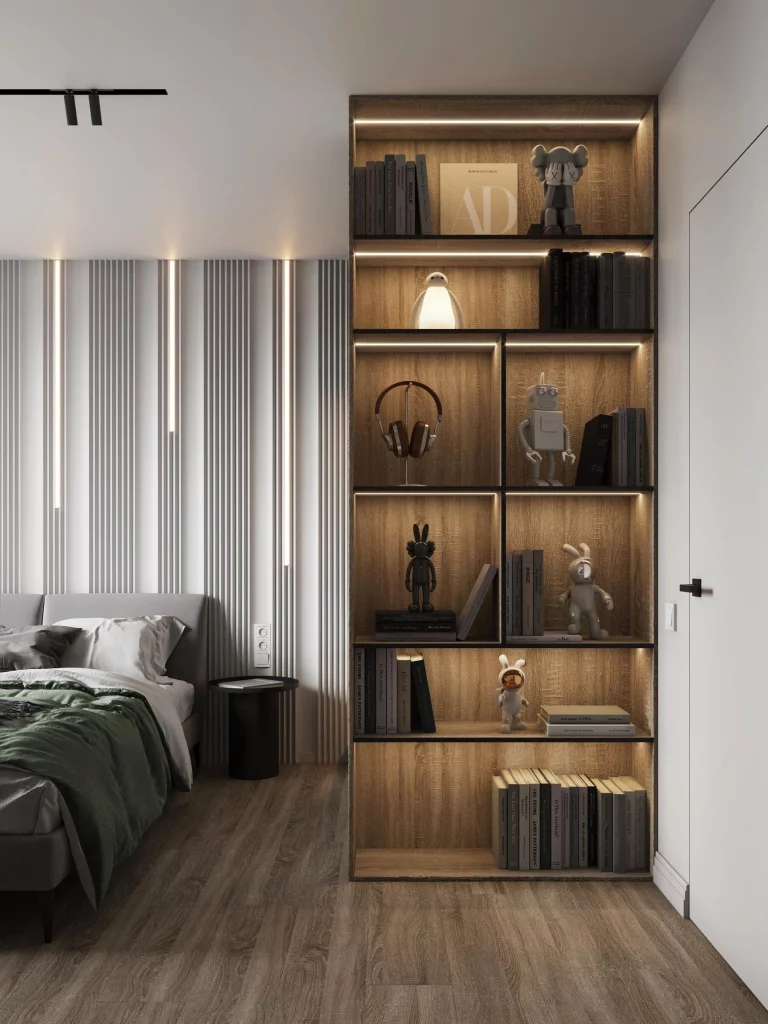
I especially appreciate how the shelving transforms an otherwise unused vertical wall into both storage and display space. Because the compartments are built into one tall unit, the room does not need several separate cabinets or freestanding shelves. The integrated lighting also makes the storage visually lighter and gives the objects inside their own presence. For me, this is a strong solution for a bedroom where books and personal objects need to remain accessible but still look organized.
When I look at a built-in like this, I always think about editing the contents as carefully as the furniture itself. The image shows books arranged alongside a small number of decorative objects, leaving plenty of open space between them. I would follow that principle rather than filling every compartment. The warm wood backing also works particularly well with the gray bed, so I would keep the surrounding furniture simple and allow the shelving to carry most of the visual interest.
Warm Wood Dining Furniture Beneath a Timber Ceiling
This open room brings wood into the dining area in a much warmer and more expansive way. A large rectangular wooden dining table occupies the center, paired with long upholstered benches on both sides. Above it hang two large woven pendant lights, while exposed wood beams and ceiling boards create a strong architectural frame overhead. Tall wood-framed glass doors open toward a green outdoor setting, and a light sofa with warm-toned cushions sits beyond the dining area. I find the combination of substantial wood furniture and generous glazing especially inviting.
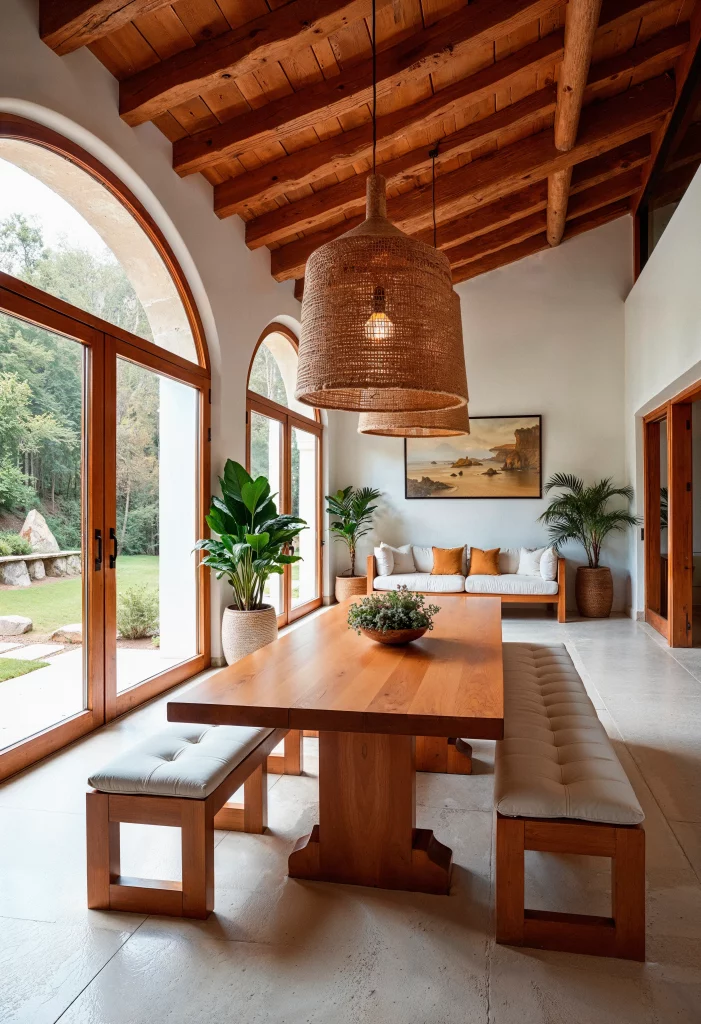
The dining table is clearly designed for shared meals and conversation, and the long benches make excellent use of the table’s length. Instead of filling the room with separate chairs, the seating remains visually simple and leaves the large table as the centerpiece. I also like how the wood of the table relates to the ceiling structure and door frames, creating continuity across the room. The broad glass openings keep all that warm material from making the space feel visually closed in.
For my own home, I would take inspiration from the way the table connects the dining area with the architecture around it. A substantial wooden table becomes much more effective when it has enough room around it to be appreciated and used comfortably. I would also pay attention to the height and scale of the lighting, because the oversized pendants shown here complement the generous proportions of the table and ceiling. The result feels cohesive without needing lots of additional decoration.
Minimal Wood Lounge Framed by a Forest View
This serene room takes a very different direction, with pale wood covering the ceiling and framing a wall of floor-to-ceiling glass. A low built-in seating arrangement stretches along the right side, finished with light cushions and neutral pillows. In front of it sits a large irregular wood coffee table with a thick natural edge, while a simple round woven tray rests on top. The surrounding view of tall trees becomes a major part of the room, and the restrained furniture allows the architecture and landscape to remain prominent.
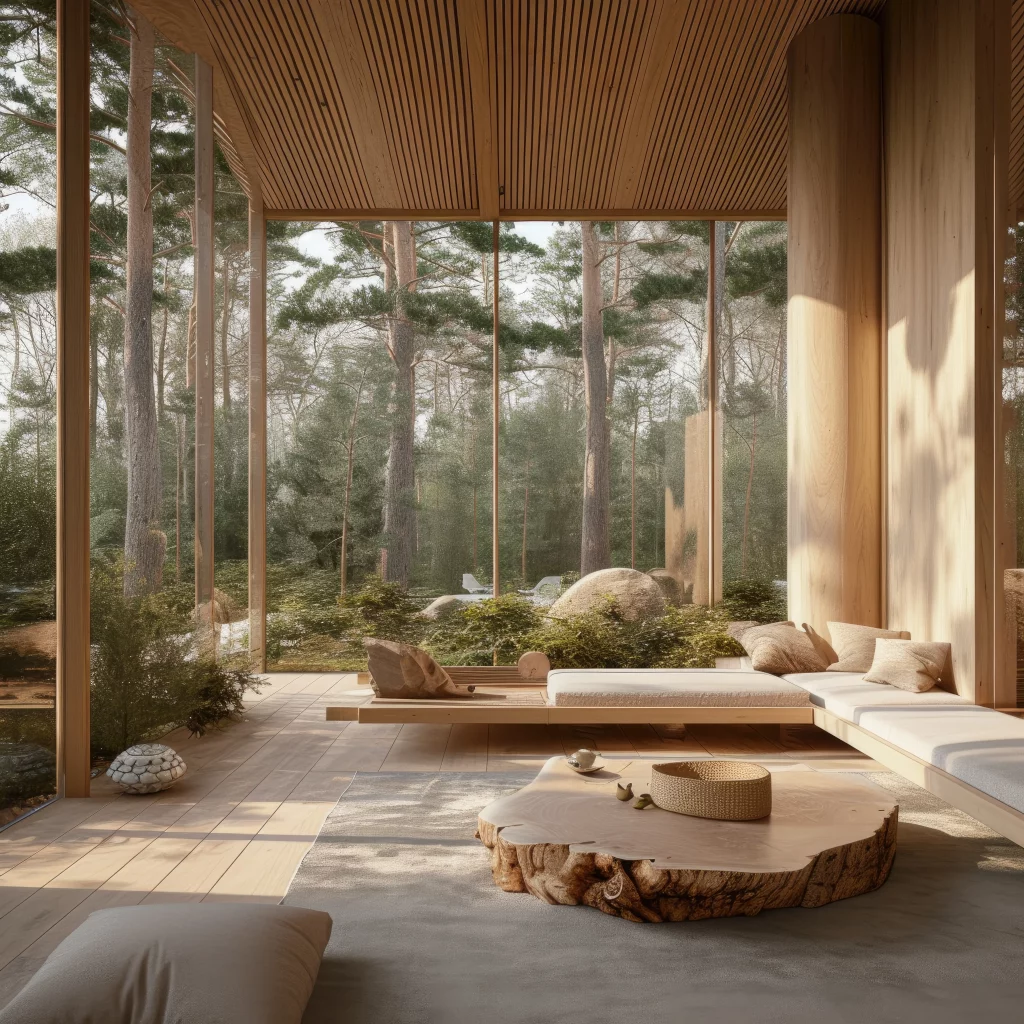
I like the low profile of the furniture here because it preserves the expansive view through the glass. The coffee table has a substantial physical presence, but its organic outline prevents it from feeling rigid or overly formal. The built-in seating also makes efficient use of the wall, creating a comfortable place to sit without introducing a collection of separate pieces. To me, the room demonstrates how wood furniture can feel substantial while still maintaining a calm visual rhythm.
If I were styling a room like this, I would resist adding too many competing furniture shapes. The image already has a strong relationship between the long seating, the low table, the wood ceiling, and the surrounding view. I would keep accessories minimal and choose pieces with simple silhouettes, as shown here. The most important lesson for me is that wooden furniture does not always need to be decorative; sometimes its scale, shape, and relationship to the architecture are enough.
Curved Wood Home Office With Integrated Storage
The final interior pushes wood into an almost sculptural architectural role. The entire office is wrapped in flowing wood surfaces, with a curved ceiling, rounded wall openings, and a large built-in desk extending across the foreground. Two rounded upholstered chairs sit along the desk, while illuminated shelving is integrated into the curved wall behind them. Large circular windows bring views of trees into the room, and the warm wood finish is repeated throughout the floor, walls, desk, and storage areas. I find the continuity between the furniture and architecture particularly striking.
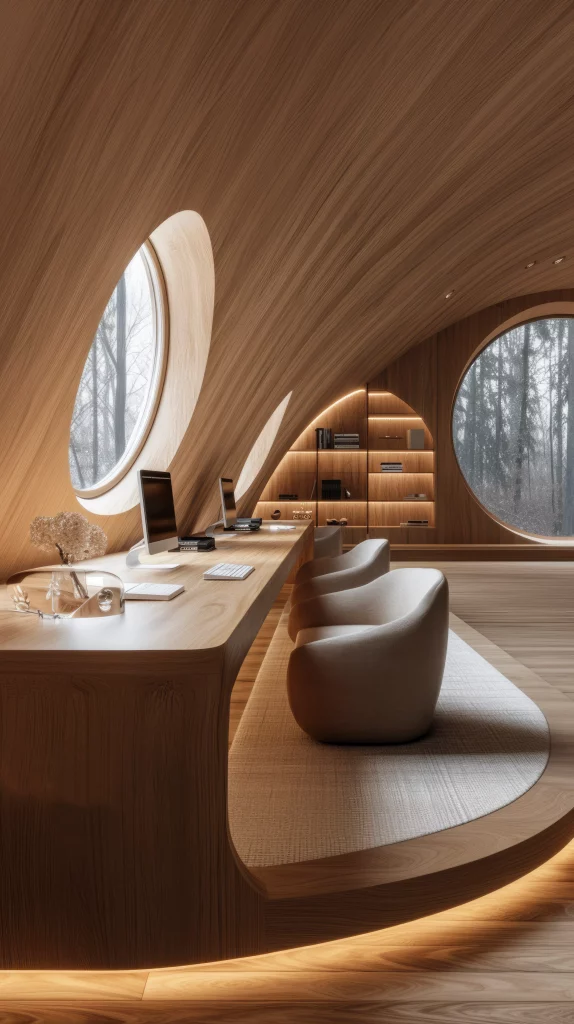
The built-in desk provides a generous work surface while keeping the room visually clean because it follows the curved geometry of the space. Behind it, the illuminated shelving offers practical storage without breaking the overall flow of the walls. The rounded chairs echo the surrounding forms, making the furniture feel like part of the architecture rather than separate additions. Even the rug follows a softened outline, reinforcing the room’s consistent visual language.
What I would take from this design is the value of repeating one material across different functions. Here, wood is not limited to a desk or cabinet; it connects the ceiling, walls, shelving, flooring, and furniture into one continuous environment. I would not try to reproduce the entire architectural treatment in an ordinary room, but I would borrow the principle by choosing a wooden desk with rounded edges and pairing it with built-in or carefully proportioned shelving. That can create some of the same sense of cohesion on a much simpler scale.
Wood furniture can bring warmth, texture, character, and practical beauty to almost every room in the home. From sculptural shelving and statement coffee tables to elegant beds, cabinets, and seating, the right piece can make an interior feel more complete and inviting. I hope these ideas inspire you to experiment with wood in a way that suits your space and personal style. Which wood furniture idea was your favorite? Leave a comment and share your pick!