
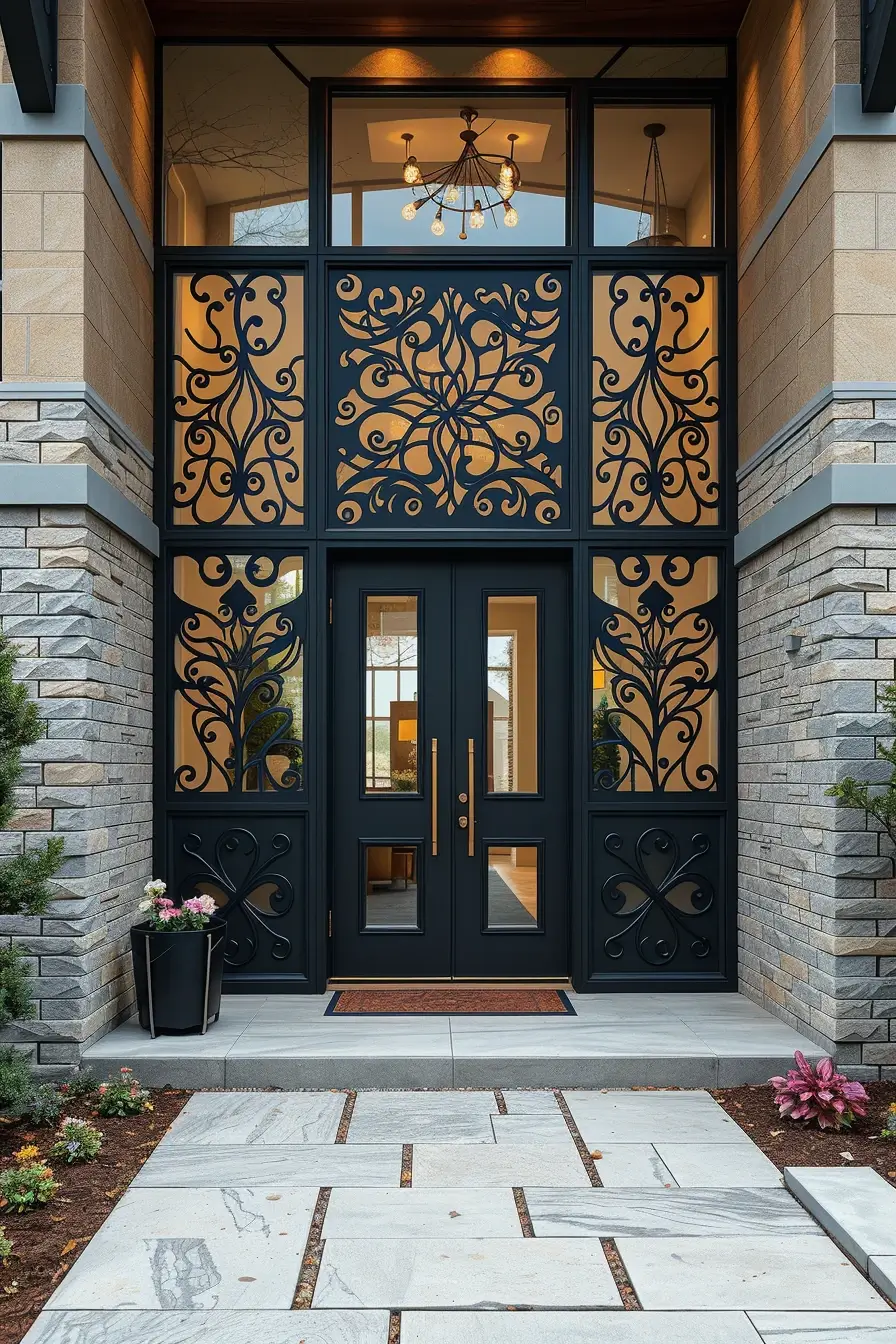
Outdoor entryway ideas in 2026 go far beyond simple front-door design, transforming the entrance into a bold architectural statement and a true extension of the home’s identity. The outdoor entryway is no longer just a transition zone — it is the first artistic impression, setting the tone for the entire space through sculptural forms, expressive materials, and carefully curated details. In 2026, homeowners and designers are embracing creative, stylish, and unique outdoor entryways that feel intentional, immersive, and visually striking from the very first step.
This new approach focuses on artistic composition, where geometry, texture, lighting, and craftsmanship come together to create entryways that resemble outdoor art installations rather than traditional porches. From monolithic stone structures and custom statement doors to sculptural canopies and dramatic lighting, outdoor entryway ideas for 2026 emphasize individuality, architectural depth, and modern elegance. Whether minimalist or bold, these entryway designs redefine curb appeal by blending functionality with expressive design, creating entrances that feel unforgettable, contemporary, and distinctly personal.
Sculptural Outdoor Entryways As Architectural Statements
I approach sculptural outdoor entryways as part of the building’s architecture rather than an added feature. In 2026, these entryways are designed to feel solid, grounded, and purposeful, often using monolithic forms, curved volumes, or oversized frames to define the threshold. From a practical standpoint, these sculptural structures provide shelter, visual direction, and a strong sense of arrival while seamlessly integrating with the home’s facade.
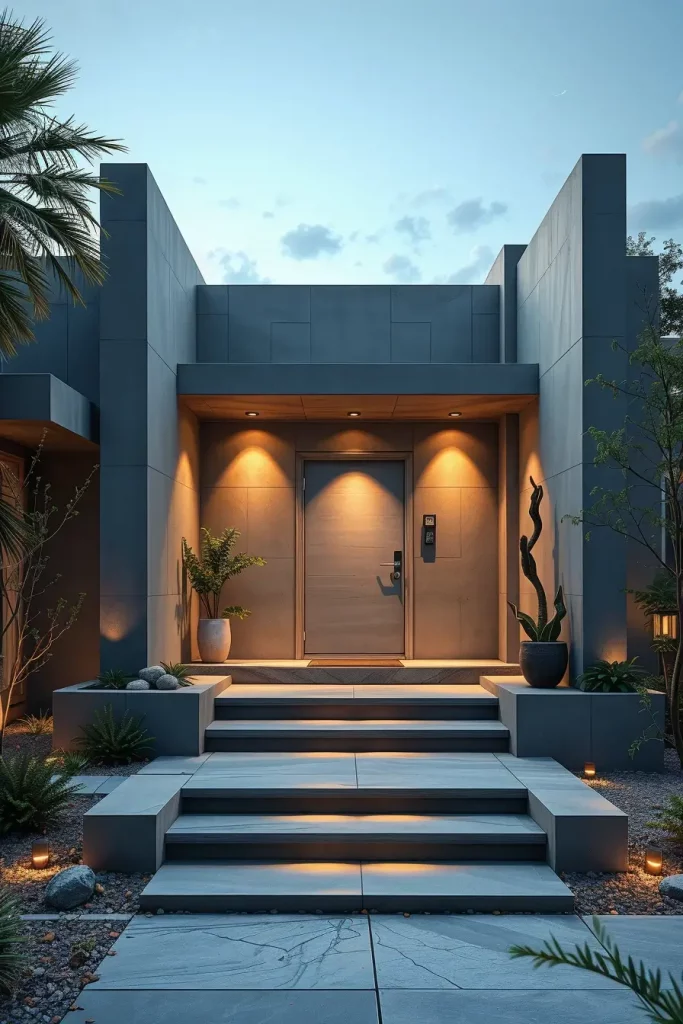
In my work, I rely on materials such as architectural concrete, stone slabs, metal cladding, and textured plaster to create sculptural depth. A deep-set front door, integrated steps, built-in benches, and recessed lighting are essential components because they enhance usability without cluttering the space. Each element is selected to support both durability and visual clarity, especially in outdoor conditions.
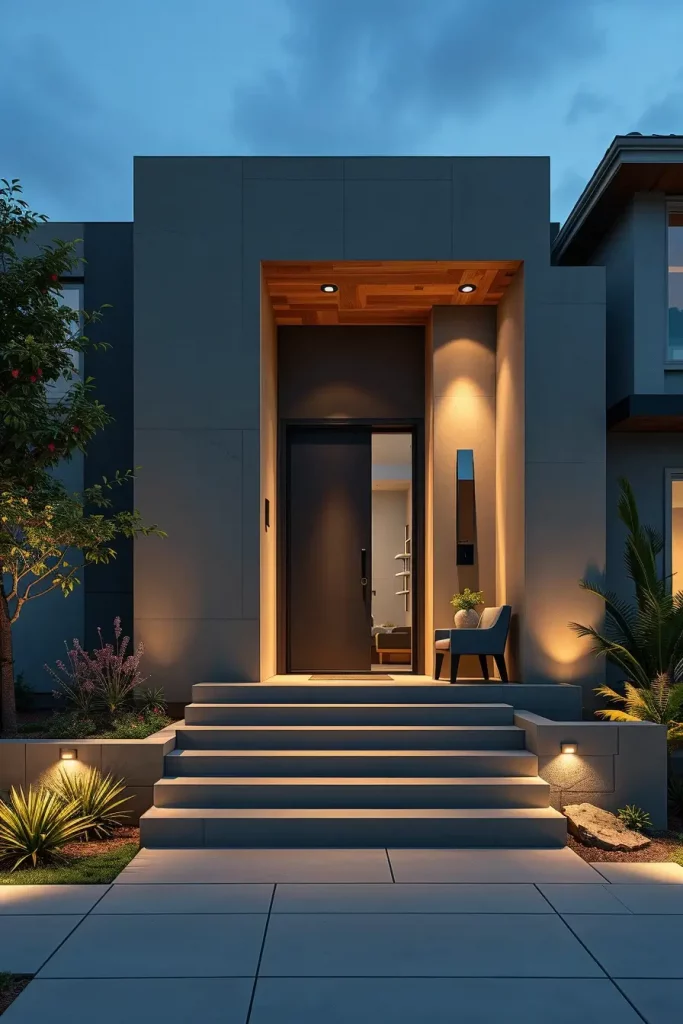
From my experience, clients respond strongly to sculptural entryways because they immediately communicate identity and permanence. Architectural Digest and Dezeen have repeatedly highlighted sculptural entrances as a defining feature of contemporary residential design, noting their ability to elevate even minimalist homes. I’ve found that when proportions are carefully balanced, these entryways age beautifully rather than feeling trend-driven.
What I would add to this type of entryway is subtle landscaping that reinforces the form rather than competing with it. Low-profile planting, gravel beds, or linear planters help frame the structure and maintain its architectural dominance.
Artistic Front Entrances That Blur The Line Between Art And Design
When I design artistic front entrances, I treat them as curated outdoor compositions rather than conventional entry zones. These unique outdoor entryways often incorporate sculptural walls, custom textures, or hand-finished surfaces that feel closer to public art than residential design. Functionally, they still guide movement and provide protection, but visually they invite interpretation.
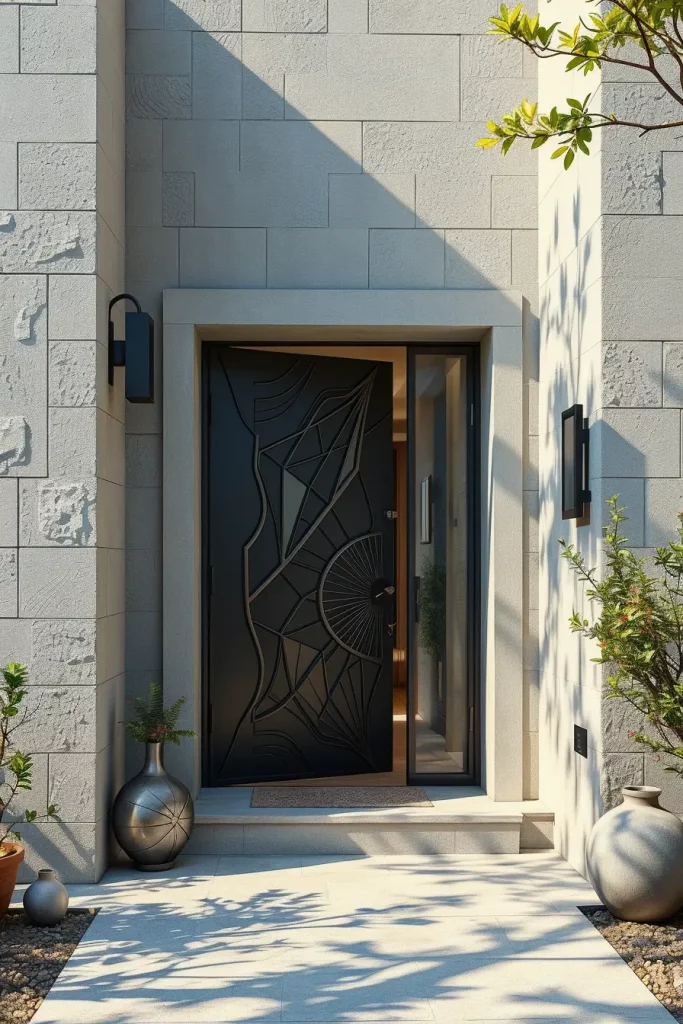
I often integrate custom doors, carved panels, artistic metal screens, or textured concrete walls to create depth and shadow. Lighting plays a crucial role here, as directional fixtures highlight textures and transform the entryway throughout the day. Every object has intention, and nothing feels purely decorative or accidental.
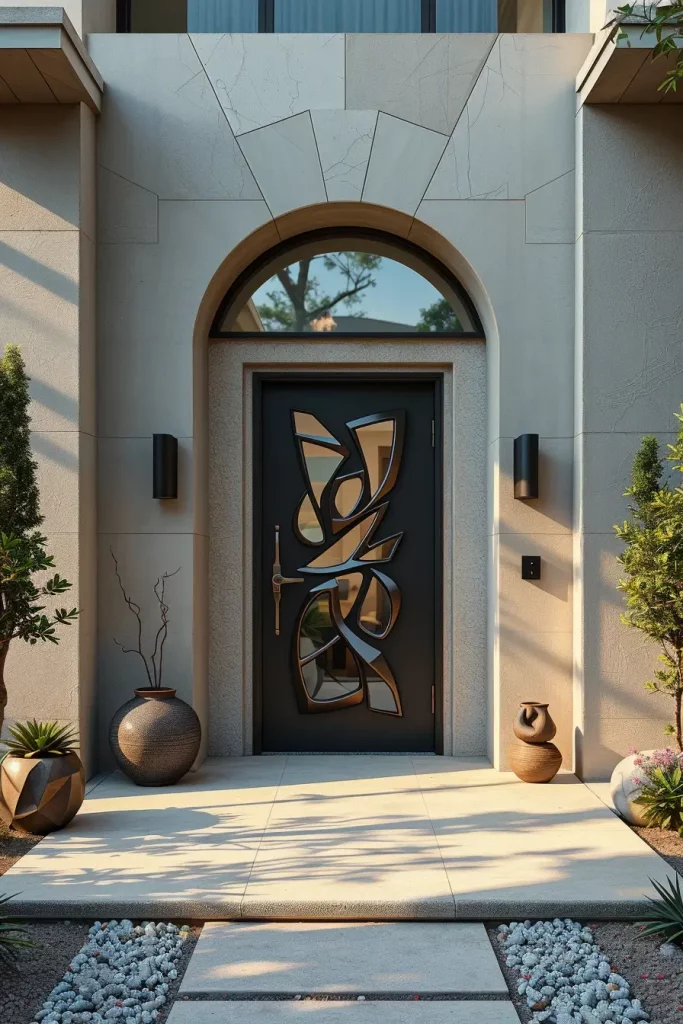
In my professional opinion, these entryways work best when restraint is applied. Designers featured in Architectural Digest frequently emphasize that artistic entrances should focus on one strong gesture rather than many competing elements. I’ve applied this advice consistently, and it helps maintain clarity while still delivering impact.
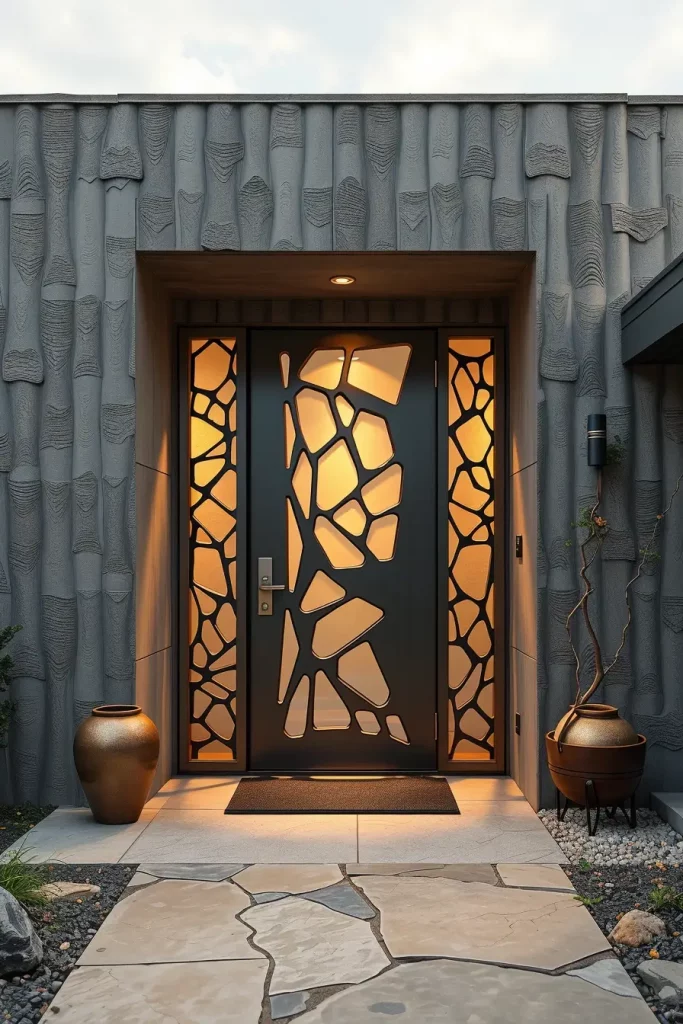
To complete this type of entryway, I would recommend adding a single sculptural seating element or stone plinth near the entrance. This reinforces the gallery-like atmosphere and adds subtle functionality without disrupting the artistic focus.
Modern Outdoor Entryways Inspired By Gallery-Level Design
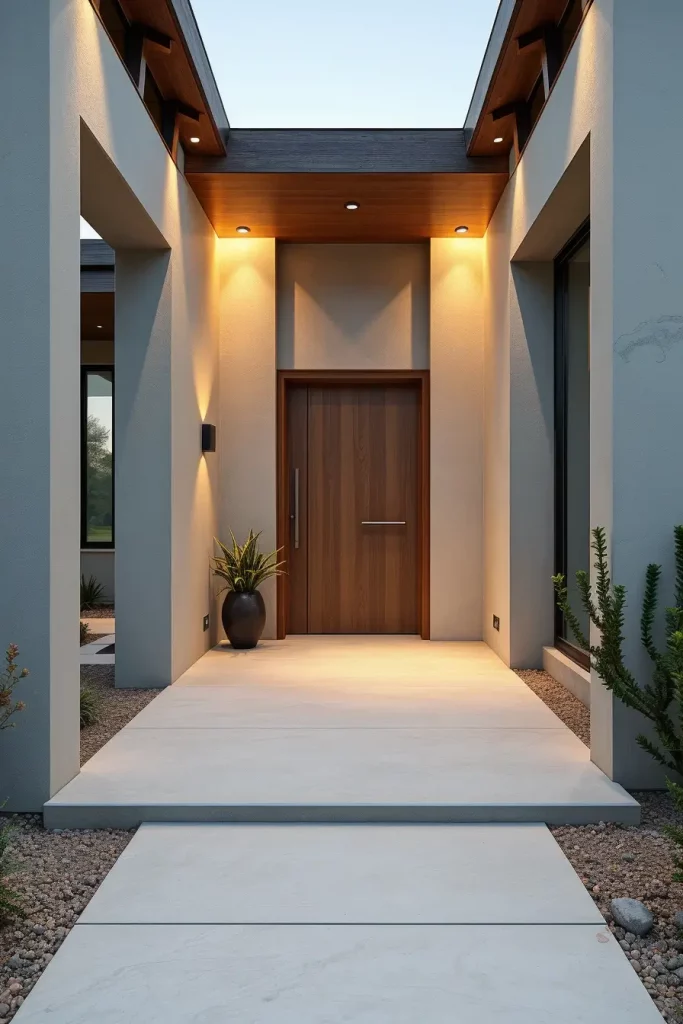
Gallery-inspired outdoor entryways emphasize calm, proportion, and controlled visual rhythm. I design these spaces to feel open and intentional, using symmetry, clean surfaces, and generous negative space. In Outdoor entryway ideas 2026, this approach supports both aesthetics and practicality by keeping circulation clear and surfaces easy to maintain.
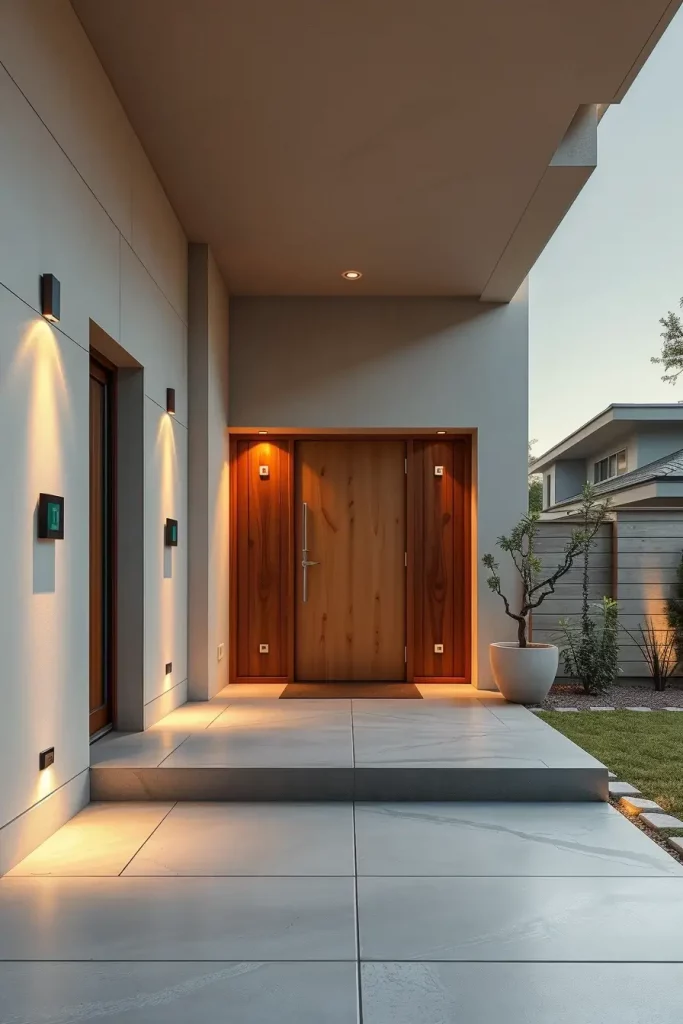
Materials such as smooth concrete, limestone, architectural wood panels, and matte metal are central to this concept. I often include wide entry platforms, frameless glass sidelights, concealed drainage, and minimal hardware to preserve the gallery-like quality. Furniture is limited to built-in benches or integrated seating to avoid visual noise.
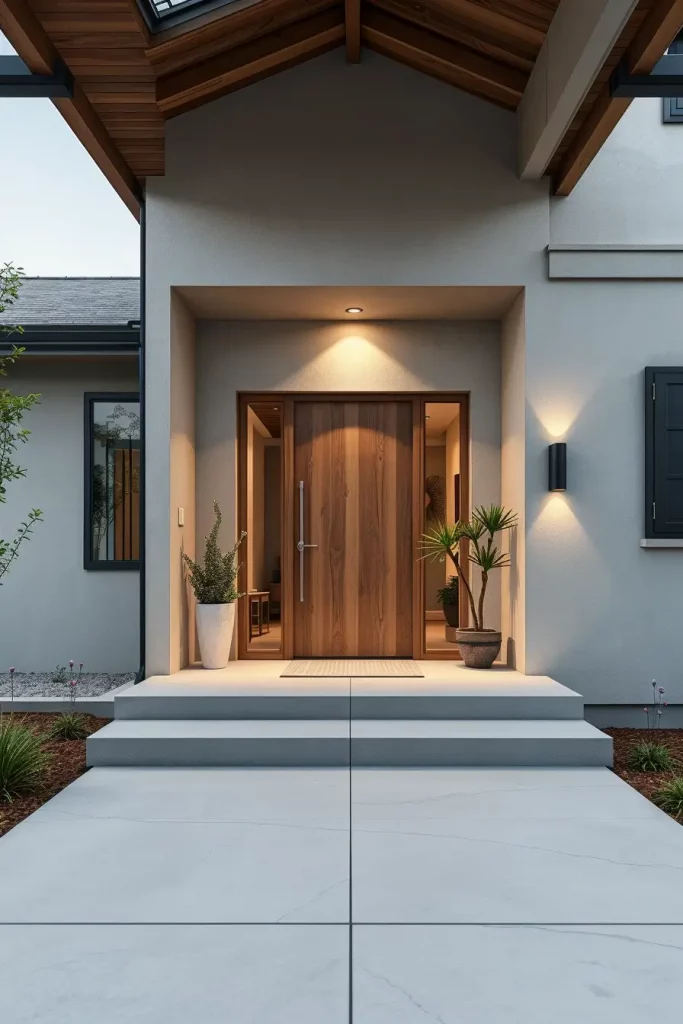
From my experience, these entryways resonate with homeowners who appreciate order and clarity. Dezeen and Design Milk frequently highlight gallery-inspired residential design as a response to visual overload, and I see this reflected in client preferences. The result is an entryway that feels calm, confident, and timeless.
What I would add here is subtle wayfinding through floor texture changes or lighting gradients. These details quietly guide visitors without disrupting the refined composition of the space.
Statement Doors That Define Outdoor Entryway Style In 2026
In 2026, statement doors are no longer accessories; they define the entire outdoor entryway. I design these entrances around the door itself, using scale, material, and placement to establish hierarchy. Practically, this approach simplifies design decisions while delivering strong visual identity.
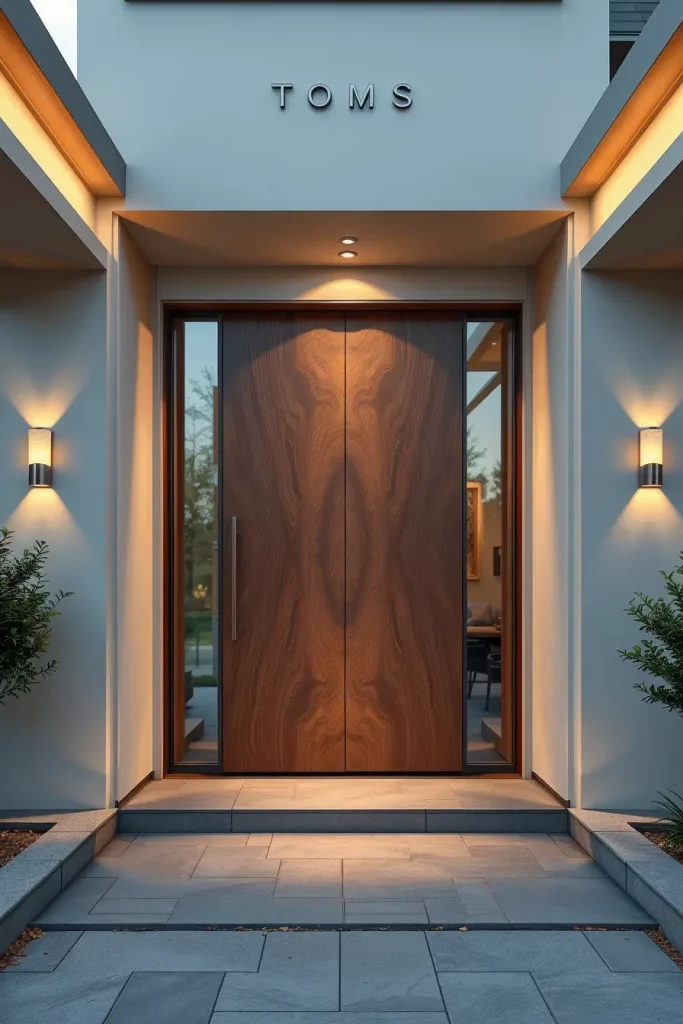
Oversized pivot doors, sculpted wood panels, metal-clad surfaces, and integrated handles are key features I consistently specify. Surrounding elements such as flush walls, concealed frames, and minimal thresholds allow the door to remain the focal point while ensuring weather protection and security.
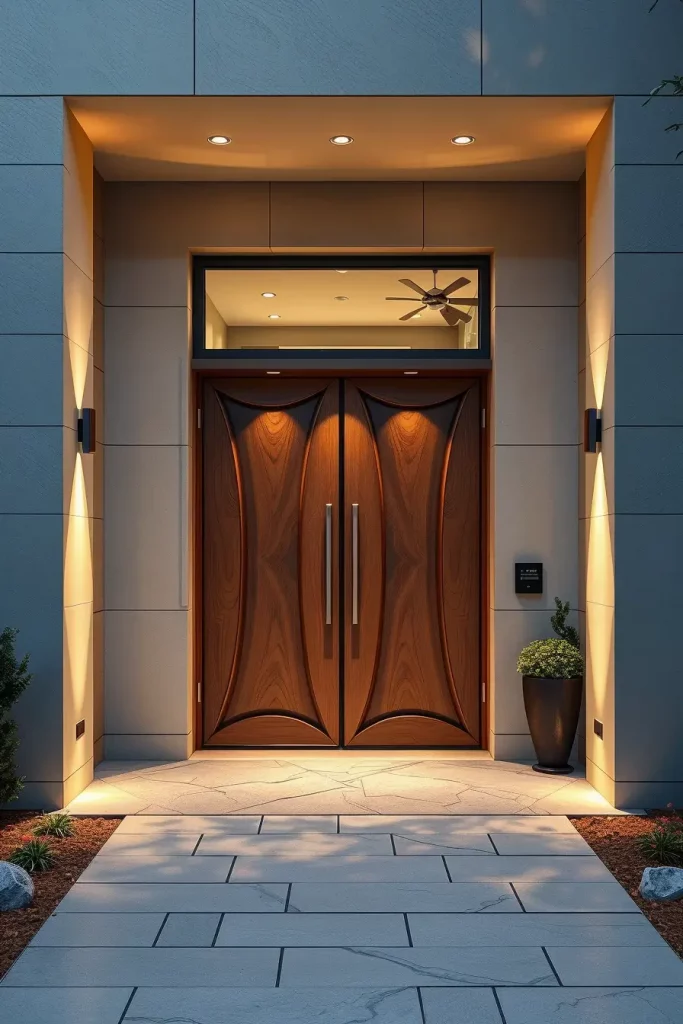
In my professional experience, a well-designed statement door significantly increases perceived value. Architectural Digest has noted that entry doors are among the most impactful exterior investments homeowners can make. I’ve seen firsthand how a single bold door can elevate an otherwise simple facade.
To strengthen this concept further, I would add controlled lighting that emphasizes the door’s texture and form at night, ensuring its impact remains consistent around the clock.
Bold Geometric Forms In Contemporary Outdoor Entryways
Bold geometry allows outdoor entryways to feel dynamic while remaining highly functional. I use strong lines, angular volumes, and asymmetrical compositions to create movement and direction. These creative and stylish entryways help visually anchor the home within its surroundings.
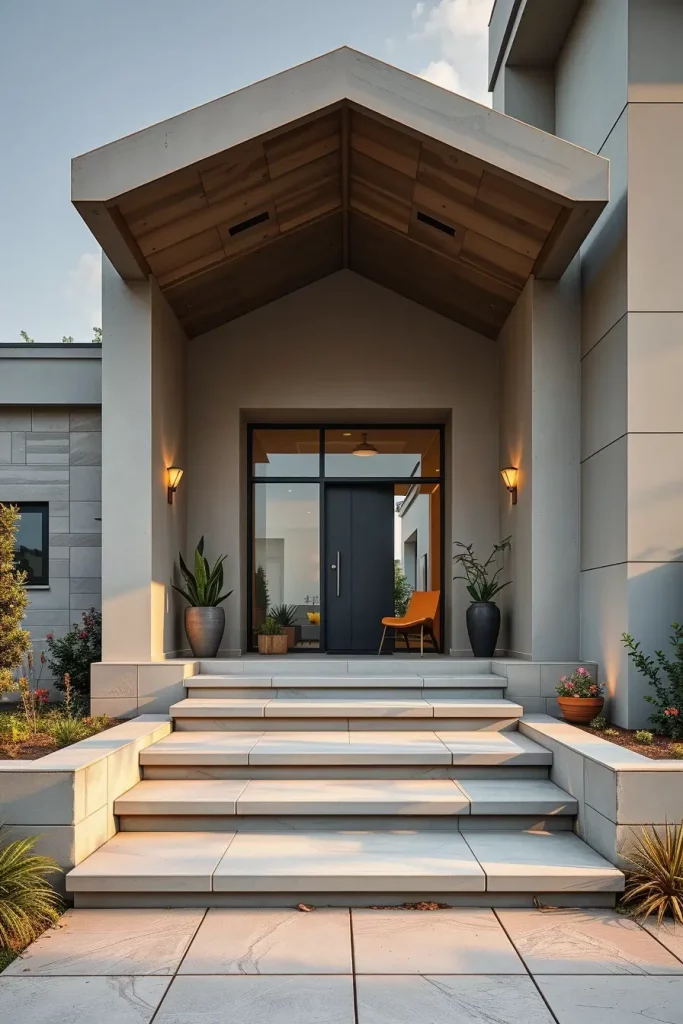
Rectilinear canopies, angular staircases, geometric wall planes, and sharp-edged platforms are elements I frequently combine. Materials are chosen for precision, including poured concrete, metal panels, and large-format stone. Each form serves both aesthetic and practical purposes, such as guiding circulation or providing shelter.
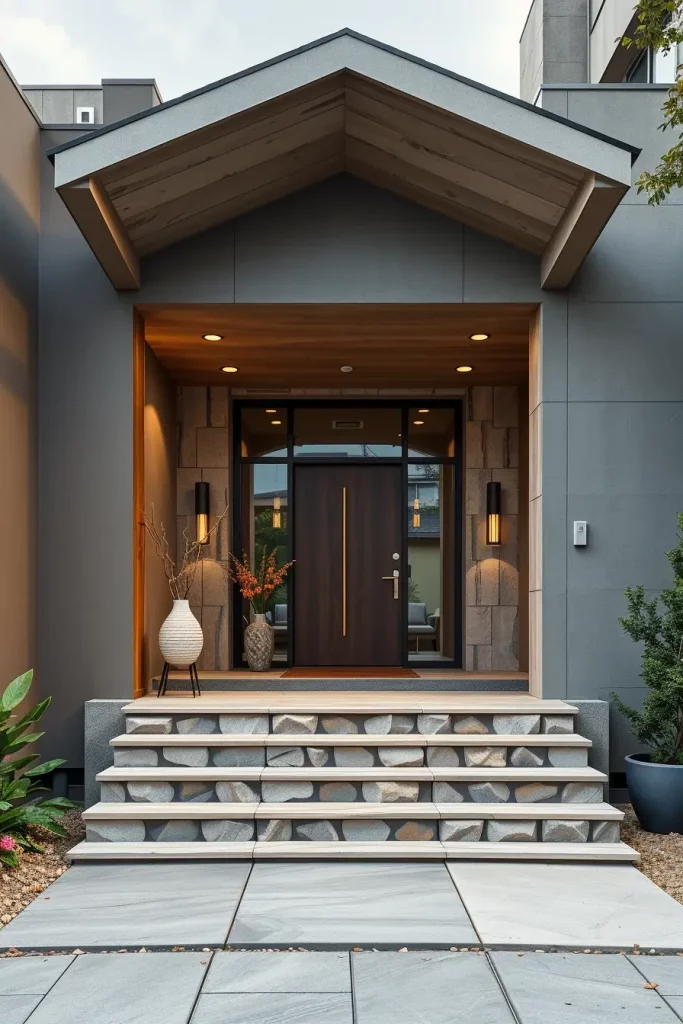
From my experience, geometric entryways appeal to homeowners seeking modernity without ornamentation. Design publications like Dezeen often highlight geometry as a defining language of contemporary architecture, and I agree when it is executed with discipline and proportion.
What I would add to this design is subtle contrast through texture or color variation. This enhances depth and readability without softening the geometric intent.
Minimalist Sculptural Entryways With Maximum Visual Impact
I design minimalist sculptural outdoor entryways to communicate clarity and confidence through form rather than decoration. In 2026, these entryways rely on strong proportions, controlled material palettes, and precise detailing to create presence without visual noise. Practically, this approach simplifies maintenance while ensuring the entrance remains timeless and functional.
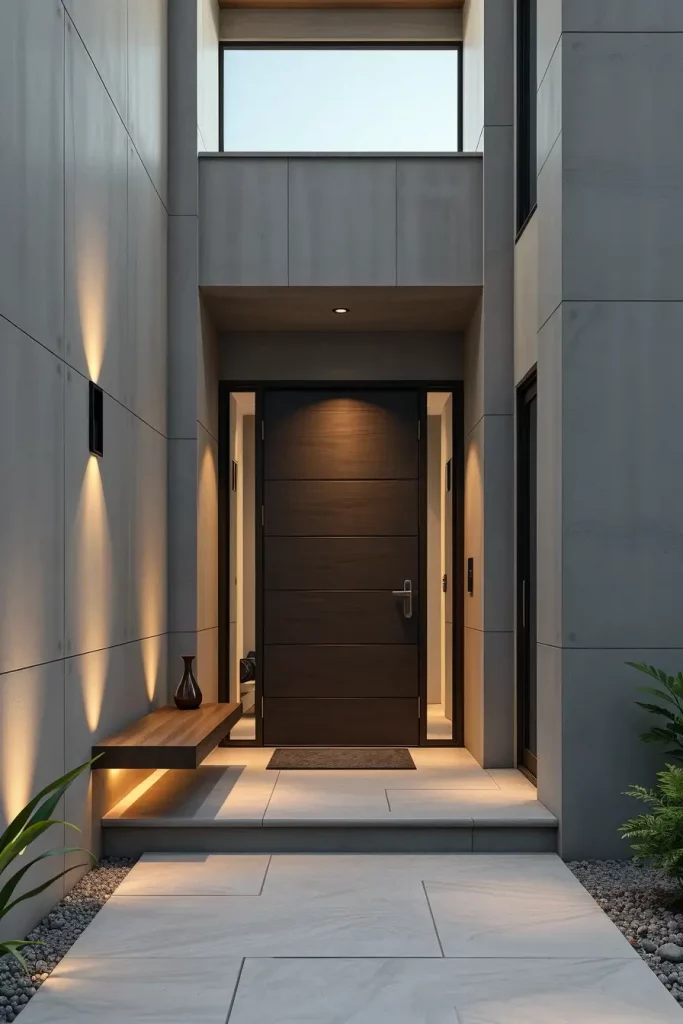
In my projects, I prioritize smooth concrete walls, flush door systems, concealed drainage, and integrated overhangs. Furniture is minimal and often built-in, such as floating benches or low stone seating, because it preserves openness while offering usability. Lighting is embedded into architectural lines to reinforce structure rather than distract from it.
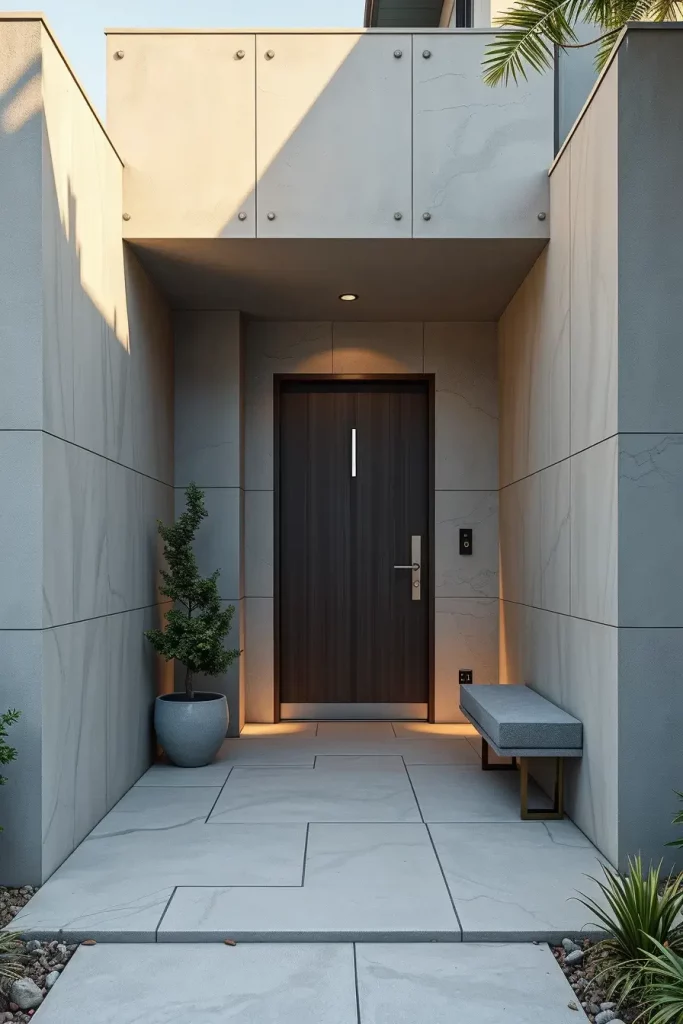
From my experience, minimalist sculptural entryways work best when every detail serves a purpose. Designers featured in Design Milk often stress that minimalism succeeds through discipline, not absence. I’ve applied this philosophy consistently, and it results in outdoor entryways that feel intentional rather than sparse.
To enhance this type of entryway further, I would add subtle material contrast, such as a single textured wall or matte-finish door, to create depth without compromising the minimalist language.
Futuristic Outdoor Entryway Ideas With Architectural Drama
Futuristic outdoor entryways focus on movement, light, and unexpected forms to create a dramatic arrival experience. I treat these spaces as transitional zones that prepare visitors emotionally before entering the home. In Outdoor entryway ideas 2026, architectural drama is achieved through form rather than ornament.
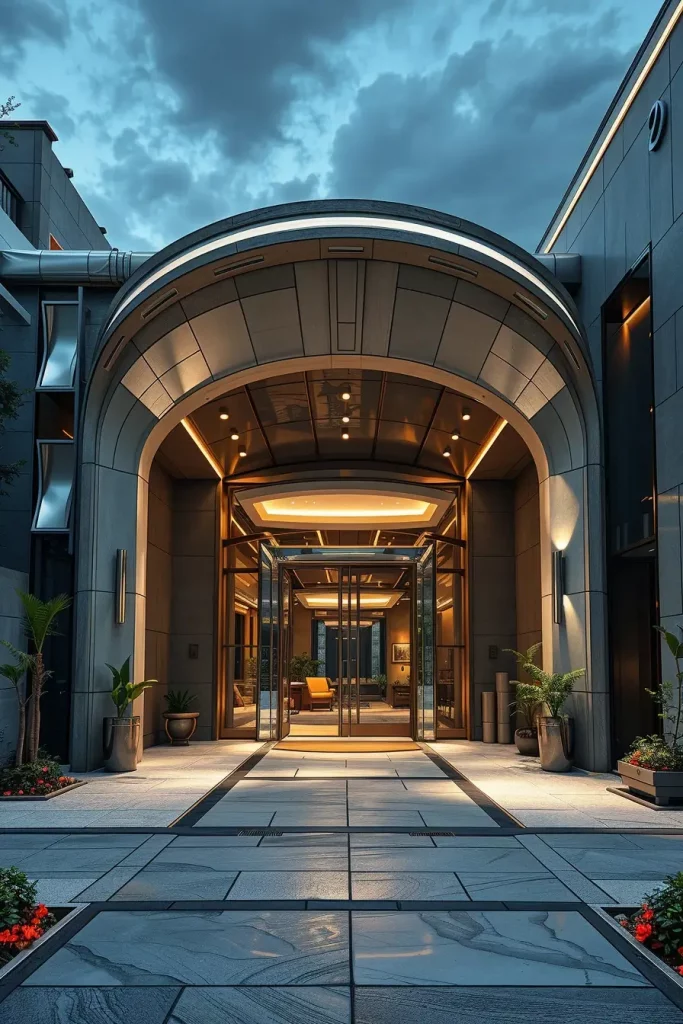
I frequently use cantilevered canopies, curved walls, metallic finishes, and layered lighting to create a sense of motion. Materials such as aluminum panels, smooth concrete, and glass are selected for their ability to reflect light and emphasize form. Integrated seating and seamless flooring transitions ensure the space remains practical despite its bold appearance.
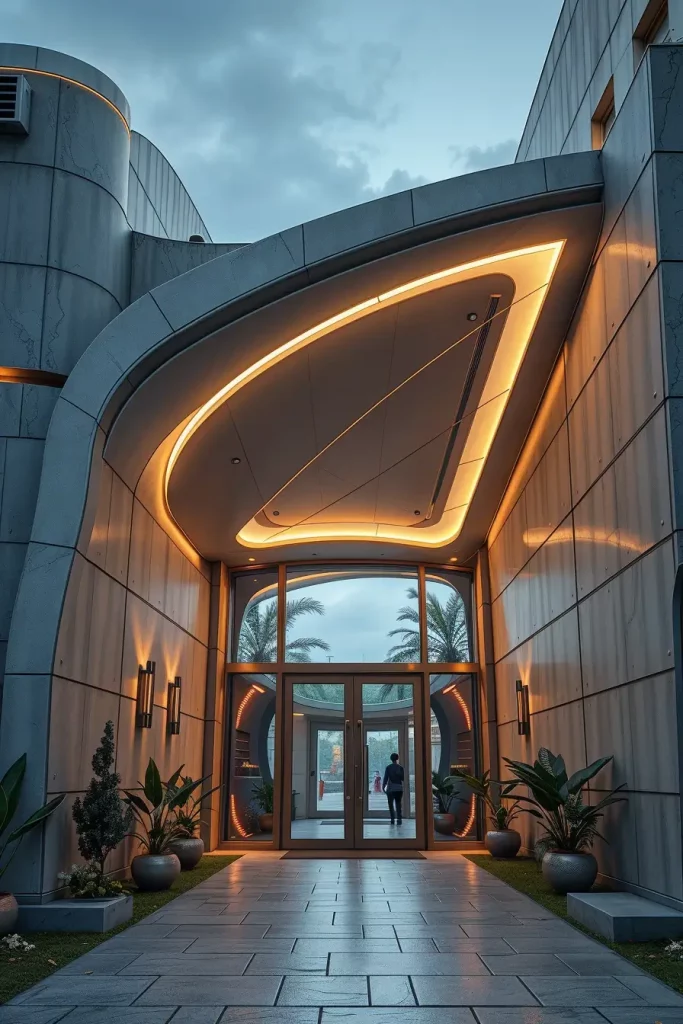
In my professional opinion, futuristic entryways succeed when they remain grounded in function. Dezeen regularly highlights forward-looking residential architecture that balances innovation with usability, and I align with that approach. When circulation and shelter are prioritized, dramatic design becomes livable rather than theatrical.
What I would add to these entryways is smart lighting control, allowing brightness and color temperature to adjust throughout the day, reinforcing the futuristic experience while improving comfort.
Outdoor Entryways Designed As Immersive Arrival Experiences
An immersive outdoor entryway is designed to engage the senses and guide movement intentionally. I approach these entryways as sequences rather than static spaces, using layered materials, lighting, and spatial rhythm. This makes the arrival feel deliberate and memorable while remaining practical for everyday use.
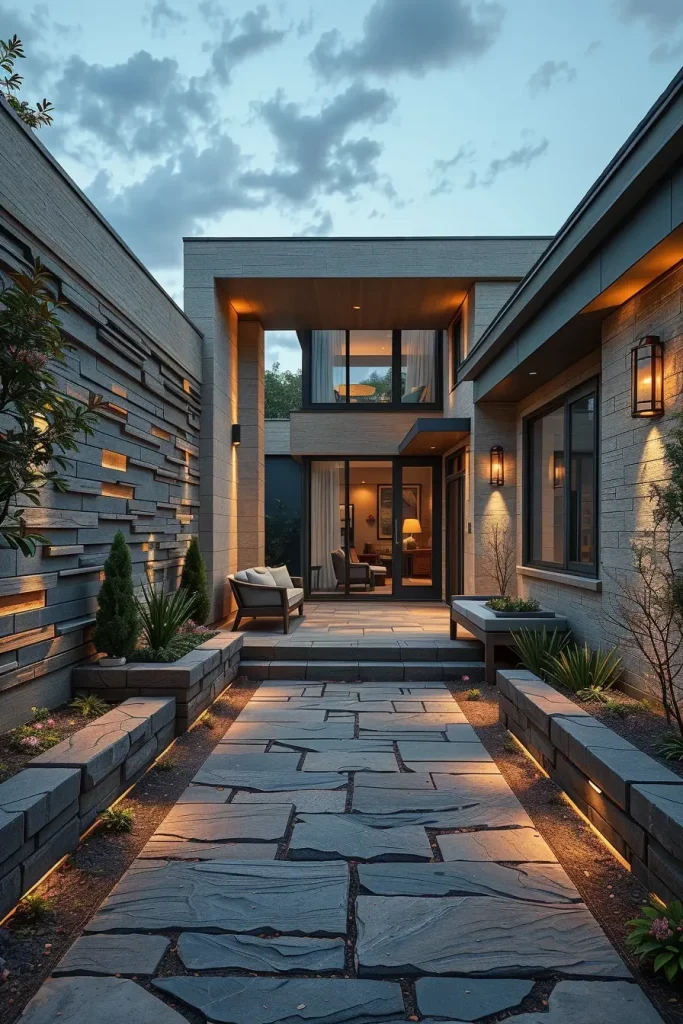
In my designs, I often include framed views, textured pathways, subtle elevation changes, and enveloping walls that draw visitors inward. Built-in benches, integrated planters, and overhead structures help slow movement and encourage pause. Each element works together to create continuity between exterior and interior.
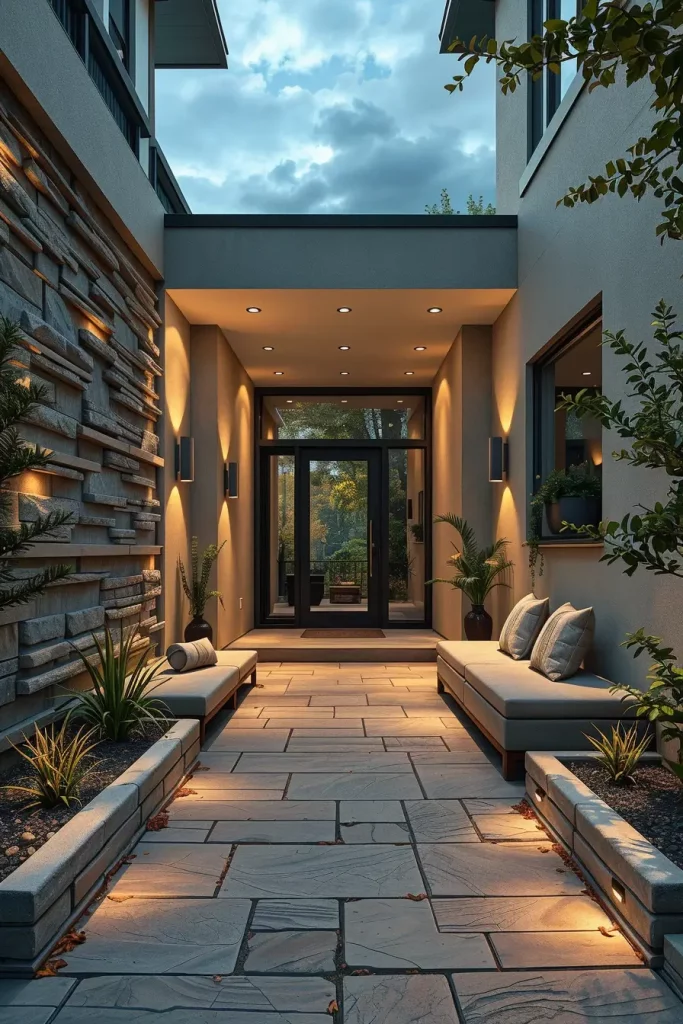
Based on my experience, immersive entryways are particularly effective for larger homes or architectural residences. Architectural Digest frequently emphasizes the importance of arrival sequences in luxury residential design, and I’ve seen how this approach elevates the overall experience without requiring excessive ornamentation.
To complete this concept, I would recommend incorporating sound-absorbing materials or water elements nearby, adding a sensory layer that enhances calm and focus during arrival.
Creative Use Of Concrete In Outdoor Entryway Design
Concrete has evolved into one of the most expressive materials in outdoor entryway design for 2026. I use it not only for durability but also for its sculptural and textural potential. Properly detailed, concrete entryways are resilient, visually striking, and adaptable to various architectural styles.
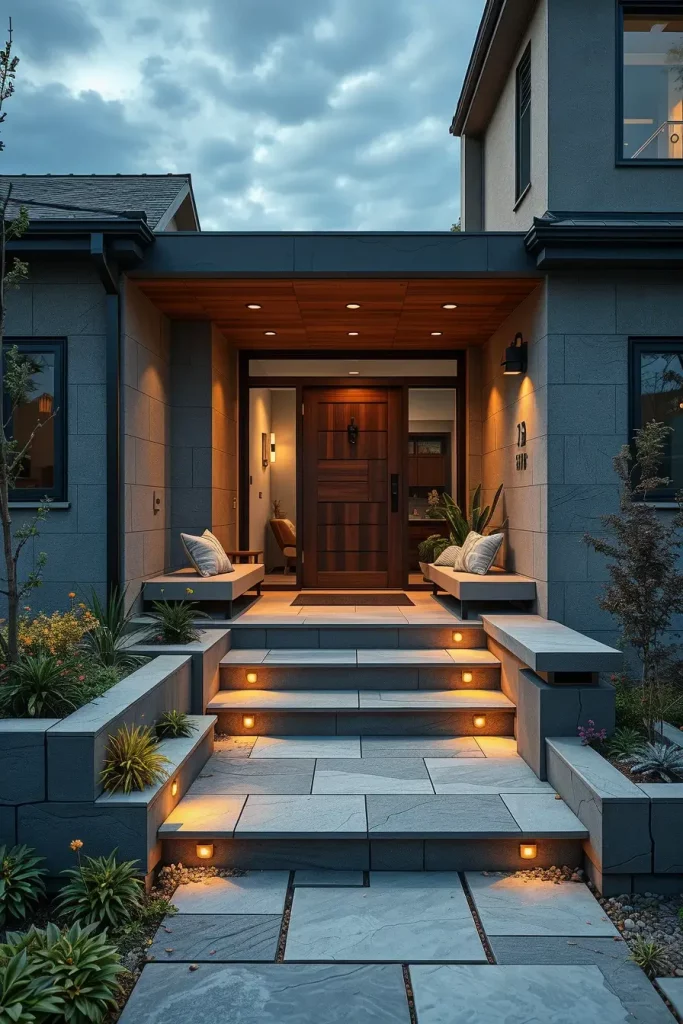
I often specify board-formed concrete, polished slabs, or textured finishes to create visual interest. Concrete steps, walls, seating, and overhead elements can be seamlessly integrated into one cohesive composition. When paired with warm lighting and natural materials, concrete feels refined rather than cold.
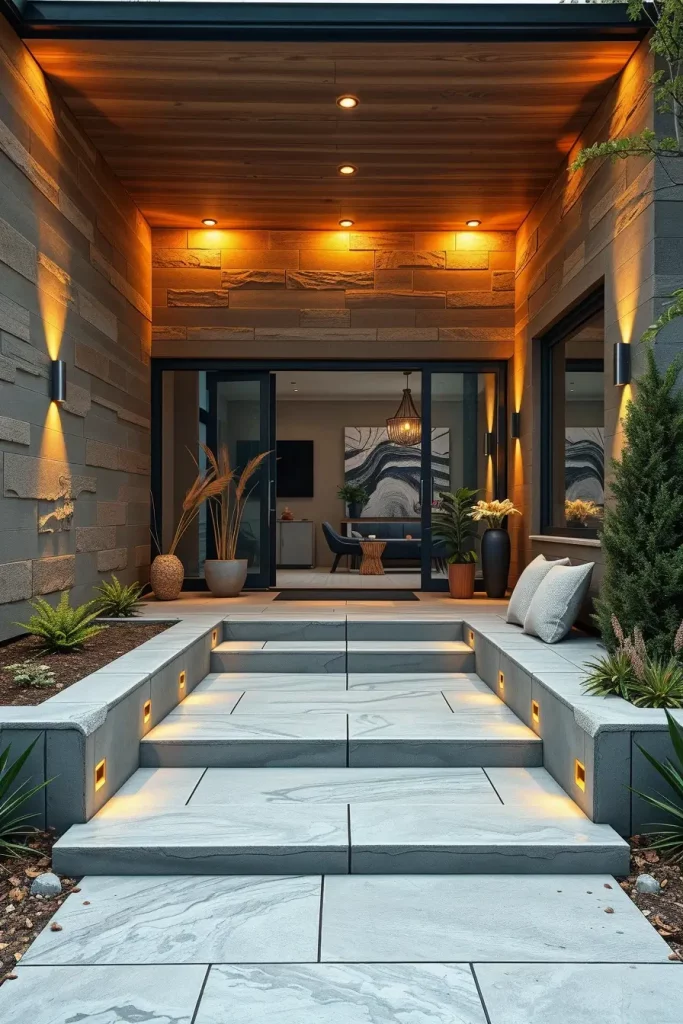
From my professional experience, concrete offers unmatched longevity when correctly installed. Design publications like Dezeen consistently showcase concrete as a material of choice for contemporary architecture, particularly in outdoor applications. I’ve found it especially effective for clients seeking stylish yet low-maintenance solutions.
To enhance concrete entryways further, I would add contrasting materials such as wood or metal to soften the composition and improve tactile comfort.
Artistic Lighting Concepts For Outdoor Entryways In 2026
Lighting plays a defining role in shaping artistic and unique outdoor entryways. I design lighting as an architectural tool rather than an accessory, using it to highlight form, guide movement, and create atmosphere. In 2026, lighting design is fully integrated into entryway architecture.
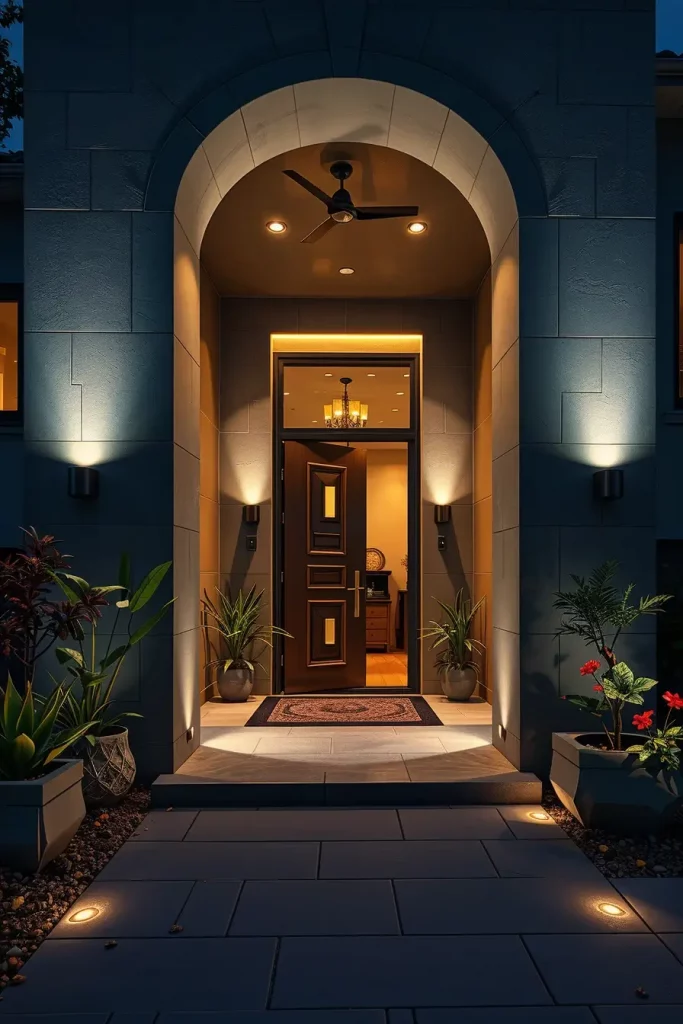
I incorporate recessed floor lights, wall grazers, concealed LED strips, and overhead fixtures aligned with architectural lines. These elements improve safety while enhancing visual impact after dark. Every fixture is chosen for weather resistance and consistency with the overall design language.
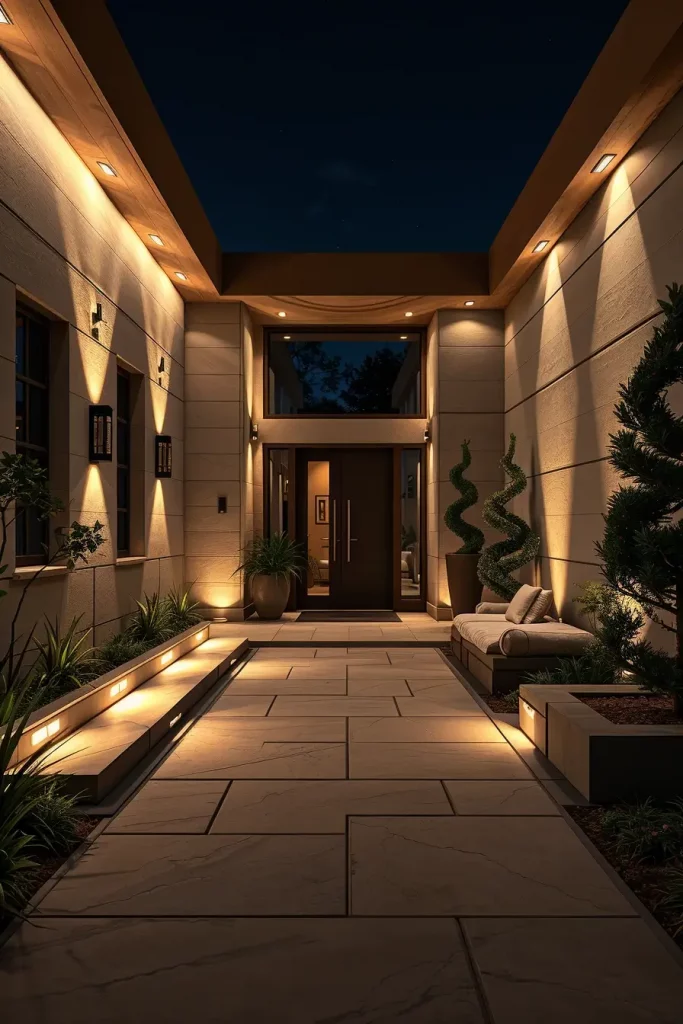
In my experience, well-planned lighting transforms an entryway more than any single material choice. Experts cited in Architectural Digest often stress that exterior lighting should reveal architecture, not overpower it. I apply this principle by keeping brightness controlled and placement intentional.
What I would add here is layered lighting control, allowing homeowners to adjust scenes for daily use, events, or nighttime ambiance without altering the physical design.
Curved Lines And Flowing Forms In Modern Entryway Architecture
I see curved lines and flowing forms as one of the most expressive directions shaping Outdoor entryway ideas 2026. These designs soften the transition between exterior and interior, creating a welcoming approach that feels intentional rather than rigid. From arched walls to gently rounded thresholds, curved architecture improves circulation, enhances visual flow, and works particularly well for homes that aim to stand out without feeling aggressive or overdesigned.
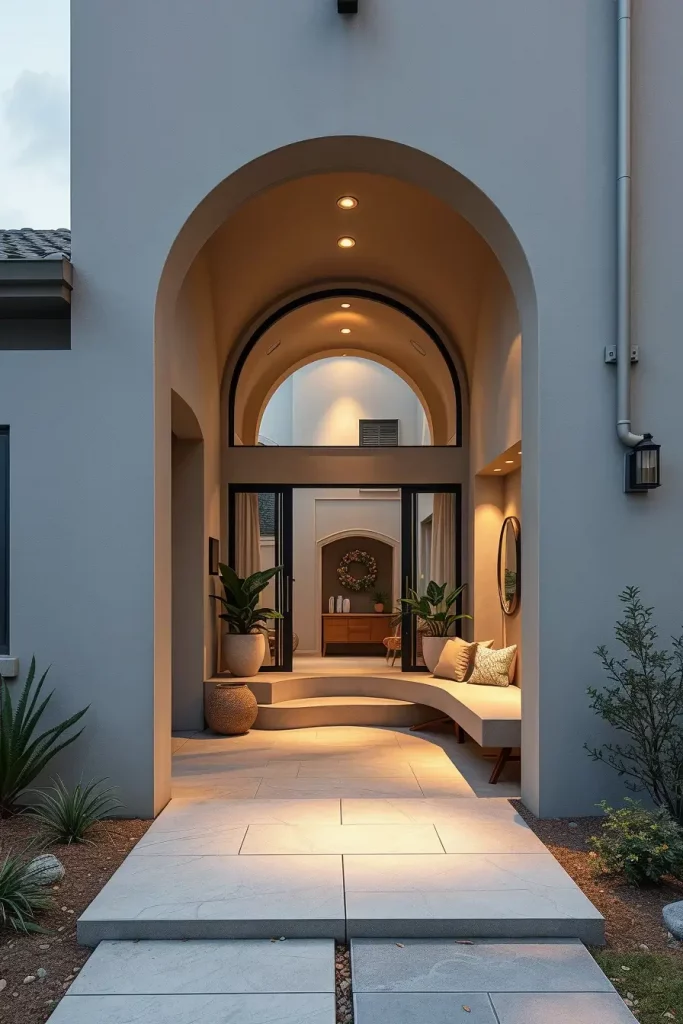
In practice, I focus on curved concrete walls, rounded stucco surfaces, seamless plaster finishes, and integrated benches that follow the same organic geometry. Curved doors, recessed lighting following the arc of the structure, and custom planters reinforce continuity. Each element plays a role in guiding visitors naturally toward the entrance while maintaining a clean, modern appearance that supports both aesthetics and durability.
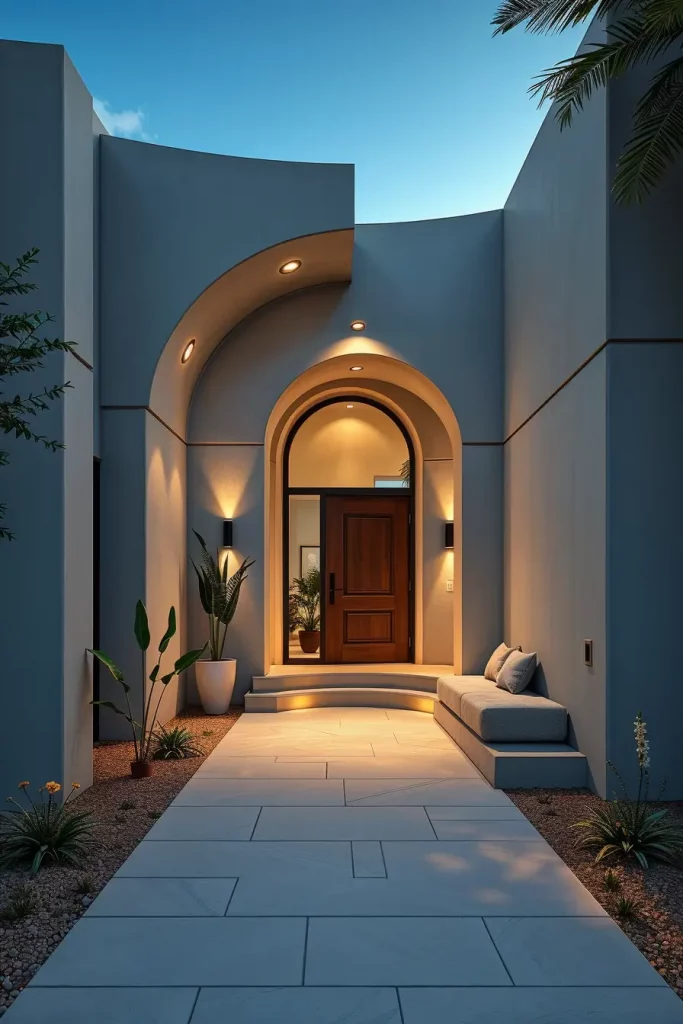
From my experience, architects and designers featured in Architectural Digest often emphasize curves as a way to humanize contemporary spaces, and I agree with this approach. Curved entryways feel approachable and timeless, and I often recommend them when clients want a sculptural presence without excessive ornamentation.
What I would add to this type of entryway is subtle landscape integration, such as low-profile greenery or curved stone pathways that echo the architecture and enhance the sense of flow before reaching the door.
Sculptural Canopies And Overhangs For Outdoor Entryways
Sculptural canopies and overhangs are central to stylish and sculptural outdoor entryways, offering both visual impact and practical protection. I view them as architectural elements that define the entry zone, shielding visitors from weather while clearly signaling where the home begins. In 2026 design trends, these canopies become bold forms rather than purely functional covers.
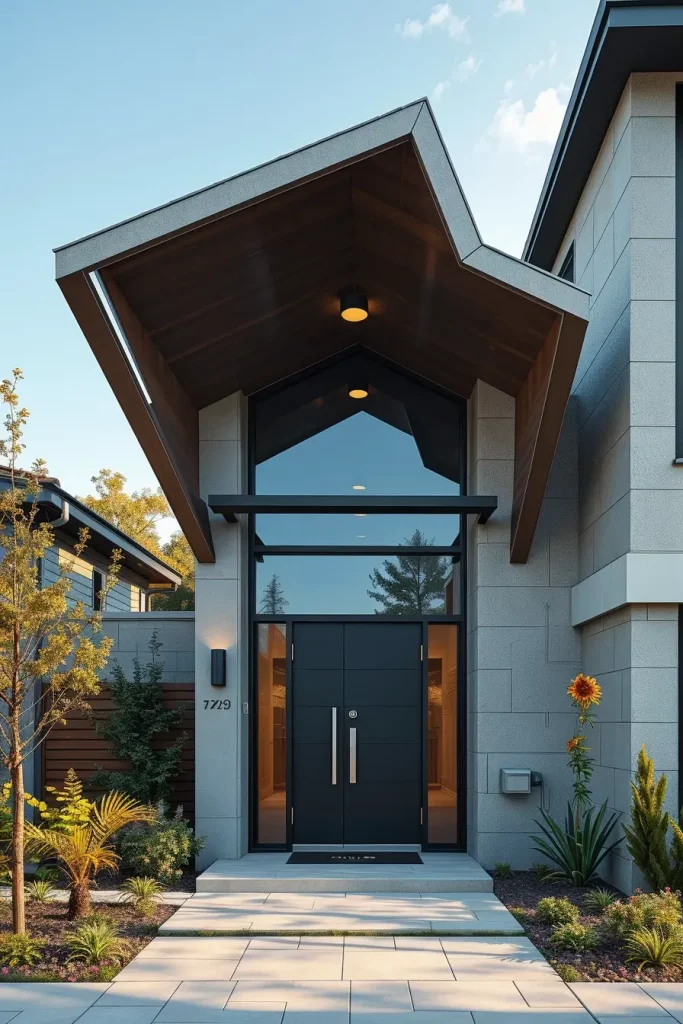
I often work with cantilevered concrete slabs, curved metal shells, or layered wood structures combined with recessed lighting. These canopies frame the door, enhance proportions, and create dramatic shadow play throughout the day. When paired with minimalist doors and textured walls, the canopy becomes a focal point without overwhelming the facade.
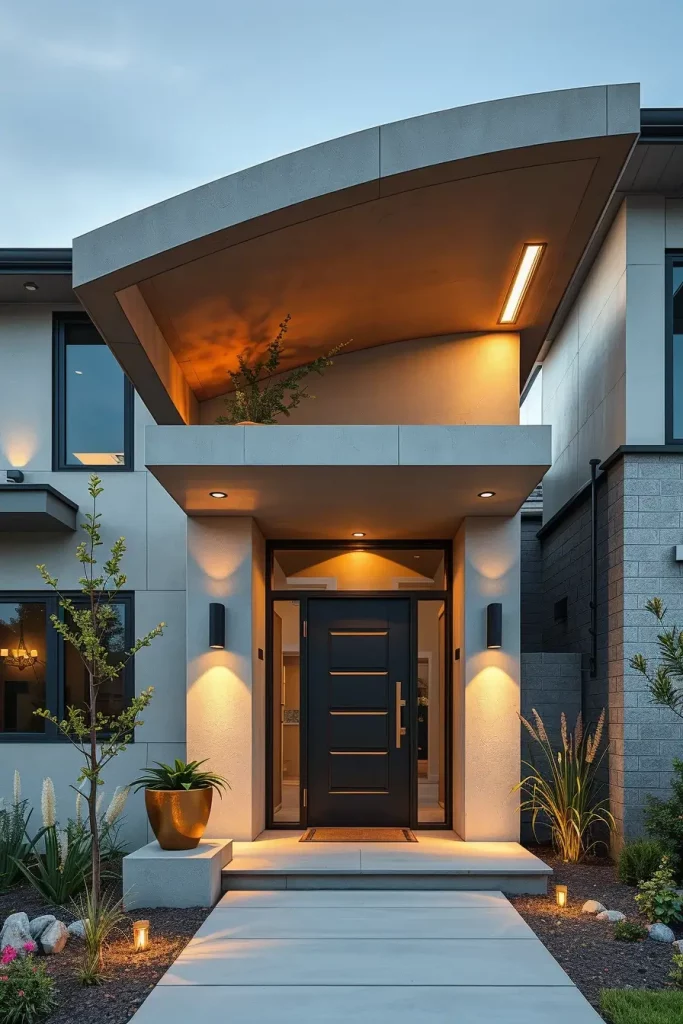
In my professional opinion, publications like Dezeen highlight sculptural overhangs as a key feature of contemporary residential architecture because they merge engineering with artistic expression. I recommend investing in precise detailing and high-quality materials to ensure longevity and visual clarity.
To complete this section, I would incorporate integrated drainage systems and concealed lighting channels, ensuring the canopy remains visually clean while performing efficiently in different weather conditions.
Outdoor Entryway Ideas Featuring Custom Metal Art Elements
Custom metal art elements allow artistic and unique outdoor entryways to express individuality while maintaining modern discipline. I see metal as an ideal medium for entryway accents because it balances strength, refinement, and adaptability to custom designs. In Outdoor entryway ideas 2026, metal becomes expressive rather than purely structural.
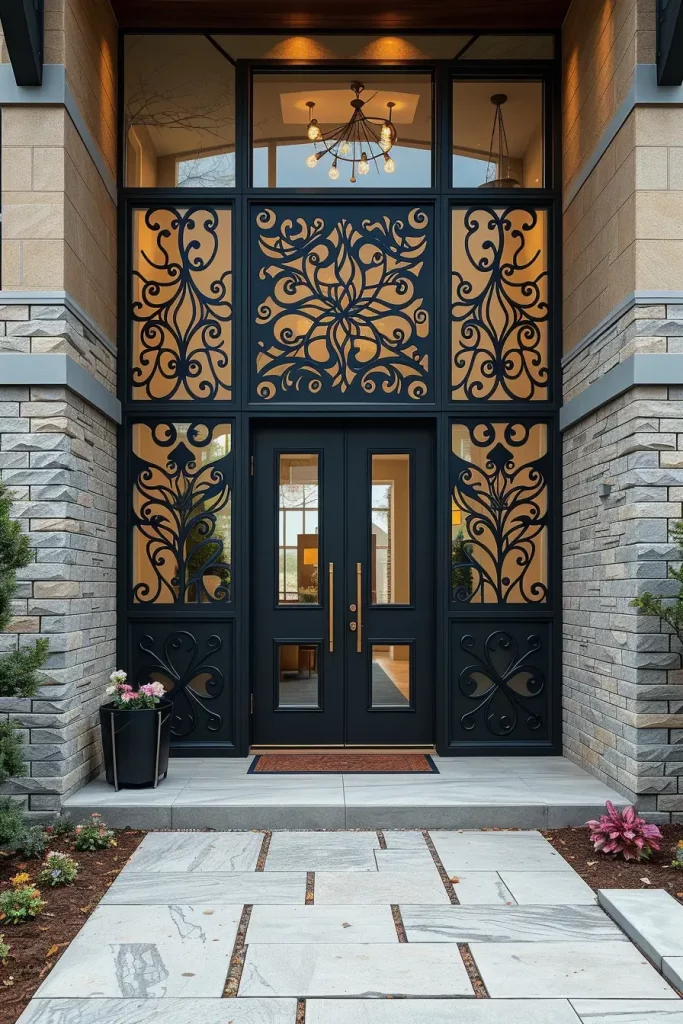
I typically incorporate laser-cut metal screens, sculptural steel panels, bronze door surrounds, or decorative gates that double as privacy features. These elements add depth and texture, especially when paired with neutral stone or concrete backgrounds. Finishes such as matte black, weathered steel, or brushed bronze provide contrast while aging gracefully outdoors.
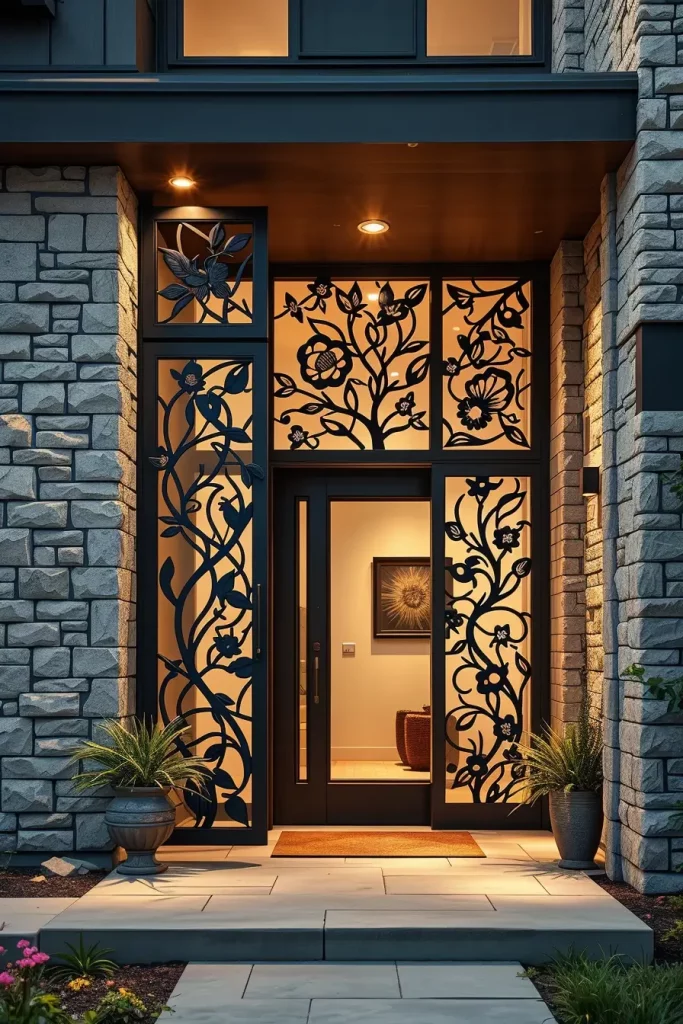
Based on my experience, many U.S. designers featured in Dwell emphasize custom metalwork as a way to add personality without clutter. I agree, as metal art can be bold yet restrained when designed thoughtfully, making the entryway memorable without sacrificing elegance.
What I would add here is subtle backlighting behind metal panels to highlight patterns at night, enhancing visibility and reinforcing the sculptural quality of the design.
Monolithic Entryway Designs With A Bold Contemporary Presence
Monolithic entryways are a defining feature of stylish and sculptural outdoor design in 2026. I see these entryways as architectural statements where mass, scale, and material dominance establish a powerful first impression. They work particularly well for modern homes seeking clarity and confidence in their exterior design.
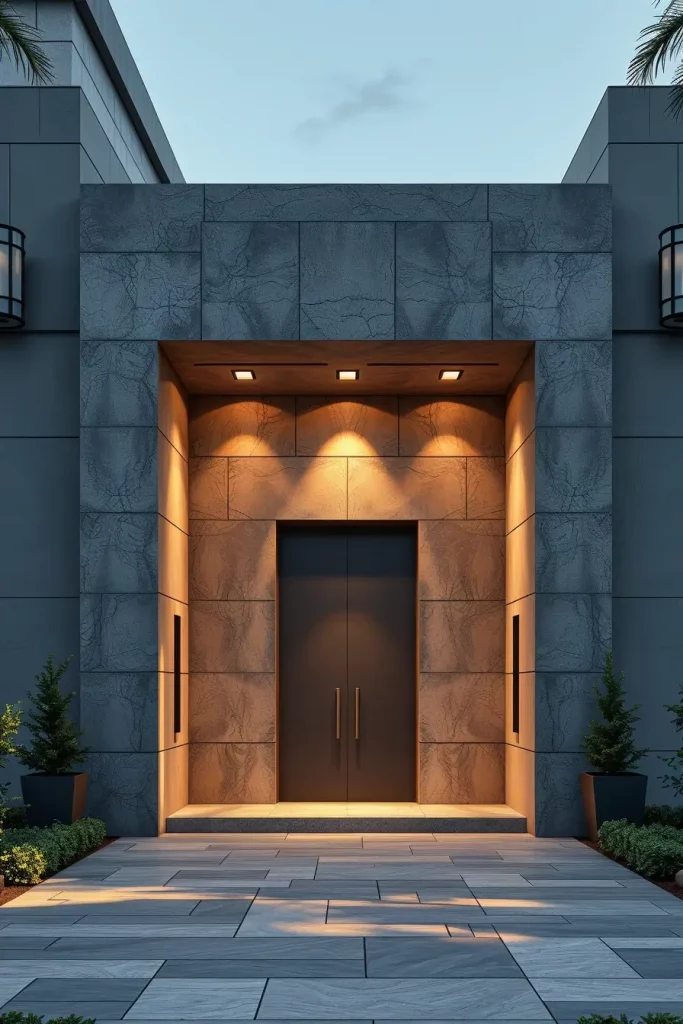
In these designs, I focus on large-format concrete walls, solid stone portals, oversized doors, and minimal detailing. The strength of the entryway comes from proportion and material continuity rather than decoration. Clean lines, concealed hardware, and integrated lighting maintain a refined and purposeful appearance.
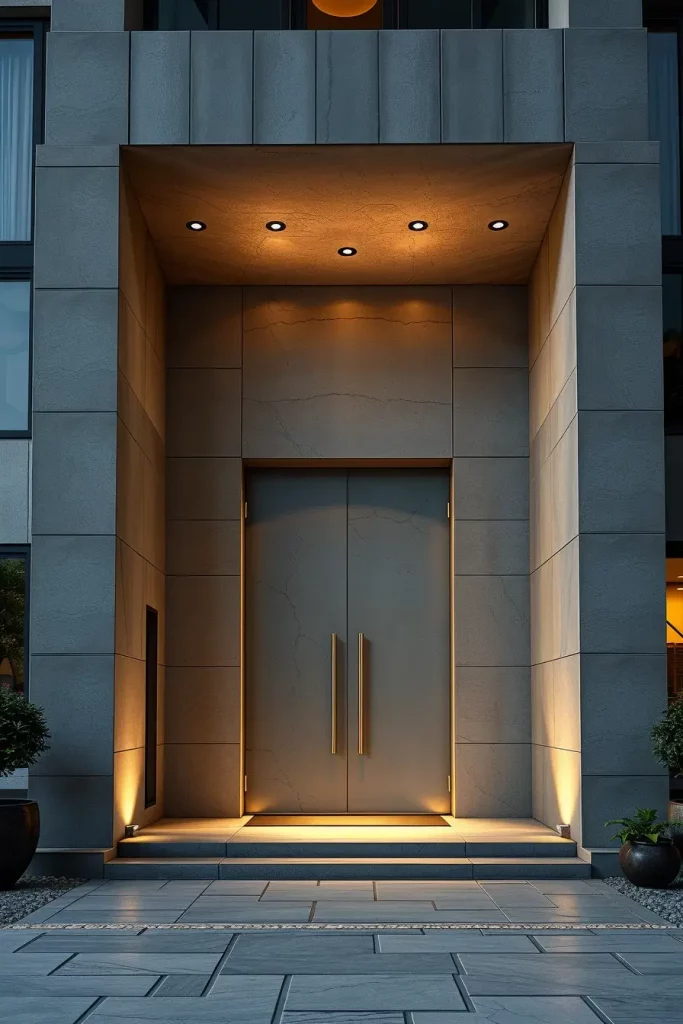
From my perspective, leading architects in platforms like ArchDaily often advocate for monolithic forms because they convey permanence and modern identity. I find this approach effective when balanced with warm materials such as wood or subtle textural contrasts to prevent the space from feeling too austere.
To strengthen this concept, I would add tactile elements such as textured stone flooring or a subtly recessed entry path to enhance sensory engagement without compromising the monolithic aesthetic.
Artistic Stone And Textured Surfaces For Entryway Exteriors
Textured stone surfaces are essential for creative and artistic outdoor entryways that feel grounded yet refined. I value stone for its ability to introduce depth, durability, and natural variation while supporting modern architectural language. In Outdoor entryway ideas 2026, texture becomes a design tool rather than a decorative afterthought.
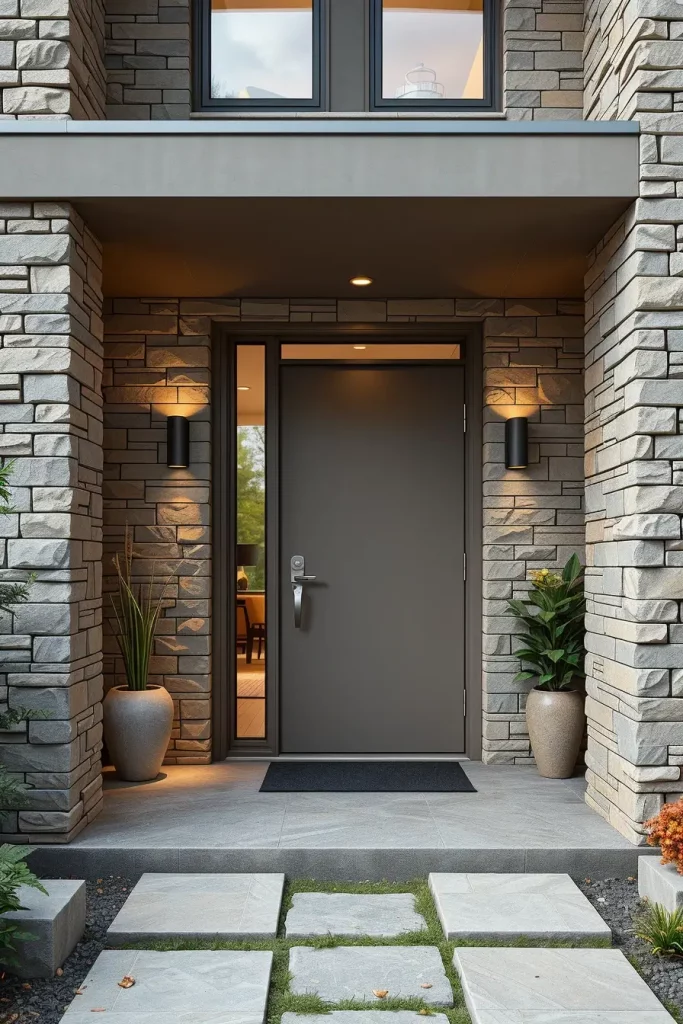
I frequently use split-face stone, fluted stone panels, honed limestone, or textured concrete finishes to create visual interest at the entry. These surfaces pair well with minimalist doors, concealed lighting, and clean architectural forms, allowing texture to become the main focal point without visual clutter.
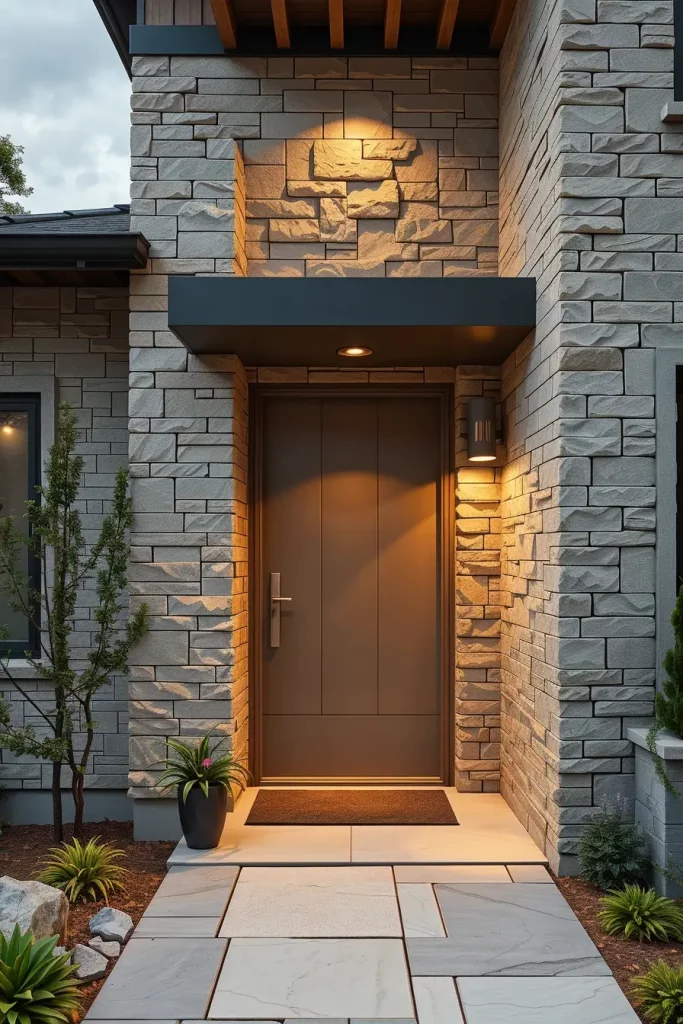
In my experience, interior and exterior designers cited by Elle Decor often recommend textured materials to add richness and longevity to transitional spaces like entryways. I support this advice, especially for outdoor areas exposed to weather and frequent use.
What I would add to this section is directional lighting that grazes the stone surface, emphasizing texture and enhancing the entryway’s character after dark.
Statement Staircases Leading To Sculptural Outdoor Entryways
I consider statement staircases an essential component of Outdoor entryway ideas 2026, especially when the goal is to create a sculptural and memorable arrival experience. A well-designed exterior staircase does more than connect levels; it sets rhythm, scale, and anticipation before reaching the front door. When thoughtfully proportioned, it improves safety, enhances accessibility, and visually anchors the entryway within the overall architecture.
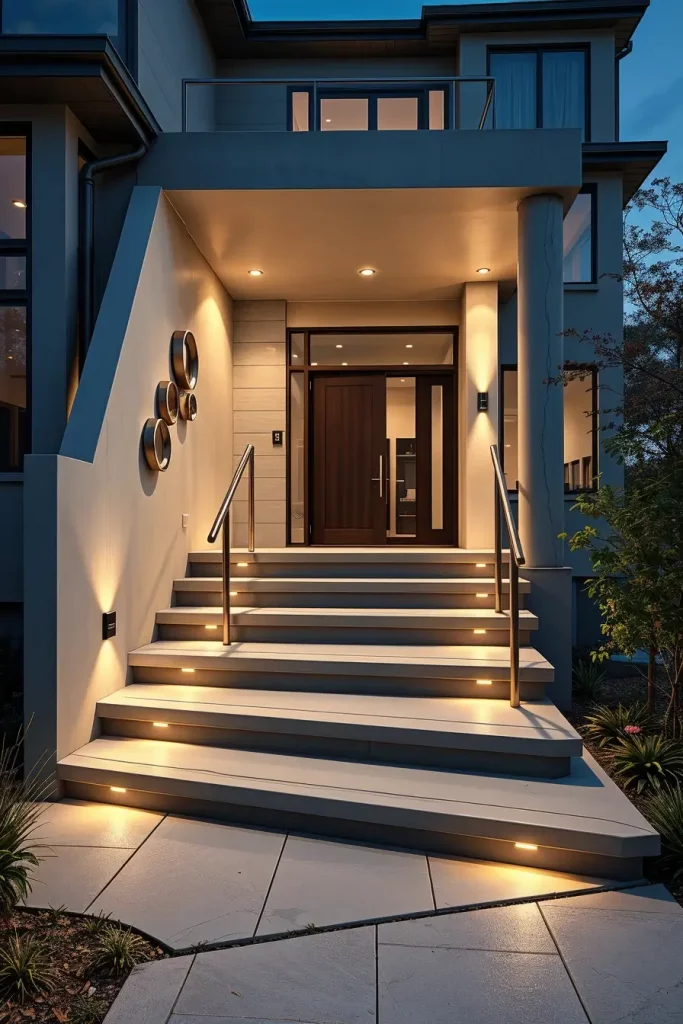
In my projects, I prioritize wide concrete or stone steps, floating stair treads, integrated riser lighting, and minimal railings made of glass or metal. These elements guide movement naturally while reinforcing a modern, architectural aesthetic. The staircase often becomes a lead-in sculpture that aligns with the entryway’s form and materials, creating a cohesive exterior narrative.
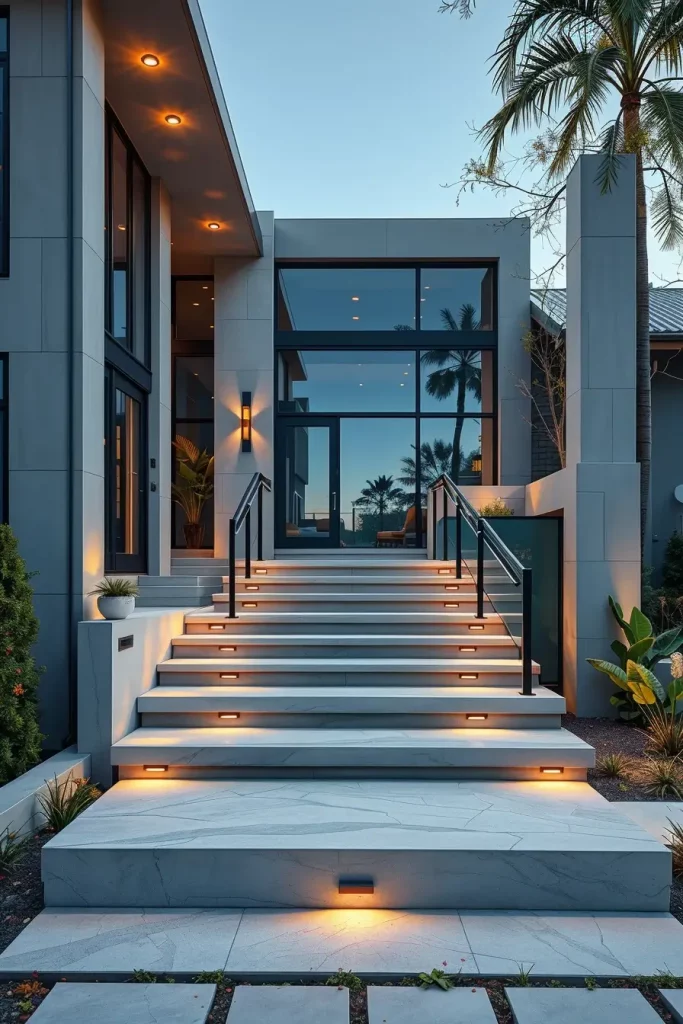
From my professional perspective, many architects featured in ArchDaily emphasize exterior staircases as experiential design elements rather than utilities, and I strongly support this view. A sculptural staircase elevates the emotional impact of the entry and signals intentional design from the very first step.
What I would add here is the integration of textured stair surfaces or subtle color variation to enhance grip, visual interest, and long-term durability without compromising the clean design language.
Unique Outdoor Entryways That Focus On Material Contrast
Material contrast is one of the most effective ways to achieve unique outdoor entryways that feel intentional and contemporary. In Outdoor entryway ideas 2026, contrasting materials help define volumes, highlight architectural features, and create visual hierarchy without excessive decoration. I see this approach as both artistic and highly practical.
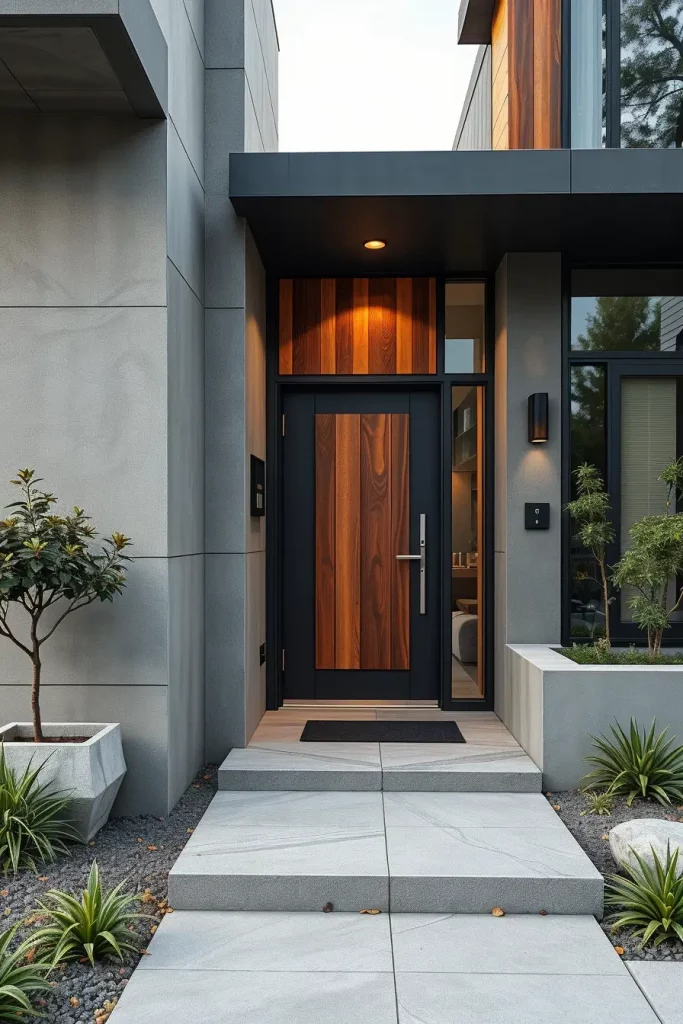
I often combine smooth concrete with warm wood, matte metal with textured stone, or dark entry doors against light facades. Each material serves a functional purpose while contributing to a layered visual effect. The contrast draws attention to the entryway and helps it stand out even within minimalist exterior compositions.
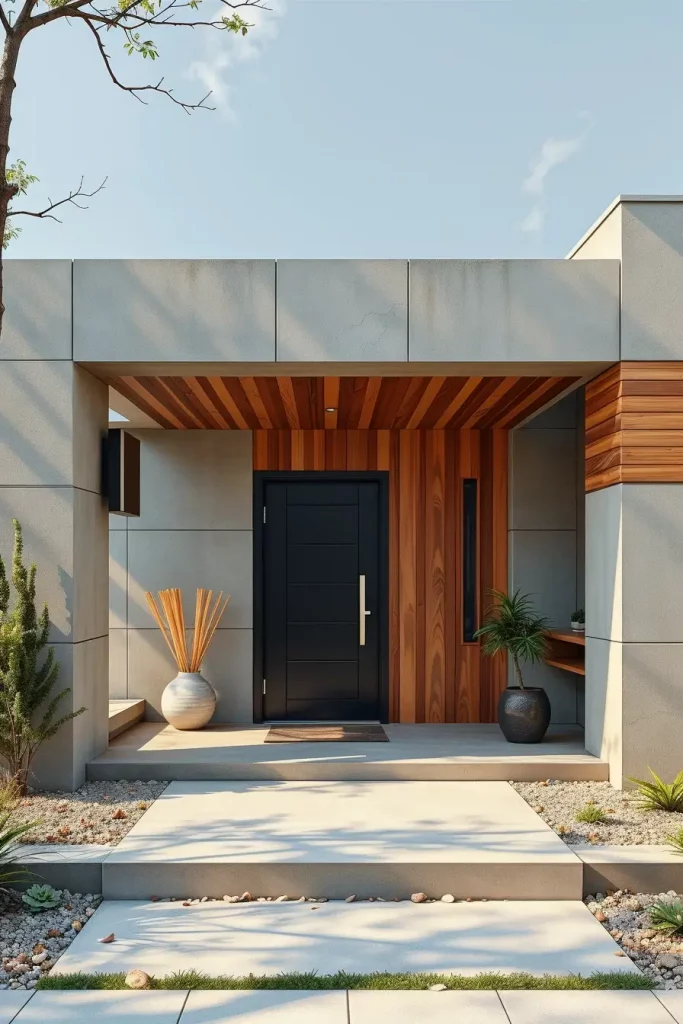
In my experience, designers featured in Dwell frequently recommend material contrast as a way to add depth to modern exteriors. I agree, especially when the palette is limited and carefully balanced to avoid visual chaos.
To strengthen this concept, I would add transitional details such as shadow gaps or recessed joints between materials, ensuring clean separation and enhancing the precision of the design.
Modern Outdoor Entryways With Integrated Art Installations
Integrated art installations define artistic and creative outdoor entryways by transforming the entry into a curated experience. In Outdoor entryway ideas 2026, art is no longer an afterthought but an architectural component that communicates identity and intention from the exterior.
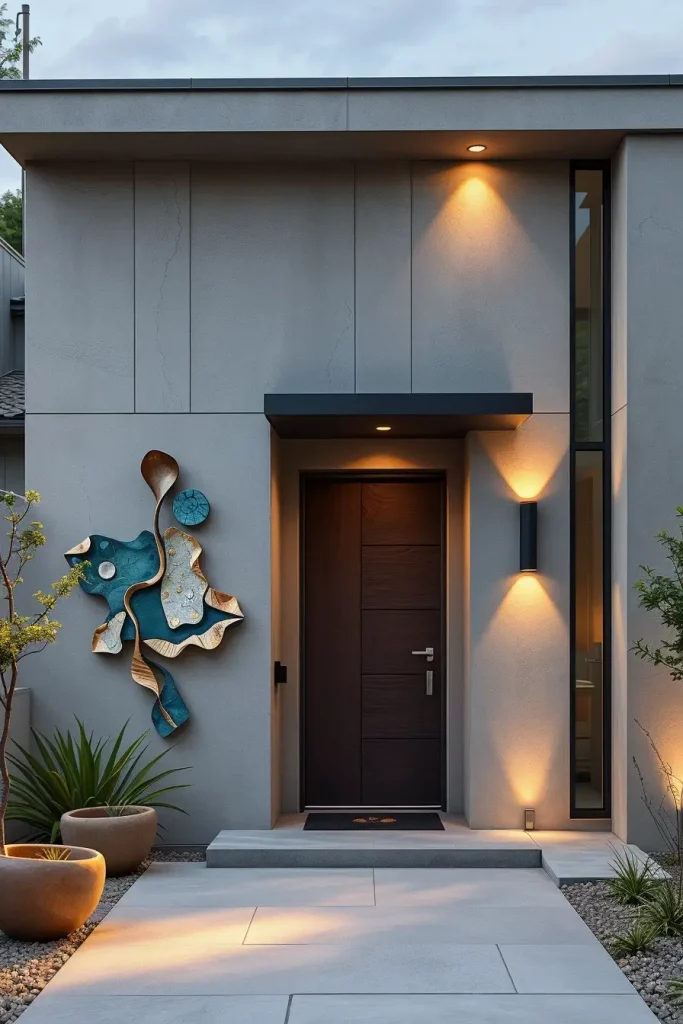
I typically incorporate sculptural wall reliefs, custom outdoor art panels, or freestanding installations positioned near the door or along the entry path. These pieces are designed to withstand outdoor conditions while complementing the architecture rather than competing with it. Lighting is carefully planned to highlight the artwork during evening hours.
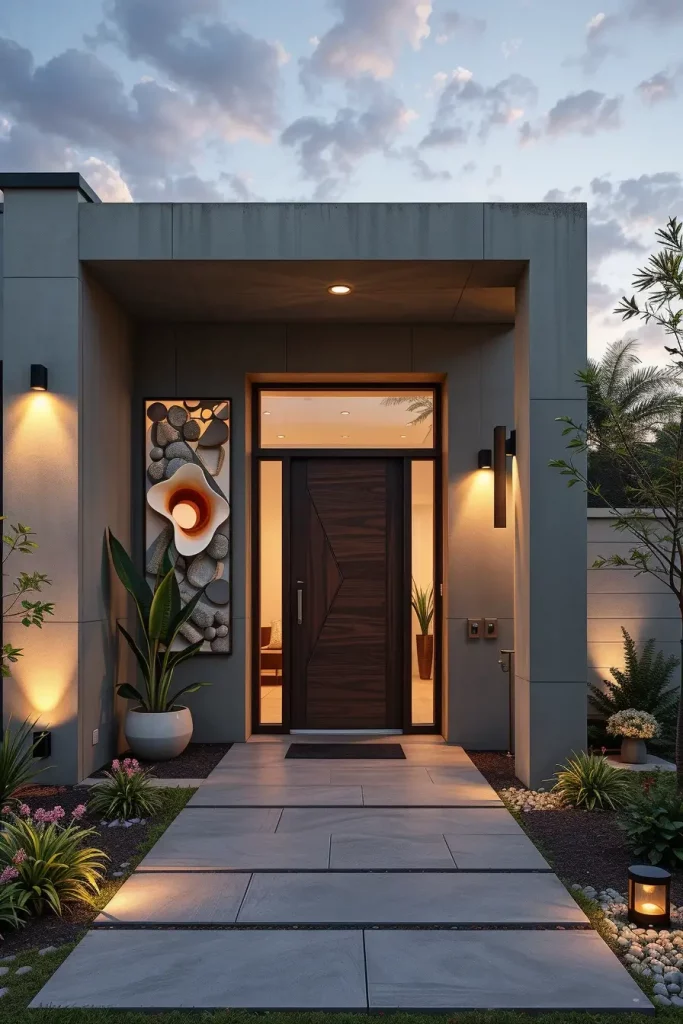
From my point of view, publications like Architectural Digest often highlight homes where art is integrated into architecture, and I find this approach especially effective for entryways. It creates an emotional connection and makes the arrival experience memorable without overwhelming the space.
What I would add here is collaboration with local artists to create site-specific pieces that reflect the home’s character and surroundings, adding authenticity and originality to the entryway.
Architectural Frames That Redefine The Outdoor Entryway
Architectural frames are a powerful tool for redefining stylish and sculptural outdoor entryways. In Outdoor entryway ideas 2026, frames act as visual boundaries that emphasize the entrance while adding depth and architectural clarity. I see them as modern reinterpretations of traditional portals.
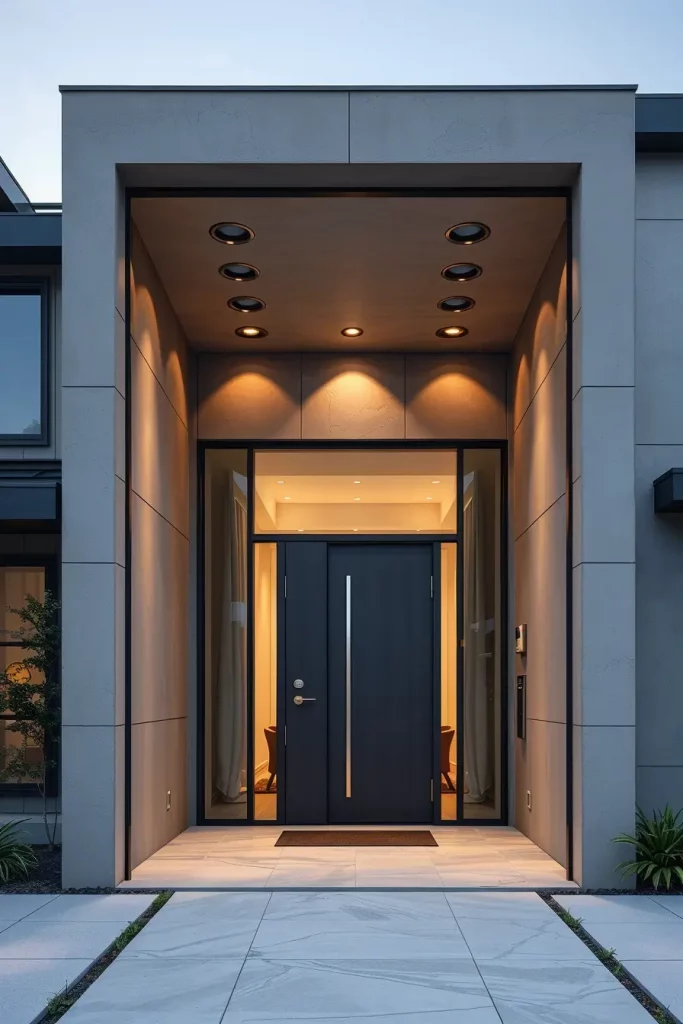
In my designs, I use oversized concrete frames, metal portals, or layered rectangular forms that surround the door. These frames create a sense of transition, draw focus to the entry point, and provide opportunities for integrated lighting or contrasting finishes. The result is a clear, intentional entry that feels grounded and contemporary.
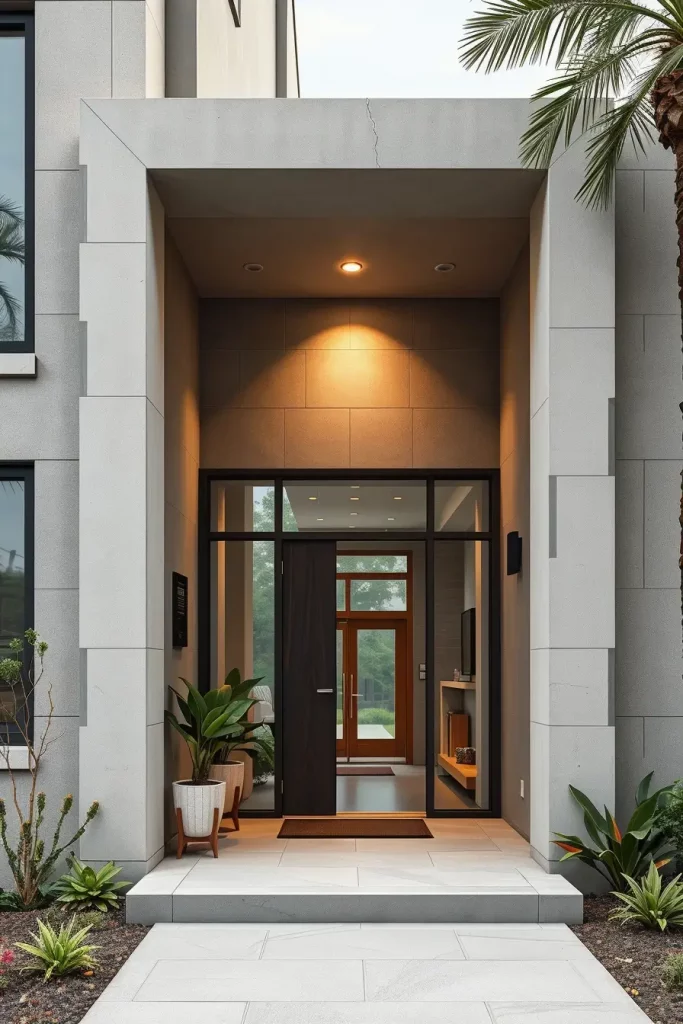
Based on my professional experience, many modern architects featured in Dezeen use framing techniques to create hierarchy on minimalist facades. I agree with this approach, as it enhances legibility and strengthens the architectural composition.
To complete this section, I would add subtle lighting embedded within the frame to enhance depth and improve visibility while maintaining a clean, uninterrupted form.
Asymmetrical Outdoor Entryway Designs With Artistic Flair
Asymmetry brings energy and individuality to unique outdoor entryways, making it a defining trend in Outdoor entryway ideas 2026. I view asymmetrical designs as a way to break away from predictable layouts while maintaining balance through proportion, material choice, and spatial logic.
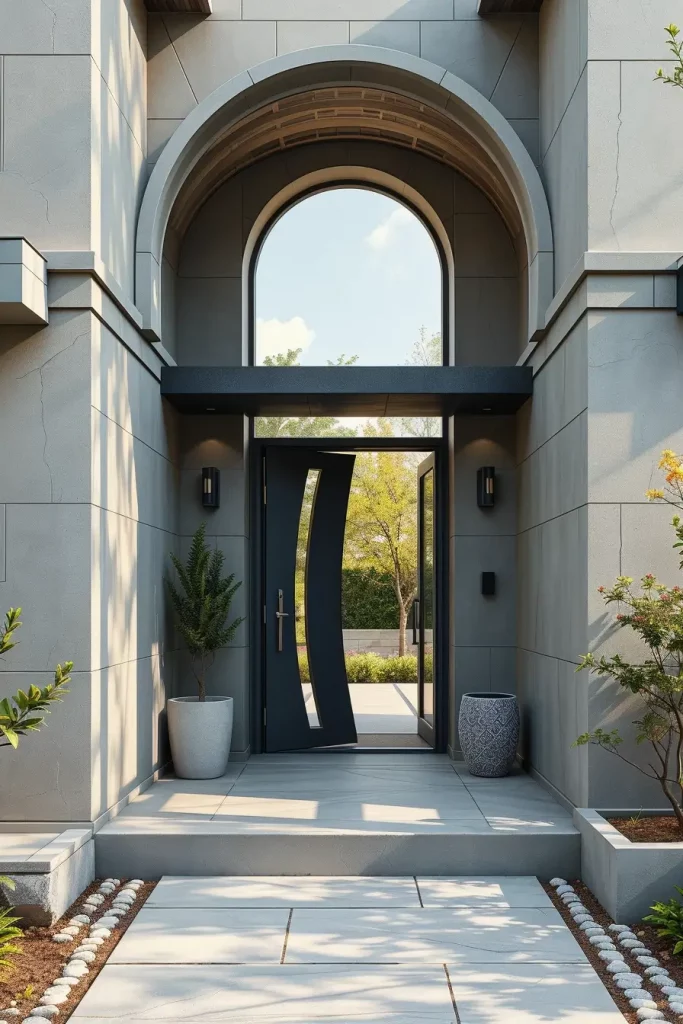
I often design entryways where the door is offset, walls vary in height, or canopies extend unevenly to create visual interest. These compositions are supported by consistent materials, strong lines, and intentional alignment with pathways and landscaping. The result feels dynamic yet controlled.
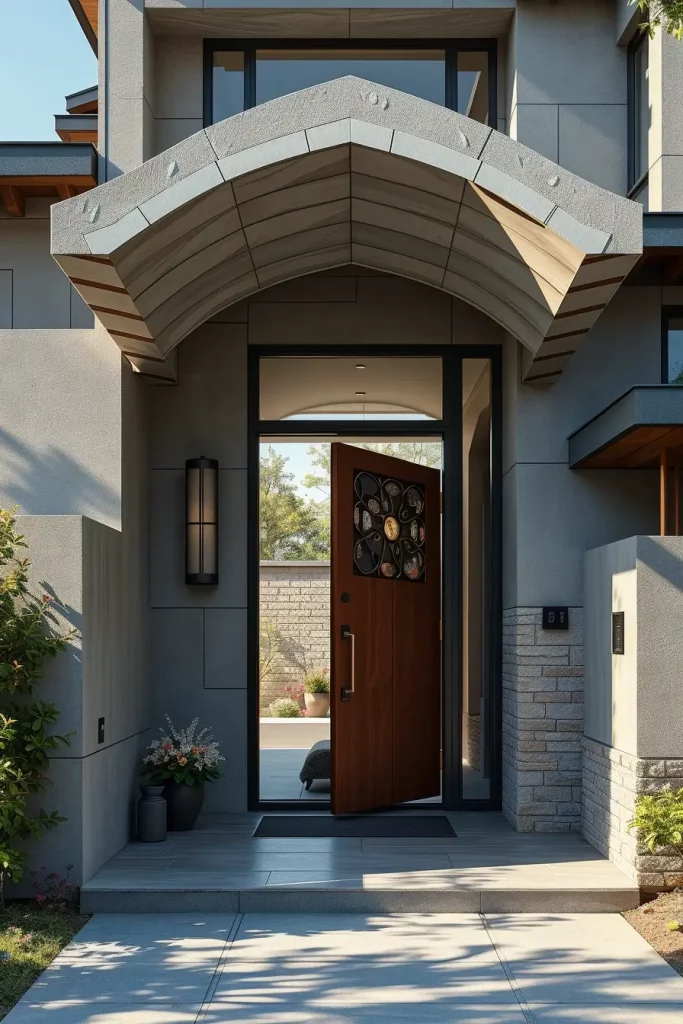
From my perspective, many contemporary designers featured in design-focused media emphasize asymmetry as a hallmark of artistic modern architecture. I support this approach when it is guided by structure rather than randomness, ensuring usability and coherence.
What I would add here is careful alignment of lighting and landscaping to reinforce the asymmetrical composition and guide visitors intuitively toward the entrance.
Outdoor Entryways With Statement Walls And Sculptural Facades
I see statement walls and sculptural facades as one of the most effective ways to elevate an outdoor entryway in 2026. These designs rely on strong materials, depth, and architectural relief to create visual interest before anyone even reaches the door. From a practical perspective, a sculptural facade also protects the entry from weather exposure while guiding visitors intuitively toward the entrance. I always approach this type of entryway as an architectural threshold rather than simple decoration.
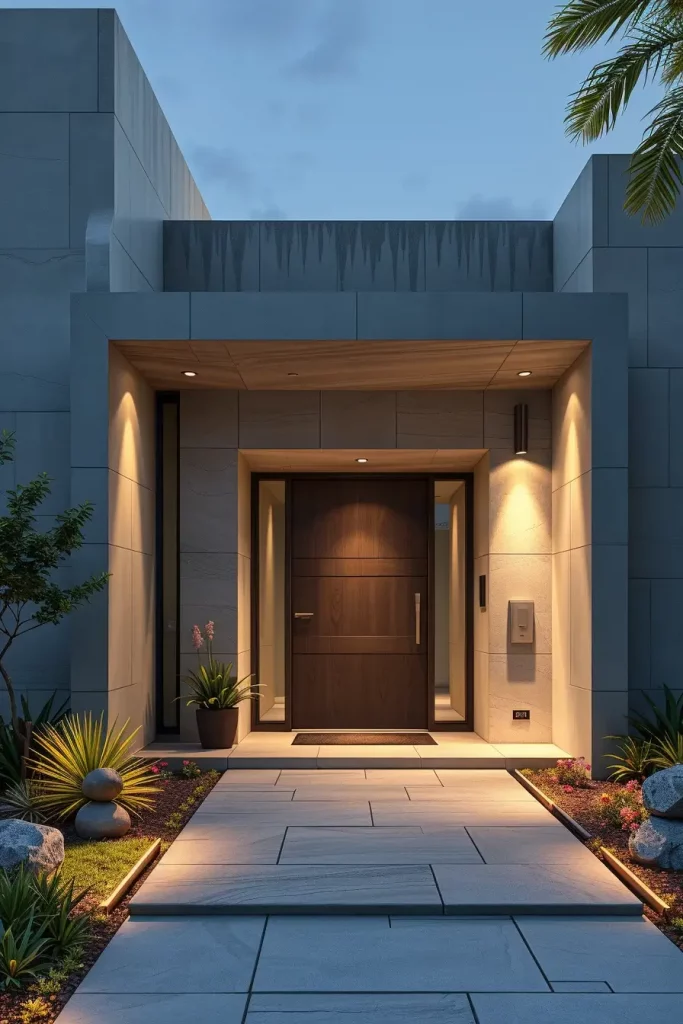
In my designs, I focus on materials such as textured concrete, carved stone panels, architectural plaster, or vertically ribbed metal surfaces. These elements work best when paired with integrated lighting, concealed drainage, and subtle overhangs that enhance both durability and comfort. I also recommend grounding the facade with minimalist paving and low-profile planters so the wall itself remains the focal point.
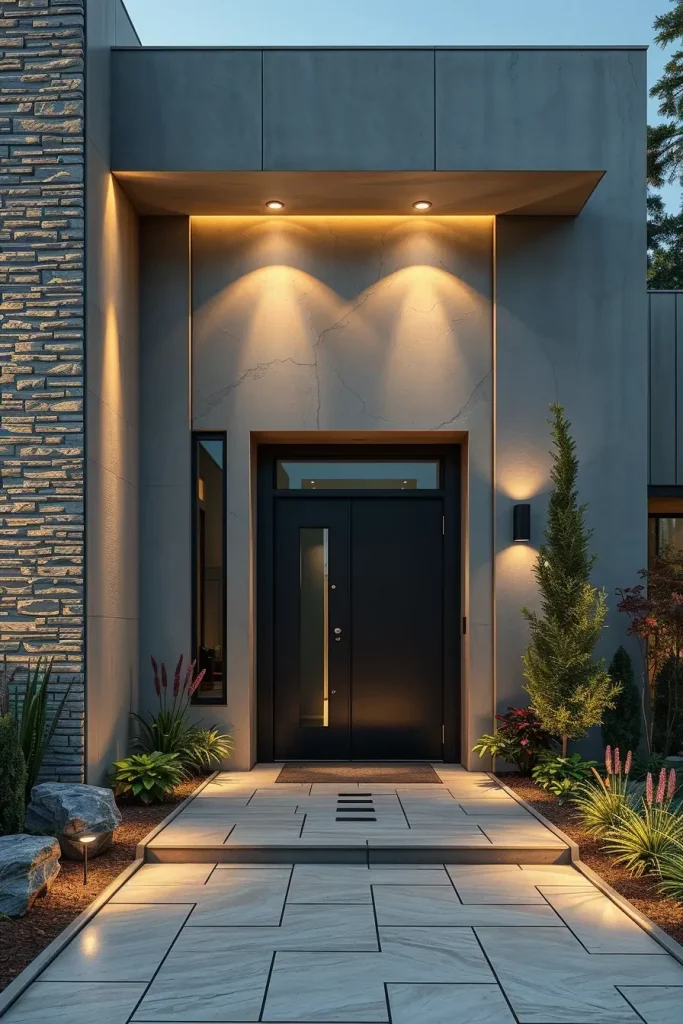
From my experience, designers featured in publications like Architectural Digest often emphasize restraint when working with statement walls. I agree with this approach. The facade should feel intentional and sculptural, not overwhelming. I always advise clients to commit fully to one strong surface rather than layering multiple competing finishes.
What is often missing in these entryways is thoughtful nighttime lighting. I would add recessed uplights or linear LED washes to highlight textures after dark and ensure the sculptural quality remains visible at all hours.
Creative Use Of Shadows And Depth In Entryway Design
When I design outdoor entryways that rely on shadows and depth, I think about how light moves throughout the day. Deep recesses, layered walls, and overhanging planes create natural shade while adding dimension to the entrance. This approach is both visually striking and practical, especially in warmer climates where controlling sunlight is essential.
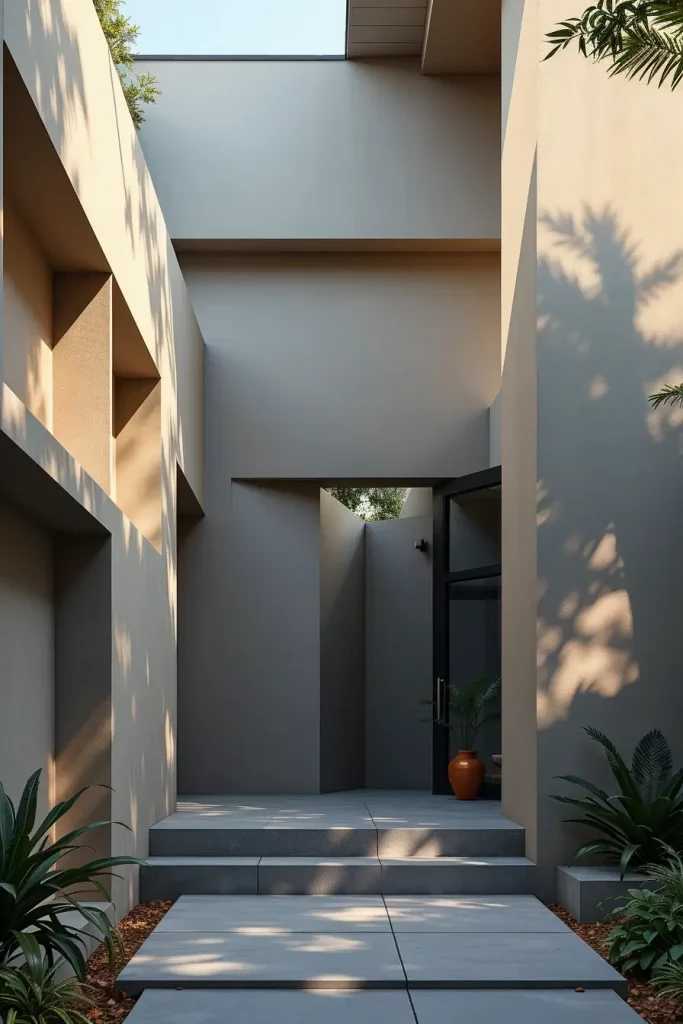
I usually introduce architectural fins, perforated screens, or layered wall panels that cast changing shadows across the entry surface. These elements pair well with smooth concrete flooring, floating steps, and frameless glass side panels. The goal is to create a sense of movement and rhythm without relying on ornament.
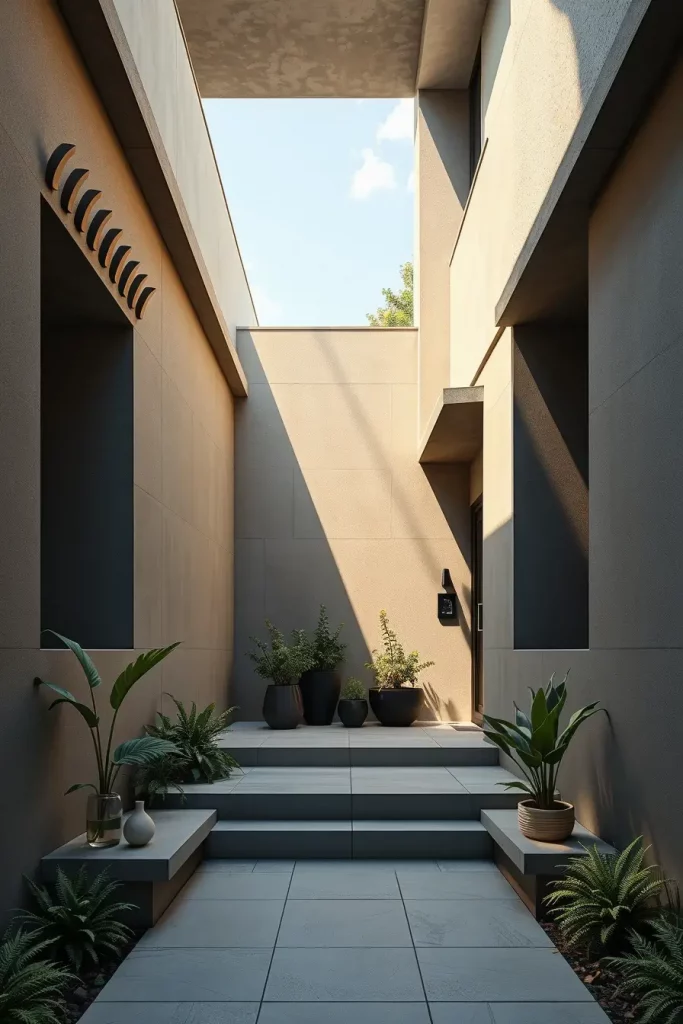
In my opinion, this concept aligns strongly with guidance from contemporary architects who emphasize passive design strategies. Publications like Dezeen frequently highlight how shadow play reduces glare while enhancing architectural character. I have seen firsthand how this approach makes an entryway feel calm, intentional, and immersive.
What I would add to many of these designs is a subtle seating element, such as a built-in concrete bench or stone ledge, to make the space more welcoming without disrupting the visual flow.
Ultra-Modern Entryway Ideas With Clean Sculptural Lines
Ultra-modern entryways in 2026 prioritize clarity, proportion, and sculptural simplicity. I approach these designs with a focus on clean lines, sharp geometry, and seamless transitions between exterior materials. The result is an entryway that feels precise, confident, and unmistakably contemporary.
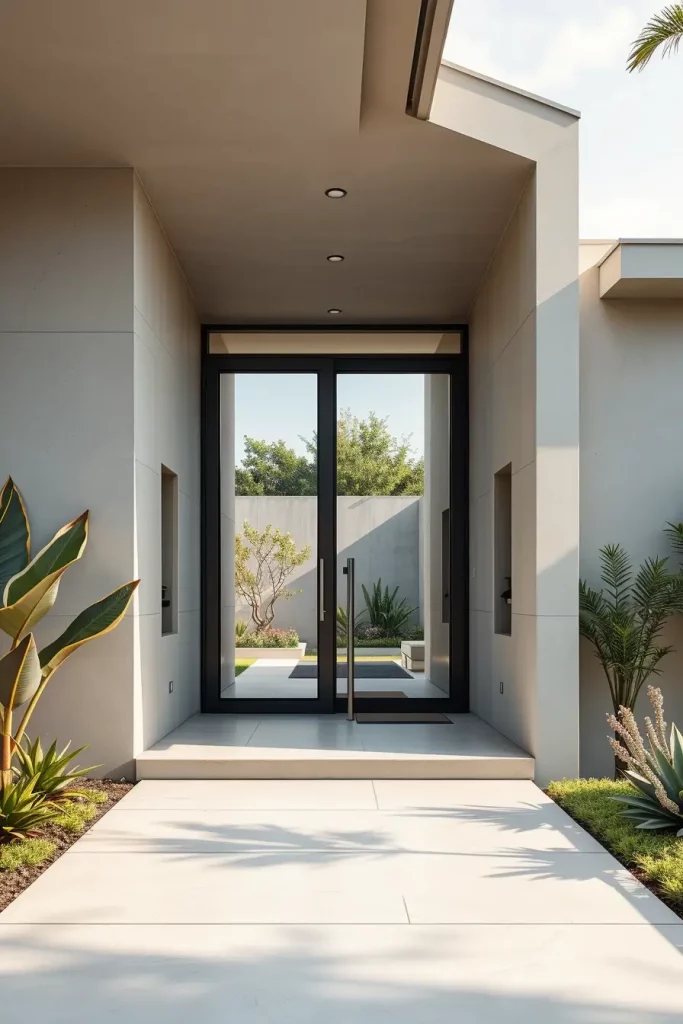
I typically use oversized pivot doors, flush wall panels, and continuous flooring materials that extend from the walkway into the threshold. Materials such as smooth stone, matte metal, and architectural concrete reinforce the sculptural quality. Every element serves a purpose, eliminating visual noise while enhancing durability.
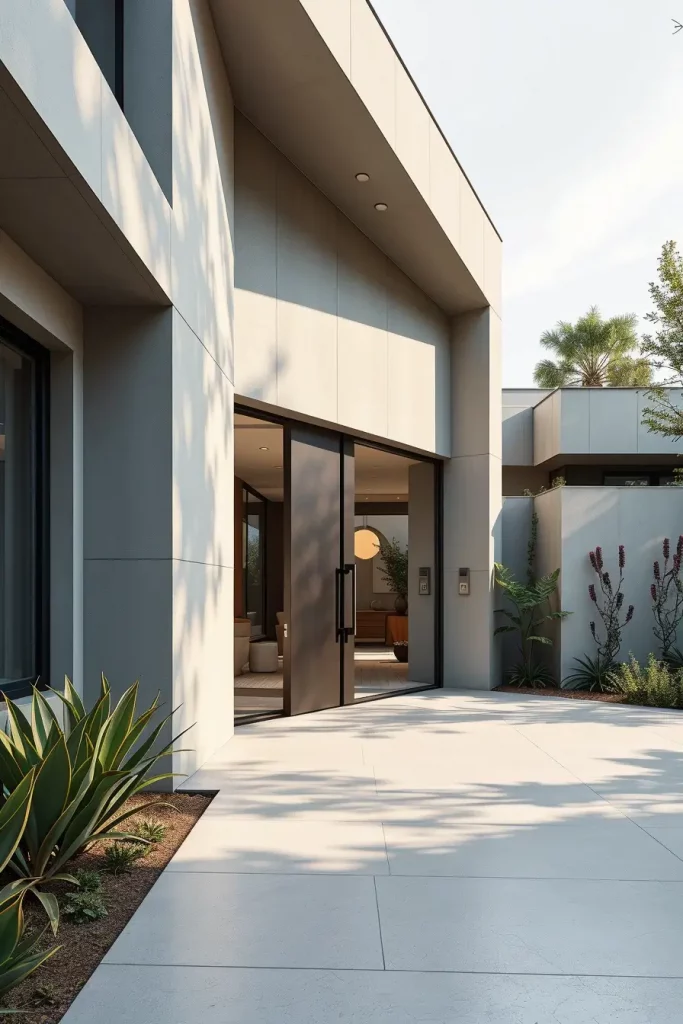
From my professional experience, many leading designers featured in Dwell emphasize that modern entryways should feel calm and intentional. I share this philosophy. A sculptural entryway should not rely on decoration but on proportion and material integrity.
What is often missing here is warmth. I would add subtle wood accents or integrated landscape elements to soften the geometry and make the entry feel more human without compromising its modern identity.
Outdoor Entryways Designed Around Large Artistic Doors
Large artistic doors are becoming the centerpiece of outdoor entryways in 2026. I see these doors not just as functional components but as architectural artworks that define the entire facade. When designed properly, they create a powerful focal point while enhancing security and insulation.
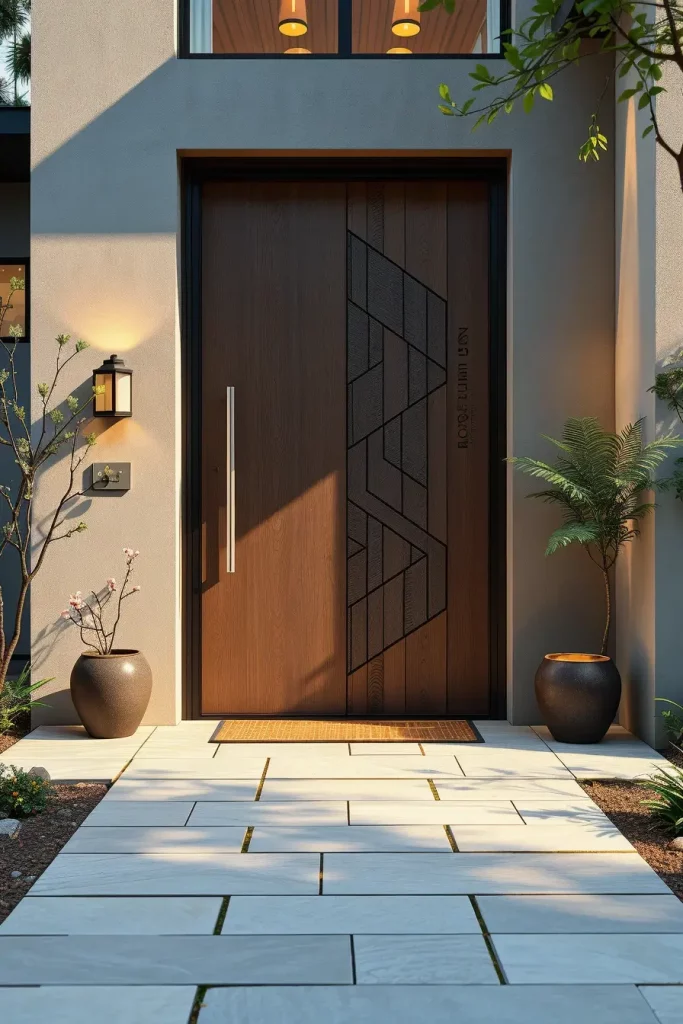
I recommend doors crafted from solid wood slabs, metal composites, or custom-molded materials with visible grain or texture. Oversized handles, concealed hinges, and pivot mechanisms contribute to a clean, gallery-like appearance. Surrounding the door with minimalist walls ensures it remains the visual anchor.
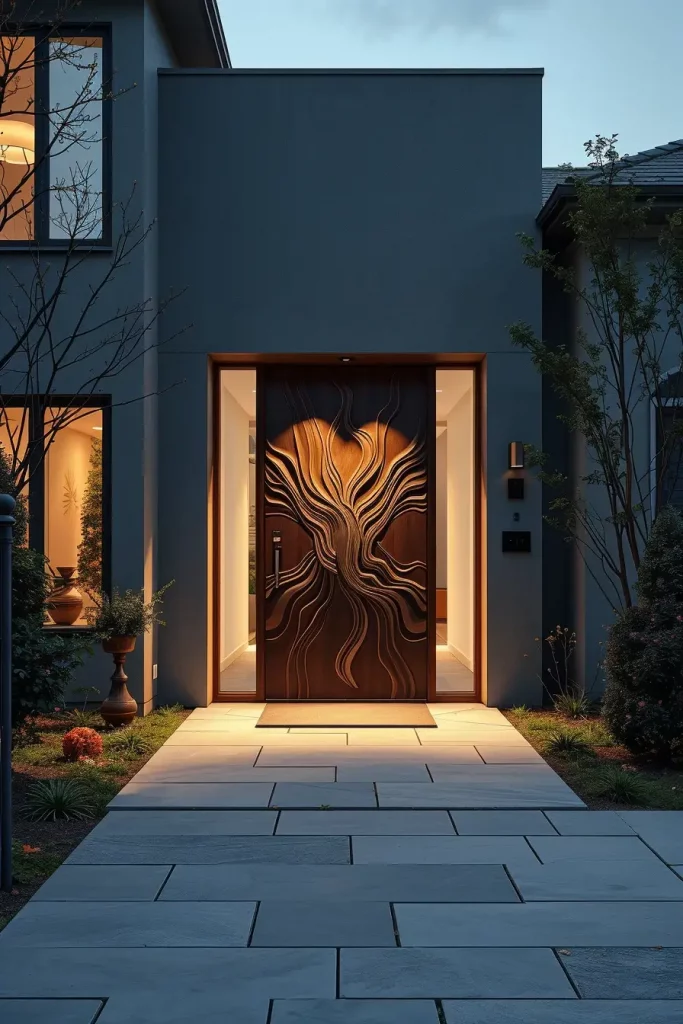
In my experience, many architects highlighted by Interior Design Magazine stress the importance of scale at the entry. I agree completely. A generously sized door immediately communicates confidence and architectural intent, especially when paired with restrained detailing.
What I would add to these entryways is a carefully framed approach path, using lighting or material changes, to visually prepare visitors for the artistic impact of the door itself.
Entryway Designs That Emphasize Form Over Ornament
Entryways that emphasize form over ornament are a defining trend for 2026. I design these spaces by prioritizing shape, proportion, and material honesty instead of applied decoration. This approach results in entryways that feel sculptural, timeless, and deeply architectural.
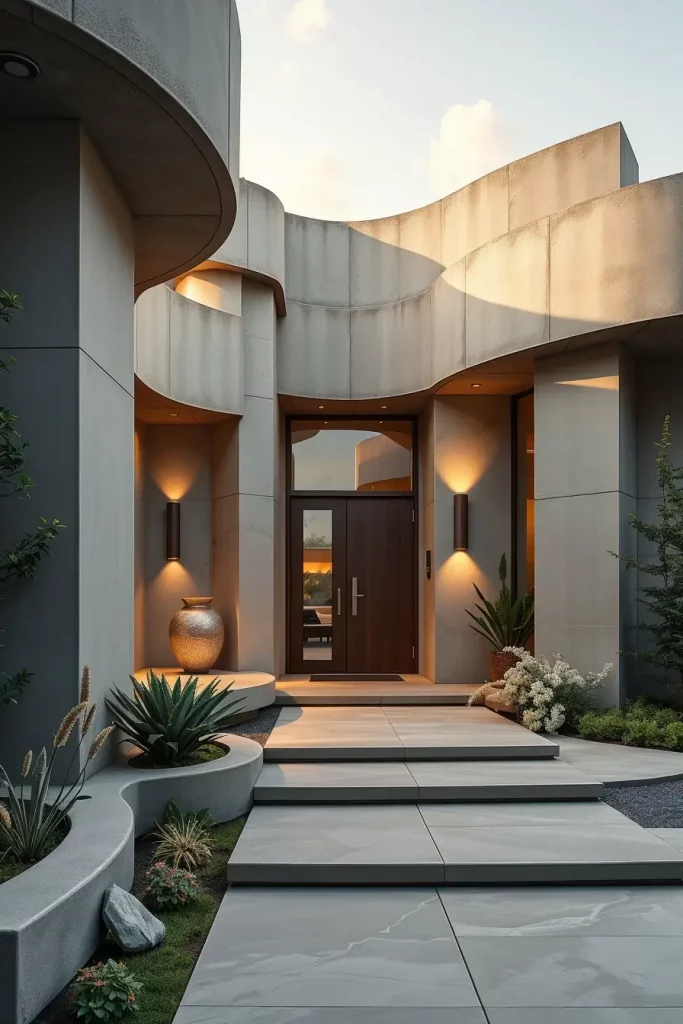
I focus on monolithic forms, curved walls, floating canopies, and uninterrupted surfaces. Materials are left exposed and authentic, allowing texture and form to speak for themselves. Minimal landscaping and discreet lighting ensure nothing distracts from the overall composition.
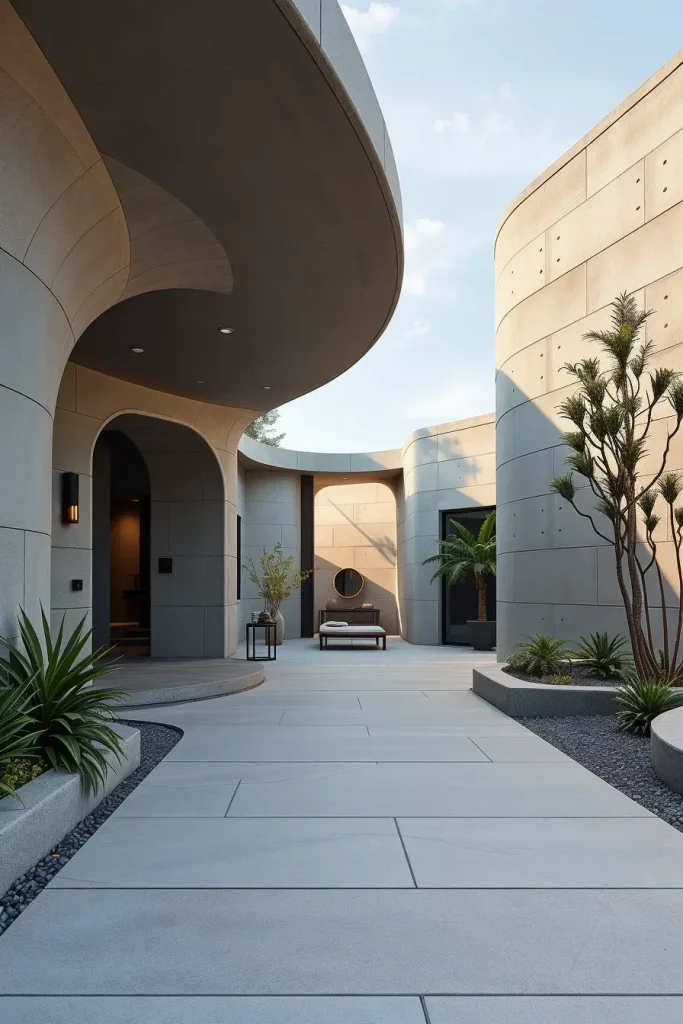
From my perspective, this philosophy echoes advice from respected architects often cited in The Wall Street Journal’s design features. They consistently emphasize that strong form ages better than surface decoration. I have seen these entryways remain relevant long after trends shift.
What I would add here is improved tactile contrast, such as pairing smooth walls with subtly textured flooring, to enhance the sensory experience without introducing ornament.
Experimental Outdoor Entryway Concepts For 2026 Homes
When I work with experimental outdoor entryway concepts, I focus on pushing architectural boundaries while maintaining everyday usability. In 2026, these entryways often explore unconventional layouts, asymmetry, and unexpected material pairings. From a functional standpoint, experimentation does not mean sacrificing comfort or durability, but rather rethinking how an entryway guides movement and frames arrival.
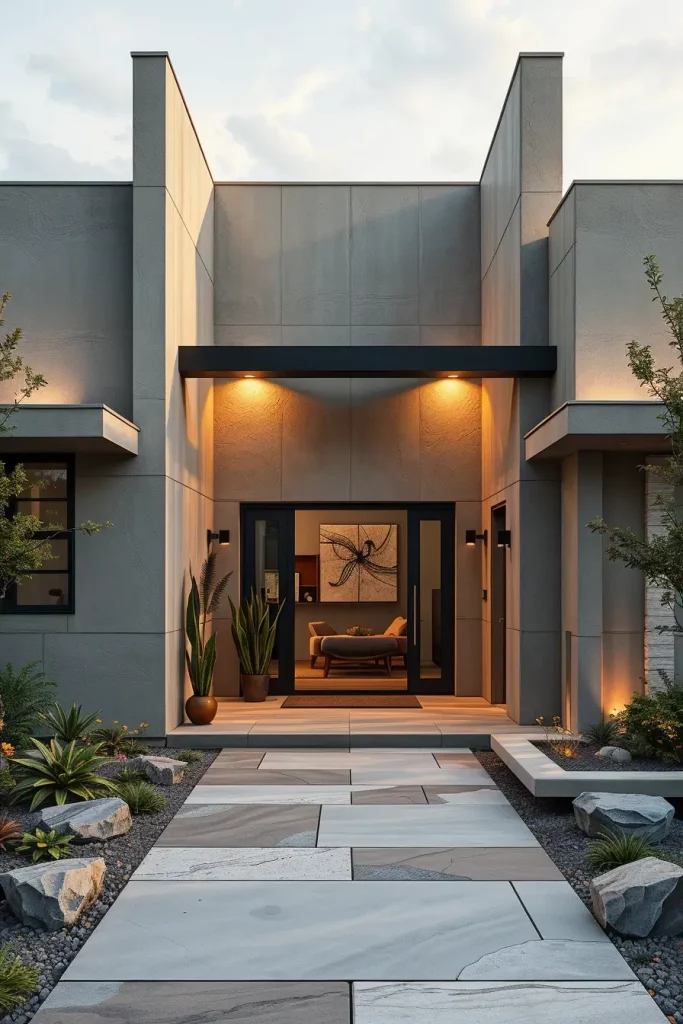
I frequently introduce sculptural staircases, offset walls, mixed textures, and unexpected rooflines. Materials such as raw concrete combined with smooth stone or dark metal help balance innovation with structural integrity. I also pay close attention to weather resistance, drainage, and circulation so the entryway remains practical despite its bold form.
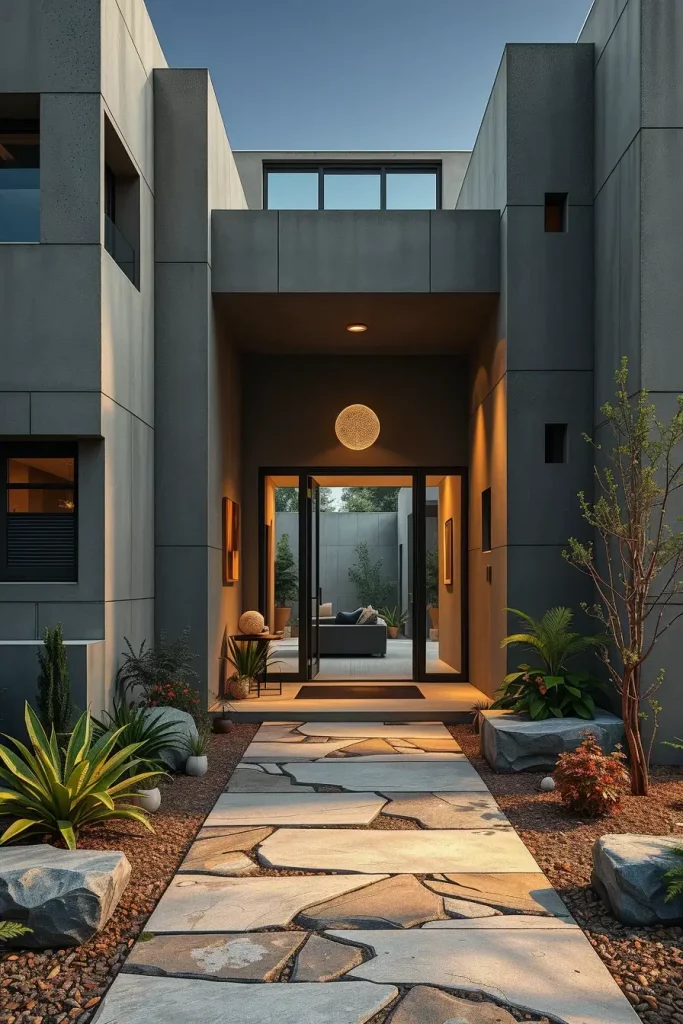
In my professional opinion, experimental entryways work best when they are rooted in architectural logic. Design critics featured in publications like Dezeen often highlight that innovation succeeds when it enhances spatial experience rather than distracting from it. I have seen experimental designs age beautifully when they are grounded in function.
What is often missing in these entryways is intuitive wayfinding. I would add subtle visual cues, such as directional lighting or material transitions, to help visitors navigate the space effortlessly.
Sculptural Entryways That Create A Strong First Impression
A sculptural outdoor entryway is often the defining moment of a home’s exterior, and in 2026, this approach continues to gain momentum. I design these spaces to immediately communicate identity, confidence, and architectural clarity. A strong first impression is not about excess, but about form that feels intentional and memorable.
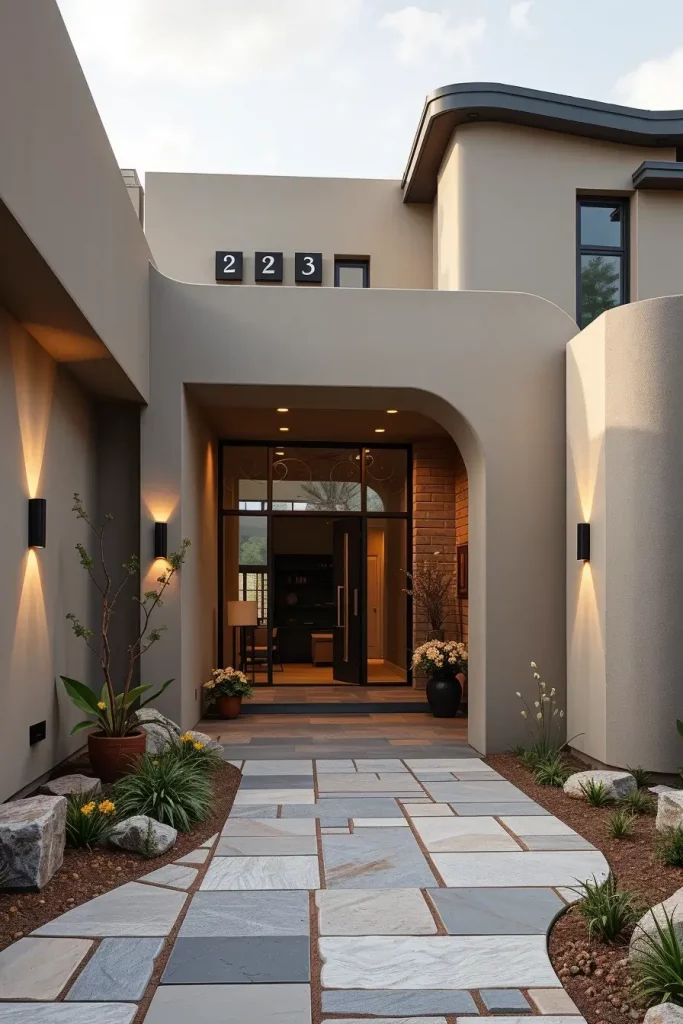
I typically rely on bold volumes, curved or angular walls, and carefully framed openings. Materials such as stone, architectural plaster, or metal panels reinforce the sculptural quality, while minimal landscaping keeps attention focused on the structure itself. Lighting is integrated to enhance form rather than decorate it.
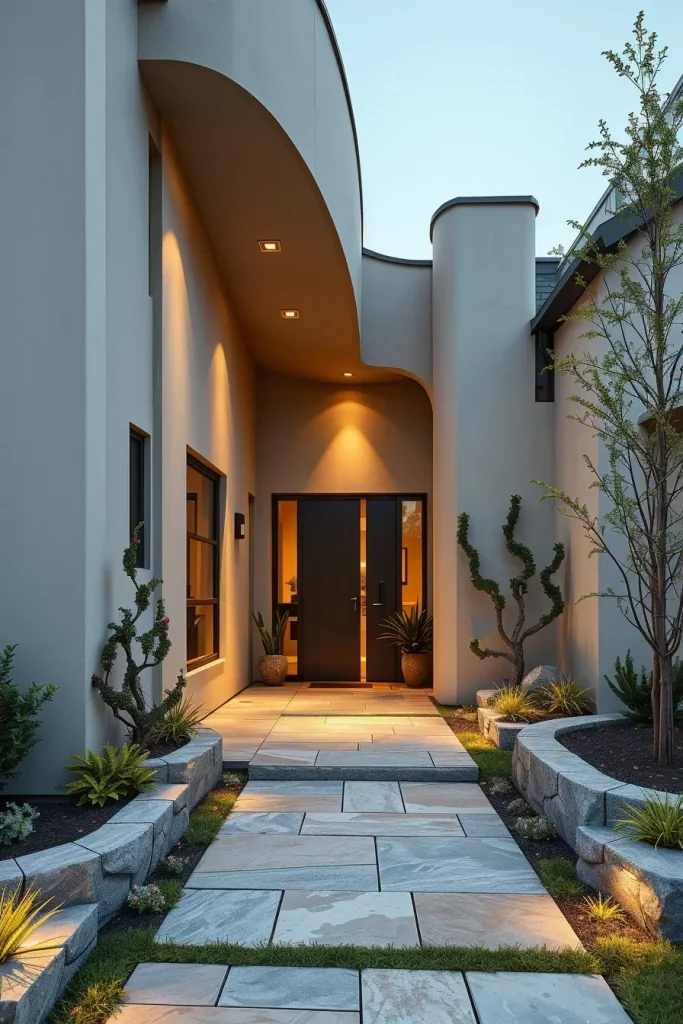
From my experience, leading architects frequently emphasize that the entryway sets expectations for the entire home. I agree with this fully. A sculptural entryway signals thoughtful design and creates anticipation before the door even opens.
What I would add to strengthen these entryways is a tactile element, such as textured flooring or a subtly contoured handrail, to connect the visual impact with physical experience.
Artistic Outdoor Entryways With A Focus On Craftsmanship
Artistic outdoor entryways centered on craftsmanship are becoming increasingly relevant in 2026. I approach these designs by highlighting hand-finished details, custom-built elements, and materials that showcase skilled workmanship. These entryways feel personal, refined, and deeply intentional.
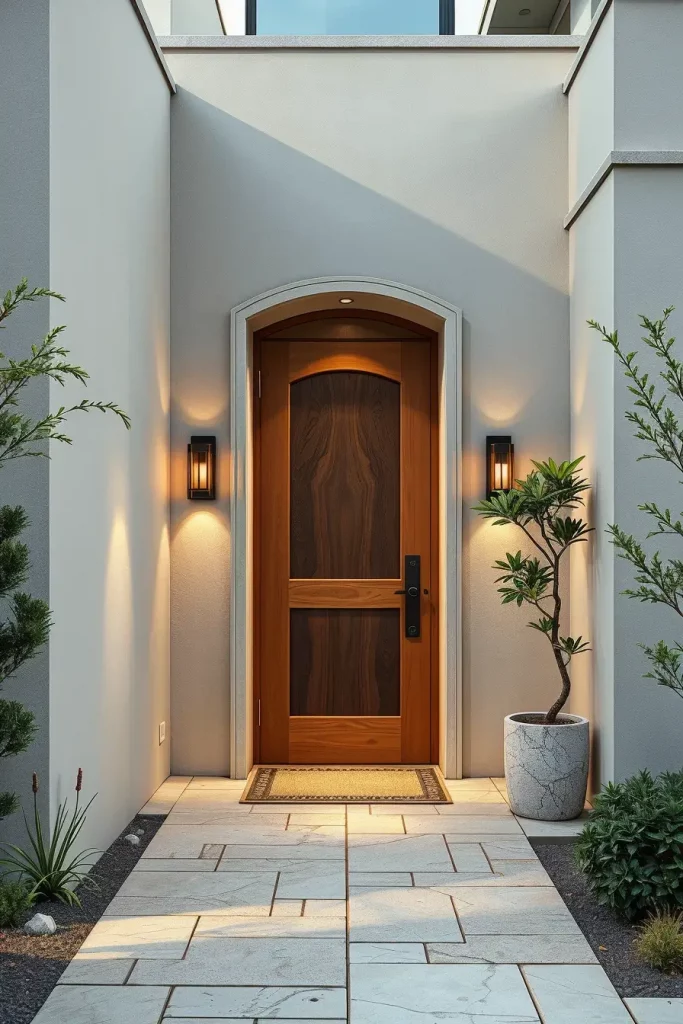
I often incorporate custom doors, carved stone panels, bespoke metalwork, or hand-applied plaster finishes. Each element is chosen for its durability and its ability to age gracefully. Furniture is usually minimal, allowing craftsmanship to remain the focal point without visual clutter.
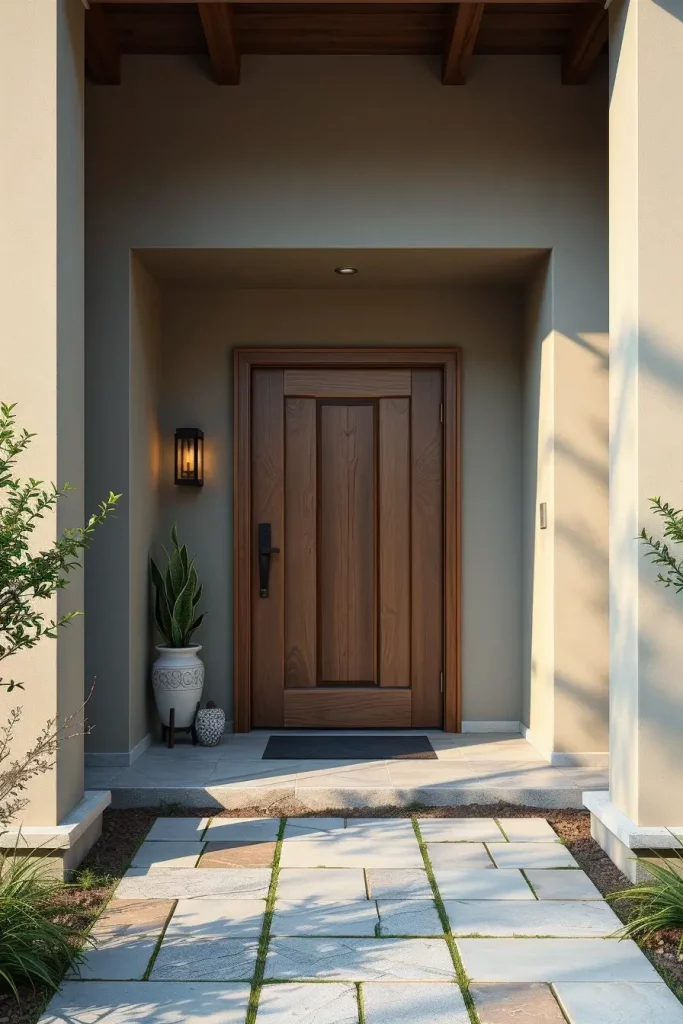
In my opinion, this direction aligns closely with insights from Architectural Digest, where designers frequently stress the long-term value of craftsmanship over trends. I have found that clients appreciate entryways that tell a story through material quality and detail.
What is sometimes missing is contrast. I would introduce a modern lighting system or minimalist paving to balance the artisanal elements and keep the entryway feeling current.
Outdoor Entryway Ideas That Feel Like Outdoor Art Galleries
Designing an outdoor entryway as an art-gallery-like space is one of my favorite approaches for 2026. These entryways prioritize openness, clarity, and controlled visual focus, allowing architectural elements to be appreciated like curated works. Functionally, this approach also creates calm and legibility at the entrance.
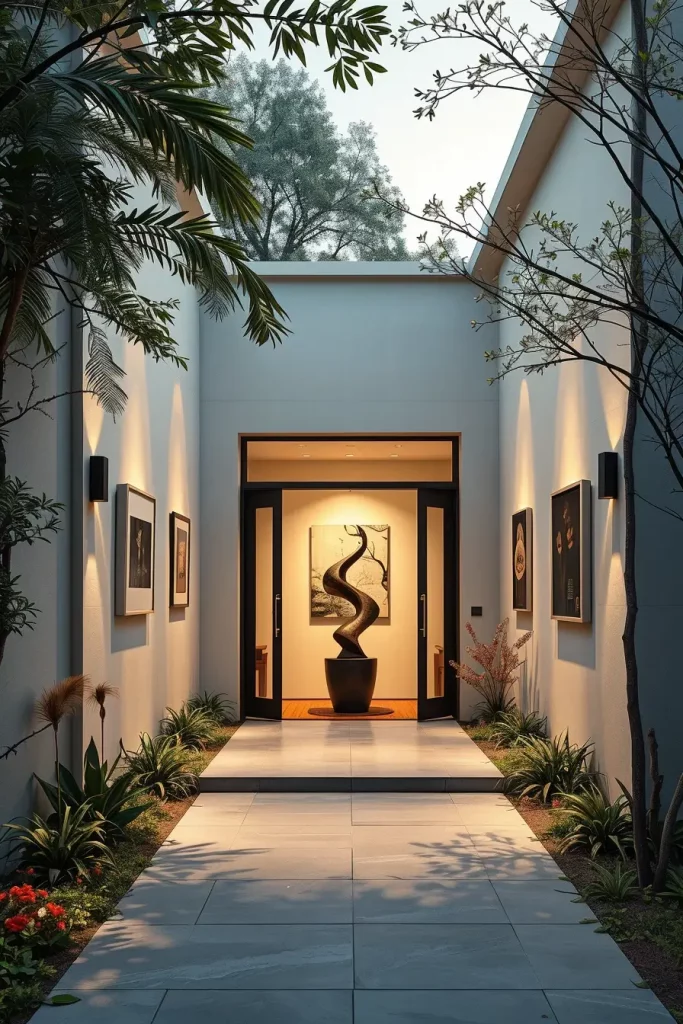
I typically use clean surfaces, neutral palettes, and strategic lighting to frame walls, doors, or sculptural features. Pathways are kept simple, and any greenery is carefully placed to complement rather than compete with the architecture. The entire entryway is treated as a composition.
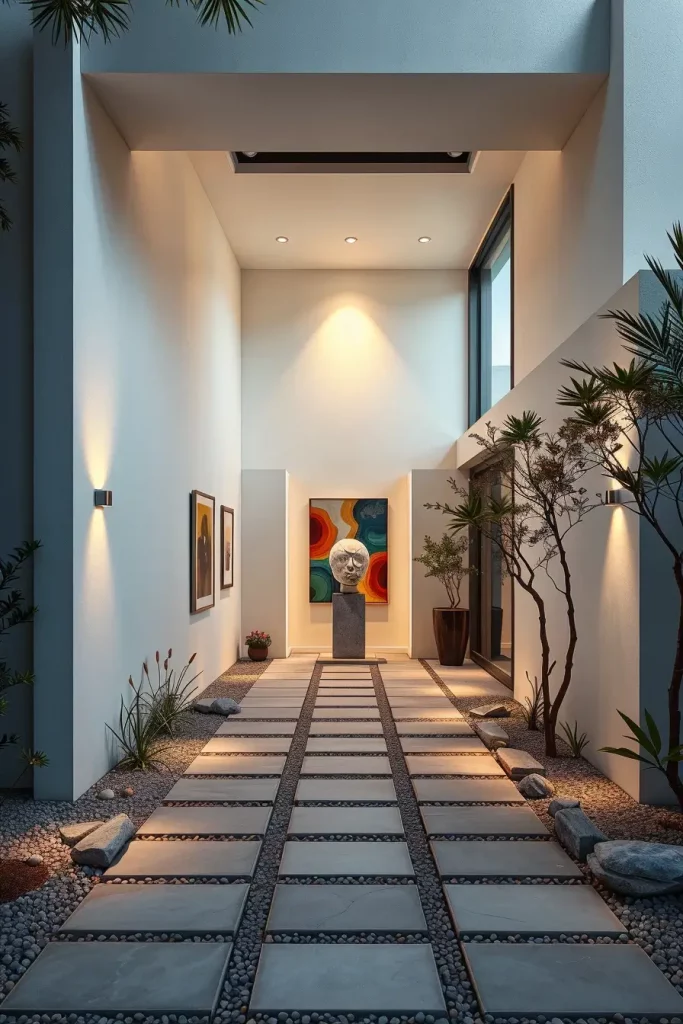
From my perspective, many modern designers featured in Dwell highlight the importance of negative space in contemporary homes. I fully agree. An entryway that feels like an outdoor gallery allows form, light, and material to speak clearly.
What I would add to these designs is one intentional focal element, such as a sculptural bench or wall relief, to anchor the composition without overwhelming it.
Iconic Outdoor Entryway Designs Defining Residential Style In 2026
Iconic outdoor entryways in 2026 are those that instantly feel recognizable and forward-thinking. I design these spaces with longevity in mind, focusing on strong architectural gestures rather than short-lived trends. These entryways define the home’s character and influence the surrounding streetscape.
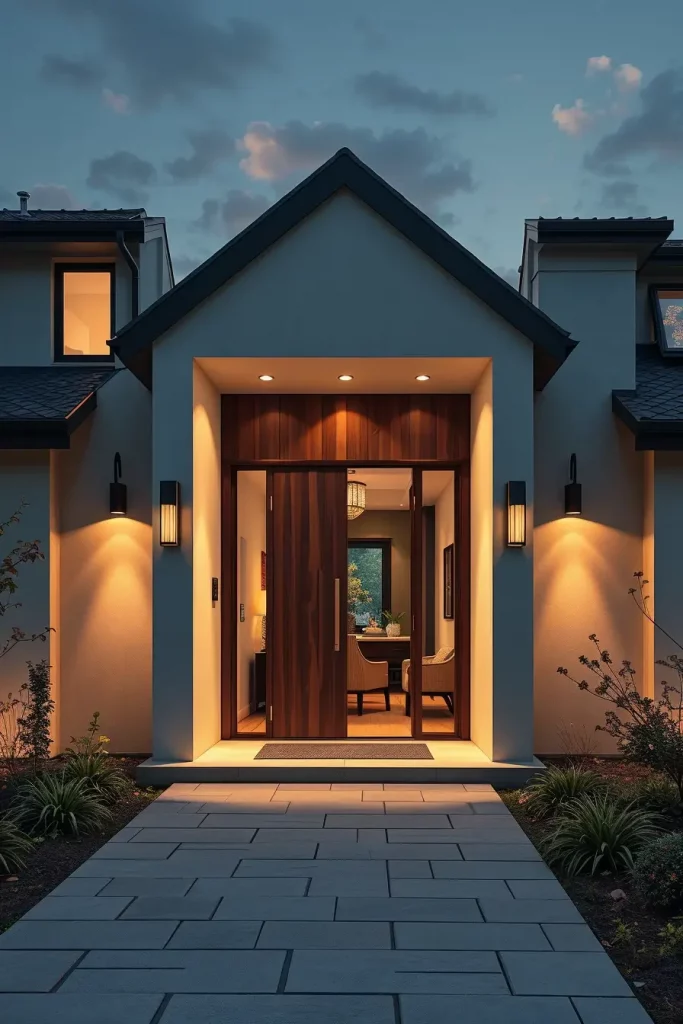
I rely on distinctive forms, high-quality materials, and a cohesive relationship between the entryway and the overall facade. Large doors, sculptural walls, and integrated lighting work together to create a unified statement. Landscaping is minimal and purposeful.
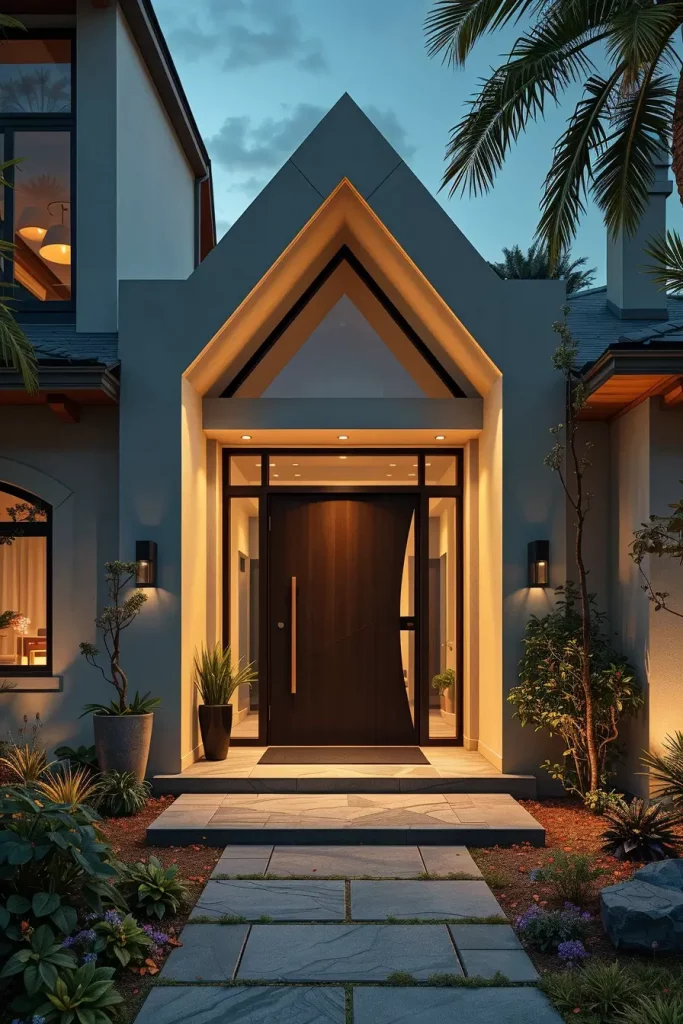
In my professional experience, iconic designs often emerge from restraint rather than excess. Design analysts in major US architecture publications consistently note that clarity and consistency are what make an entryway memorable. I have seen this principle succeed repeatedly.
What I would add to ensure lasting impact is adaptability, such as lighting systems or modular elements that can evolve over time without altering the core design.
Outdoor entryway ideas for 2026 redefine the way we experience arrival, turning the entrance into a powerful expression of creativity, architecture, and personal style. Sculptural forms, artistic materials, and intentional design choices elevate outdoor entryways beyond function, making them a defining feature of the home’s exterior. As design continues to move toward individuality and visual impact, these innovative entryway concepts prove that the first impression can be both functional and unforgettable.