
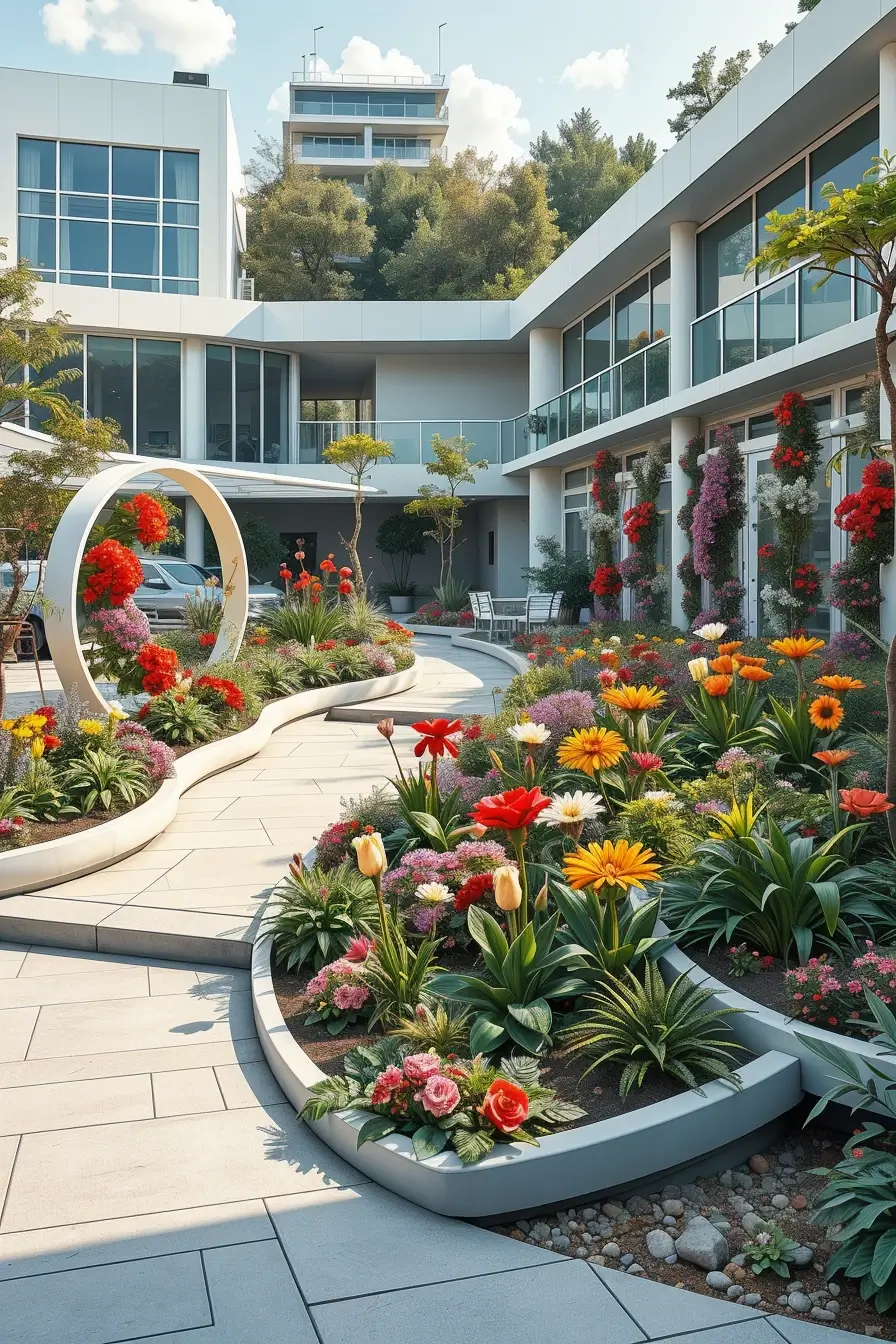
Flower garden ideas 2026 reflect a new vision of outdoor design where creativity, technology, and natural beauty come together in expressive and thoughtful ways. Modern gardens are no longer limited to traditional layouts — they are becoming artistic landscapes with curved, round, vertical, and sculptural flower beds that feel both intentional and organic. Designers are focusing on unique compositions, flowing lines, and bold shapes that transform flower gardens into living works of art.
In 2026, flower gardens embrace individuality and modern aesthetics while remaining deeply connected to nature. From elegant oval layouts and alpine slides to arabesque patterns and figure-shaped beds, these gardens are designed to inspire, surprise, and evolve with the space around them. This article explores the most stylish, unusual, and forward-thinking flower garden ideas for 2026, offering inspiration for creating outdoor spaces that feel fresh, contemporary, and visually striking.
Future-Driven Flower Garden Design Concepts For 2026
I approach future-driven flower garden design as a balance between innovation and long-term practicality. In 2026, I see gardens becoming structured yet fluid, with landscape flower gardens designed around movement, sustainability, and visual rhythm. These gardens prioritize smart zoning, climate-adaptive plants, and layouts that work equally well for relaxation and visual impact.
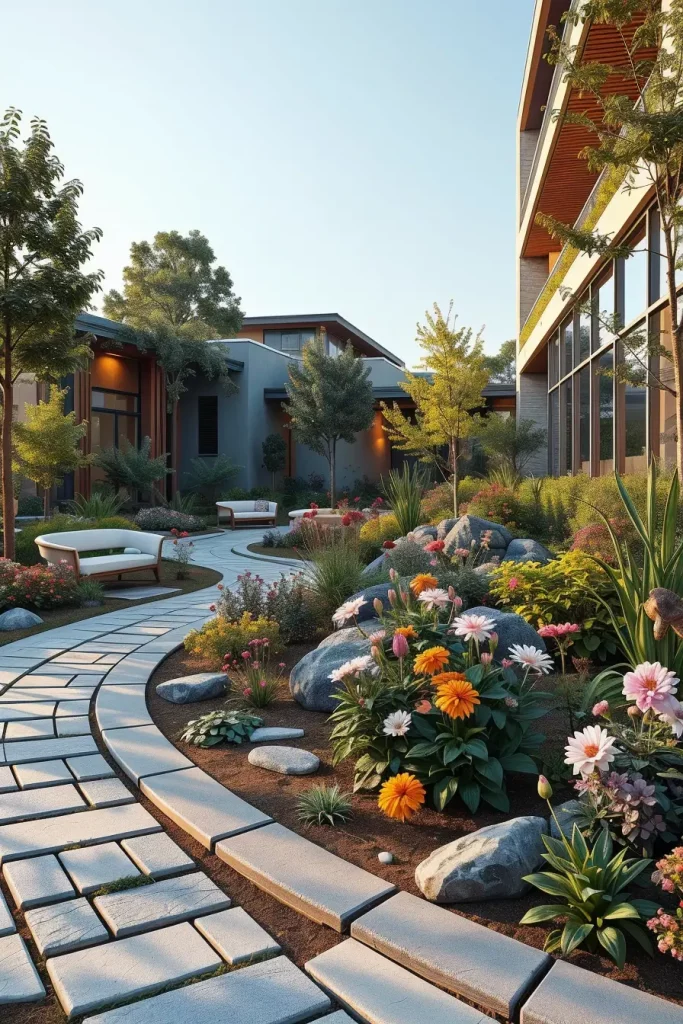
When I design these spaces, I rely on clean pathways, integrated seating elements, subtle lighting, and carefully chosen planters that feel architectural rather than decorative. Materials like smooth concrete borders, stone slabs, and minimalist benches help anchor the flower beds, while layered planting keeps the garden dynamic throughout the seasons.
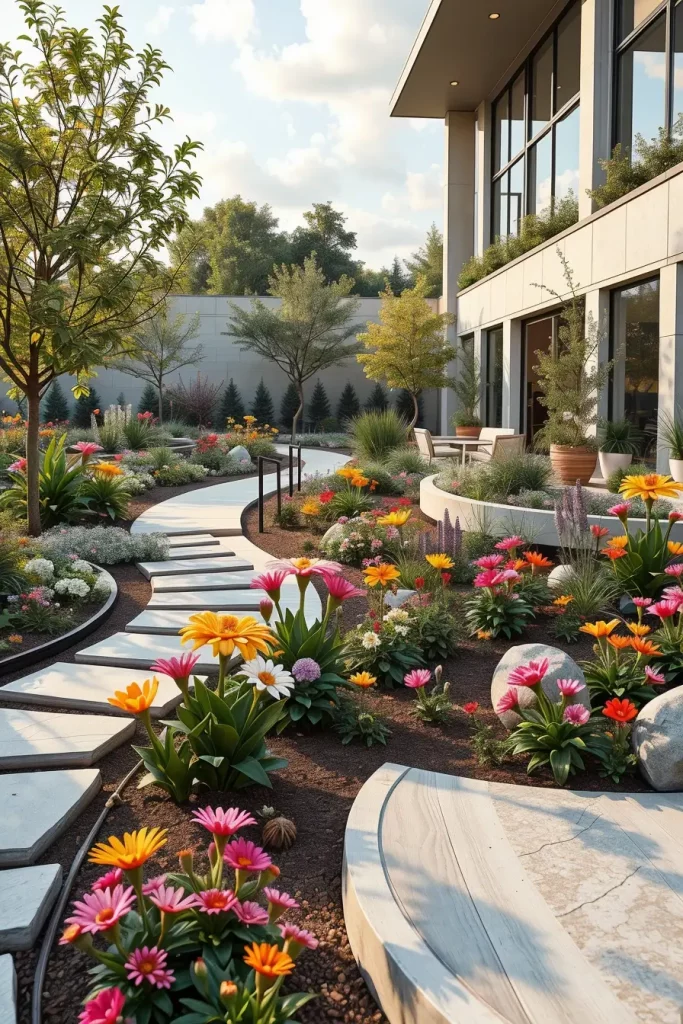
From my experience, many US-based landscape architects featured in Architectural Digest emphasize longevity over trends, and I fully agree. A future-driven garden should evolve gracefully over time, not feel outdated after one season. I always recommend investing in a strong base layout before focusing on seasonal color accents.
To strengthen this concept further, I would add smart irrigation systems, discreet solar lighting, and modular edging solutions. These elements are often missing but are essential for making a flower garden truly future-ready and low maintenance.
Modern Flower Gardens With Sculptural Curved Flower Beds
Curved flower beds are one of the most expressive tools I use in modern flower gardens. These sculptural shapes soften the outdoor space and guide movement naturally, making the garden feel intentional and calm rather than rigid. Curves work especially well in open yards where straight lines feel too formal.
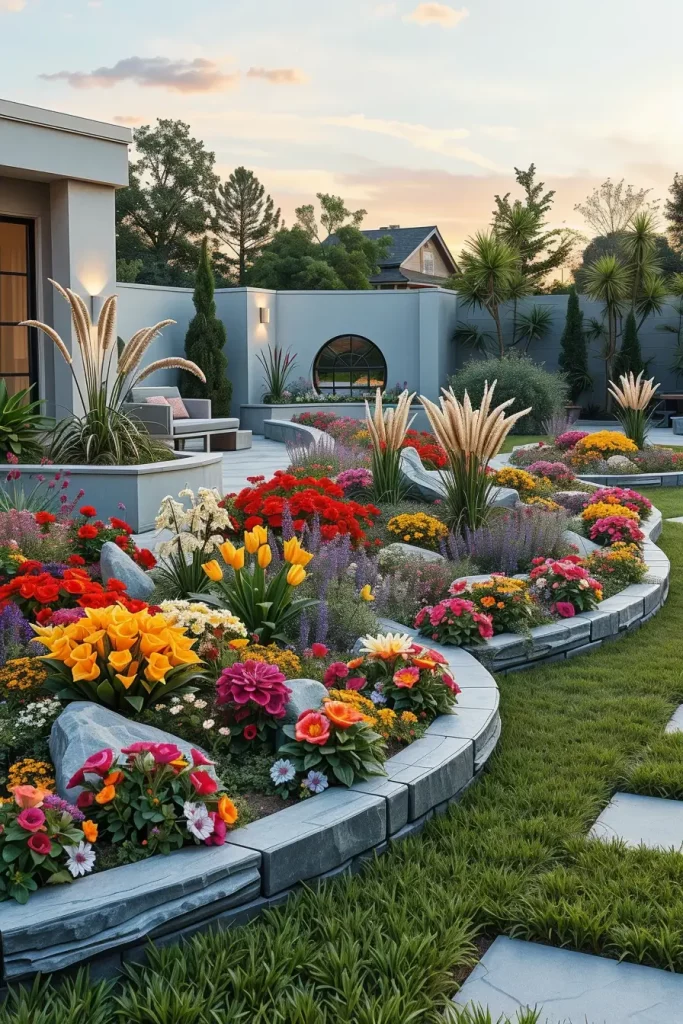
I usually combine curved beds with smooth stone borders, ornamental grasses, and layered flowering plants to emphasize depth. Low-profile garden seating or built-in benches placed along the curves enhance usability while reinforcing the design flow. Every element serves both aesthetic and functional purposes.
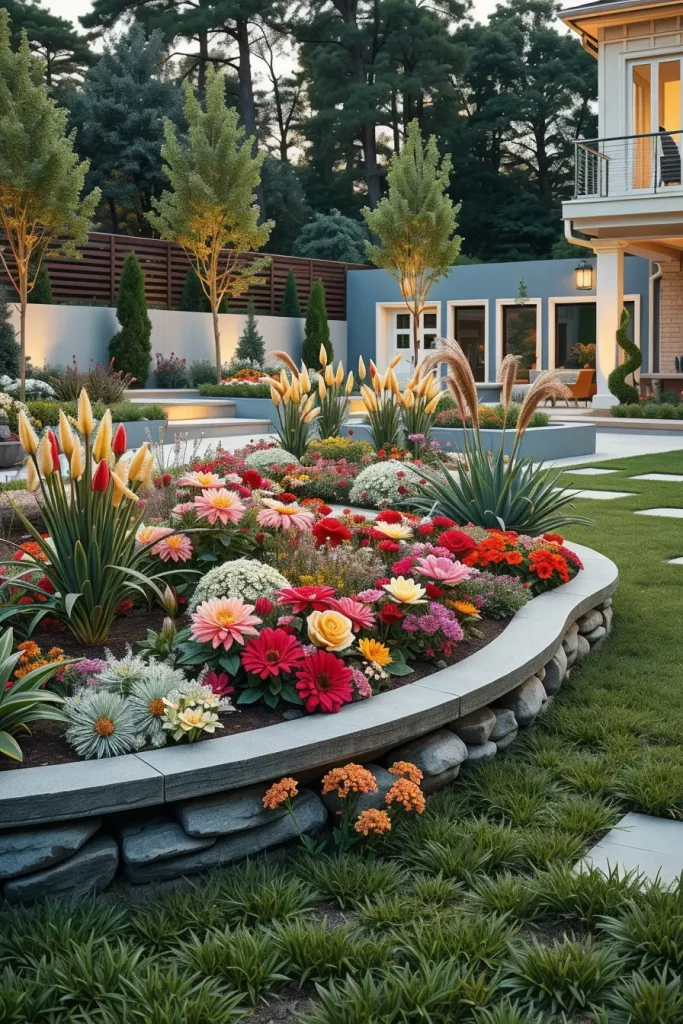
In my own projects, I have noticed that homeowners respond emotionally to curved layouts because they feel organic and welcoming. Designers from the American Society of Landscape Architects often highlight curves as a way to mimic natural landforms, which is why I trust this approach for long-term appeal.
What I would add here is accent lighting that follows the curve lines and highlights the flower bed edges at night. This detail is often overlooked, but it elevates the garden from attractive to truly sculptural after sunset.
Elegant Oval Flower Garden Layouts For Contemporary Homes
Oval flower garden layouts offer a refined alternative to traditional shapes, especially for designer flower gardens in contemporary homes. I use oval forms to create a visual focal point that feels balanced and intentional without overpowering the surrounding architecture.
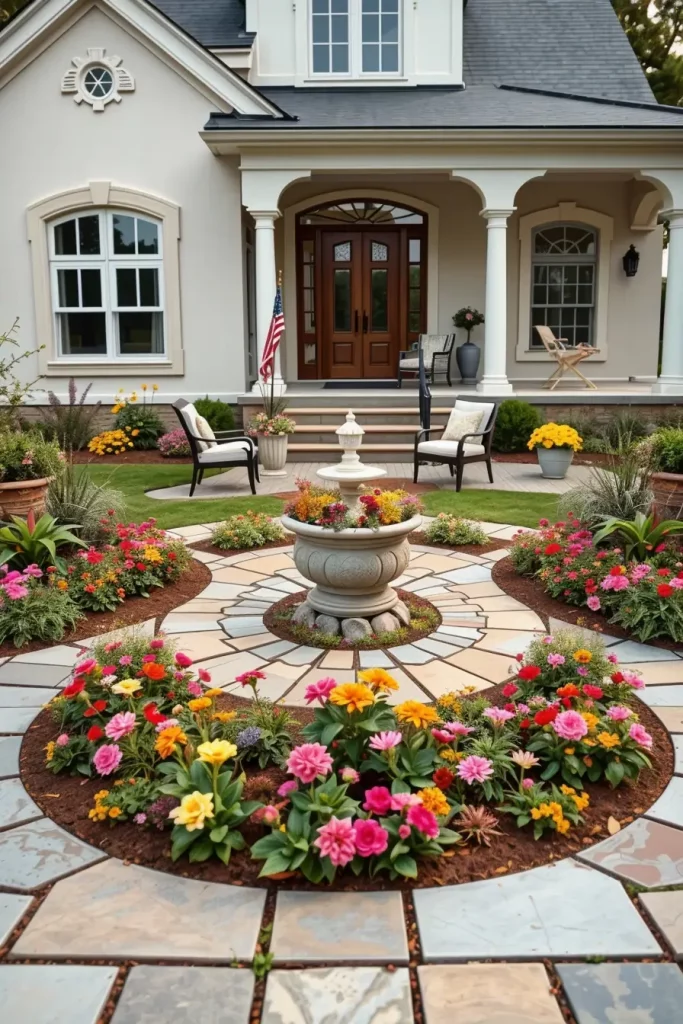
In these layouts, I carefully select symmetrical planting patterns, low hedges, and a central feature such as a decorative planter or sculptural stone element. Surrounding the oval with clean walkways or lawn sections ensures the shape remains clearly defined and visually strong.
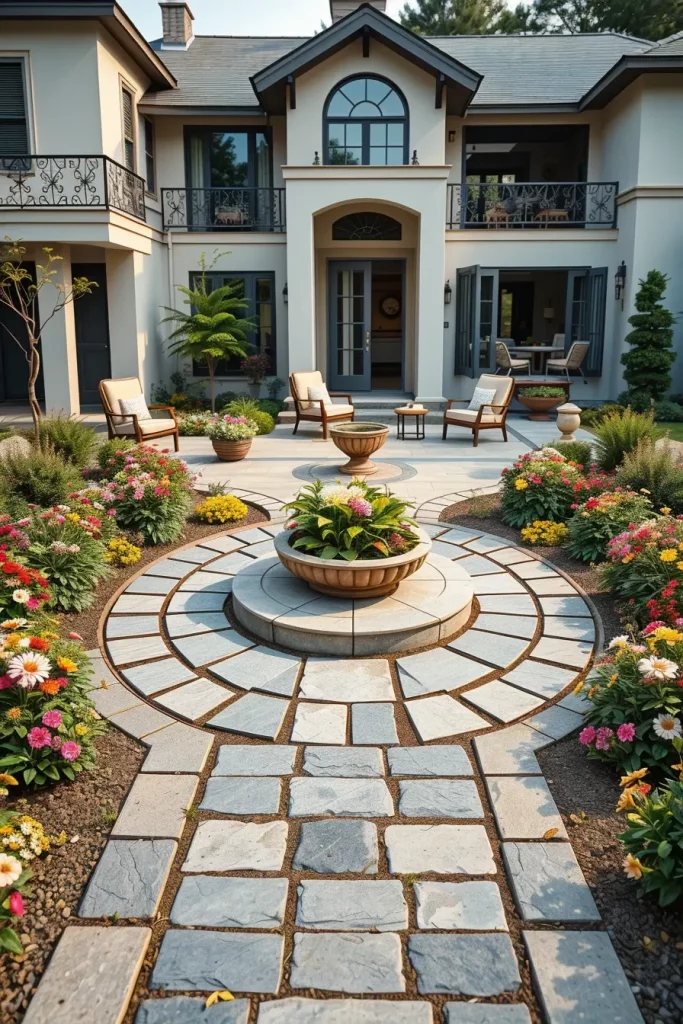
Personally, I appreciate oval gardens because they naturally encourage circulation and viewing from multiple angles. Garden designers featured in Better Homes and Gardens often recommend oval layouts for transitional spaces between patios and open lawns, which aligns with my own practice.
To complete this section, I would introduce integrated seating or a central viewing bench. This addition transforms the oval garden from a visual feature into a functional outdoor destination.
Round Flower Beds As A Statement Element In Garden Design
Round flower beds are powerful statement pieces that immediately draw attention. I use them in unique flower gardens to create strong visual anchors, especially in minimalist or open-plan landscapes where a single bold feature is needed.
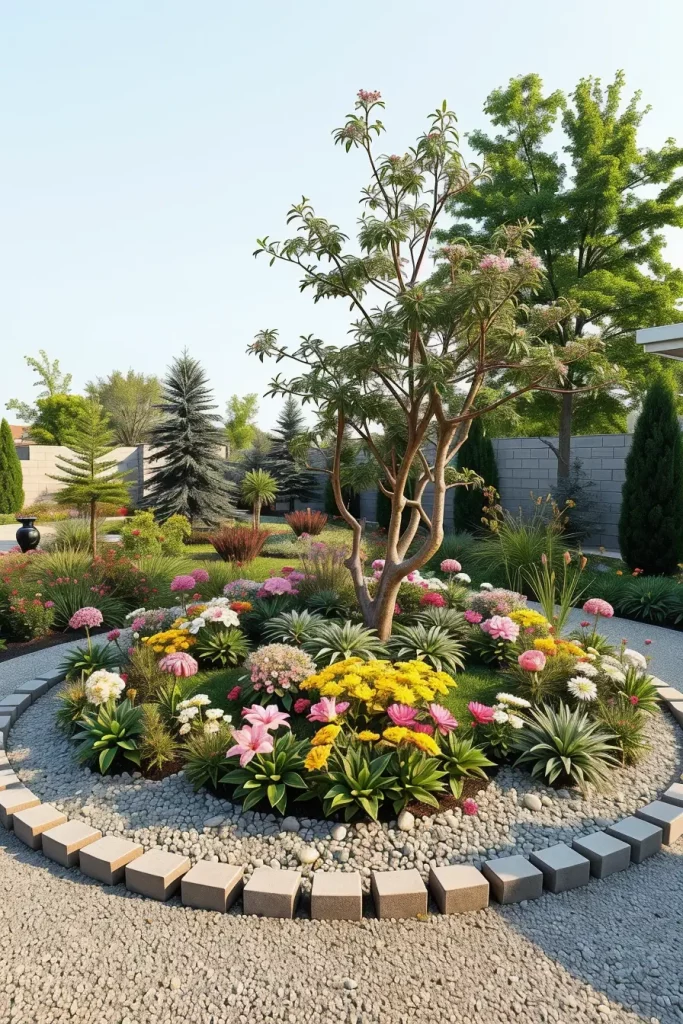
These beds work best when planted with layered heights, starting with low ground cover and building toward a central flowering shrub or ornamental tree. I often surround round beds with gravel or stone paving to enhance contrast and maintain a clean, modern look.
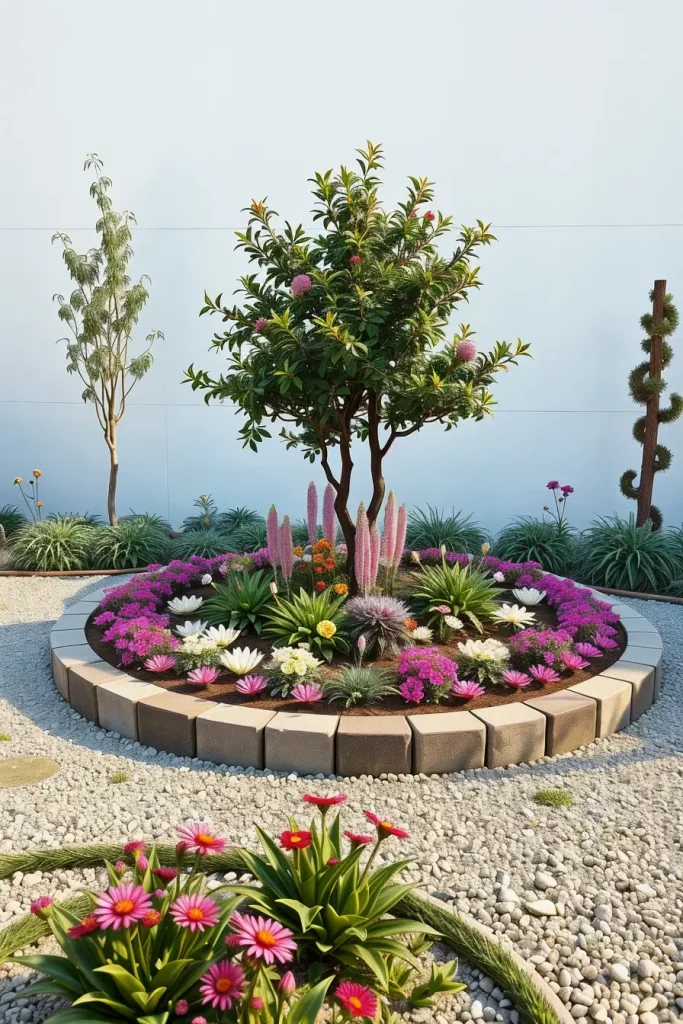
From my professional experience, round beds are ideal for showcasing seasonal changes. Many landscape designers writing for Garden Design Magazine emphasize the importance of focal points, and round flower beds perform this role exceptionally well.
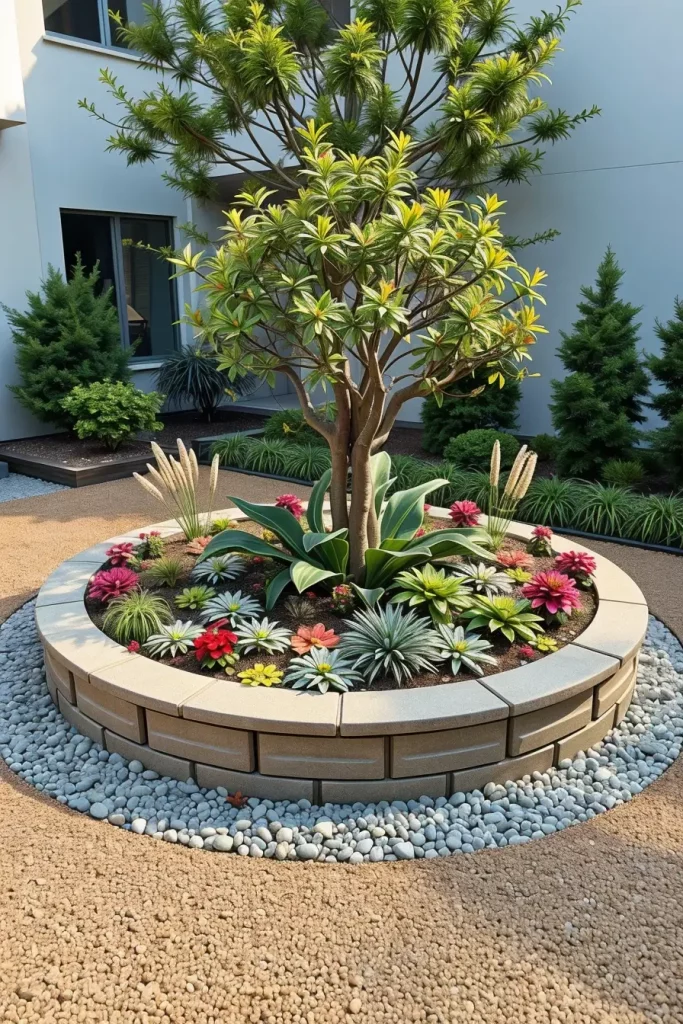
What I would add here is a subtle water feature or sculptural element at the center. This addition enhances sensory appeal and reinforces the bed’s role as a garden centerpiece.
Designer Flower Gardens Inspired By Organic Landscape Lines
Organic landscape lines are at the heart of stylish and unusual flower gardens for 2026. I design these gardens to feel as though they grew naturally, even though every curve and plant placement is carefully planned.
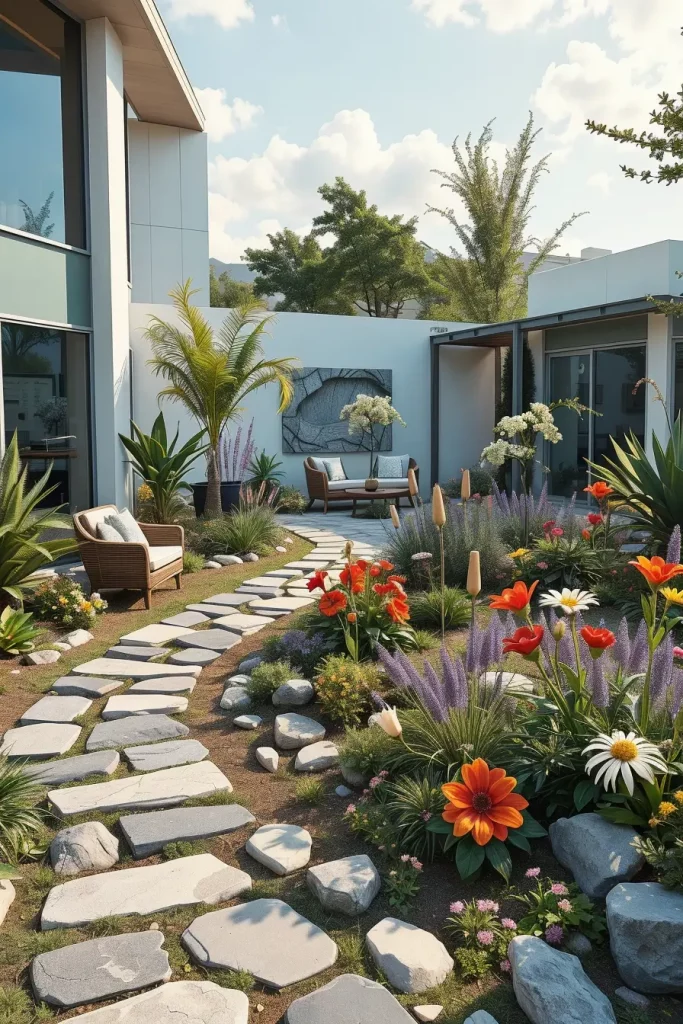
I rely on flowing paths, irregular planting clusters, and natural materials such as wood, stone, and textured concrete. Outdoor furniture with rounded edges and low profiles complements the garden without interrupting its visual rhythm.
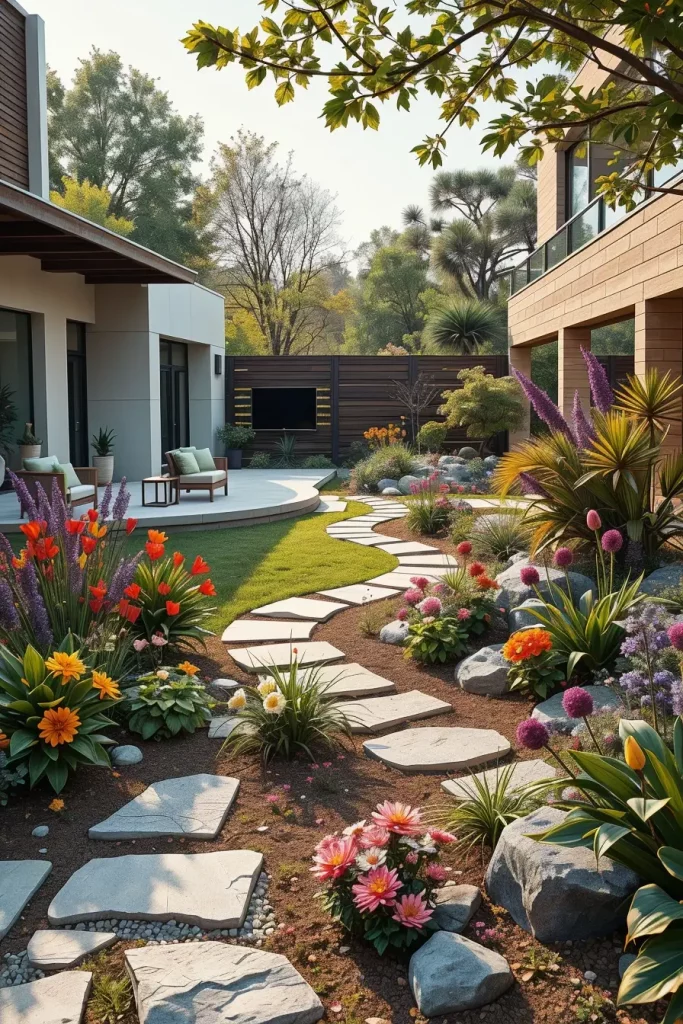
In my view, this approach reflects the advice of many US landscape architects who stress harmony between architecture and nature. When done correctly, organic lines create calm, immersive spaces that feel timeless rather than trend-driven.
To enhance this section, I would introduce elevation changes through gentle mounds or terraced planting. This detail adds depth and reinforces the natural flow of the garden design.
Stylish Alpine Slide Flower Gardens With A Modern Twist
When I design alpine slide flower gardens for 2026, I focus on combining natural elevation with a modern, controlled aesthetic. These gardens are no longer chaotic rock piles but carefully structured compositions that guide the eye upward while remaining practical and easy to maintain. Alpine slides work especially well on uneven terrain, turning a challenge into a visual advantage.
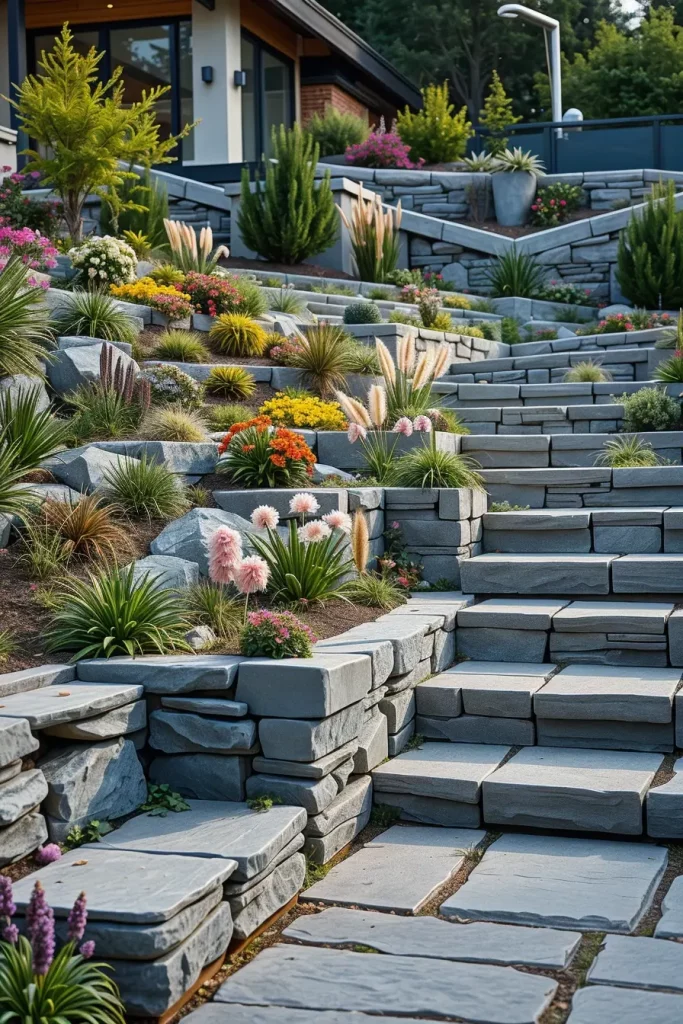
I use layered stone terraces, low-growing alpine plants, ornamental grasses, and compact flowering shrubs to create depth and contrast. Clean stone steps, minimalist retaining walls, and discreet pathway lighting help connect the slide visually to the rest of the garden while keeping it functional for everyday use.
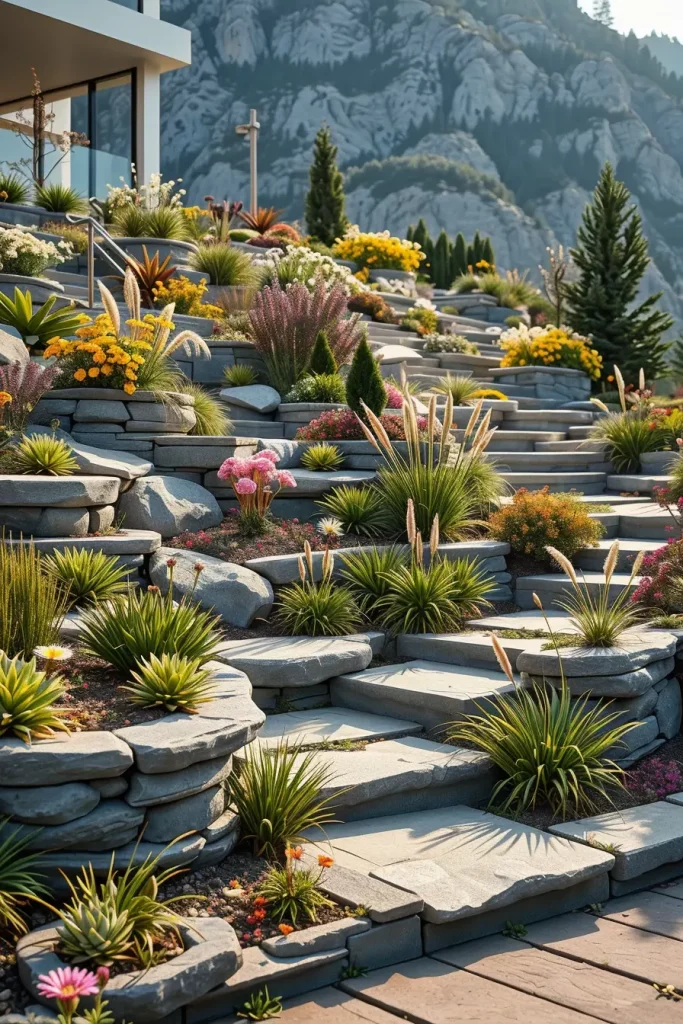
From my professional experience, landscape designers featured in Garden Design Magazine often stress that alpine gardens succeed when plant scale matches stone size. I fully agree and always recommend restraint, allowing each plant and rock to breathe rather than overcrowding the space.
What I would add to enhance this section is a subtle seating nook or viewing platform near the top of the slide. This transforms the alpine garden from a decorative feature into an interactive and contemplative space.
Vertical Flower Garden Ideas For Compact And Urban Spaces
Vertical flower gardens are essential for flower garden ideas 2026, especially in compact or urban environments where ground space is limited. I approach vertical designs as living walls that combine greenery, structure, and architectural clarity without overwhelming the surroundings.
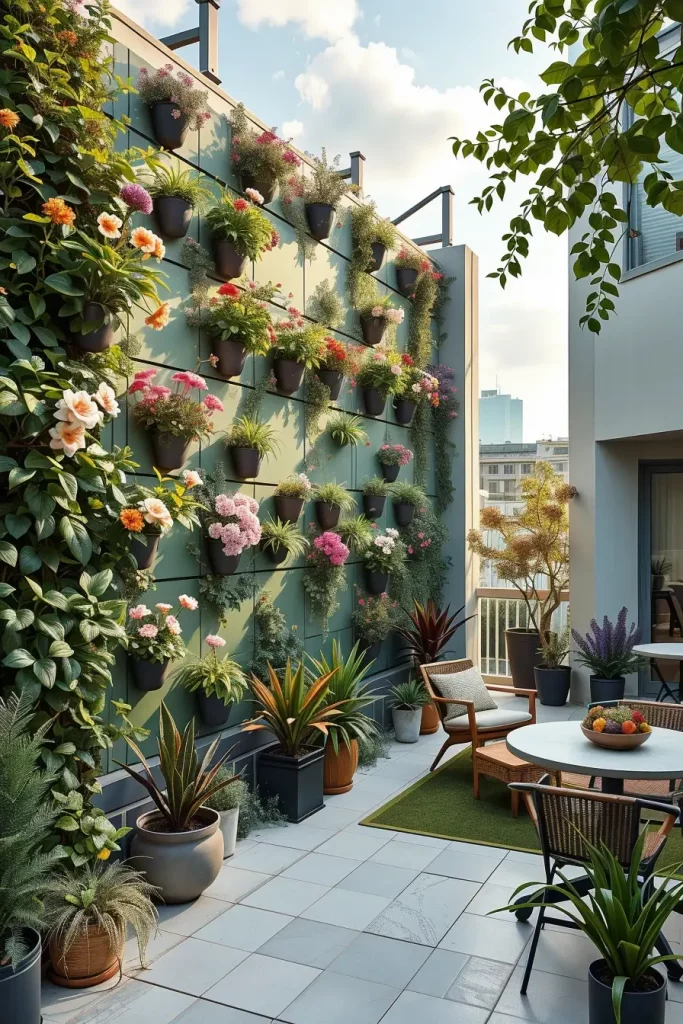
In these gardens, I incorporate modular wall systems, metal or wooden frames, climbing plants, and integrated irrigation panels. I also recommend pairing vertical gardens with slim benches or small café-style furniture to maximize usability while maintaining a light, modern feel.
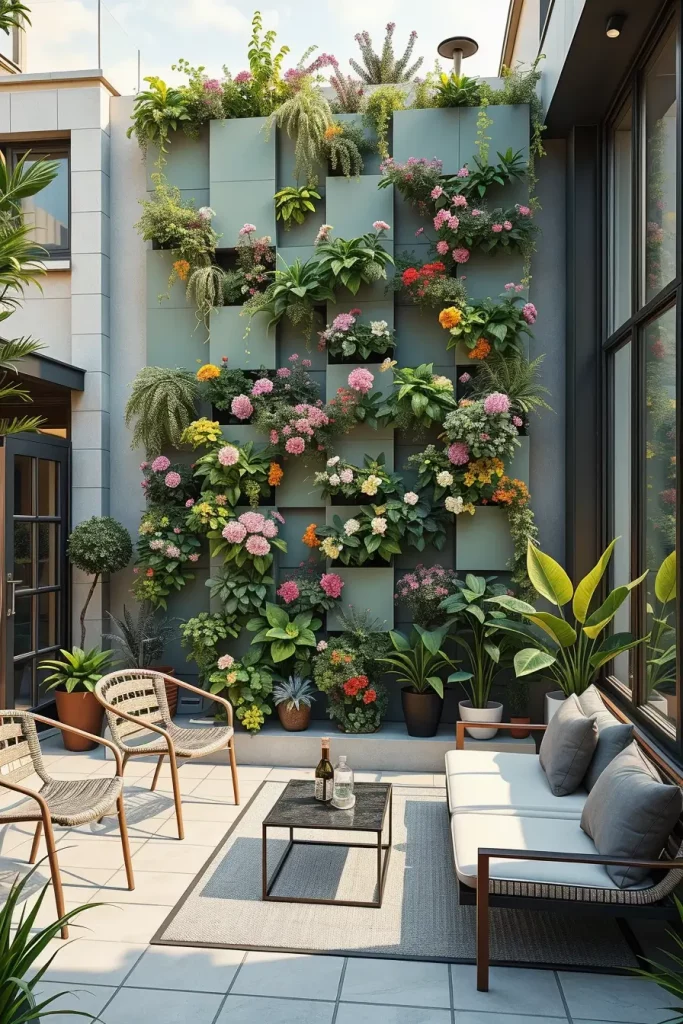
In my own projects, I have seen vertical gardens dramatically improve air quality and visual comfort. Designers writing for Architectural Digest emphasize vertical greenery as both a sustainability and lifestyle solution, which reinforces why I consider it a core design element for future gardens.
To complete this section, I would add smart irrigation technology and seasonal plant rotation plans. These details ensure the vertical garden remains lush and visually balanced year-round.
Arabesque Flower Beds For Artistic And Decorative Gardens
Arabesque flower beds allow me to explore stylish, unusual, and artistic expressions within garden design. These intricate, flowing patterns create a decorative focal point that feels refined and intentional, especially in larger outdoor spaces.
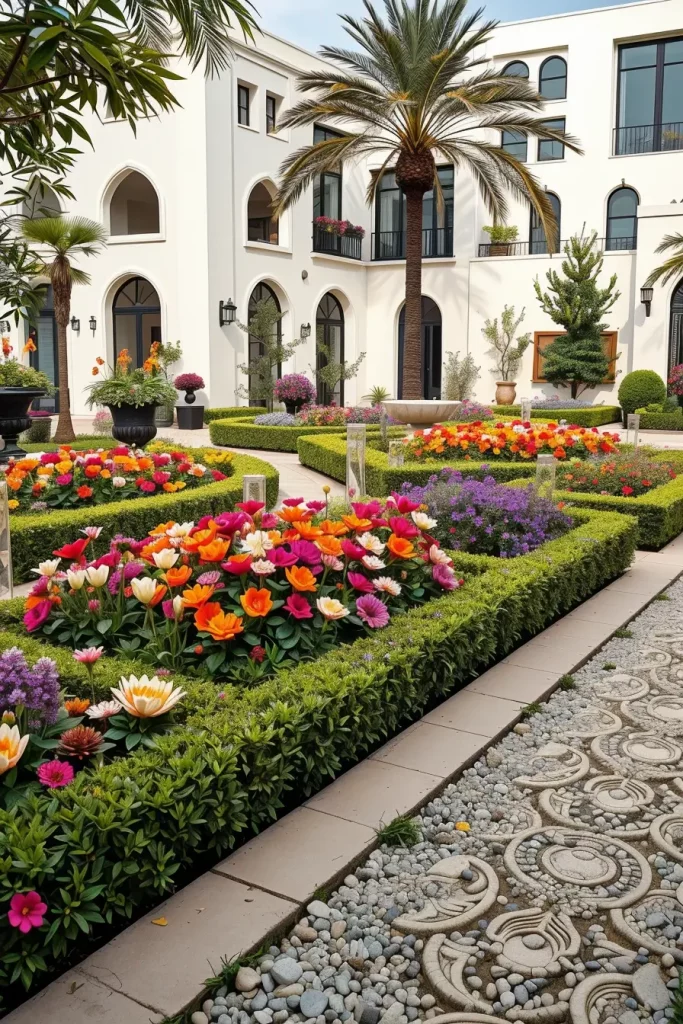
I design arabesque beds using low hedges, colorful flowering plants, and contrasting ground covers to highlight the ornamental shapes. Stone or gravel pathways around the beds help define the pattern and prevent visual clutter, while discreet lighting enhances the design at dusk.
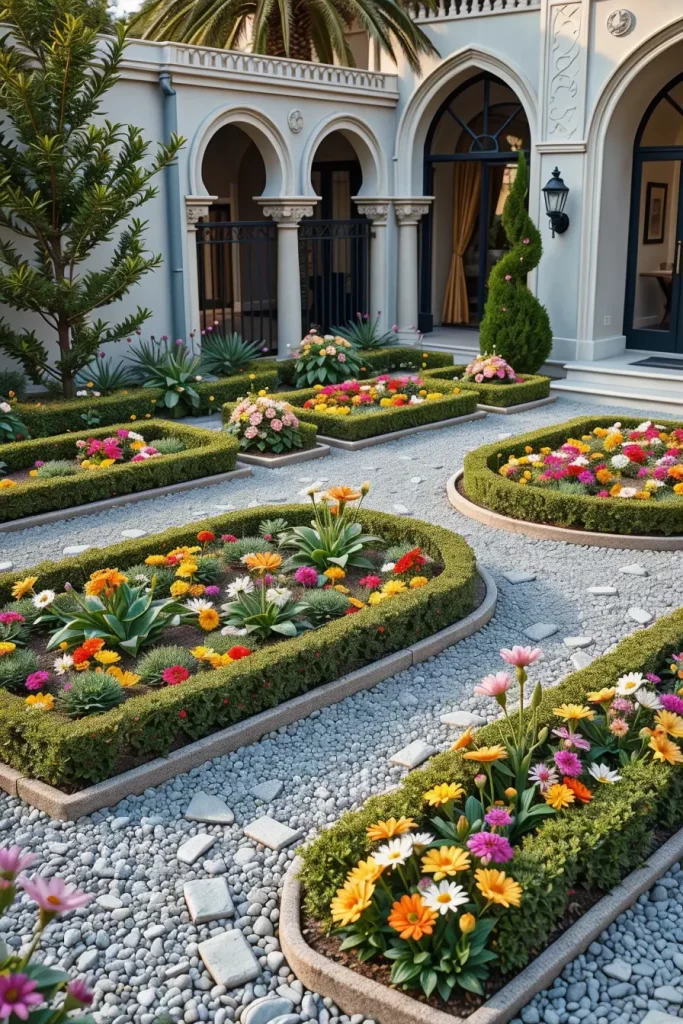
From my perspective, arabesque gardens work best when treated like outdoor artwork. Landscape historians and designers often reference classical garden traditions when discussing these forms, and I believe adapting them to a modern context keeps them relevant and visually striking.
What I would add here is a raised viewing angle, such as a terrace or balcony viewpoint. This allows the full arabesque pattern to be appreciated, which is often missing in ground-level-only designs.
Landscape Flower Gardens Blending Nature And Architecture
Blending nature and architecture is one of my core principles when creating landscape flower gardens for contemporary homes. In 2026, these gardens emphasize seamless transitions between built structures and natural elements, resulting in cohesive and calming outdoor environments.
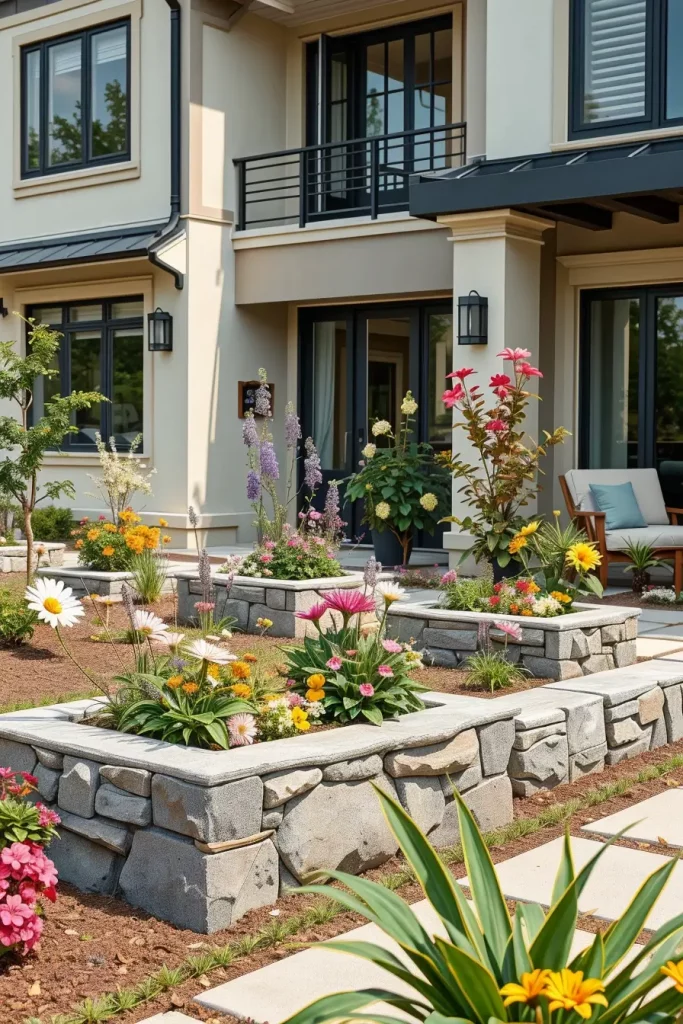
I rely on clean lines, coordinated materials, and plant palettes that echo the home’s exterior finishes. Stone planters, architectural lighting, and outdoor furniture with simple silhouettes help bridge the gap between house and garden.
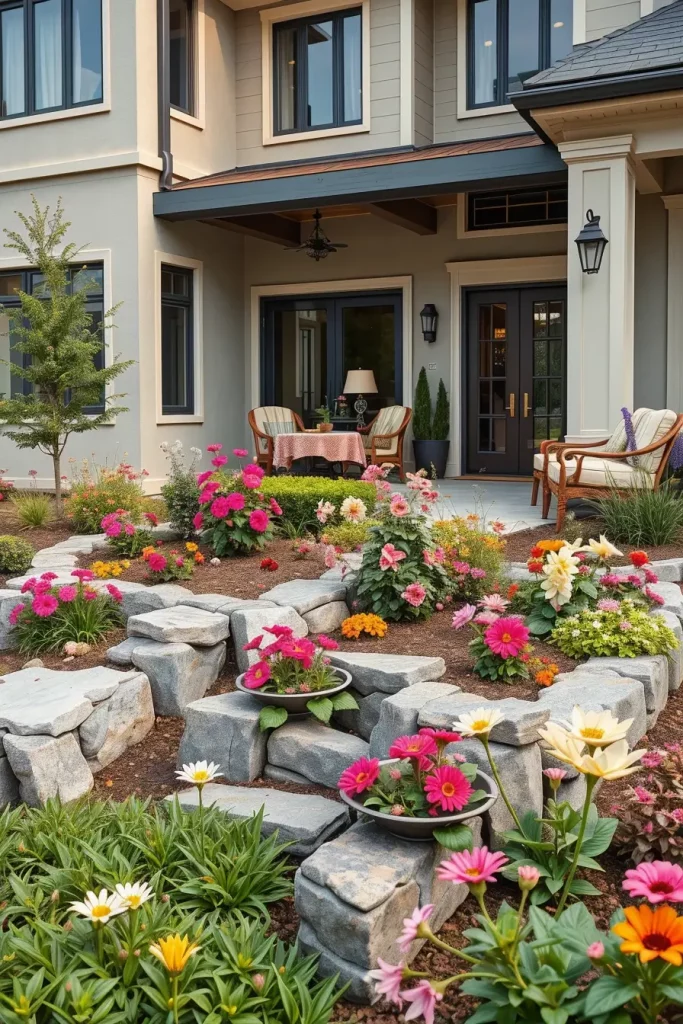
In my experience, many US-based architects featured in Dwell Magazine advocate for gardens that feel like extensions of interior spaces. I fully support this idea and often mirror indoor color palettes and textures in the outdoor planting scheme.
To strengthen this section, I would add transitional elements such as pergolas or semi-covered walkways. These features enhance flow and provide visual continuity between indoor and outdoor zones.
Arched Flower Bed Designs For Dynamic Garden Movement
Arched flower bed designs introduce movement and rhythm into garden layouts, making them ideal for designer and unique flower gardens. I use arches to guide pathways, frame views, and create a sense of progression through the space.
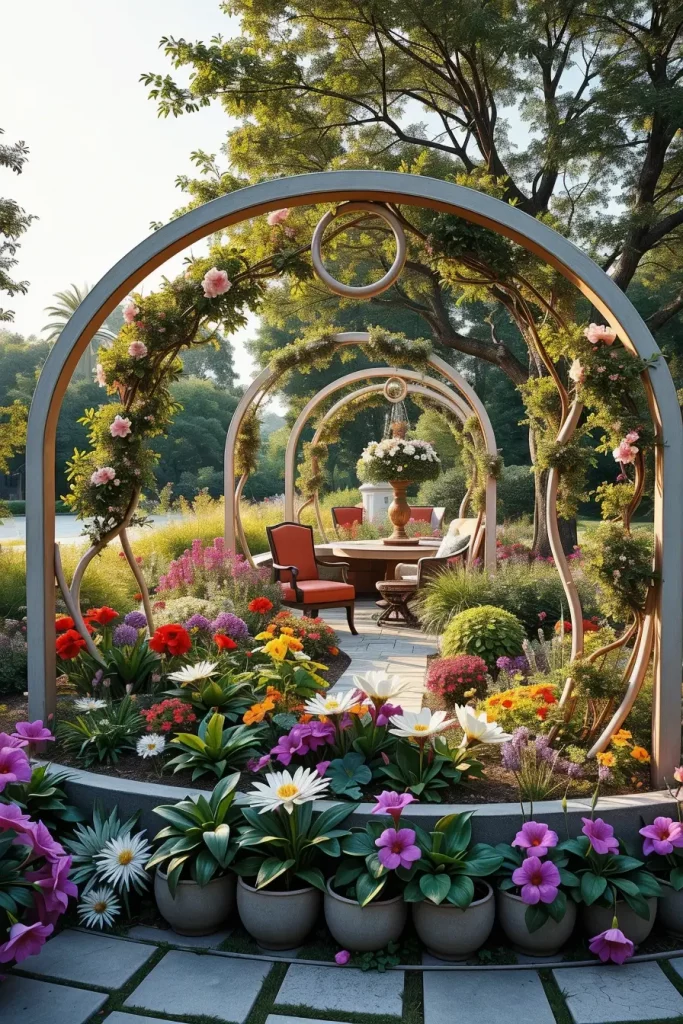
These designs often include curved borders, layered planting heights, and repeated plant species to maintain visual consistency. I also integrate arched trellises, sculptural metal frames, or wooden structures to reinforce the theme vertically.

From my professional standpoint, arched layouts naturally encourage exploration and slow movement, which enhances the overall garden experience. Landscape experts frequently note that curved circulation paths improve spatial perception, a principle I apply consistently.
What I would add to this section is directional lighting that follows the arches. This detail enhances safety and dramatically elevates the garden’s nighttime atmosphere.
Figure-Shaped Flower Gardens As Unique Outdoor Art Pieces
I see figure-shaped flower gardens as one of the most expressive directions in flower garden ideas 2026, where the garden itself becomes a living sculpture. These designs rely on carefully planned outlines shaped like waves, abstract symbols, or organic figures that guide movement through the space. From a practical perspective, figure-shaped beds help organize planting zones, improve visual flow, and create focal points that work well in both private gardens and public landscapes.
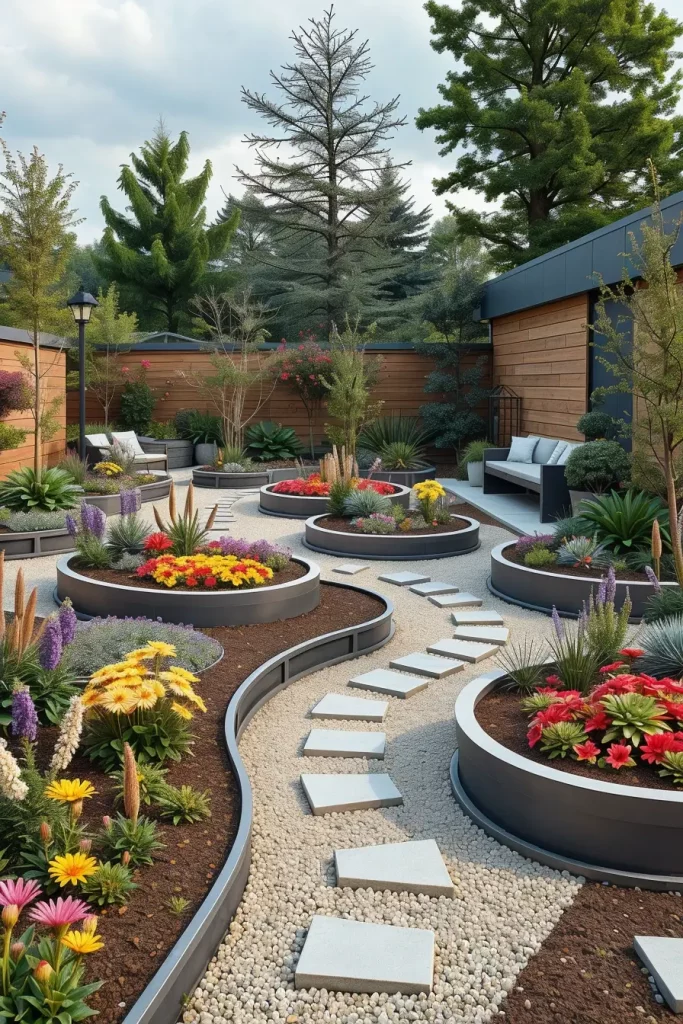
In my experience, the success of these gardens lies in the precise combination of low-maintenance perennials, ground covers, and accent plants that clearly define the shape. Curved metal or stone edging is essential to maintain crisp contours, while decorative gravel paths or lawn inserts enhance contrast. I often recommend subtle outdoor seating nearby, such as minimalist benches or integrated stone seats, to encourage people to view the garden as an art installation rather than a passing detail.
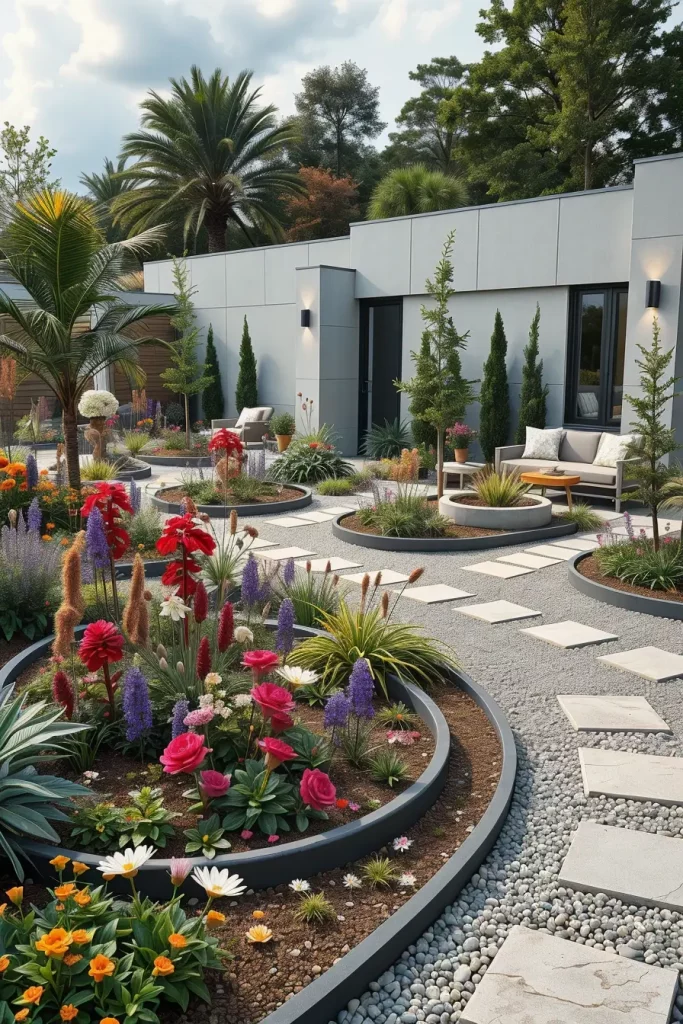
From a professional standpoint, many landscape architects featured in Architectural Digest emphasize that sculptural gardens should be designed from elevated viewpoints as well as ground level. I fully agree with this approach, as figure-shaped gardens are most effective when their form is readable from terraces, balconies, or upper windows. This transforms the garden into a dynamic visual element throughout the day.
To complete this type of garden, I would add discreet lighting embedded along the contours. Soft LED strips or ground spotlights highlight the shape after sunset and extend the visual impact into the evening without overwhelming the plants.
Minimalist Flower Garden Ideas With Clean Geometry
Minimalist gardens with clean geometry continue to dominate modern flower garden ideas 2026, especially for urban and contemporary homes. I approach these designs with a strong focus on order, balance, and repetition, using rectangular, oval, or circular flower beds arranged with precision. This structure makes the garden easy to navigate and maintain while delivering a calm, intentional aesthetic.
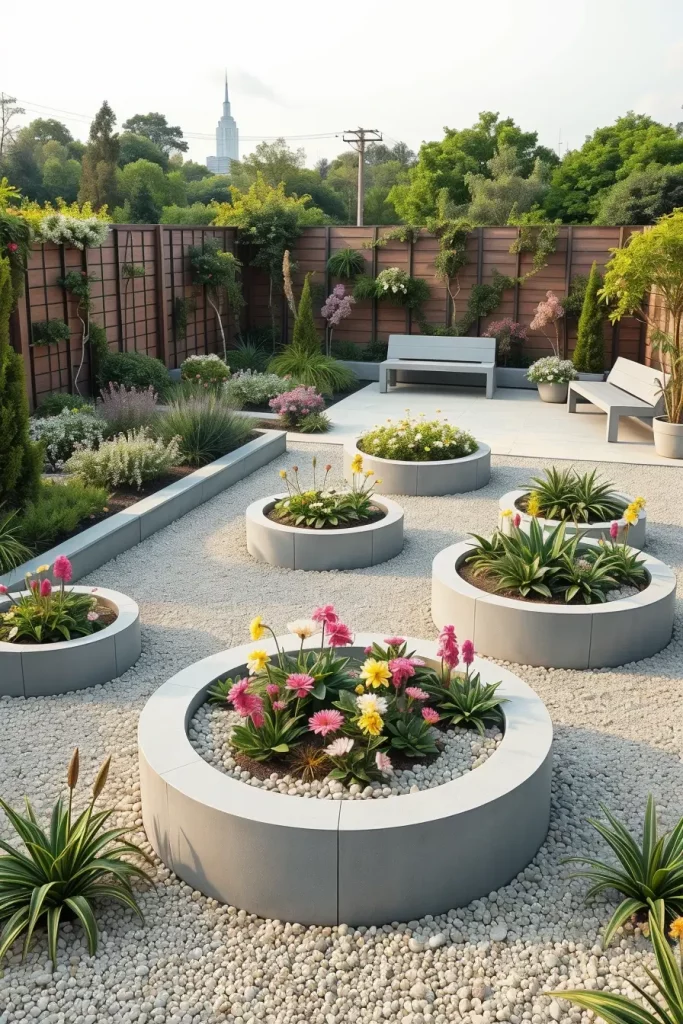
I typically select a limited plant palette, often repeating the same species across multiple beds to create unity. Decorative concrete planters, stone slabs, and smooth gravel surfaces reinforce the geometric theme. In some projects, I integrate simple outdoor furniture like low-profile loungers or modular benches, which complement the clean lines without competing visually with the plant compositions.

Personally, I appreciate how minimalist gardens encourage mindfulness and clarity. Garden designers featured in Dezeen frequently note that reducing visual noise allows plant form and texture to stand out, and I apply this principle consistently. The result is a garden that feels curated and timeless rather than trend-driven.
What I would still add to this type of garden is subtle variation in plant height. Even within strict geometry, slight vertical changes prevent the space from feeling flat while preserving its minimalist identity.
Luxury Flower Gardens With Designer Plant Compositions
Luxury flower gardens in flower garden ideas 2026 are defined by intentional composition rather than sheer abundance. I design these spaces with layered planting schemes that combine statement flowers, sculptural shrubs, and ornamental grasses arranged in flowing yet controlled patterns. The goal is to create a sense of refinement while maintaining seasonal interest.

In these gardens, every element has a purpose. I often include custom stone planters, water features with clean silhouettes, and premium materials such as natural stone paving or hardwood decking. Designer outdoor furniture, such as upholstered seating or low-profile dining sets, becomes part of the visual narrative rather than an afterthought.
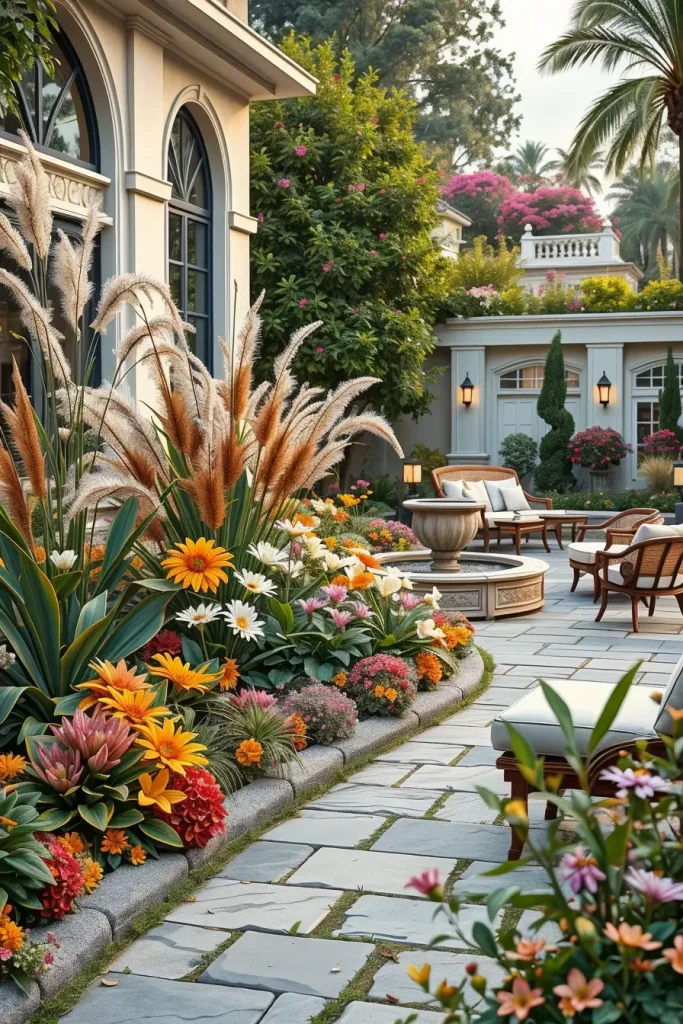
From my professional experience, luxury does not mean complexity. Landscape designers quoted in House Beautiful often stress restraint and proportion, and I fully support this philosophy. A well-designed luxury garden feels effortless because each plant and object earns its place.
To elevate this garden further, I would introduce curated art elements such as sculptural installations or bespoke garden lighting. These details reinforce the designer character without overpowering the floral compositions.
Modern Cottage-Style Flower Gardens Reimagined For 2026
Modern cottage-style gardens are evolving significantly in flower garden ideas 2026, blending romantic planting with structured layouts. I design these gardens to feel welcoming and lush while avoiding visual chaos. Curved flower beds, layered planting, and defined borders ensure the space remains practical and easy to maintain.

In my projects, I mix traditional flowering plants with modern hardscape elements like stone paths or timber pergolas. Wooden benches, vintage-inspired lanterns, and compact outdoor tables add comfort while maintaining a contemporary feel. The key is balance, allowing softness and structure to coexist.
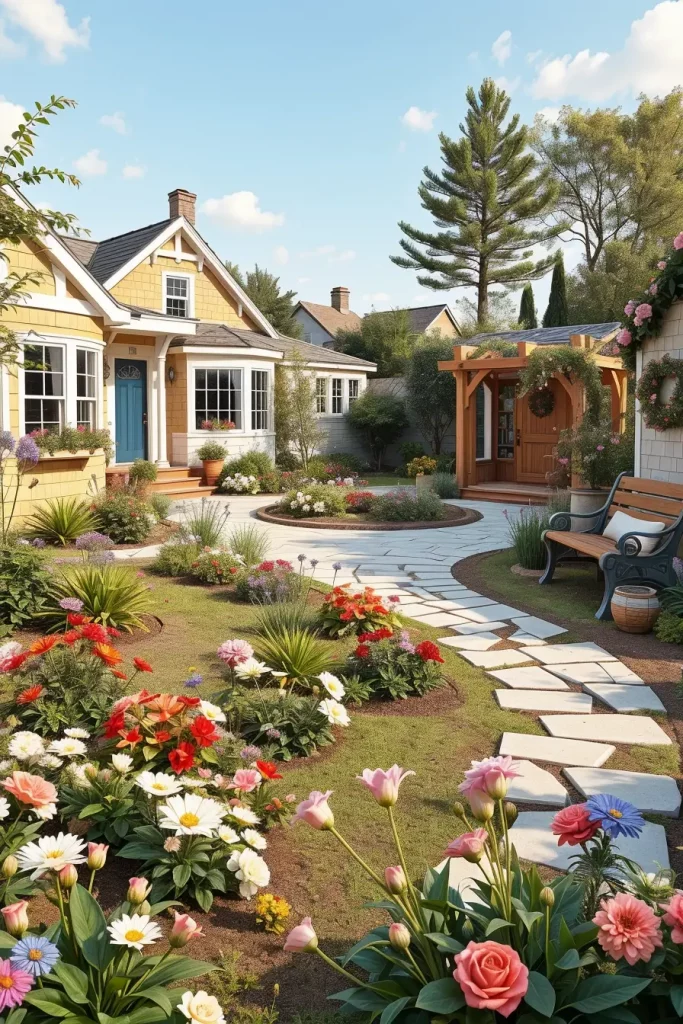
I personally value how these gardens feel lived-in without appearing outdated. Many American landscape designers highlighted in Better Homes and Gardens recommend combining native plants with classic cottage varieties, and I apply this strategy to improve resilience and reduce maintenance.
To complete this garden style, I would add vertical elements such as arched trellises or climbing structures. These features enhance depth and provide visual continuity throughout the space.
Sustainable Flower Garden Ideas With Aesthetic Appeal
Sustainability plays a central role in flower garden ideas 2026, and I design eco-conscious gardens that never compromise on style. These gardens prioritize native plants, efficient layouts, and thoughtful water management while still delivering strong visual impact. From alpine slides to gently curved beds, sustainability and design work hand in hand.
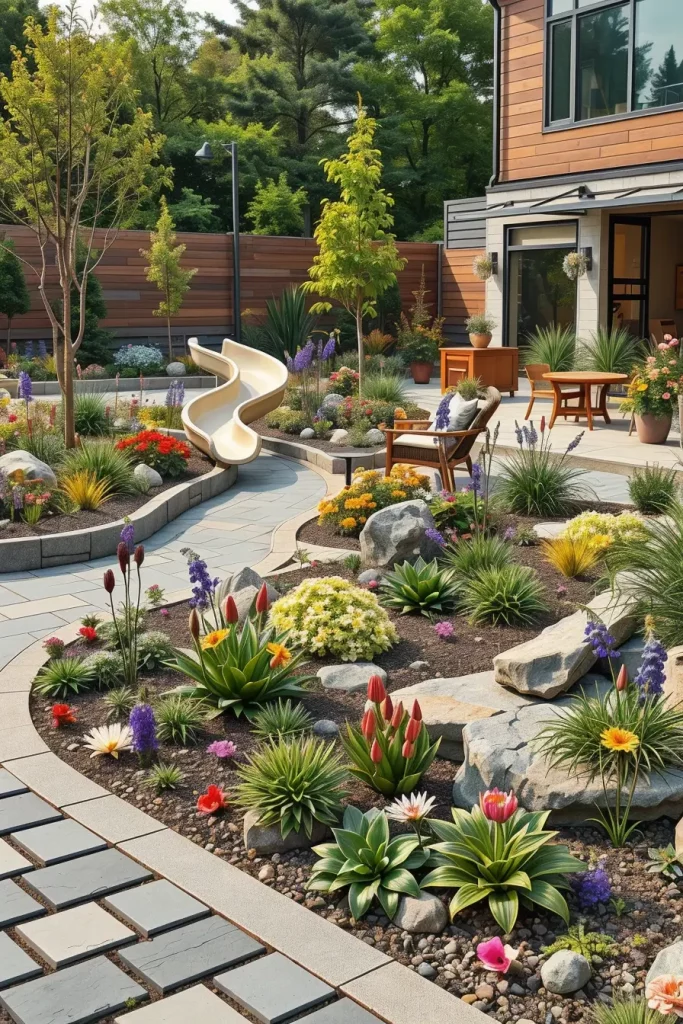
I carefully select drought-tolerant plants, permeable paving, and recycled materials for borders and seating. Raised beds, rain gardens, and integrated compost areas are designed to blend seamlessly into the overall layout. Simple outdoor furniture made from sustainable materials supports the functional use of the space.
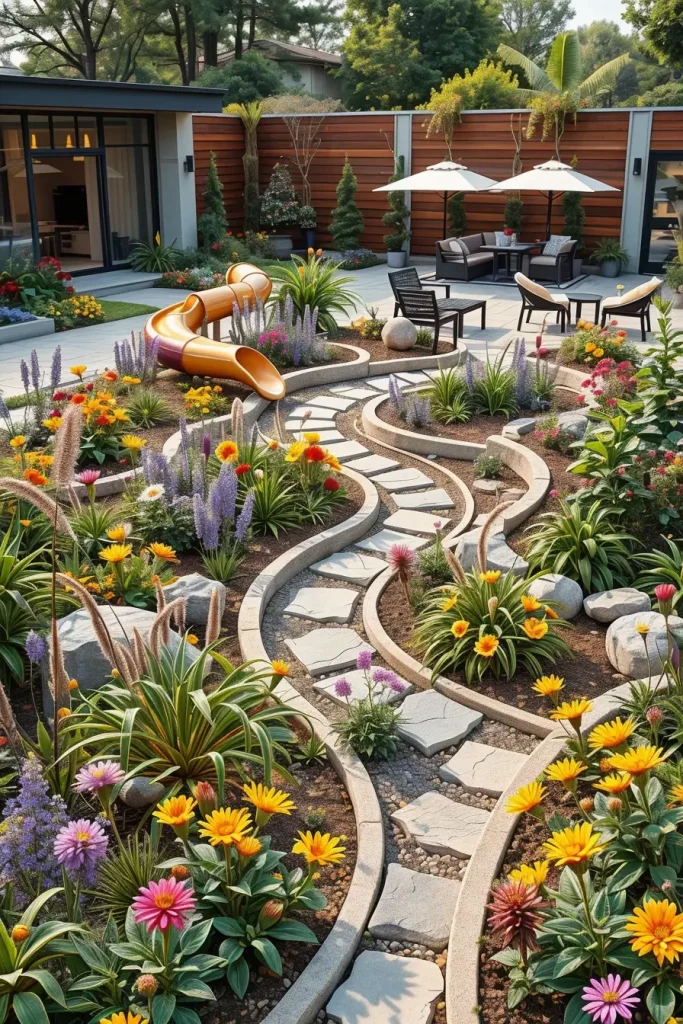
From my experience, sustainable gardens often become the most rewarding long-term projects. Experts from the American Society of Landscape Architects frequently emphasize that beauty and responsibility are not opposites, and I fully align with this mindset in my work.
What I would add here is educational signage or subtle markers to highlight sustainable features. This transforms the garden into not only a visual space but also a source of inspiration for visitors.
Multi-Level Flower Beds For Depth And Visual Interest
I consider multi-level flower beds one of the most effective ways to add architectural depth to flower garden ideas 2026. These designs use height variation to guide the eye naturally through the garden, making even flat plots feel dynamic and layered. From a practical standpoint, raised and tiered beds improve drainage, allow better soil control, and create clear planting zones for different plant needs.
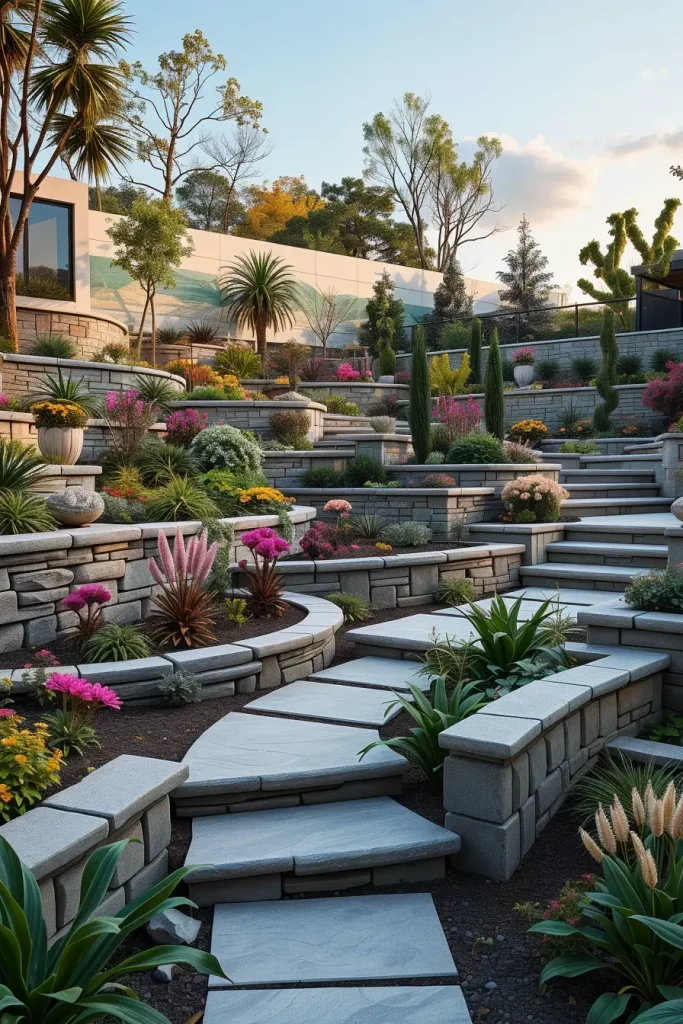
In my projects, I often combine stone, concrete, or wood retaining walls with softly curved or oval layouts. Each level supports a different plant height, from ground covers at the base to flowering shrubs or ornamental grasses above. Built-in steps, low walls that double as seating, and integrated lighting enhance usability while maintaining a clean, modern look.
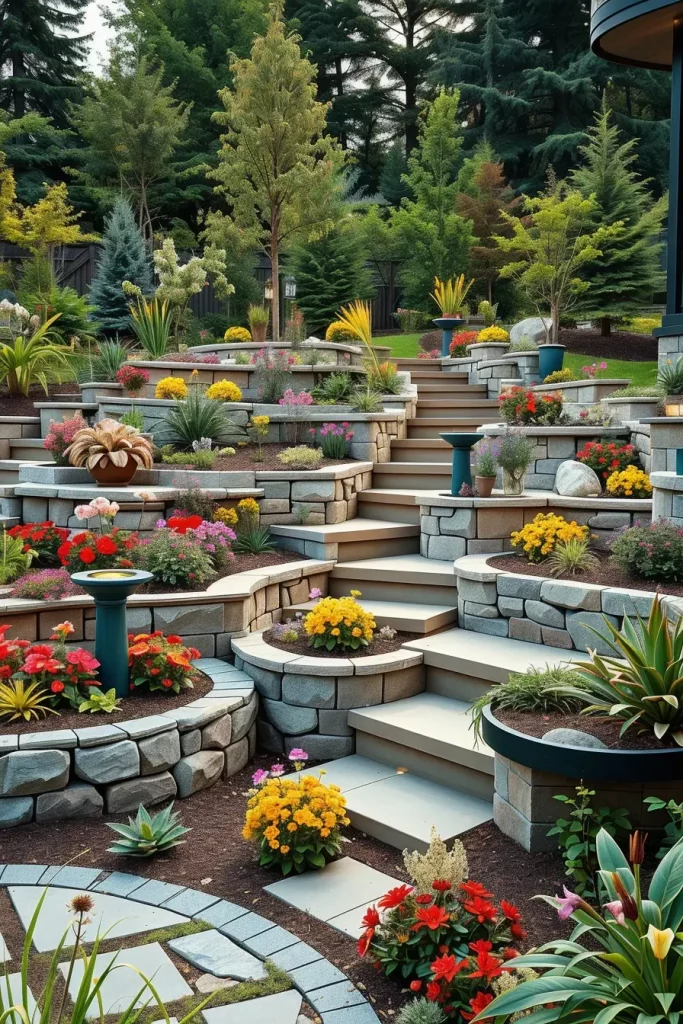
From personal experience, landscape designers featured in Garden Design Magazine consistently highlight vertical layering as a way to extend seasonal interest. I follow this approach by selecting plants that bloom at different times, ensuring that each level contributes to the garden’s visual rhythm throughout the year.
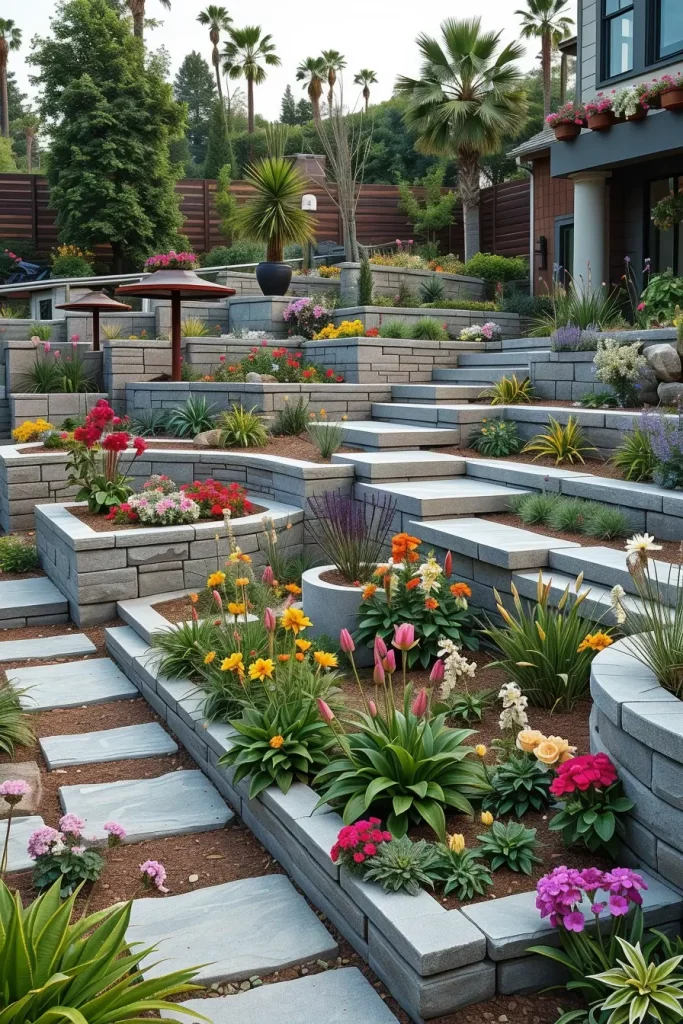
To strengthen this design further, I would add subtle transitions between levels, such as gravel strips or contrasting textures. This helps visually separate each tier while keeping the overall composition cohesive.
Contemporary Flower Gardens With Mixed Textures And Heights
Contemporary gardens thrive on contrast, and I design these spaces by mixing textures and heights to create visually engaging modern flower gardens. This approach works particularly well in 2026, where structured layouts are softened by natural variation. The result is a garden that feels curated yet organic, balancing order and spontaneity.
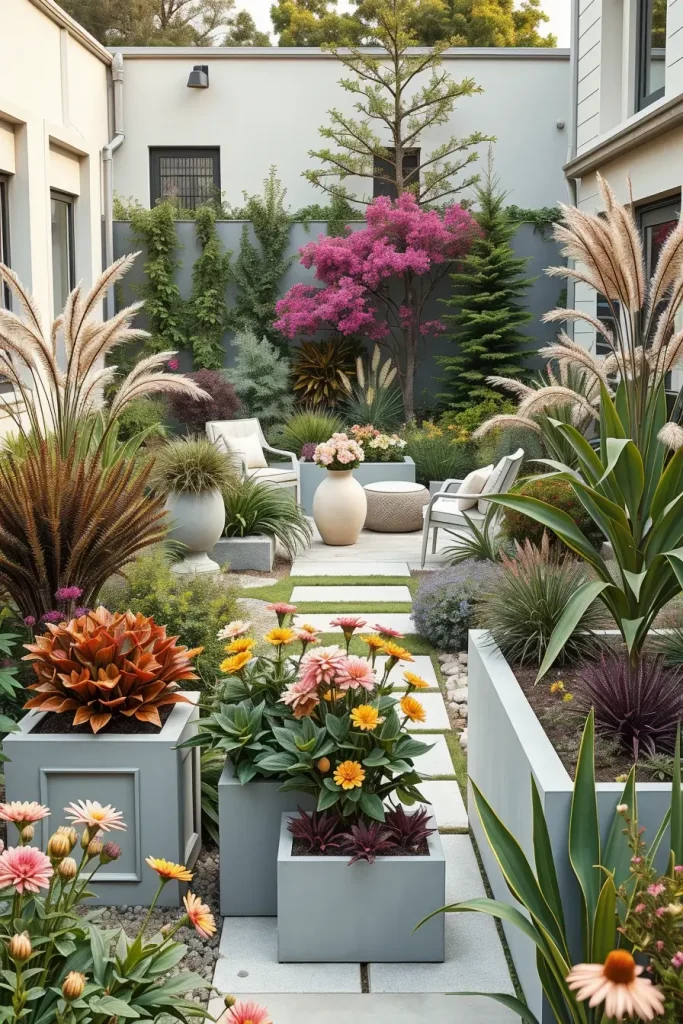
I typically combine smooth-leaf plants with feathery grasses, flowering perennials with sculptural shrubs, and matte stone surfaces with glossy foliage. Raised planters, narrow vertical beds, and freestanding containers allow me to control height variation without cluttering the space. Minimalist outdoor furniture with clean silhouettes reinforces the contemporary feel.
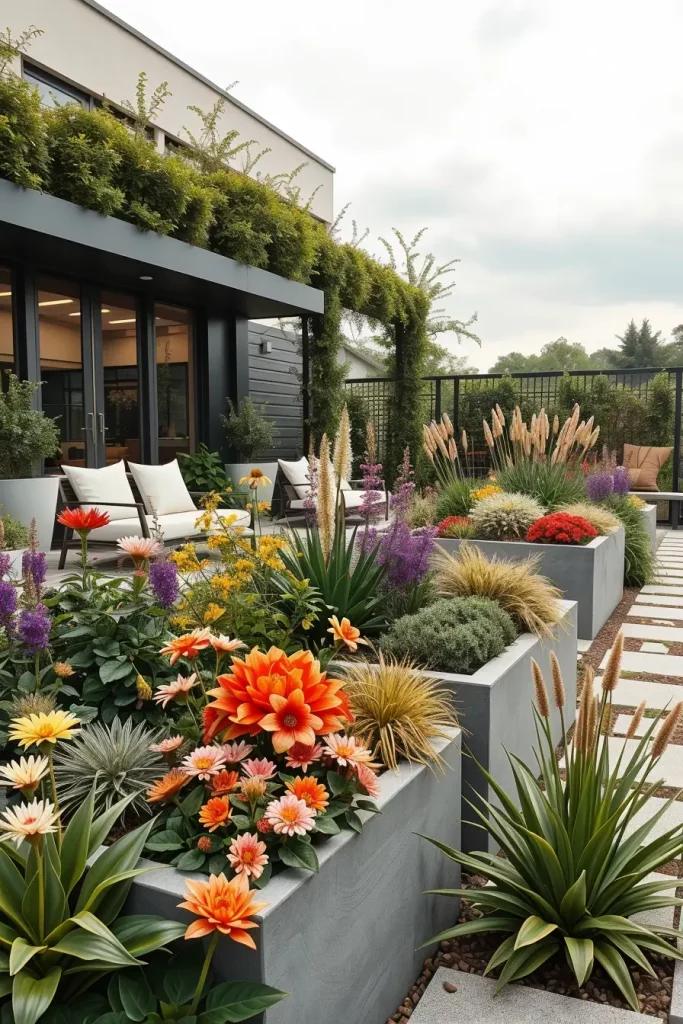
Personally, I find that texture-driven gardens age beautifully. Designers quoted in Landscape Architecture Magazine often recommend focusing on foliage texture as much as flower color, and I’ve seen firsthand how this approach creates lasting visual interest even outside peak bloom periods.
What I would still add is intentional negative space. Leaving small open areas between plant groupings prevents the garden from feeling overcrowded and allows each texture to stand out clearly.
Flowing Curved Flower Beds For Natural Garden Transitions
Flowing curved flower beds are essential for creating smooth transitions in unique flower gardens planned for 2026. I use curved and oval forms to guide movement naturally through outdoor spaces, eliminating harsh visual stops and encouraging exploration. These shapes work especially well in landscape-style gardens where flexibility and softness are key.
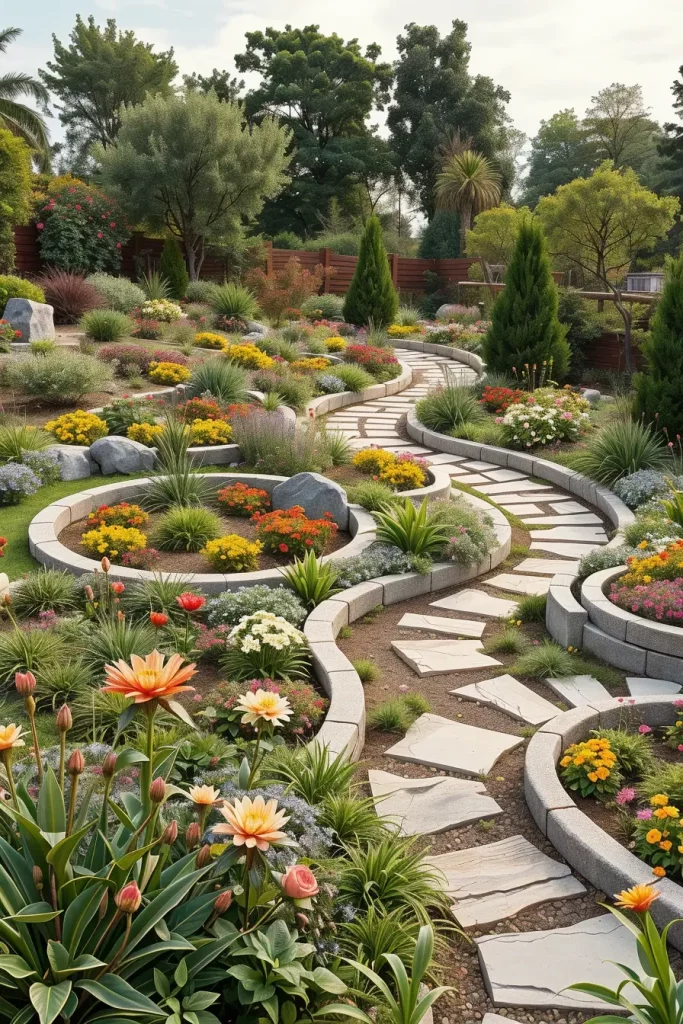
In execution, I rely on gently bending borders made of stone, metal, or brick to define each bed. Plant selections follow the curve, with taller plants placed at wider points and lower varieties along narrower sections. Pathways, lawns, and seating areas flow alongside these beds, reinforcing the sense of continuity.
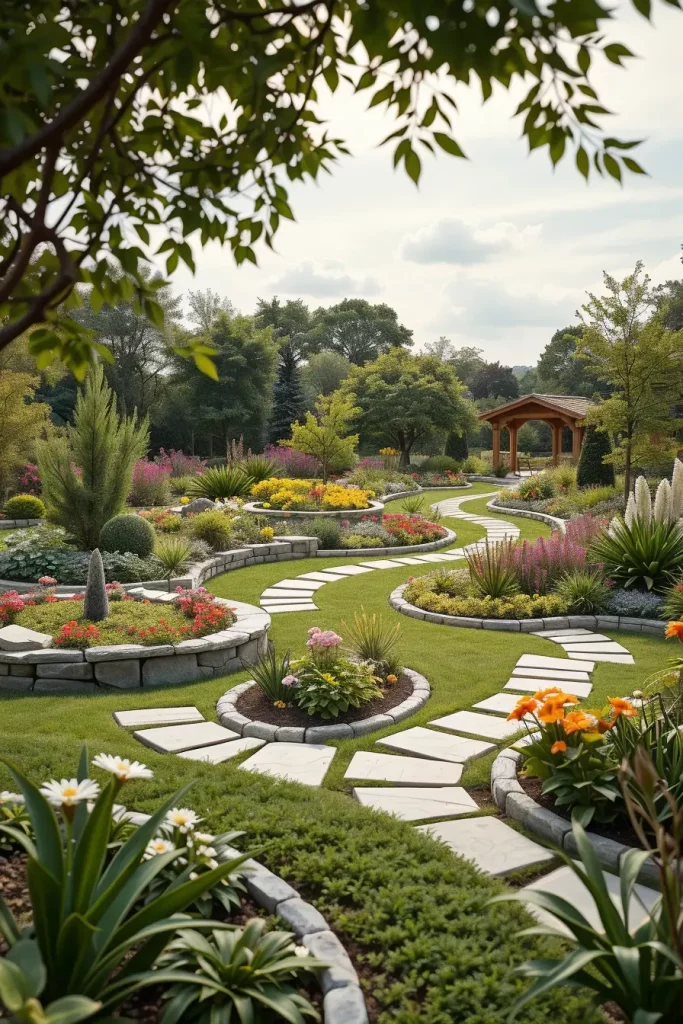
From my professional perspective, many US-based landscape architects recommend curved layouts to make gardens feel larger and more inviting. I fully support this idea, as curves naturally draw the eye forward and reduce the rigidity often associated with straight-line designs.
To complete this concept, I would add focal elements at curve intersections, such as sculptural planters or accent trees. These points anchor the design and give the eye moments of rest along the flowing path.
Artistic Flower Gardens Inspired By Modern Landscape Art
Art-inspired gardens are becoming a defining feature of flower garden ideas 2026, and I approach these designs as outdoor galleries. Each garden is composed with intention, using plant color, form, and spacing to echo principles found in modern art. The goal is not decoration, but expression through living materials.
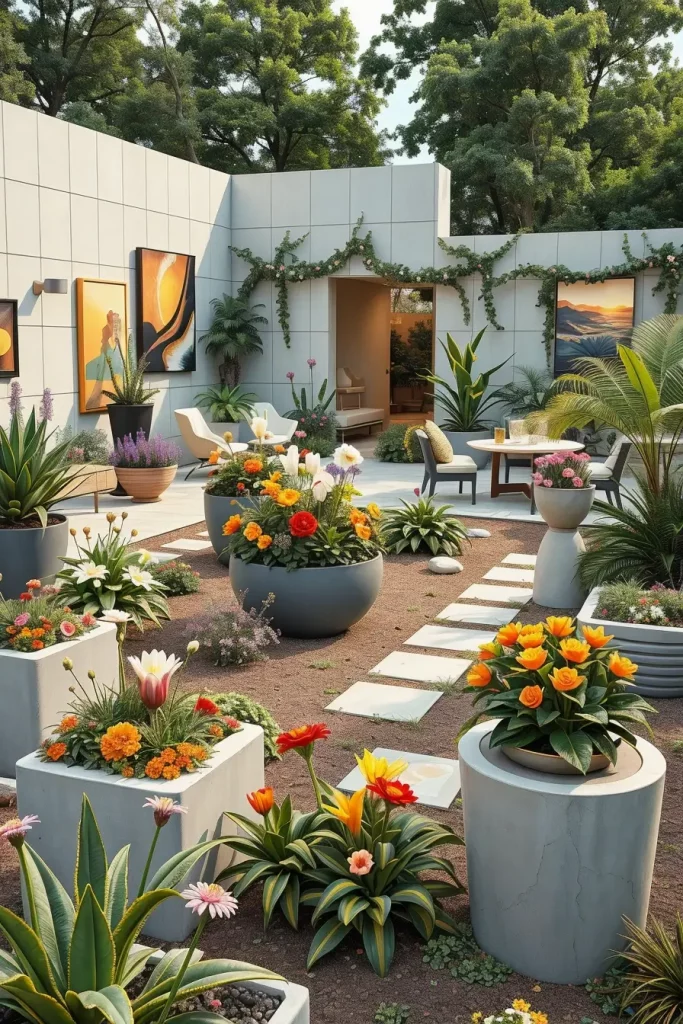
I often incorporate bold plant groupings, asymmetrical layouts, and contrasting materials like steel, concrete, and natural stone. Sculptural seating, abstract planters, and statement lighting reinforce the artistic theme while remaining functional. Every element contributes to the overall composition rather than standing alone.
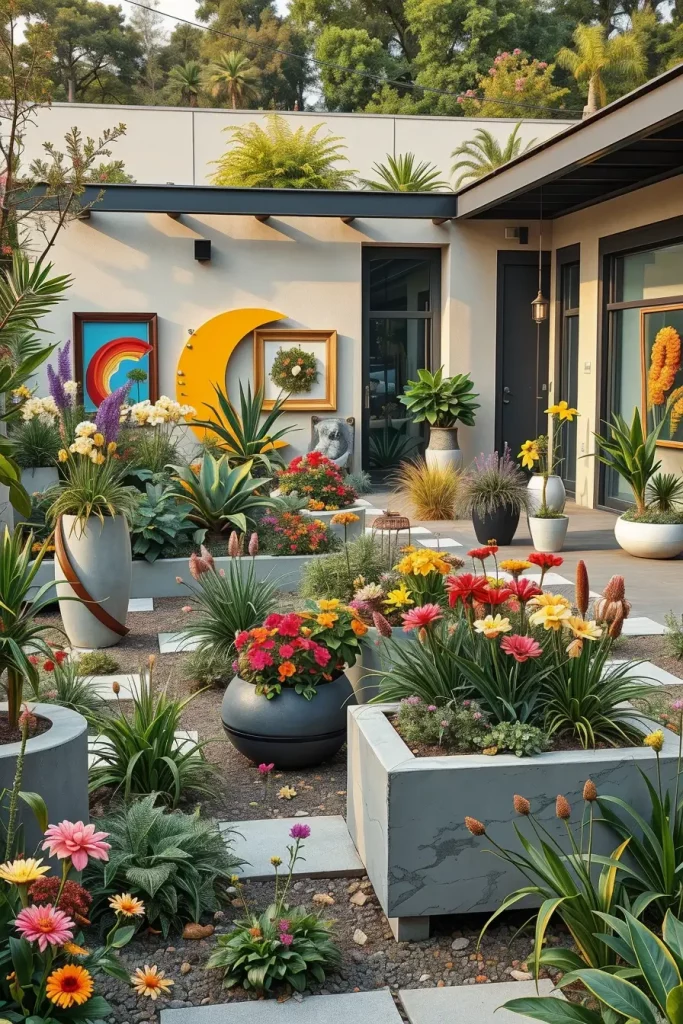
From my experience, publications like The New York Times Design section emphasize that art-driven landscapes benefit from restraint. I apply this advice by limiting focal points and allowing the plants themselves to serve as the primary medium of expression.
What I would add to this type of garden is a clear visual narrative. Whether inspired by movement, geometry, or nature itself, defining a concept early ensures the garden feels intentional rather than experimental.
Small Flower Garden Ideas With Bold Design Impact
Small gardens play a major role in flower garden ideas 2026, proving that limited space does not limit creativity. I design compact gardens with a focus on bold forms, vertical elements, and carefully chosen focal points. These strategies maximize visual impact without overwhelming the space.
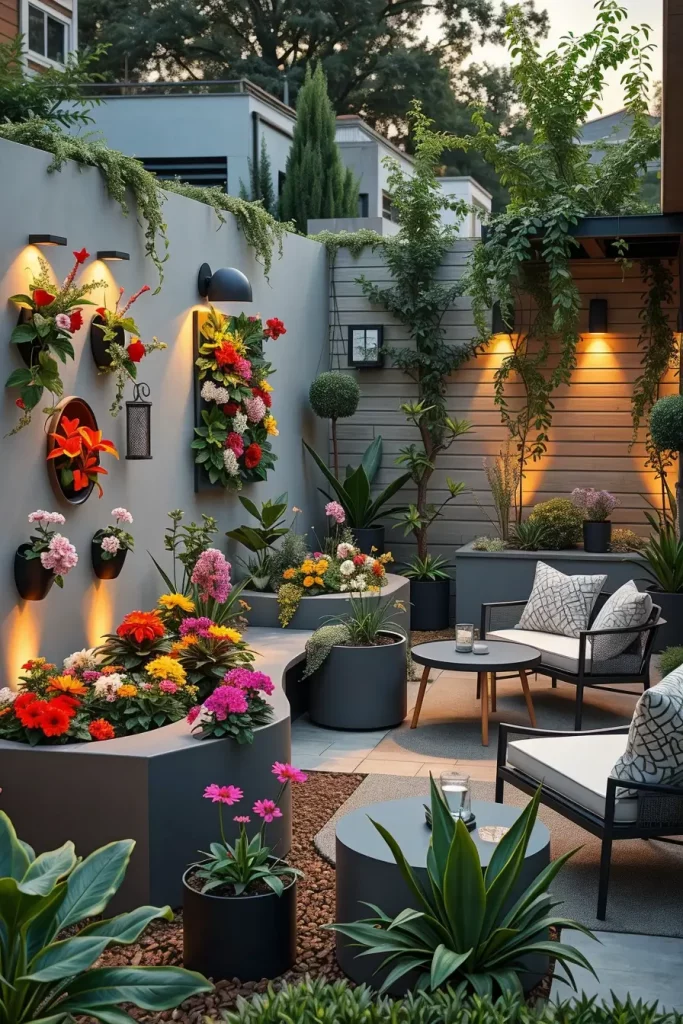
In practice, I use vertical flower beds, raised planters, and figure-shaped layouts to introduce dimension. Mirrors, light-colored surfaces, and streamlined outdoor furniture help visually expand the area. Each plant is selected for its form, color, or texture to ensure it contributes meaningfully to the design.
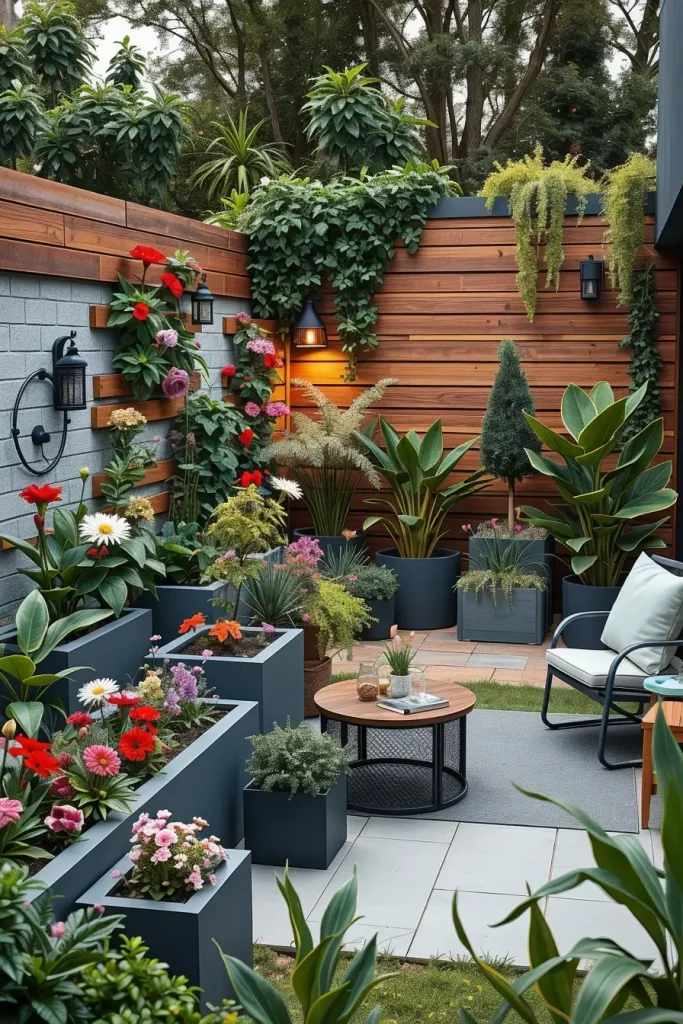
Personally, I’ve found that small gardens benefit from decisive choices. Landscape professionals featured in Dwell often recommend committing to a strong concept rather than mixing styles, and I consistently apply this principle to compact outdoor spaces.
To enhance these gardens further, I would add layered lighting. Wall-mounted fixtures, planter lights, and subtle ground illumination extend usability and reinforce the garden’s bold character after sunset.
Open-Concept Flower Gardens Integrated With Outdoor Living
I see open-concept flower gardens as one of the strongest directions for flower garden ideas 2026, because they blur the boundary between planting zones and everyday outdoor living. These gardens rely on flowing paths, curved and oval flower beds, and soft transitions that visually connect terraces, patios, and lawns. From a practical perspective, this approach improves circulation and allows the garden to be used as an extension of the home rather than a decorative backdrop.
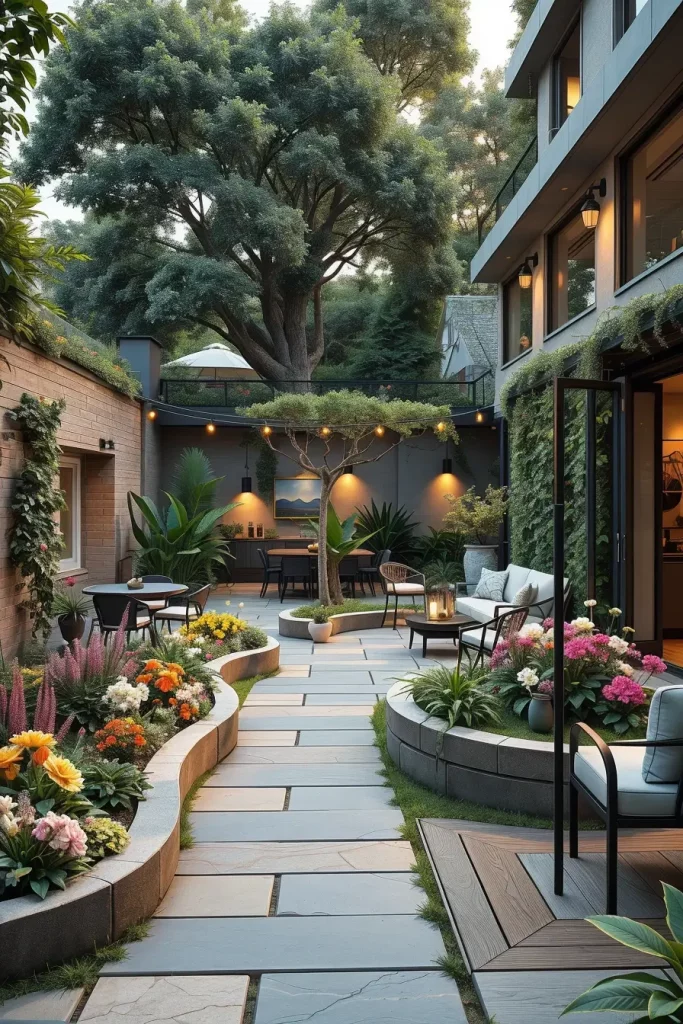
In my projects, I often integrate low-profile outdoor seating, built-in benches, and minimal dining furniture directly alongside landscape-style flower beds. I choose round or arched planting forms filled with perennials and ornamental grasses so that furniture feels framed rather than crowded. Subtle lighting, natural stone paving, and vertical planting elements help the garden function day and night while reinforcing a modern, designer aesthetic.
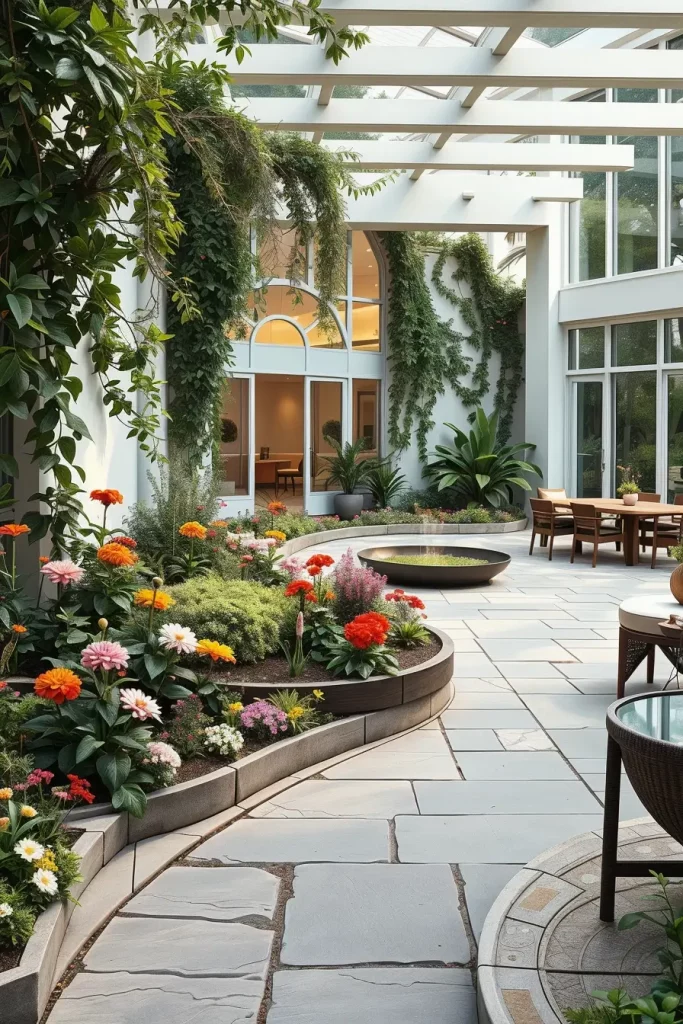
From my experience, many US-based landscape designers featured in Architectural Digest emphasize that open layouts encourage longer outdoor use and better social interaction. I fully agree with this view, especially when flower beds are shaped to guide movement naturally. What I would still add here is smart irrigation and concealed drainage systems, which are essential to maintain healthy planting in high-traffic garden zones.
Statement Flower Beds Using Color Blocking Techniques
Statement flower beds built with color blocking are a bold interpretation of modern flower gardens for 2026. I approach these designs by dividing curved, round, or arabesque flower beds into visually clear sections, each dominated by a single color palette. This makes the garden immediately readable and highly graphic, which works particularly well in contemporary residential landscapes.
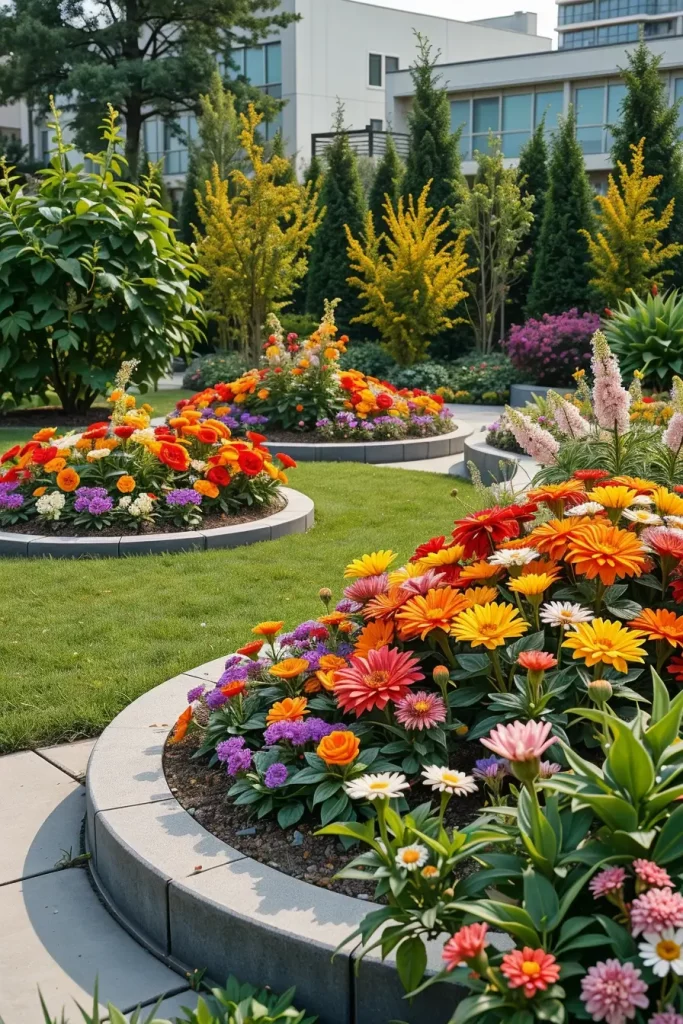
When designing these beds, I carefully select plant varieties with consistent bloom tones and similar growth heights to maintain clean visual lines. I often pair these flower beds with neutral hardscape materials such as concrete edging or light stone borders, allowing the colors to stand out without visual clutter. Minimal garden furniture nearby ensures the focus remains on the planting composition.
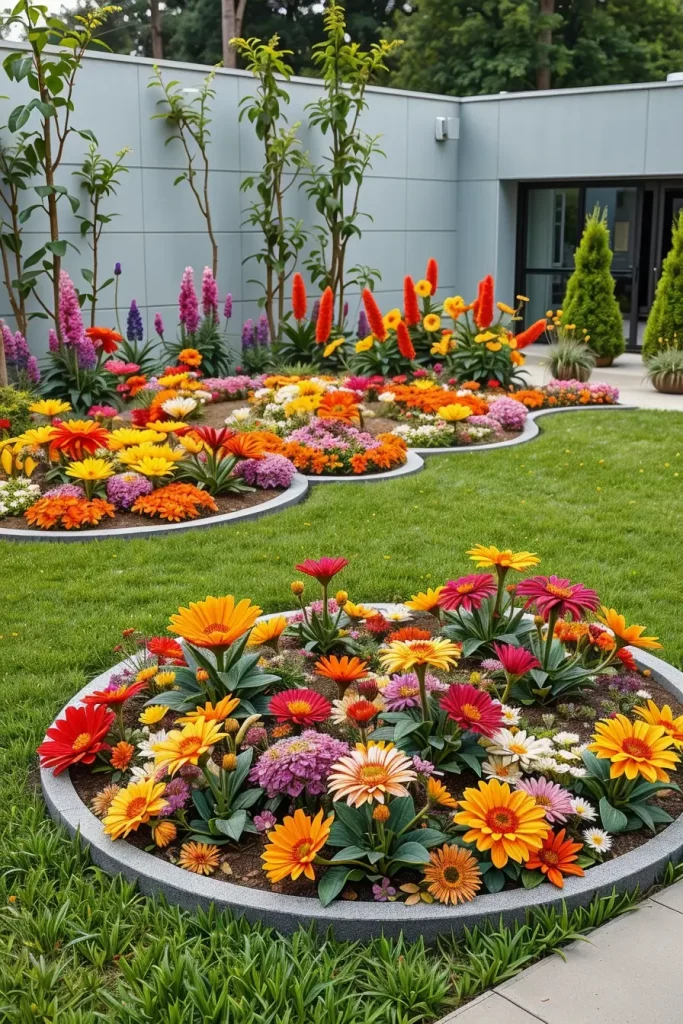
Personally, I find that color-blocked flower beds require discipline but deliver strong results when done correctly. Designers frequently recommend limiting the palette to two or three colors, a guideline I follow to avoid visual overload. To improve these sections further, I would add seasonal transition planning, ensuring that color impact remains strong even when bloom cycles change.
Modern Front Yard Flower Garden Ideas For 2026
Front yard gardens in 2026 are becoming more architectural, and I design them to reflect both designer flower gardens and functional landscaping. Clean geometry combined with curved and figure-shaped flower beds creates a welcoming yet structured first impression. These gardens are not only decorative but also designed to frame entrances and guide visitors intuitively.
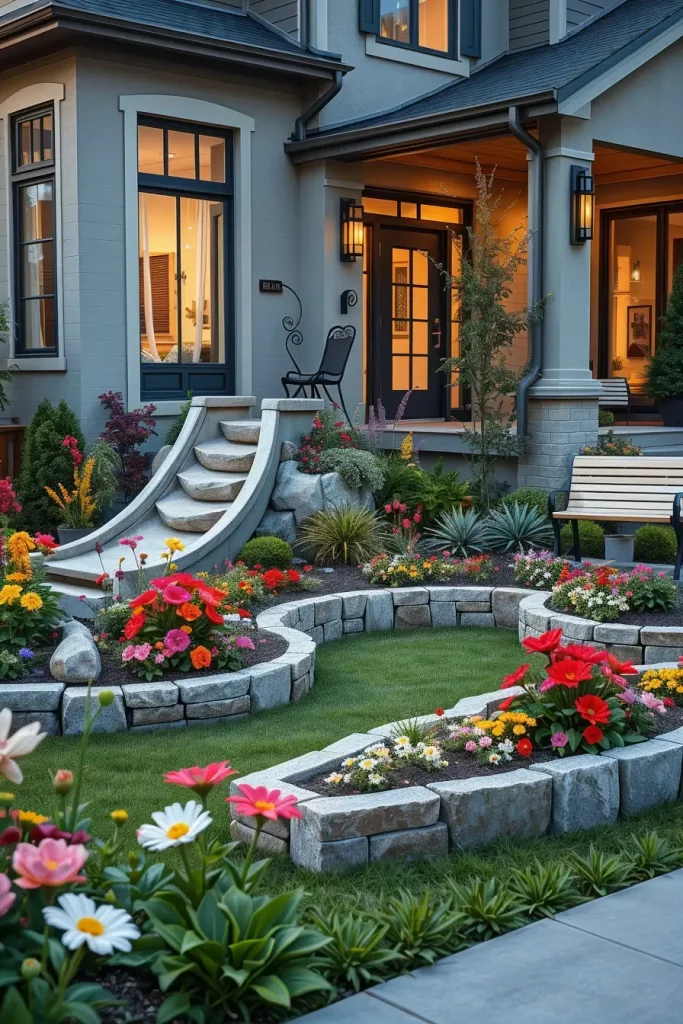
In practice, I use raised flower beds, alpine slides with sculptural stones, and vertical planting panels near entryways. Low shrubs, flowering perennials, and ornamental grasses are arranged in layered compositions, while discreet lighting highlights key shapes after dark. I intentionally keep furniture minimal, often limiting it to a single bench or accent element.
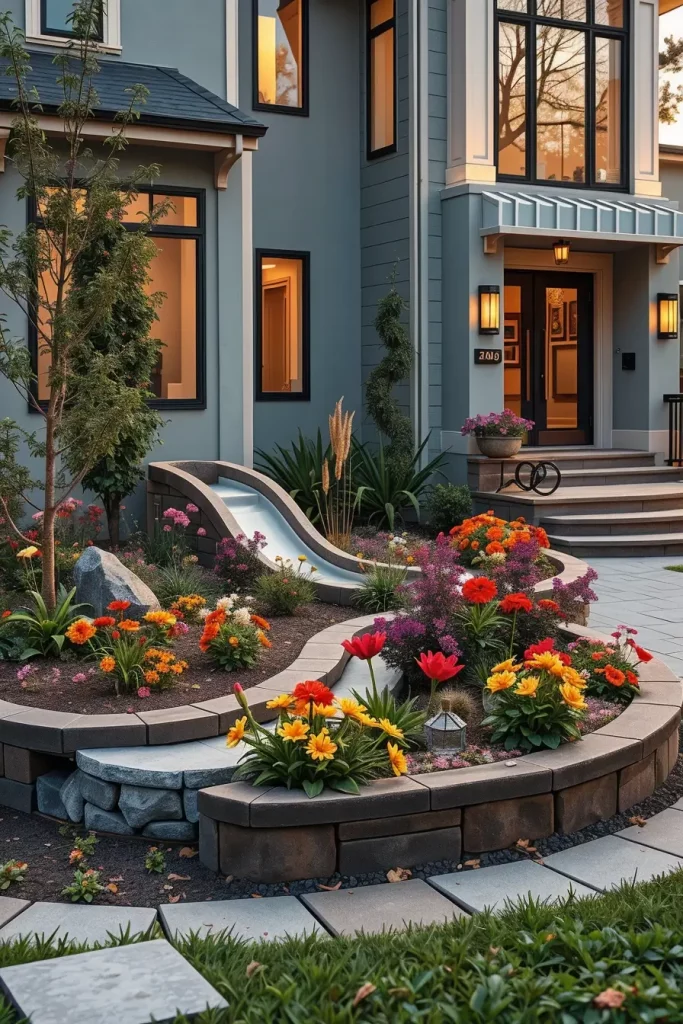
From my professional perspective, front yard gardens benefit greatly from restraint. Publications like Better Homes and Gardens often highlight the importance of clarity in entry landscaping, which aligns with my experience. To complete these gardens, I recommend adding subtle signage or sculptural accents that reinforce the home’s architectural style without overpowering the planting.
Backyard Flower Gardens With Unique Geometric Patterns
Backyard flower gardens offer more freedom, and for flower garden ideas 2026, I see geometric layouts becoming increasingly expressive. I work with intersecting curves, oval paths, and round planting islands to create rhythm and movement across the space. These designs balance creativity with usability, ensuring clear walking routes and flexible gathering areas.
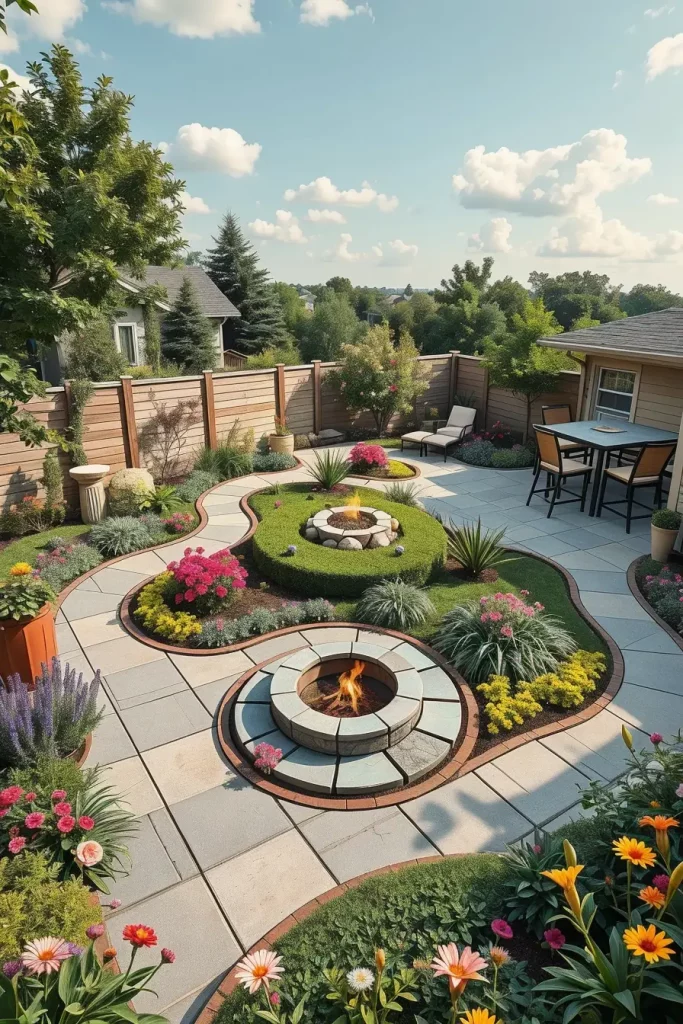
In these gardens, I often integrate modular outdoor furniture, fire pits, and dining zones positioned between geometric flower beds. The planting itself is carefully structured, with repeated shapes and plant groupings to reinforce the overall pattern. Hardscape elements act as visual anchors, preventing the design from feeling chaotic.
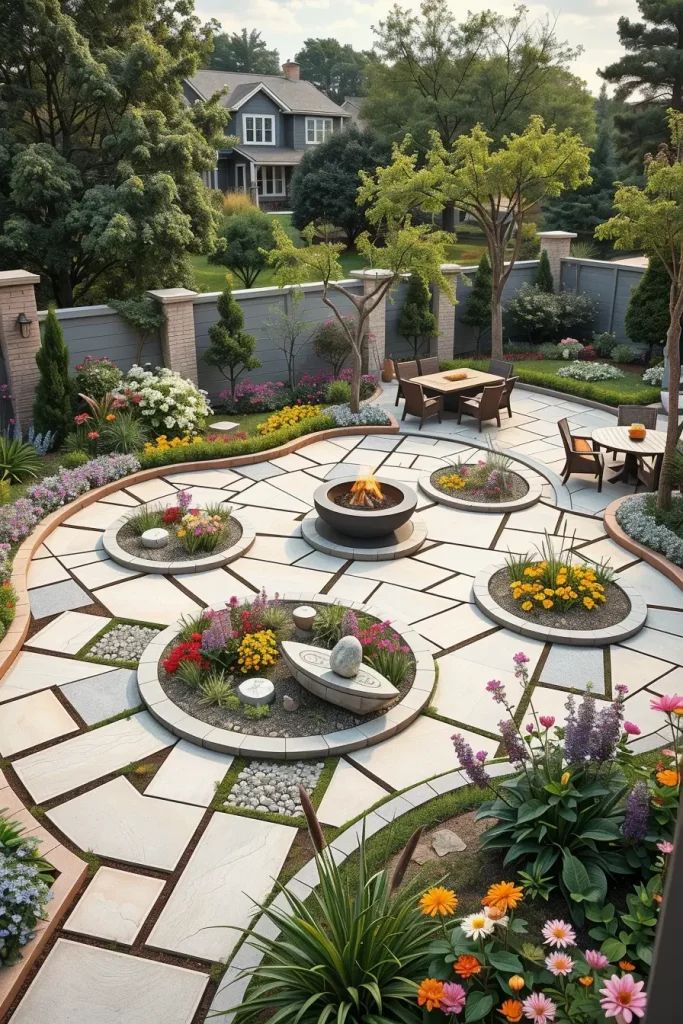
Based on my experience, homeowners appreciate geometric gardens that feel intentional rather than experimental. Landscape architects frequently note that repetition is key to successful pattern-based design, and I follow this principle consistently. What I would still add here is more vertical layering, using trellises or sculptural plant supports to enhance depth.
Creative Flower Gardens With Asymmetrical Layouts
Asymmetry plays a major role in unique flower gardens for 2026, especially for those seeking a more artistic and less predictable look. I design these gardens with free-flowing, landscape-inspired flower beds that avoid mirror symmetry while still feeling balanced. This approach allows for more natural movement and visual interest.
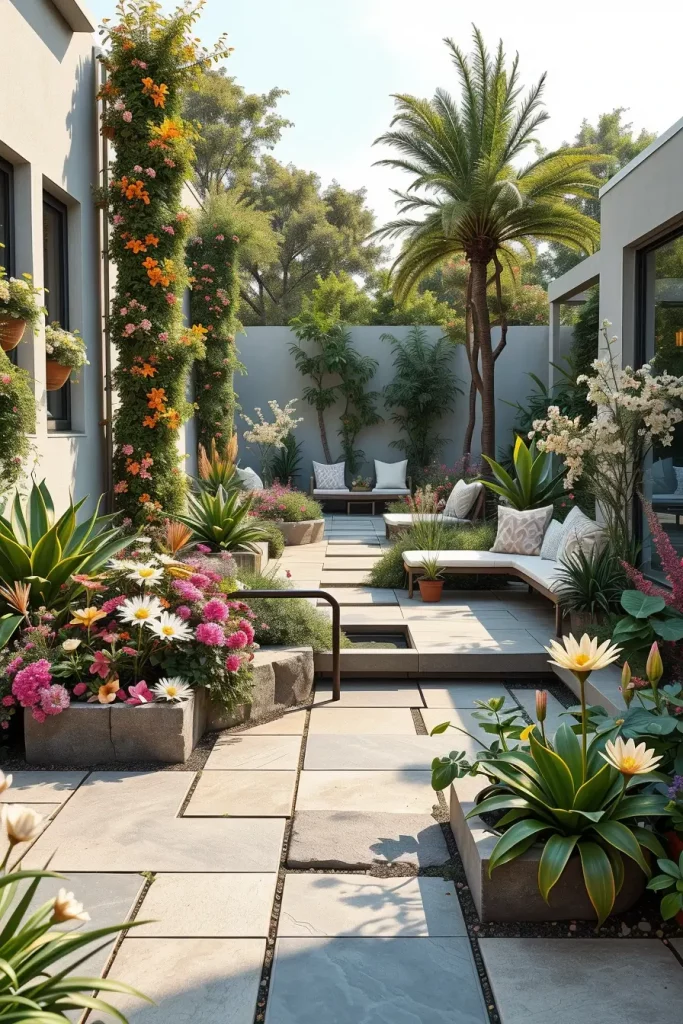
In my designs, asymmetrical layouts often include vertical planting features, arched flower beds, and mixed-height plant groupings. I pair these with organic seating arrangements and subtle water elements to reinforce a relaxed but modern atmosphere. Each element is placed intentionally, even if the layout appears spontaneous.
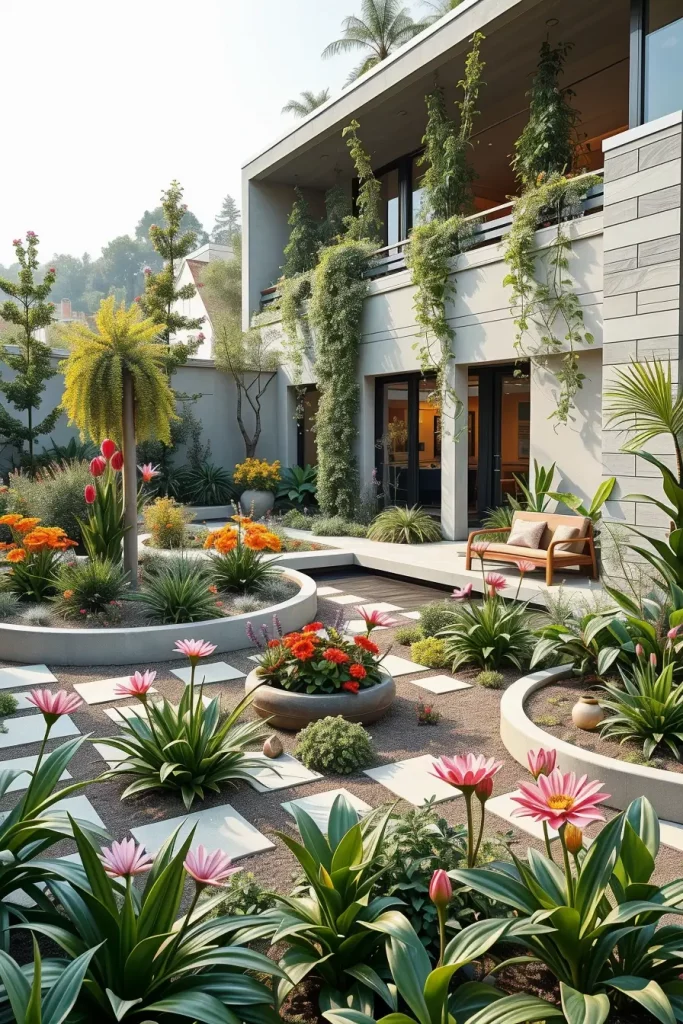
I believe asymmetry reflects how modern homeowners want their gardens to feel personal and expressive. Many contemporary designers emphasize emotional connection over rigid structure, a philosophy I share. To strengthen these gardens further, I would include focal lighting or sculptural accents that provide visual grounding within the asymmetrical composition.
Designer Flower Beds Using Unconventional Shapes
When I design flower garden ideas 2026, I increasingly rely on unconventional shapes to create a strong visual identity. These designer flower beds move beyond standard curves into sculptural, figure-shaped, arched, and arabesque forms that immediately signal a contemporary approach. From a practical standpoint, such shapes help organize space, define circulation paths, and turn planting into a focal architectural element rather than background decor.
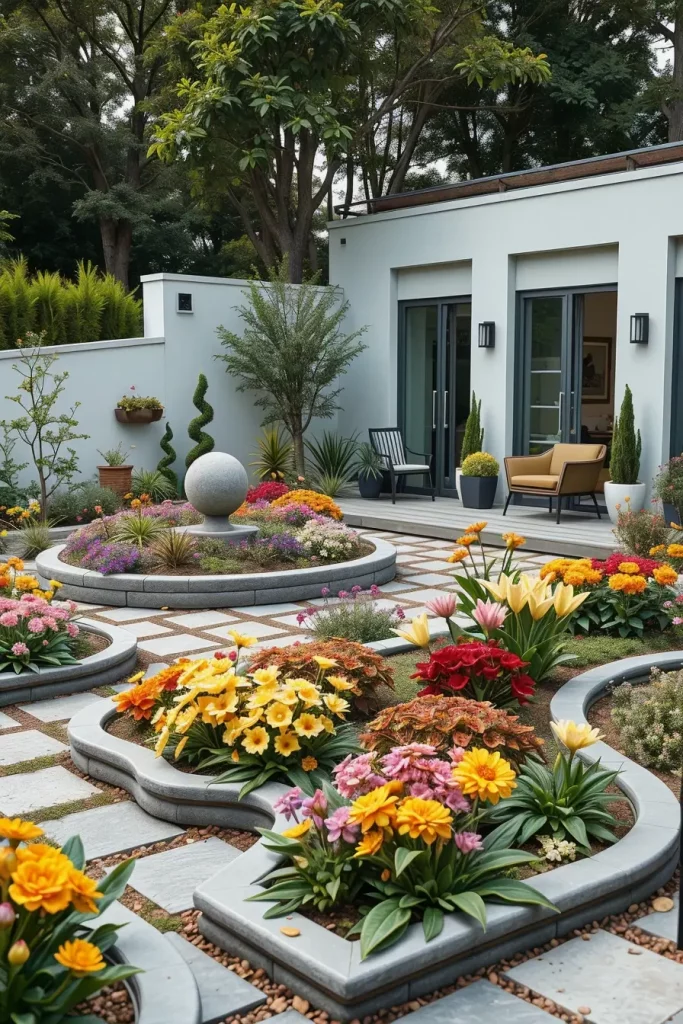
In my work, I combine these unconventional flower beds with precise edging, often using stone, metal, or poured concrete to preserve clean lines. I carefully select plants with contrasting textures and controlled growth habits so the shape remains readable throughout the season. Minimal outdoor furniture placed nearby reinforces the designer quality without competing with the planting geometry.
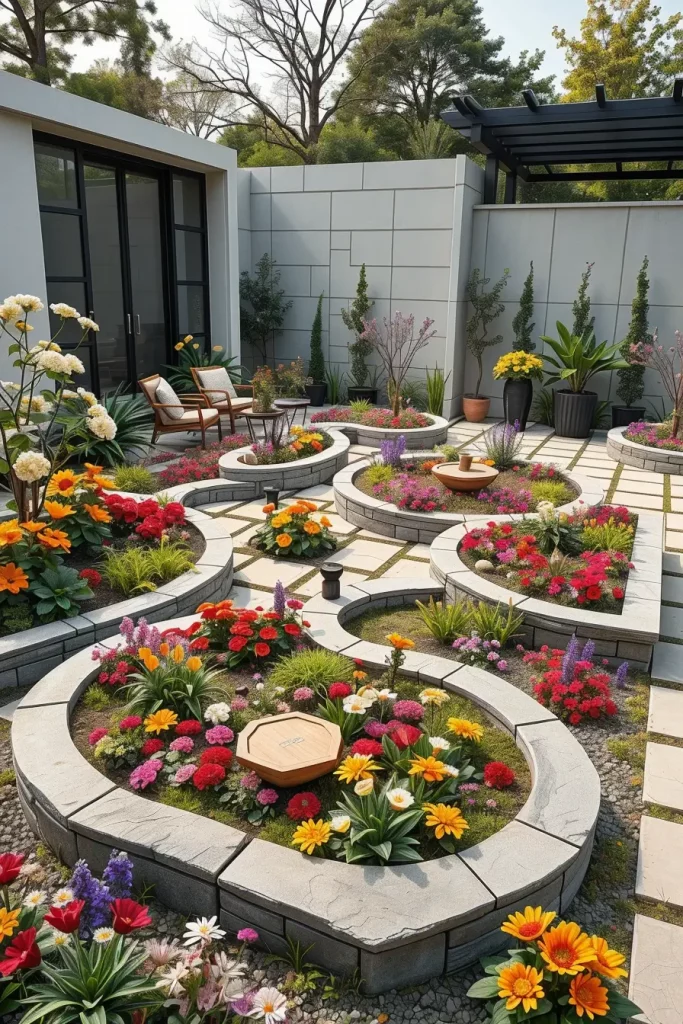
I’ve noticed that many landscape architects featured in US design media highlight sculptural planting as a way to elevate residential gardens. I share this view and find that unconventional shapes encourage homeowners to see their garden as a curated outdoor room. What I would add here is a long-term maintenance plan, ensuring these intricate shapes stay crisp and intentional over time.
Flower Garden Ideas Combining Hardscape And Softscape
Combining hardscape and softscape is essential for modern flower gardens that feel balanced and livable in 2026. I design these gardens by layering curved or round flower beds alongside paved walkways, terraces, and retaining walls. This approach improves usability while giving structure to otherwise organic planting layouts.
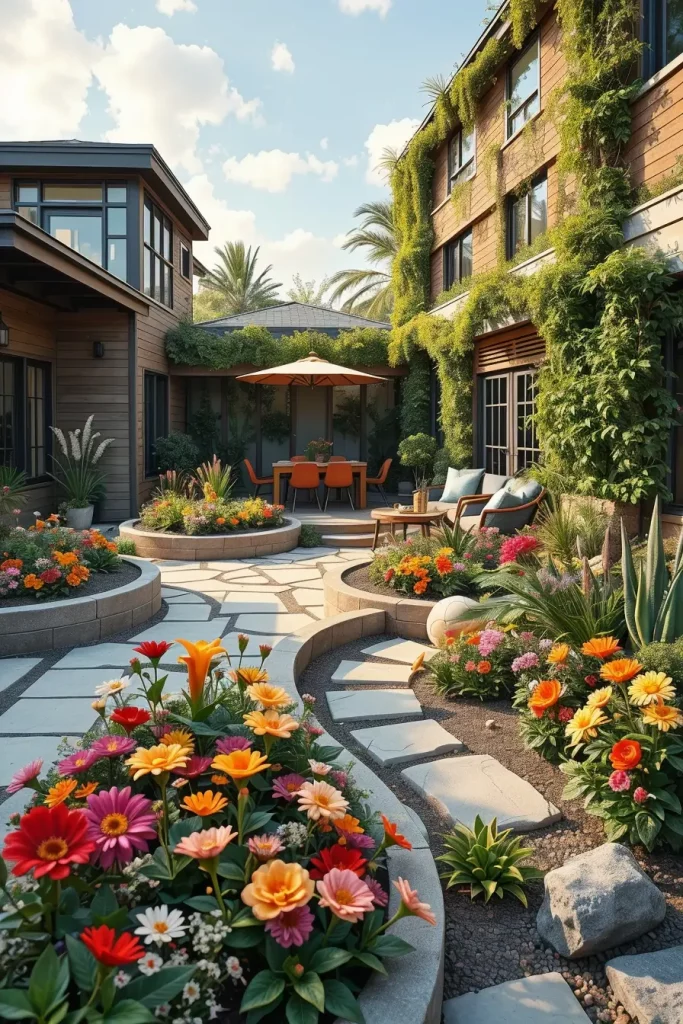
In practice, I integrate materials such as natural stone, concrete slabs, and wood decking with landscape-style flower beds. Vertical elements like pergolas or trellises support climbing plants and visually connect hard surfaces with soft planting. Furniture is chosen for simplicity and durability, allowing the garden to function as a comfortable outdoor living space.
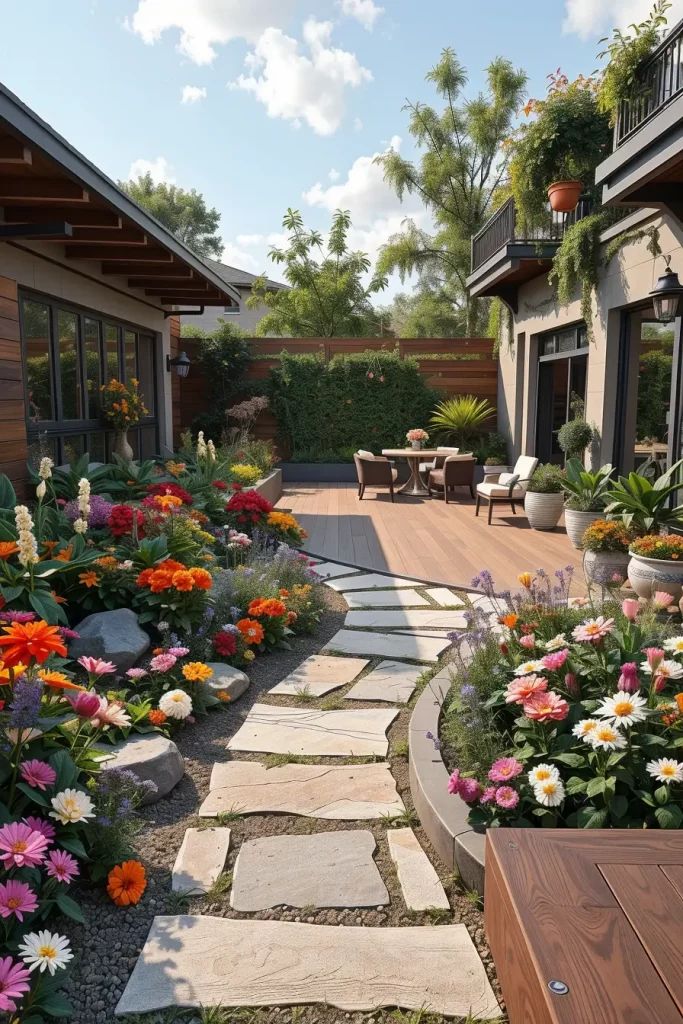
From my experience, designers often stress that hardscape should frame, not dominate, the planting. I fully agree and always prioritize plant health and visual softness. To complete these gardens, I would add layered lighting that highlights both textures, enhancing depth after sunset.
Seasonal Flower Garden Concepts With Year-Round Style
Seasonal planning is a defining feature of flower garden ideas 2026, especially for homeowners seeking year-round visual interest. I approach these gardens by designing curved and oval flower beds that transition smoothly across seasons without losing structure. Evergreen plants, ornamental grasses, and seasonal blooms work together to maintain consistency.
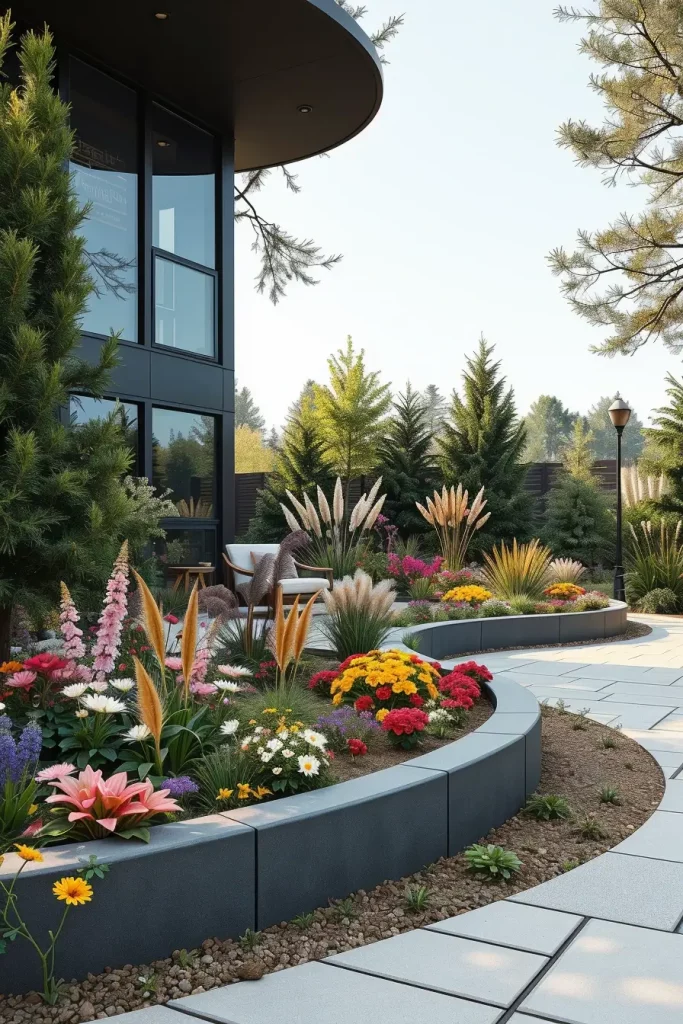
I carefully select plant combinations that peak at different times while maintaining cohesive color and texture. Hardscape elements, such as sculptural edging and minimalist seating, ensure the garden looks complete even during dormant periods. Vertical features add winter interest and reinforce the garden’s architectural quality.
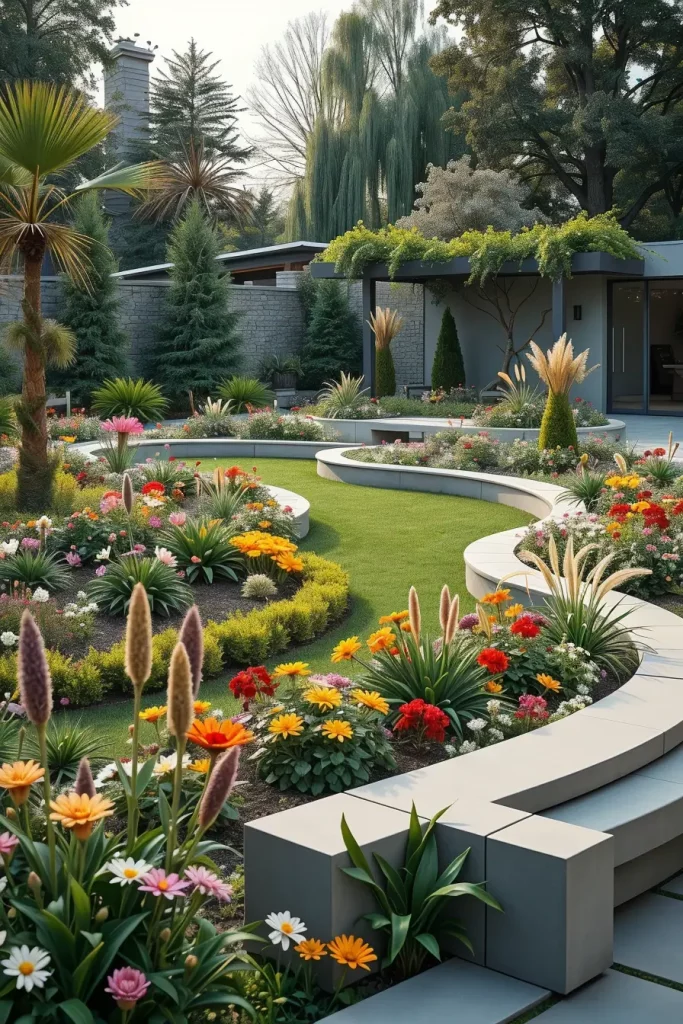
Personally, I believe seasonal gardens succeed when structure leads and flowers support it. Experts frequently recommend designing for winter first, then layering seasonal interest, a strategy I consistently follow. To enhance these spaces further, I would introduce interchangeable decor elements that adapt to seasonal changes without disrupting the design.
Modern Flower Gardens Inspired By Botanical Architecture
Botanical architecture heavily influences designer flower gardens for 2026, and I often draw inspiration from conservatories and contemporary botanical parks. These gardens emphasize strong forms, symmetry balanced with curves, and intentional spatial rhythm. The result feels immersive, structured, and distinctly modern.
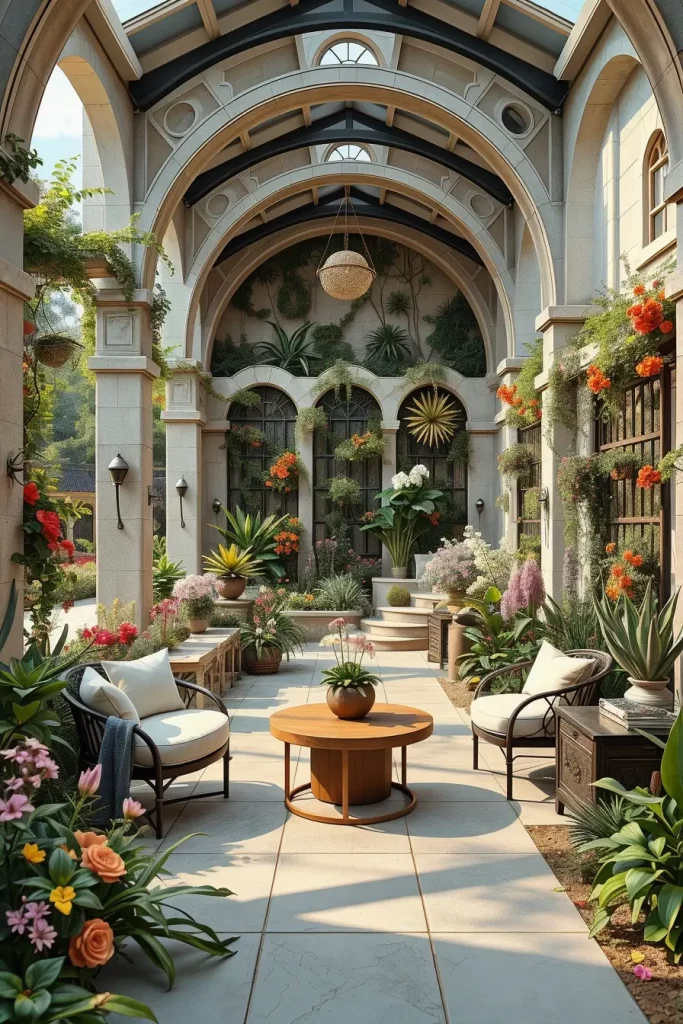
In my designs, I use arched planting beds, vertical garden walls, and carefully spaced plant groupings to echo architectural principles. Materials such as steel, glass accents, and refined stonework complement the planting. Furniture is sparse but sculptural, reinforcing the sense of design cohesion.
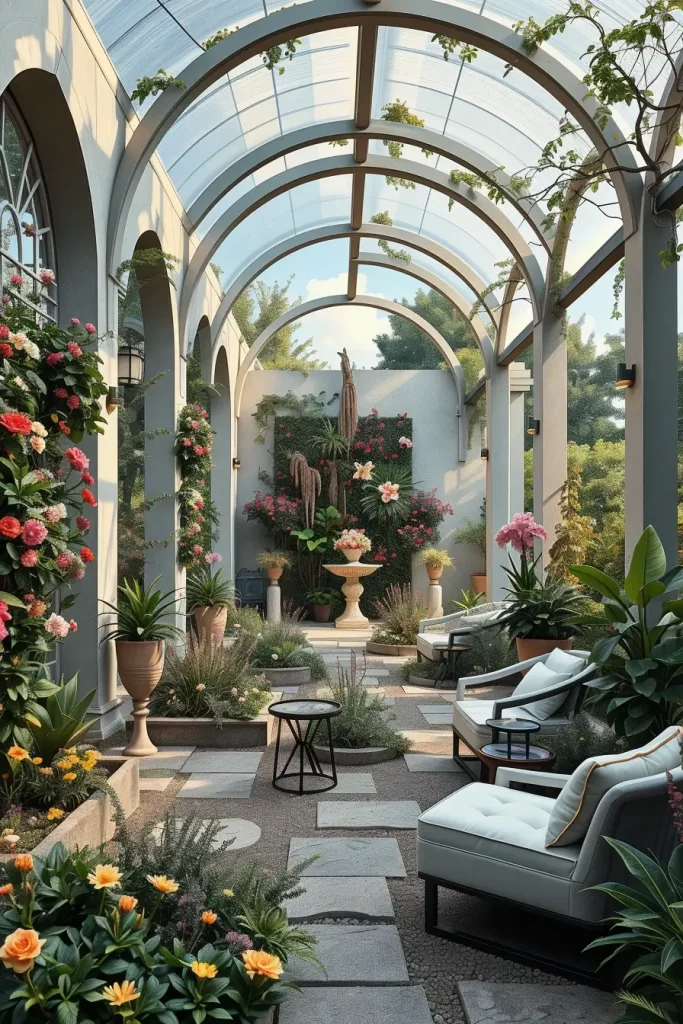
I find that botanical-inspired gardens feel timeless yet innovative. Many US landscape designers note that architectural planting improves long-term garden value, a point I strongly support. What I would add here is integrated climate-responsive planting, ensuring resilience as weather patterns continue to shift.
Future Trends In Flower Garden Design For 2026 And Beyond
Looking ahead, flower garden ideas 2026 are clearly moving toward expressive, adaptable, and highly personalized designs. I see curved, vertical, alpine, and figure-shaped flower beds becoming standard elements rather than exceptions. These gardens prioritize individuality while remaining functional and sustainable.
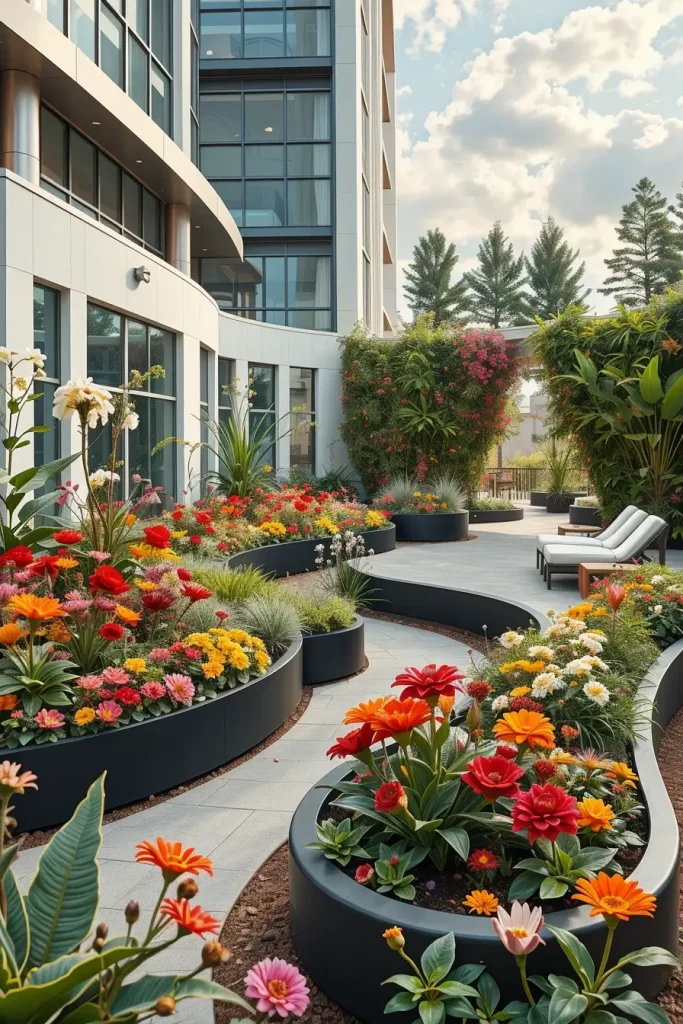
In my future-focused designs, I integrate modular planting systems, smart irrigation, and flexible hardscape layouts. Furniture and decor are selected to evolve with changing needs, ensuring longevity. The garden becomes a dynamic space that grows with the homeowner.
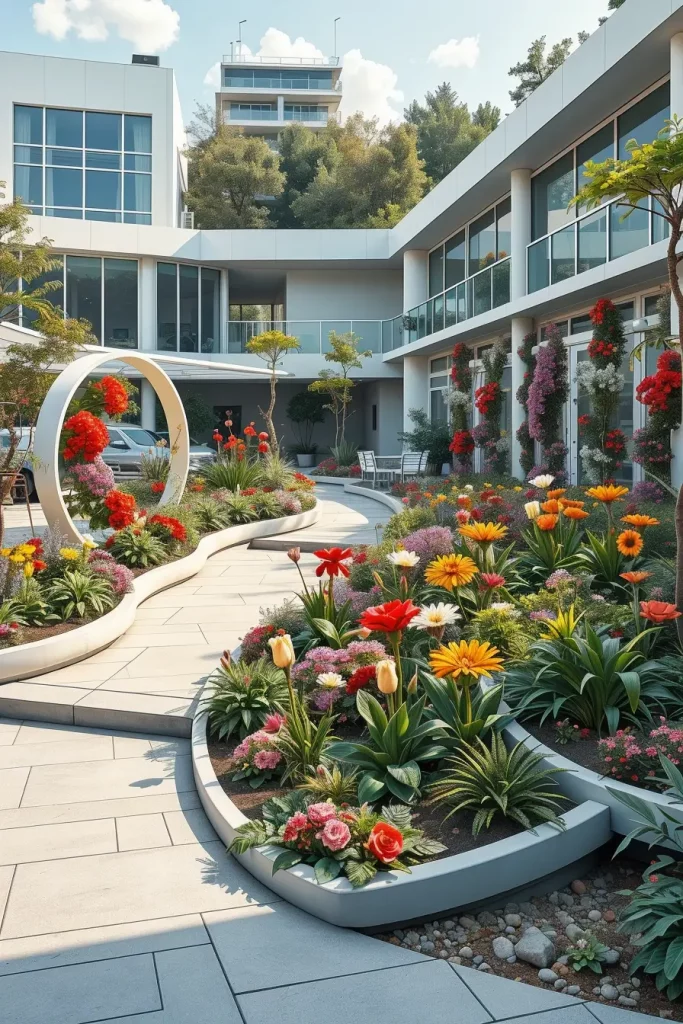
From my professional perspective, the future of flower gardens lies in intentional design combined with adaptability. Many leading designers emphasize flexibility as the key to longevity, a principle I fully embrace. To strengthen future gardens, I would include technology-ready infrastructure that supports evolving garden innovations.
Flower garden ideas 2026 highlight a future where outdoor spaces become expressive, modern, and uniquely personal. With innovative shapes, sculptural layouts, and thoughtfully designed compositions, flower gardens are evolving into dynamic landscapes that blend creativity with natural beauty. By embracing these modern ideas, you can create a garden that feels stylish, forward-thinking, and timeless—an outdoor space that truly reflects the spirit of 2026.